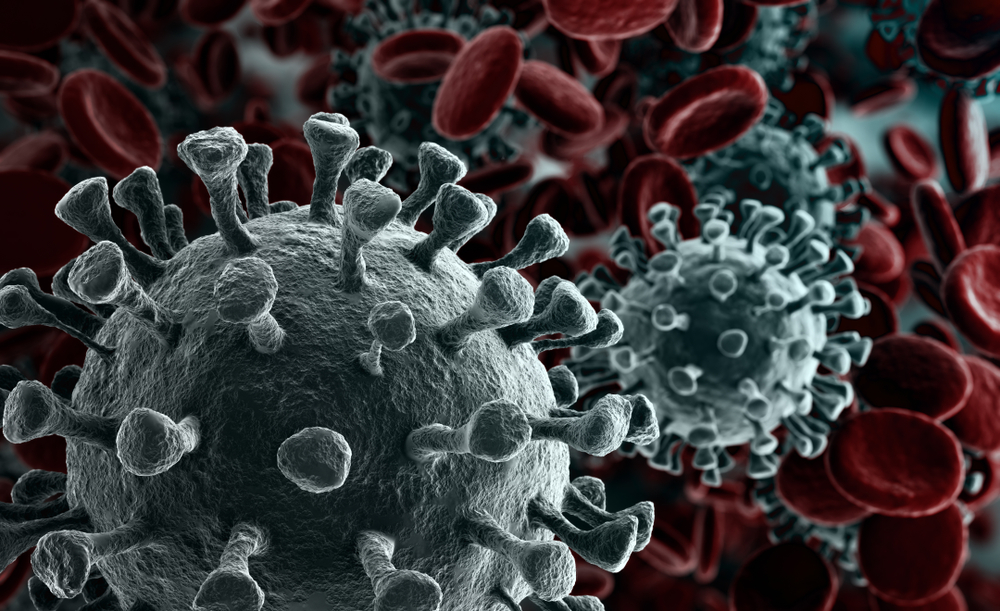
Americans love a big, dramatic metaphor. We put rockets on goals, call coffee “fuel,” and declare war on everything from weeds to wrinkles. So when a pandemic arrives, it is almost irresistible to reach for military language. We “fight” the virus. We go to the “front lines.” We “defeat” an invisible enemy. It sounds bold, urgent, and cinematic. It also gets the story wrong.
A pandemic is not a war. It is much closer to a natural disaster: a destructive event that rolls through communities, exposes weak infrastructure, punishes poor planning, and leaves a long, messy recovery behind. The virus does not hate us. It is not scheming in a bunker. It does not surrender on a battleship. It spreads because biology allows it to spread, and because human systems give it opportunities. That distinction matters more than it seems.
When leaders frame a pandemic like a war, the public starts expecting wartime drama: rapid victories, heroic speeches, villains, and maybe a flag planted on top of a flattened curve. But pandemics do not behave like that. They move in waves, not marching orders. They strain hospitals, schools, workplaces, and family life all at once. They punish delay, confusion, and magical thinking. And they demand not just courage, but boring, unglamorous competence: planning, data, ventilation, paid sick leave, vaccination, trust, childcare, backup staffing, and clear communication. In other words, fewer battle drums, more emergency checklists.
Why the war metaphor sounds strong but leads us astray
The war metaphor has one obvious advantage: it grabs attention. In the early days of a crisis, officials want people to understand that the threat is serious. “War” sounds urgent. It can motivate sacrifice. It can create a sense of common purpose. It can also flatten reality into a story that is emotionally satisfying and strategically clumsy.
War suggests an enemy with intent
Wars involve opponents that choose, plan, deceive, escalate, and negotiate. A virus does none of those things. It replicates. It mutates. It follows conditions. A hurricane is not “evil,” but it can still kill thousands. A wildfire is not a villain, but it can erase neighborhoods. A pandemic is similar. It is a biological event with social consequences, not a moral contest with a mastermind.
That matters because the language we use shapes the policies we accept. If we imagine a clever enemy attacking the homeland, we may lean too heavily toward command-and-control thinking: more forceful rhetoric, more symbolic toughness, more appetite for scapegoats. Suddenly the conversation starts sounding like a bad action movie. Who failed? Who betrayed us? Who refused to be a hero? Those questions can crowd out better ones: Which communities are most exposed? Where are the supply bottlenecks? How do we protect workers? Which messages are people actually hearing and trusting?
War language turns people into soldiers when they are really survivors
In a war story, citizens are expected to show grit, obedience, and loyalty. In a disaster, people need shelter, information, income stability, medical care, emotional support, and time. Those are not the same thing. A nurse working through a respiratory surge is not just a warrior. She is also a professional inside a stressed system that needs staffing support, protective equipment, child care, mental health resources, and rest. Calling her a hero may sound flattering, but it can become a sneaky substitute for fixing the system around her.
That is one of the great tricks of crisis language: it can make avoidable failures look noble. If hospitals overflow, schools struggle, public health staff burn out, or families lose jobs because they had no cushion, that is not proof of bravery. It is often proof that the country was underprepared. A war metaphor can cover that up with patriotic fog. A disaster framework makes the gaps harder to ignore.
Why a pandemic behaves more like a natural disaster
A disaster lens is not softer. It is sharper. It captures the real shape of the problem: a cascading emergency that tests preparedness, response capacity, community resilience, and recovery planning.
Disasters move through phases, and so do pandemics
Emergency managers do not think only about impact. They think about mitigation, preparedness, response, and recovery. That is exactly how a pandemic should be understood. Long before the first alarming headline, there is mitigation: stronger surveillance, better indoor air standards, stockpiles that are actually stocked, updated hospital plans, paid leave policies, and trustworthy communication systems. Then comes preparedness: training, simulations, staffing plans, lab capacity, school continuity plans, and supply-chain redundancy.
Once cases surge, the response phase begins: testing, triage, treatment, vaccination, masking guidance, workplace adjustments, public messaging, and support for the people most at risk. But the story does not end when the emergency curve bends downward. Recovery is not a victory parade. It is the long, uneven work of restoring learning, employment, routine medical care, mental health, trust, and institutional capacity. Anyone who lived through COVID-19 knows the credits did not roll after the first dramatic act. The sequel kept showing up uninvited.
Disasters expose weak infrastructure and old inequalities
Natural disasters do not strike “equally,” even when they hit broadly. The same flood will not affect a family with savings, insurance, flexible work, and a sturdy home in the same way it affects a family in crowded housing, hourly employment, and a neighborhood with fewer services. Pandemics work the same way. The pathogen may be biological, but the damage map is social.
That is why a pandemic looks so much like an earthquake rolling through fault lines that were already there. Communities with weaker health access, lower incomes, crowded living conditions, limited transportation, and less job flexibility absorb heavier blows. Schools in under-resourced districts have a harder time pivoting. Small businesses with no cushion wobble faster. Public health departments that were already understaffed get buried. The event is natural in origin, but the scale of suffering is shaped by policy, investment, and neglect.
Disasters do not end when the sirens stop
One of the most misleading features of the war metaphor is its obsession with decisive endings. Wars, at least in popular imagination, end with surrender, treaty, or triumph. Disasters rarely do. Recovery is patchy. Grief lingers. Systems restart unevenly. Some people return to “normal” quickly, while others remain stuck in the debris field for years.
That was true of the pandemic. The health effects did not vanish when mandates changed. The educational effects did not disappear when classrooms reopened. Delayed screenings, workforce burnout, learning loss, caregiving strain, loneliness, inflation shocks, and distrust in institutions all outlasted the most dramatic phase of the crisis. That is disaster logic, not war logic. No one holds a parade because the mold remediation crew finally arrived.
What changes when we use the right frame
If we stop treating pandemics like wars and start treating them like natural disasters, policy priorities get smarter fast.
We invest before the emergency, not just during it
War language encourages emergency mobilization after the threat is obvious. Disaster thinking starts earlier. You do not wait for a hurricane to buy every battery in the county. You harden systems before impact. For pandemics, that means sustained investment in public health staff, lab networks, school contingency plans, wastewater surveillance, hospital coordination, vaccine delivery systems, and building design that takes indoor air seriously. Preparedness is not glamorous. Neither is plumbing. Yet nobody laughs when the plumbing works.
We protect systems, not just celebrate sacrifice
In a war frame, the spotlight shines on individual heroism. In a disaster frame, the spotlight widens to system resilience. Can hospitals expand capacity without breaking their workforce? Can schools keep instruction going without pushing families into chaos? Can local governments deliver clear, consistent information in multiple languages? Can low-wage workers afford to stay home when sick? Can nursing homes, shelters, prisons, and crowded workplaces reduce transmission risk?
These are not abstract questions. They determine how much damage the next outbreak can do. A resilient society does not merely applaud exhausted people. It reduces the odds that exhaustion becomes the entire operating model.
We communicate like public servants, not wartime announcers
The war metaphor rewards certainty, confidence, and chest-thumping. Public health reality often requires humility. Guidance can change as evidence improves. Risks vary by setting. Tradeoffs are real. A disaster frame allows officials to say something that sounds less cinematic but is far more useful: “Here is what we know, here is what we do not know yet, here is what we are doing, and here is how you can reduce risk today.”
That style of communication builds trust because it treats people like adults, not extras in a propaganda reel. In a real emergency, clarity beats swagger every time. A virus does not care how forcefully a podium is pounded.
The COVID-19 years made the lesson impossible to miss
The pandemic did not just reveal a dangerous virus. It revealed the shape of modern vulnerability. Hospitals could produce astonishing acts of adaptation, yet many were stretched thin. Scientists developed vaccines with remarkable speed, yet distribution and public confidence varied. Teachers improvised. Parents improvised. Public health workers improvised. To be honest, if improvisation were an Olympic sport, the country would have medaled.
But improvisation is not the same thing as preparedness. Too many communities were forced to operate like households discovering, in the middle of a storm, that the flashlight battery was dead, the insurance binder was missing, and the basement had opinions. The most durable lesson was not that society needs better war slogans. It was that society needs stronger civic infrastructure.
That includes visible systems, like hospital readiness and emergency supply networks. It also includes invisible systems, like trust. People are more likely to follow difficult guidance when institutions have been credible, competent, and present before the crisis. Trust cannot be duct-taped onto a podium during a surge. It is built over time through fairness, transparency, and delivery.
Seen through this lens, the pandemic was not a battlefield test of national character. It was a stress test of the institutions that shape daily life. Some held. Some cracked. Some had clearly been held together with the administrative equivalent of chewing gum and hope.
Natural disaster does not mean “nobody is responsible”
There is an important caveat here. Calling a pandemic a natural disaster does not mean shrugging and saying, “Well, stuff happens.” Hurricanes are natural, but building codes still matter. Wildfires can be worsened by land management failures. Flood deaths rise when warnings are poor and evacuation plans are weak. Likewise, pandemics begin with biology, but their toll is amplified or reduced by human choices.
That is exactly why the disaster metaphor is useful. It makes room for accountability without pretending that anger alone is a response strategy. It pushes us to ask where defenses failed, which institutions lacked capacity, whose warnings were ignored, and why some communities had so little margin for error. It moves the conversation away from fantasies of conquest and toward the harder work of adaptation.
And adaptation is the right word. The goal in a pandemic is not to “win” in the movie-trailer sense. It is to reduce harm, preserve function, protect the vulnerable, communicate honestly, and recover more fairly than we responded. That may not fit on a bumper sticker as neatly as “fight back,” but it is much closer to reality.
What a better future looks like
If America wants to be ready for the next pandemic, it should think like a country preparing for recurring disasters, not a country waiting for a glorious war. That means stronger local health departments, sturdier hospital coordination, smarter buildings, clearer data systems, better leave policies, more support for caregivers, more consistent school planning, and more honest public communication. It means treating recovery as a phase that deserves investment, not as an awkward epilogue everyone is impatient to skip.
Most of all, it means understanding what a pandemic really is: not a duel, not a crusade, not a blockbuster battle between good and evil. It is a mass disruption that moves through the channels of ordinary life and tests whether a society has built enough capacity to absorb shock without abandoning people.
That is why the better metaphor is not war. It is weather, flood, fire, quake. The danger may arrive in different form, but the civic question is the same: Did we prepare? Did we protect the most vulnerable? Did we tell the truth? Did we rebuild wisely? Those are the questions that matter when the emergency is biological instead of geological.
So yes, retire the battle talk. Save it for actual battles. A pandemic does not need generals nearly as much as it needs planners, nurses, lab scientists, custodians, teachers, transit workers, social workers, logistics teams, and public servants who know how to keep a community functioning when the pressure rises. In a real disaster, the people who save the day are often the ones with clipboards, backup plans, and enough coffee to power a midsize county.
Experiences from living through a pandemic that felt more like a disaster than a war
The strongest evidence for this idea is not just academic; it is lived. Ask people what the pandemic felt like, and they rarely describe a battlefield. They describe a storm that would not move on. They remember empty grocery shelves, canceled weddings, delayed funerals, school laptops balanced on kitchen tables, and the strange exhaustion of making tiny risk calculations all day long. Is it safe to visit grandma? Can the kid go to soccer? Do I need to wipe this package, or have I officially become a raccoon with disinfectant wipes?
Many people remember the disorientation first. One week life was normal enough to complain about traffic. The next week everyone was learning epidemiology words they had never planned to use in casual conversation. Families became mini emergency operations centers. Parents ran logistics. Teenagers adapted faster than adults in some ways and struggled more in others. Grandparents became both beloved and frighteningly fragile. Everyone had a role, but nobody had the whole map.
Then came the unevenness, which is exactly what disaster survivors always talk about. Some workers shifted to video calls and sourdough experiments. Others had to show up in person every day and hope the mask supply held. Some homes had extra rooms, stable internet, and a freezer full of food. Others had crowded living spaces, uncertain income, and no buffer. A disaster never lands on a blank page. It lands on the life people already have.
There was also the emotional rhythm of a disaster: the initial adrenaline, the scramble to adapt, the brief moments of optimism, the crash of bad news, the fatigue, the anger, the weird humor, the bargaining, and the long stretch where everyone looked functional on paper while running on fumes. Communities made mutual-aid lists. Neighbors dropped groceries on porches. Teachers learned new platforms overnight. Health workers kept showing up even when they were depleted. None of that looked like conquest. It looked like people trying to hold the roof on during a storm.
And recovery, if we are honest, did not feel like “victory” either. It felt lopsided. Some routines returned quickly. Other losses stayed put. Children carried educational and social disruptions forward. Workers changed careers. Families kept empty chairs at holiday tables. People discovered that survival and restoration are not the same thing. That is the language of flood zones, wildfire towns, and earthquake regions. It is also the language of a pandemic.
That is why the natural-disaster frame resonates so deeply. It sounds less flashy, but it matches what people actually endured: disruption, displacement, improvisation, grief, resilience, and rebuilding. Not war. Weather with consequences. Biology with a social blast radius. A crisis that reminded us, sometimes brutally, that resilience is not a personality trait. It is a public investment.