Some people write letters to their future selves. Some journal to understand their past selves. And some of us, apparently, want to send a quick “Hey, did you buy Bitcoin?” to a version of ourselves in a parallel universe. Ambitious? Absolutely. Scientifically proven? Not even close. Fun to explore? Oh, extremely.
The idea of contacting yourself in a parallel universe sits at the deliciously weird intersection of physics, philosophy, science fiction, and late-night “what if?” thinking. Modern science does not offer a working phone number for Alternate You. There is no verified multiverse mailbox, no quantum customer service desk, and sadly no “press 4 to speak with the version of yourself who became a marine biologist.”
Still, the question is worth exploring because real scientific ideas do brush against it: cosmic inflation, many-worlds quantum mechanics, wormholes, black holes, quantum entanglement, and the simulation hypothesis. None of these currently prove that parallel-universe communication is possible. But each gives us a different way to imagine what “contact” might mean if reality is bigger, stranger, and less emotionally prepared than we are.
Below are eight possibilitiesranked not as instructions, but as thoughtful, science-inspired scenarios. Think of this as a guided tour through the multiverse with a helmet, a flashlight, and a healthy respect for the fact that physics does not care about our dramatic needs.
First, What Do We Mean by a Parallel Universe?
A parallel universe is usually imagined as another reality existing alongside ours. In pop culture, it is often a place where tiny choices made history different: you took the job, moved to Seattle, learned the banjo, or never cut your own bangs during a stressful week. In science, the idea is more complicated.
Cosmologists sometimes discuss a multiverse that could arise from cosmic inflation, the rapid expansion thought to have occurred in the early universe. In some models, inflation may produce separate “bubble universes,” each with different conditions. Quantum physicists also debate the many-worlds interpretation, which suggests that all possible outcomes of quantum events may exist in branching realities. Meanwhile, theoretical physics allows mathematical structures such as wormholes, though there is no evidence that human-scale wormhole travelor messagingis possible.
So, when we talk about contacting yourself in a parallel universe, we might mean several things: sending information to another cosmic bubble, detecting another quantum branch, communicating through spacetime geometry, or symbolically connecting with the version of yourself that could have existed. Some are physics-adjacent. Some are philosophical. Some are basically science fiction wearing a lab coat it borrowed from a responsible adult.
How to Contact Yourself in a Parallel Universe: 8 Possibilities
1. Quantum Branch Messaging: The Many-Worlds Daydream
The many-worlds interpretation of quantum mechanics proposes that the wavefunction never collapses into one outcome. Instead, all possible outcomes continue in different branches. Under this view, there may be countless versions of you experiencing different results of quantum events. One version drinks tea. One spills it. One invents a spill-proof mug and becomes wildly annoying about it at parties.
Could you message another branch? Today, science says no. Once branches decoheremeaning they stop interacting in any meaningful waythey appear separated from each other. That separation is not like two rooms divided by drywall. It is more like two histories becoming mutually inaccessible.
However, as a possibility, quantum branch messaging is fascinating. If a future theory discovered a way to reverse decoherence or make branches interfere again, a “message” might look less like an email and more like a statistical fingerprint. You might not receive words from Alternate You, but you could detect patterns that suggest another branch influenced the probability of events here.
Example: imagine running an ultra-sensitive quantum experiment in which outcomes should be random. If another branch somehow interacted with ours, the randomness might show a tiny, repeatable bias. That bias would not say, “Hi, it’s me, you with better posture,” but it could hint that reality is not as isolated as it seems.
Current likelihood: deeply speculative. Best use: science fiction, philosophy, and appreciating how weird quantum mechanics already is without giving it extra coffee.
2. Entanglement Signals: The Tempting but Blocked Shortcut
Quantum entanglement is one of the most famous “spooky” ideas in physics. Two particles can be linked so that measuring one tells you something about the other, even when they are far apart. Naturally, people wonder whether entanglement could be used to send messages across space, time, or parallel realities.
The problem is that quantum entanglement does not allow controllable faster-than-light communication. The measurement results are correlated, but you cannot force your particle to produce a chosen outcome and thereby send a message. It is like having two magic coins that always match in a strange way, but neither person can decide whether their coin lands heads or tails. Very mysterious. Very useless for texting.
If parallel universes are connected by quantum relationships, entanglement might be part of the deeper structure. But using it to contact another self would require physics beyond what we currently know. The no-signaling principle protects causality, which is physics’ way of saying, “Please do not break the timeline; I just cleaned up.”
Still, a speculative version of this idea could involve searching for unexplained correlations between systems that should not be correlated. If researchers ever found repeatable, controlled correlations that violated known limits, that would be revolutionary. Until then, entanglement remains a powerful scientific tool, not a multiverse walkie-talkie.
Current likelihood: not supported by known physics. Best use: understanding why the universe is strange but not conveniently strange.
3. Wormhole Mail: The Einstein-Rosen Bridge Fantasy
Wormholes are theoretical shortcuts through spacetime. In popular imagination, they are cosmic tunnels where you enter here, exit somewhere else, and try not to arrive inside a star because that would ruin the weekend. Some versions of wormhole theory connect distant regions of space. Others have been imagined as links between universes.
If a traversable wormhole connected our universe to another, contacting yourself might be as simple as sending a probe, laser pulse, radio signal, or extremely polite handwritten note through the throat of the wormhole. “Dear Parallel Me, please confirm whether pineapple pizza caused the 2030 diplomatic crisis.”
But there are major obstacles. The original Einstein-Rosen bridge is not considered a stable, traversable portal. Theoretical traversable wormholes often require exotic matter with negative energy density to hold them open, and we have no evidence that macroscopic wormholes exist. Even if one existed, aiming it at your own parallel counterpart would require technology so advanced it makes today’s smartphones look like decorative rocks.
In a realistic science-based article, wormhole communication belongs in the “mathematically intriguing, experimentally unproven” category. It is one of the most visually appealing possibilities, but also one of the most physically demanding.
Current likelihood: extremely speculative. Best use: cinematic portals, theoretical physics debates, and making whiteboards look dramatic.
4. Cosmic Bubble Detection: Listening for Universe Collisions
Some multiverse models suggest that our universe may be one bubble among many produced by eternal inflation. If another bubble universe formed near ours in the early cosmic past, the two might have interacted or collided, leaving subtle traces in the cosmic microwave backgroundthe ancient afterglow of the Big Bang.
This is not “contact” in the personal sense. You would not hear Alternate You complain about taxes. But it could be a kind of cosmic-level contact: evidence that another universe touched ours. Scientists have searched for unusual patterns in the cosmic microwave background that might match such scenarios, though no definitive proof of bubble collisions has been confirmed.
If this possibility ever became real, it would not help you chat with a parallel version of yourself. It would tell humanity something much bigger: our universe may not be the whole show. That discovery would be like opening a closet and finding not shoes, but an infinite number of other closets, all with different laws of physics and possibly better storage systems.
The best “message” from another universe in this model would be observational, not conversational. It might appear as a strange circular imprint, a temperature anomaly, or a pattern in ancient light. That is less romantic than a letter from Alternate You, but scientifically far more credible.
Current likelihood: possible in some models, unproven observationally. Best use: cosmology, telescopes, and humbling everyone at dinner.
5. Black Hole Echoes: A Message Through Extreme Gravity
Black holes are where our best theories start sweating. General relativity describes gravity and spacetime beautifully on large scales. Quantum mechanics rules the tiny world. Near black holes, both theories matter, and physicists are still working to reconcile them.
Some speculative ideas suggest black holes could be connected to baby universes or could preserve information in ways we do not yet understand. If universes can emerge from black-hole interiors, then perhaps a connection between parent and child universes exists at a deep physical level. This is not proven, but it has inspired serious discussion.
Could you send a message into a black hole and have it reach another universe? The short answer is: please do not throw your laptop into a black hole. The longer answer is that anything crossing an event horizon cannot send a signal back to us under standard physics. From our side, black holes are not convenient mailboxes. They are more like one-way cosmic filing cabinets with terrifying gravity.
However, “black hole echoes” as a possibility could mean looking for indirect evidence that information is not destroyed. Future gravitational-wave astronomy might reveal unexpected patterns in black-hole mergers. Those patterns would not be personal messages, but they might teach us whether spacetime has hidden structure connecting regions or realities.
Current likelihood: highly theoretical. Best use: exploring quantum gravity and resisting the urge to use black holes as customer support portals.
6. Simulation Backchannel: Contacting the System Administrator
The simulation hypothesis asks whether our reality could be a sophisticated computational environment created by advanced intelligence. It is not the same thing as the multiverse, but it can overlap with parallel-universe ideas. If simulations can be copied, branched, paused, or rewound, then there might be multiple versions of you running in different simulated timelines.
In that scenario, contacting yourself in a parallel universe might mean exploiting a backchannel in the simulation. Maybe there are glitches. Maybe there are shared memory structures. Maybe the version of you in Universe 47-B keeps leaving sticky notes in the cosmic source code. Very rude, but efficient.
From a scientific standpoint, this remains speculative and philosophical. The simulation argument does not prove we are simulated; it presents a reasoning framework about what might be likely if advanced civilizations can create many conscious simulations. Even if we were in a simulation, we do not know that communication between simulated branches would be possible.
Still, the simulation backchannel is useful as a thought experiment. It reframes “parallel universe” as “parallel computation.” If reality is information-based, then contact might not require wormholes or faster-than-light travel. It might require access permissions. Unfortunately, most of us cannot even remember our streaming passwords, so administrator-level cosmic access may be ambitious.
Current likelihood: philosophical and unverified. Best use: asking big questions about consciousness, computation, and whether déjà vu is just poor rendering.
7. Dream, Memory, and Intuition Contact: The Inner Multiverse
Not every version of “contact” has to be physical. Human imagination constantly simulates alternate selves. You can picture the version of you who moved to another city, ended a relationship sooner, started a business, became a musician, or did not send that one text. The brain is a powerful alternate-reality engine, although it also occasionally forgets why you walked into the kitchen.
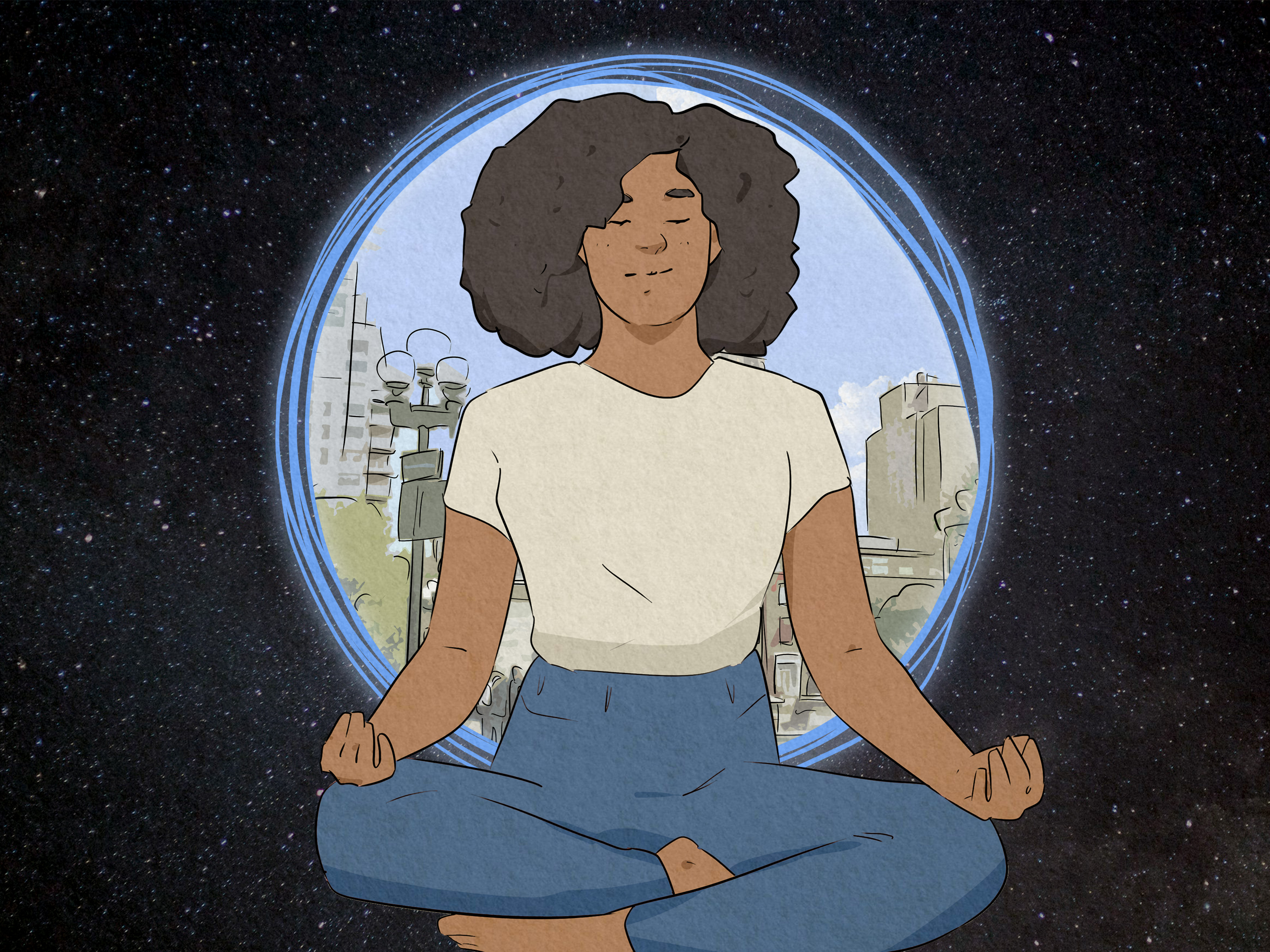
Dreams, journaling, meditation, and creative visualization can feel like contacting another self. Scientifically, these experiences are best understood through psychology, memory, emotion, and imaginationnot literal multiverse communication. But they can still be meaningful. The “parallel self” you meet in a dream may represent unchosen possibilities, unresolved questions, or values you have ignored.
For example, someone wondering whether to change careers might imagine speaking with two versions of themselves: one who stayed safe and one who took the leap. Neither version needs to physically exist for the conversation to reveal something useful. The brain can model consequences, fears, hopes, and identities in story form.
This is the most practical possibility on the list. You are not contacting a proven external parallel universe, but you are contacting your internal map of possible lives. And sometimes that is exactly what people are really seeking: not a message from another dimension, but permission from a braver version of themselves.
Current likelihood: psychologically real, physically unproven. Best use: self-reflection, creative writing, decision-making, and politely interrogating your own life choices.
8. Future-Branch Messaging: Contact Through the Choices You Make Now
If many-worlds is true, every choice may correspond to branching futures. You may not be able to contact a parallel version of yourself after the branch separates, but you can influence which future versions of you come into existence from this moment forward. That may be the closest thing to practical multiverse communication.
Think of your present actions as messages to future branches. Saving money is a message to Future You: “I tried.” Learning a skill is a message: “Here, have options.” Apologizing is a message: “Let’s not drag this emotional furniture forever.” Even drinking water is a message, although usually a boring but necessary one.
This possibility turns the question around. Instead of asking, “How do I contact myself in another universe?” ask, “What message am I sending to the future versions of myself created by today’s decisions?” You may not control the whole multiverse, but you do shape the probability landscape of your life.
For instance, if you want a future branch where you are healthier, more skilled, or less overwhelmed, the message is not mystical. It is behavioral. You send it by changing routines, environments, relationships, and habits. The receiver is a later version of you who either thanks you or wonders why you left them seven browser tabs and no plan.
Current likelihood: philosophically powerful and practically useful. Best use: personal growth disguised as cosmic strategy.
Why Contacting a Parallel Self Is Probably Not Possible Today
The biggest obstacle is not lack of imagination. Humanity has plenty of imagination. We invented both space telescopes and cheese in a can, proving our range is impressive. The obstacle is physics.
Known physical laws do not give us a confirmed pathway to send information between quantum branches, bubble universes, or separate realities. Entanglement cannot be used for controllable faster-than-light messaging. Wormholes remain theoretical and likely unstable unless exotic conditions exist. Bubble universes, if real, may be permanently beyond our observable horizon. Black holes do not currently function as interdimensional post offices. And the simulation hypothesis, while fascinating, does not provide testable instructions for contacting other simulated selves.
That does not make the topic worthless. Speculative questions often help people understand real science. Asking how to contact a parallel self leads naturally to quantum decoherence, causality, cosmic inflation, spacetime geometry, information theory, and consciousness. In other words, the question is a glitter cannon pointed at some of the deepest problems in modern thought.
What Would Count as Evidence?
If parallel-universe contact were ever claimed, scientists would need evidence that is repeatable, measurable, and not better explained by ordinary causes. A dream would not be enough. A coincidence would not be enough. Even a strange quantum result would require careful testing, peer review, and independent replication.
Possible evidence might include a verified signal that violates known communication limits, a repeatable anomaly in quantum experiments, observational signs of another cosmic bubble, or a new theory that makes predictions no existing theory can explain. Extraordinary claims need extraordinary evidence because ordinary explanations are sneaky little raccoons. They get into everything.
Experiences Related to Contacting Yourself in a Parallel Universe
The most relatable experience connected to this topic is not standing before a glowing portal. It is the quiet feeling that another version of your life is close enough to sense but too far away to touch. Most people know this feeling. You see an old photo, pass a former workplace, hear a song from a specific year, or imagine what might have happened if you had made one different choice. Suddenly, the “parallel universe” does not feel like a physics concept. It feels like a room in your own mind.
One common experience is the alternate-career fantasy. Maybe you are working in marketing, but part of you wonders about the version who became a chef, a scientist, a teacher, a filmmaker, or a person who raises goats in Vermont and somehow makes it look profitable on Instagram. This is not evidence of a literal alternate universe. But it is evidence that the self is not a single frozen object. It is a collection of potentials shaped by opportunity, courage, timing, and occasionally questionable Wi-Fi.
Another experience is déjà vu. People often describe it as feeling like they have already lived a moment before. Science generally explains déjà vu through memory processing, attention, and brain timingnot parallel timelines overlapping. Still, the emotional texture of déjà vu makes it easy to understand why parallel-universe ideas are so compelling. For a second, reality seems to wink at you. It does not hand you proof, but it does hand you goosebumps.
Dreams can create a similar impression. In dreams, you may meet versions of yourself who are younger, older, braver, colder, happier, or living in places you have never visited. These dream selves can feel independent, as if they arrived from another branch of existence carrying urgent news and terrible fashion choices. Psychologically, they may represent memory fragments, desires, fears, or unfinished decisions. Practically, they can still be useful. If a dream version of you says, “Stop ignoring your art,” the message may be worth hearing even if it did not arrive through a wormhole.
Journaling is perhaps the safest and most effective “parallel self contact” method available. Write a letter to the version of you who made a different choice. Ask what they gained and what they lost. Then write back as that person. The exercise can reveal hidden assumptions. Maybe the successful alternate self is lonely. Maybe the cautious alternate self is peaceful. Maybe the adventurous alternate self is exhausted but proud. Each imagined reply helps you understand the trade-offs inside your own life.
People also experience parallel-self moments during major decisions. Before a move, breakup, marriage, business launch, or career shift, the future seems to split into branches. You can almost feel multiple versions of yourself waiting ahead. One says, “Be careful.” Another says, “Go.” Another says, “Please label the moving boxes this time.” In these moments, contacting your parallel self means listening carefully to the values behind each possible future.
The best experience-based lesson is simple: even if you cannot contact a literal parallel-universe self, you can use the idea to live more intentionally. Ask what your best future branch needs from you today. Ask what your neglected self has been trying to say. Ask which version of you would be proud of the next small action. That may not open a portal, but it can open a pathand unlike wormholes, paths are known to exist.
Conclusion: The Multiverse Has No Inbox, But the Question Still Matters
So, how do you contact yourself in a parallel universe? With current science, you probably do notat least not literally. There is no verified method to send a message across quantum branches, bubble universes, wormholes, black-hole interiors, or simulated timelines. The strongest scientific answer is honest: parallel-universe communication remains speculative.
But the question opens a remarkable door. It lets us explore real ideas in physics while also asking deeply human questions about identity, regret, possibility, and choice. The multiverse may or may not contain another you. But this universe definitely contains you, right now, making decisions that shape the versions of yourself still to come.
If Alternate You exists, perhaps they are wondering about you too. Perhaps they are trying to send a message. Or perhaps they are simply hoping that, in at least one universe, you finally clean your inbox, drink enough water, and stop arguing with strangers in comment sections. A noble dream, across all realities.
Note: This article treats parallel-universe contact as a speculative thought experiment informed by real physics concepts. It should not be read as proof that parallel universes can be contacted or that dreams, coincidences, or intuition are verified messages from another reality.