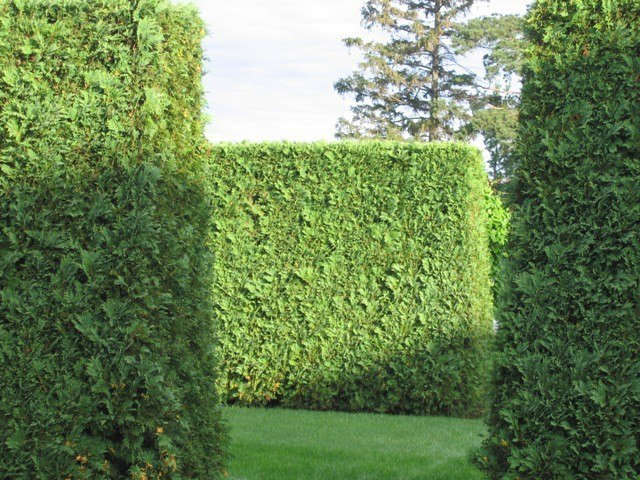
Deborah Nevins and Associates Inc. is one of those landscape design names that makes architects, garden lovers, museum directors, and people who own suspiciously perfect hedges sit up a little straighter. Officially known as Deborah Nevins & Associates, the New York City-based landscape design firm has built its reputation on elegant gardens, cultural landscapes, green roofs, sculpture-friendly grounds, and outdoor spaces that do something harder than merely look expensive: they make architecture feel settled, human, and alive.
In a design world that sometimes treats landscaping like the decorative parsley on the edge of a dinner plate, Deborah Nevins and Associates Inc. takes the opposite view. The landscape is not an afterthought. It is the room before the room, the breath between buildings, the patient green host that quietly tells visitors where to walk, where to pause, and where to say, “Wait, why does this place feel so calm?”
The firm’s work stretches from private estates in the United States to major cultural projects abroad, including the Stavros Niarchos Foundation Cultural Center and Park in Athens, the Museum of Fine Arts, Houston campus landscape, and the Pritzker Garden at the Art Institute of Chicago. Its portfolio shows a consistent belief: a garden should not shout over the building, but it also should not mumble into the mulch.
Who Is Deborah Nevins?
Deborah Nevins is an American landscape designer, founder, and president of Deborah Nevins & Associates. She is also associated with Nevins & Benito Landscape Architecture, a practice connected to larger institutional and civic-scale projects. Her career is especially interesting because it blends garden history, architectural thinking, horticultural knowledge, and a sharp eye for spatial drama.
Before becoming known for monumental hedges, museum landscapes, and refined plant compositions, Nevins studied architectural history. That background matters. Her gardens often read less like plant collections and more like outdoor architecture made of hornbeam, grass, stone, shadow, and time. A hedge, in this vocabulary, is not just a hedge. It is a wall with chlorophyll. A lawn is not just a lawn. It is a carpet that needs sun, soil, discipline, and someone willing to argue politely with deer.
Design publications have often described Nevins’s work as elegant, structured, and deeply responsive to the character of the site. Her own approach is famously rooted in space first. Flowers may arrive later, wearing their bright little outfits, but the bones of the garden come first: sight lines, scale, circulation, enclosure, contrast, and proportion.
What Makes Deborah Nevins and Associates Inc. Distinctive?
1. Harmony Between Building and Landscape
One of the firm’s central ideas is that the landscape should be in harmony with the building. That sounds simple, like “drink water” or “don’t plant a giant tree three inches from your foundation,” but in practice it is demanding. Buildings have geometry, rhythm, materials, entrances, shadows, and moods. A landscape that ignores those details can make even a beautiful house look like it crash-landed in a shrubbery convention.
Deborah Nevins and Associates Inc. tends to design landscapes that extend the logic of architecture. A path may reinforce a doorway. A hedge may frame a view. A tree canopy may soften a facade. A sculpture may become part of a walking sequence rather than a lonely object abandoned on a lawn like it missed the bus.
2. Sophisticated Planting Design
The firm is known for sophisticated use of plants across climates and contexts. That means plantings are selected not just for color, but for structure, resilience, texture, seasonality, and ecological fit. In a well-designed Nevins landscape, plants are not random guests. They are cast members with roles, entrances, exits, and sometimes dramatic winter silhouettes.
This sophistication is especially visible in the firm’s treatment of hedges and garden rooms. Hedges organize space, create privacy, provide wind protection, and give the garden a sense of ceremony. They can also hide the less glamorous truths of outdoor life, such as utility areas, deer fencing, and the neighbor’s trampoline that looks as if it was installed by a tornado.
3. Sustainability Without the Lecture Voice
Deborah Nevins and Associates Inc. has emphasized sustainable landscape design through ease of maintenance, functionality, safety, accessibility, indigenous plant communities, and sensitivity to fragile natural environments. This is sustainability in the practical sense: landscapes should perform well, age well, conserve resources where possible, and work with the ecology rather than acting like the local climate is merely a rude suggestion.
In coastal, wetland, protected, and arid environments, sustainable design requires more than good intentions. It requires soil knowledge, water strategy, plant expertise, maintenance planning, and collaboration with specialists. The firm’s projects often involve coordination among architects, engineers, arborists, irrigation professionals, soil experts, contractors, and maintenance teams. In other words, a great garden is rarely the work of one genius with a shovel. It is a small orchestra, and someone has to keep the tubas out of the rose beds.
Major Projects by Deborah Nevins and Associates Inc.
Stavros Niarchos Foundation Cultural Center and Park, Athens
The Stavros Niarchos Foundation Cultural Center and Park is one of the most important public projects associated with Deborah Nevins and Associates Inc. Designed with Renzo Piano Building Workshop, the project transformed a former Olympic parking area in Athens into a major cultural destination housing the National Library of Greece and the Greek National Opera. The park is not decorative fringe; it occupies a dominant portion of the site and functions as a living Mediterranean landscape.
From 2008 to 2016, the firm designed and oversaw implementation of the landscape at the 40-acre park. The planting strategy included thousands of trees, shrubs, perennials, and grasses, creating a regional garden that is both civic and ecological. The project’s green roof and landscape merge with the architecture, making the building and park feel like one continuous experience rather than two separate design departments forced to shake hands at the ribbon cutting.
The result is a landscape that carries cultural symbolism as well as environmental purpose. It offers shade, movement, gathering space, views, and a plant palette tied to the nature of the region. For visitors, the experience is not simply “go to a building.” It is “move through a cultivated terrain that prepares you for culture.” That is landscape architecture doing its job with a good posture and excellent shoes.
Museum of Fine Arts, Houston
At the Museum of Fine Arts, Houston, Deborah Nevins and Associates Inc., working with Nevins & Benito Landscape Architecture, helped create a cohesive landscape for the redeveloped campus. The challenge was significant. The campus includes a century of architecture, new buildings by Steven Holl Architects, midcentury structures by Mies van der Rohe, and Isamu Noguchi’s Cullen Sculpture Garden. That is not a casual design puzzle. That is a dinner party where every guest is famous and half of them have strong opinions about concrete.
The landscape had to connect old and new, art and city, galleries and plazas. The Glassell School of Art, completed in 2018, and the Nancy and Rich Kinder Building, completed in 2020, needed outdoor spaces that would not compete with the architecture but would make the campus easier to understand and more pleasurable to use.
Good museum landscapes do more than provide somewhere to sit while deciding whether you are emotionally ready for another gallery. They shape arrival, soften transitions, support public life, and create moments of decompression. The MFAH landscape demonstrates how planting, water, pavement, trees, sculpture, and pedestrian movement can knit a complex institution into a more legible whole.
Pritzker Garden at the Art Institute of Chicago
Deborah Nevins and Associates Inc. also designed the Pritzker Garden in the Renzo Piano-designed Modern Wing at the Art Institute of Chicago. This project reflects a recurring pattern in the firm’s work: collaboration with major architects and cultural institutions where the landscape must be restrained, precise, and memorable.
In museum settings, restraint is not weakness. It is discipline. The garden must support art and architecture without trying to become the loudest object in the room. A successful museum garden gives visitors a visual pause, a change in light, and a shift in pace. It becomes part of the museum experience, not a decorative lobby plant scaled up to civic size.
Residential Gardens and Private Estates
The firm’s residential work includes gardens and estates throughout the United States, the Caribbean, and Europe. These projects range from large private properties to more intimate outdoor rooms. In East Hampton, for example, the firm’s approach to a two-acre property emphasized contrast between cultivated precinct and surrounding woodland. That contrast is a classic Nevins move: create order, then let wildness sharpen it.
In residential work, the firm often uses hedges, allées, lawns, framed views, terraces, and carefully selected trees to create a sense of place. The result is not “landscaping” in the quick-service sense. It is outdoor architecture that helps a house belong to its site. The best examples feel inevitable, as if the garden had been quietly waiting for someone to notice its plan.
The Design Language: Hedges, Rooms, Views, and Restraint
If Deborah Nevins and Associates Inc. had a design vocabulary, several words would appear in bold: structure, harmony, enclosure, ecology, proportion, and restraint. The firm’s gardens often rely on strong spatial organization. Hedges form rooms. Paths establish sequences. Trees anchor views. Planting masses shape atmosphere.
This is different from the “one of everything” style of gardening, where a yard becomes a botanical garage sale. Nevins’s work suggests that fewer gestures, made with confidence, can create stronger experiences. A clipped hedge, a gravel path, a mature oak, a clean lawn, and a precisely placed bench may do more than a dozen competing flower beds all auditioning for attention.
That does not mean the work is cold. On the contrary, the contrast between structure and softness is where much of the beauty lives. A tight hedge can make loose perennials feel more generous. A formal walk can make meadow planting feel more natural. A wild edge can make a tailored garden room feel more civilized. Great gardens understand tension. So do great dinner conversations, but gardens rarely interrupt you.
Why the Firm Matters in Contemporary Landscape Design
Deborah Nevins and Associates Inc. matters because it represents a mature, deeply architectural approach to landscape design at a time when outdoor space is more important than ever. Climate, biodiversity, stormwater, urban heat, cultural programming, wellness, and public access have pushed landscape architecture into the center of serious design conversations.
The firm’s work also reminds homeowners and institutions that beauty and performance are not enemies. A landscape can be elegant and ecologically aware. It can be formal and biodiverse. It can frame art and still support everyday use. It can look effortless while secretly requiring spreadsheets, soil tests, irrigation diagrams, nursery coordination, and a maintenance plan with more plot twists than a mystery novel.
For private clients, the lesson is clear: outdoor space should be designed with the same intelligence as interior space. For museums and cultural institutions, the lesson is broader: landscape can shape civic identity, visitor experience, and environmental responsibility. For designers, the lesson may be the most useful of all: start with space, respect the site, collaborate early, and never underestimate the emotional power of a well-placed tree.
Practical Lessons Homeowners Can Learn from Deborah Nevins and Associates Inc.
Think in Outdoor Rooms
Instead of asking, “Where should I put plants?” ask, “What spaces should this garden create?” A dining terrace, a shaded reading corner, a lawn for children, a quiet path, or a framed view can guide the design. Plants then become tools for shaping experience, not just colorful objects to collect.
Use Structure Before Decoration
Good bones matter outdoors. Hedges, walls, trees, paths, and grade changes provide structure that lasts beyond one blooming season. Flowers are wonderful, but they should not carry the entire design on their delicate little petals. That is too much pressure for a peony.
Respect the Site
Climate, soil, drainage, existing trees, wind, sunlight, and local ecology should influence every design decision. A garden that fights its site will eventually lose, and the site will not even apologize. Working with native and adapted plants, protecting mature trees, and planning for water use can make a landscape more beautiful and more durable.
Coordinate Early
One of the firm’s strengths is collaboration from the beginning of a project. Homeowners can learn from that. Landscape design should not wait until the house is finished, the budget is tired, and everyone is pretending gravel is a concept. Early coordination between architects, builders, landscape designers, engineers, and maintenance teams leads to better results.
Experience Section: Living With the Ideas Behind Deborah Nevins and Associates Inc.
Spending time in a landscape inspired by the principles associated with Deborah Nevins and Associates Inc. changes how you notice outdoor space. At first, you may see the obvious elements: the hedge, the path, the tree, the terrace, the view. But after a while, the subtler experiences begin to surface. You notice how the path slows your pace before a doorway. You notice how a clipped hedge makes a wild tree canopy feel even wilder. You notice that the most peaceful part of the garden may not be the most colorful one, but the one with the clearest sense of enclosure.
That is one of the great experiences of thoughtful landscape design: it teaches attention. A casual yard may ask very little of you. A carefully composed garden asks you to look again. It might guide you from open lawn to shaded walk, from gravel court to flowering border, from house to horizon. The experience becomes sequential, almost cinematic. You do not simply stand in the garden. You move through it, and the garden edits what you see.
In a home setting, these ideas can make everyday life feel more grounded. Morning coffee on a terrace becomes more pleasant when the view is framed by trees rather than a random lineup of trash bins and confused shrubs. A family dinner outdoors feels more intimate when hedges or planting masses provide a sense of room. Even a small garden can feel larger when it is organized into moments: arrival, pause, transition, destination.
In a public setting, the experience is broader. A museum landscape or cultural park must serve people who arrive with different needs. Some want shade. Some want a route. Some want a place to sit. Some want to take a photo that says, “I am cultured, but casually.” Good landscape design accommodates these uses without making the space feel like an instruction manual. The design works quietly, guiding people through comfort, proportion, and visual clarity.
There is also an emotional experience tied to restraint. Many people assume luxury means more: more plants, more features, more paving patterns, more outdoor furniture, more fountains doing their splashy little performances. But refined landscape design often proves the opposite. Luxury may be a single mature tree preserved with care. It may be a long view kept open. It may be a hedge clipped with discipline, a path laid with precision, or a native planting that looks effortless because someone made hundreds of intelligent decisions before the first shovel hit soil.
For homeowners, the most useful experience is realizing that a garden is never truly finished. It grows, edits itself, rebels, matures, and occasionally stages a small uprising in the form of weeds. The best landscapes are designed with time in mind. Trees gain authority. Hedges thicken. Perennials shift. Stone weathers. A garden designed with strong structure can absorb change gracefully. That may be the most practical lesson connected to the work of Deborah Nevins and Associates Inc.: design for beauty today, but also for the richer beauty that arrives later.
Conclusion
Deborah Nevins and Associates Inc. stands out because it treats landscape as a serious design discipline: architectural, ecological, emotional, and cultural all at once. From the Stavros Niarchos Foundation Cultural Center and Park in Athens to the Museum of Fine Arts, Houston and refined private gardens, the firm’s work shows how outdoor spaces can organize experience, strengthen architecture, and deepen a site’s identity.
The most memorable lesson is not that every garden needs a monumental hedge, although honestly, a good hedge does have main-character energy. The real lesson is that landscapes matter. They shape how we arrive, gather, rest, look, and remember. When designed with intelligence and restraint, a garden becomes more than scenery. It becomes part of how a place thinks.
Note: This article is written as original, web-ready content based on synthesized public information about Deborah Nevins & Associates, its design approach, and its widely published projects. No source-link markup has been inserted into the publishable article body.