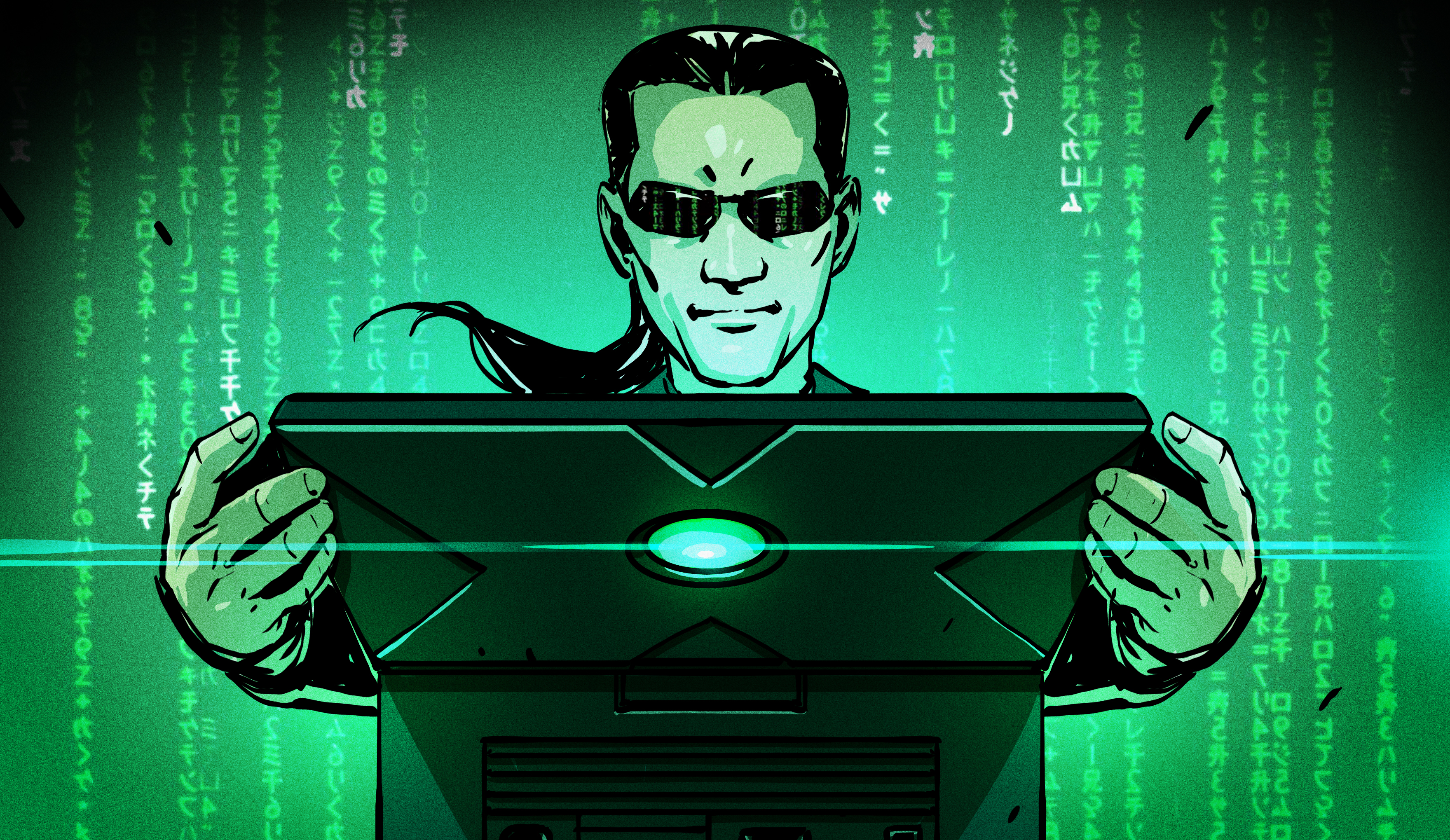
The original Xbox looked like a black plastic coffee table, sounded like a tiny jet engine when it was annoyed, and arrived in 2001 with one very bold promise: Microsoft was going to turn the living room into a gaming battlefield. What Microsoft probably did not expect was that the console would also become one of the most famous playgrounds in hardware reverse engineering.
The story of how the Xbox was hacked is not just about piracy, modchips, or teenagers with soldering irons and suspiciously strong opinions about Linux. It is a bigger story about ownership, security design, curiosity, homebrew software, and what happens when a mass-market game console is secretly a very capable little PC in a chunky costume.
To be clear, this article is a historical and educational overview. It explains the major ideas behind the original Xbox hack without turning into a step-by-step guide. Think of it as a museum tour, not a lock-picking class.
The Xbox Was Basically a PC Wearing Console Shoes
When Microsoft released the original Xbox in North America on November 15, 2001, it entered a console war dominated by Sony’s PlayStation 2 and Nintendo’s GameCube. Unlike many consoles built around highly customized architectures, the Xbox leaned heavily on familiar PC-style parts. It used an Intel-based processor, NVIDIA graphics technology, a hard drive, Ethernet, DVD media, and a software environment tied closely to Microsoft’s DirectX heritage.
That design made the Xbox powerful and developer-friendly. It also made hackers drool like someone had left pizza unattended at a LAN party. Here was a relatively cheap box with enough muscle to run games, media software, emulators, and even desktop operating systems. The only problem was that Microsoft had locked it down.
The company’s business logic made sense. Consoles were often sold at slim margins or losses, with profits expected from licensed games and accessories. If people could buy the hardware cheaply and run whatever they wanted, Microsoft’s carefully controlled ecosystem would wobble like a badly installed entertainment center.
Microsoft’s Security Plan: Let Only Approved Code Run
The original Xbox security system was designed to prevent unauthorized software from booting. Microsoft wanted the console to run approved games and signed executables, not random programs from hobbyists, Linux fans, or the neighbor who says he “knows computers” because he once fixed a printer.
At a high level, the Xbox relied on a chain of trust. During startup, early boot code helped verify later code before the machine fully loaded the dashboard or a game. The goal was simple: if the code was not properly authorized, the Xbox should reject it.
That sounded solid in theory. In practice, hardware security is brutal. A console sitting in someone’s bedroom is not like a cloud server locked in a data center. Owners can open the case, inspect the board, watch electrical behavior, replace components, and try again after failure. Physical access changes the game completely.
The Hackers Had the One Thing Microsoft Could Not Patch: The Console
The key insight behind the Xbox hack was not that Microsoft forgot security entirely. It was that the console’s security model had to survive hostile ownership. Hackers owned the machines. They could buy multiple units, break one, learn from it, and try again. That kind of persistence is a nightmare for embedded hardware protection.
Andrew “bunnie” Huang, then an MIT graduate student, became one of the best-known figures in the Xbox hacking story. His book, Hacking the Xbox: An Introduction to Reverse Engineering, documented the process and framed it as a lesson in hardware exploration, cryptography, intellectual property, and the uneasy boundary between curiosity and law.
The research showed that the Xbox security system had weaknesses in how secrets and boot processes were protected. Hackers studied the motherboard, memory behavior, firmware, and boot sequence to understand how the console decided what was allowed to run. The details were deeply technical, but the broad lesson was simple: security secrets are not very secret if a determined researcher can observe where and how the system uses them.
Modchips: The Hardware Shortcut
One of the earliest and most famous ways to modify the Xbox involved modchips. A modchip is a small add-on board that changes how a console boots. In the Xbox scene, these chips could redirect or replace parts of the startup process so the machine would load unofficial firmware or dashboards.
For homebrew enthusiasts, modchips were the golden ticket. They made it possible to run custom dashboards, media applications, emulators, Linux distributions, and utilities that Microsoft never approved. For Microsoft, they were a giant flashing warning sign. The same freedom that allowed legal tinkering could also enable copyright infringement, including copied games.
That dual-use problem haunted the Xbox scene from the beginning. Many hobbyists genuinely wanted to experiment, preserve old software, or turn the console into a living-room media center. Others wanted free games. The hardware did not know the difference, and the law often struggled to tell the difference cleanly.
Xbox Linux: The Console Became a Computer
The Xbox Linux Project became one of the most important chapters in this story. The project’s goal was straightforward but rebellious: run GNU/Linux on the Xbox and use the console as a regular computer. Considering the Xbox had a hard drive, Ethernet, USB-like controller ports, and PC-style architecture, the idea was not fantasy. It was more like Microsoft had accidentally sold a locked mini-PC with a giant X on top.
By 2002, the Xbox Linux community had major milestones. Developers managed early kernel boots, graphical environments, and bootloaders designed for lawful homebrew use. The famous Cromwell BIOS became associated with running Linux rather than launching copied games, showing that not every hack was about piracy.
This distinction matters. The Xbox hack was not a single event where one person shouted “I’m in!” and dramatic techno music played. It was a community process. Researchers, programmers, hardware tinkerers, and open-source advocates each pushed the machine in different ways. Some wanted a cheap Linux box. Some wanted a media center. Some wanted to understand Microsoft’s security. Some wanted bragging rights. Naturally, the internet provided all of them with usernames.
Softmods: When Software Joined the Party
Hardware modifications were powerful, but they required tools, confidence, and the ability not to panic when looking at a circuit board. Eventually, software-based methods also appeared. These “softmods” used weaknesses in games or system behavior to load unauthorized code without installing a physical chip.
Some well-known softmod routes involved vulnerable game-save handling in popular titles. The important point is not the exact procedure, but the security lesson: once a console accepts user-controlled data, that data must be treated carefully. A saved game may look harmless, but if software trusts it too much, it can become a doorway into deeper parts of the system.
Softmods made Xbox modification more accessible. People who would never touch a soldering iron could suddenly explore homebrew dashboards and media tools. The Xbox scene grew from a niche hardware circle into a broader community of retro gamers, media-center builders, and curious tinkerers.
XBMC: The Hack That Accidentally Predicted the Streaming Box
One of the most culturally important results of Xbox hacking was Xbox Media Center, better known as XBMC. Before smart TVs became normal and before every household had a streaming stick hiding behind the television like a plastic bat, modded Xbox consoles were used as powerful media centers.
XBMC could play video files, music, and network media in ways that felt futuristic at the time. The original Xbox became a living-room entertainment hub long before that idea became boringly mainstream. Eventually, XBMC evolved beyond the Xbox and became Kodi, a name still recognized in media-center software today.
That is one of the funniest twists in the whole saga. Microsoft wanted the Xbox to dominate the living room through a controlled gaming ecosystem. Hackers helped demonstrate another version of that dream: a flexible media box connected to the TV, running software chosen by the owner.
The DMCA Shadow Over Console Hacking
The Xbox hacking story also raised major legal questions. In the United States, the Digital Millennium Copyright Act includes anti-circumvention rules that can make it legally risky to bypass technological protection measures, even when the user’s goal is not obviously piracy.
This became especially visible in later Xbox 360 modding cases. In 2010, Matthew Crippen faced a federal case involving Xbox 360 modifications. The case drew attention because it tested how criminal anti-circumvention rules might apply to game-console modding. The prosecution eventually dismissed the case mid-trial, but the controversy showed how messy the legal line can be.
For researchers and hobbyists, the concern was chilling: if studying hardware or enabling homebrew software could be framed as circumvention, then curiosity itself might become legally dangerous. For companies, the concern was equally real: if protections were bypassed, piracy could damage the software business that paid for the hardware ecosystem.
Was the Xbox Hack Good or Bad?
The honest answer is: both, depending on what people did with it.
On the positive side, Xbox hacking encouraged reverse engineering education, open-source development, hardware preservation, and media-center innovation. It helped people learn how secure boot systems work, why physical access matters, and how difficult it is to build consumer hardware that remains locked forever.
On the negative side, the same techniques that enabled Linux and homebrew also enabled piracy. Game developers, publishers, and platform holders had legitimate reasons to worry. A console ecosystem depends on trust between hardware makers, software creators, and players. When that trust breaks, everyone starts acting like everyone else is hiding a stolen disc under their jacket.
The Xbox hack is best understood as a technology lesson rather than a simple morality play. It showed that users want control over devices they buy. It also showed that companies want to protect their business models. Those two desires collide often, and the explosion usually leaves forum threads behind.
Why the Original Xbox Was Such an Attractive Target
The Xbox was hacked because it sat at the perfect intersection of power, price, familiarity, and restrictions. It was powerful enough to be useful beyond games. It was cheap enough that hobbyists could experiment with it. Its PC-like design made it approachable to developers. Its locked-down software made it a challenge.
There was also timing. The early 2000s were a golden era for online hardware communities. Forums, IRC channels, personal blogs, and open-source repositories helped knowledge spread quickly. A discovery made by one researcher could become a community breakthrough. The Xbox arrived at exactly the right moment to become a shared puzzle.
And what a puzzle it was. The machine had cryptography, firmware, proprietary formats, legal drama, corporate strategy, and enough green branding to make a Mountain Dew bottle jealous.
What Microsoft Learned
Later Xbox generations used more sophisticated security architectures. The Xbox 360, Xbox One, and modern Xbox systems were built with stronger assumptions about physical attacks, online services, hypervisors, secure boot, and account-based ecosystems. Microsoft did not simply shrug and say, “Well, the hackers got us; everybody go home.”
Instead, the company learned from the original Xbox. Modern consoles are far more complex, with tighter hardware-rooted security and stronger integration with online platforms. That does not make them impossible to research, but it raises the difficulty dramatically.
The original Xbox became a case study in what happens when a device is powerful, popular, and physically accessible. Security designers still study similar problems today in phones, cars, smart TVs, routers, and Internet of Things devices. The lesson travels well: if users can touch the hardware, security must be designed with that reality in mind.
Experiences and Reflections: What the Xbox Hack Felt Like to a Generation
For many people who grew up around the original Xbox scene, the experience was less like “hacking a console” and more like discovering that a locked door in your house led to a secret workshop. The stock Xbox was already impressive. It had Halo, a hard drive, online play, and that enormous controller people lovingly nicknamed “The Duke,” because apparently controllers were allowed to have the mass of medieval weaponry.
But once people learned what a modified Xbox could do, the console changed identity. It was no longer just a game machine. It became a media player, a retro emulator box, a Linux experiment, a file server, a dashboard customization project, and sometimes a very expensive way to learn that soldering is harder than YouTube makes it look.
The emotional side of the Xbox hack is important. A lot of hobbyists were not trying to steal anything. They were trying to understand. They wanted to know why a device they owned could not run software they wrote. They wanted to replace a dashboard, install a bigger hard drive, stream video from a computer, or boot Linux just because the phrase “Linux on an Xbox” sounded wonderfully absurd.
That sense of discovery created a strong community. People traded notes, wrote guides, argued about BIOS choices, debated ethics, and shared screenshots of custom dashboards the way others shared vacation photos. Some setups were clean and beautiful. Others looked like a robot sneezed inside a plastic shell. Either way, they represented ownership in a very hands-on sense.
The Xbox also taught a generation that hardware is not magic. Under the case were buses, chips, memory, firmware, and design decisions made by humans. Some decisions were clever. Some were rushed. Some were strong enough for ordinary users but not for determined researchers. Seeing that reality could be empowering. It turned technology from a sealed appliance into something understandable.
At the same time, the scene carried responsibility. The line between homebrew and piracy was always nearby. A person could use a modified console to run Linux, preserve old software, or enjoy XBMC. Another person could use similar freedom to avoid paying developers. That tension never fully disappeared, and it is why the topic remains controversial.
Looking back, the most valuable experience connected to the Xbox hack was not the modification itself. It was the mindset: curiosity, documentation, patience, and respect for both technical limits and legal boundaries. The original Xbox invited people to ask, “What else can this do?” That question built skills. It led some hobbyists toward careers in engineering, cybersecurity, software development, and electronics repair.
The original Xbox hack remains fascinating because it captures a rare moment when a corporate entertainment device became a classroom. The teachers were researchers, forum regulars, open-source developers, and brave experimenters with screwdrivers. The final lesson was bigger than the console: when technology enters people’s homes, people will explore it. Sometimes they will break it. Sometimes they will improve it. And sometimes, accidentally, they will help invent the future of the living-room media box.
Conclusion: The Xbox Was Hacked Because Curiosity Found the Seams
So, how was the Xbox hacked? Not by a single trick, but by a long chain of observation, reverse engineering, hardware probing, firmware analysis, community collaboration, and software creativity. Microsoft built a locked-down console using PC-like hardware. Hackers saw a capable computer waiting underneath the restrictions. The result was one of the most important console hacking stories in gaming history.
The original Xbox hack gave the world modchips, softmods, Xbox Linux, XBMC, legal debates, and a lasting reminder that hardware security is never just about code. It is about economics, ownership, law, community, and the strange joy of asking a machine to do something its manufacturer never planned.
In the end, the Xbox was hacked because it was interesting. That may sound simple, but in technology, “interesting” is rocket fuel. Add a passionate community, a locked box, and a little early-2000s internet chaos, and suddenly a game console becomes history.