Editorial note: This article is based on public, real-world information and avoids operationally sensitive details.
Introduction: The Beach Just Got Teeth
For decades, when people imagined the U.S. Navy sinking enemy ships, they pictured destroyers, submarines, aircraft carriers, or sleek jets screaming over the horizon. The beach was usually scenery. Maybe a place for Marines to land, get sandy, and complain about chow. But the Navy and Marine Corps are rewriting that picture with a blunt new idea: put ship-killing missiles on land, hide them in hard-to-find places, and make an adversary’s fleet think very carefully before sailing too close.
The concept is not science fiction. It is already taking shape through the Navy/Marine Corps Expeditionary Ship Interdiction System, better known as NMESIS. The name sounds like something a villain would whisper before pressing a red button, but the system is practical rather than theatrical. NMESIS combines the proven Naval Strike Missile with a mobile, remotely operated ground launcher based on the ROGUE-Fires vehicle. In plain English: it gives Marines a land-based anti-ship missile that can move, hide, shoot, and relocate.
This shift matters because future naval conflict may not be decided only by the biggest ships. It may be shaped by small, dispersed units operating from islands, coastlines, and temporary bases. In the Indo-Pacific, where geography is basically a giant board game made of islands and narrow sea lanes, a land-based ship-killing missile can turn a quiet patch of shore into a serious sea-denial problem.
What Is a Land-Based Ship-Killing Missile?
A land-based ship-killing missile is exactly what it sounds like: an anti-ship missile launched from shore rather than from a warship or aircraft. Its job is to threaten enemy surface vessels from coastal positions. Instead of asking a destroyer to carry every weapon into danger, the Navy and Marines can place missile launchers on land and create overlapping danger zones across key maritime routes.
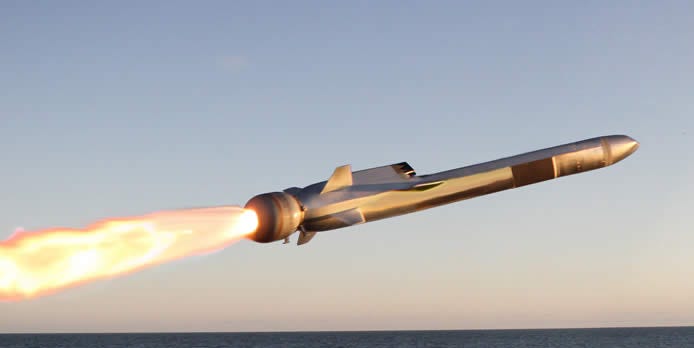
The current star of the American version is the Naval Strike Missile, a long-range precision weapon designed to strike ships and land targets. Public manufacturer descriptions emphasize its ability to fly at low altitude, use advanced target recognition, and hit targets at distances greater than 100 nautical miles. That makes it useful for over-the-horizon engagements where the launcher does not need to sit politely in plain view like a duck wearing a reflective vest.
NMESIS packages that missile into a Marine-friendly system. Each launcher carries two Naval Strike Missiles and is mounted on a remotely operated vehicle derived from the Joint Light Tactical Vehicle family. The launcher is intended to work with broader naval sensors, command-and-control networks, and targeting systems. In other words, the missile is only one part of the story. The real magic is the network that finds the target, passes the data, launches the weapon, and then tells everyone to move before the other side gets cranky.
Why the Navy and Marines Want It
The Navy wants sea control. The Marine Corps wants to help the Navy get it. That is the short version, but the longer version is more interesting.
Modern adversaries have spent years building weapons meant to keep U.S. ships and aircraft at a distance. Long-range missiles, sensors, submarines, air defenses, and electronic warfare systems are all designed to make traditional power projection harder. If U.S. forces rely only on large ships and aircraft, opponents can focus their defenses on those familiar targets. Land-based anti-ship missiles complicate the equation.
A mobile launcher on a coastline is difficult to find, especially if it is dispersed, camouflaged, and frequently moved. It does not look like a billion-dollar warship. It does not require a runway. It can be hidden, supported by small teams, and used as part of Expeditionary Advanced Base Operations, or EABO. That concept sends Marines to austere temporary positions where they can support naval campaigns, sense enemy movements, defend friendly forces, and threaten hostile ships.
For the Marine Corps, this is part of a larger transformation called Force Design. The service has been rethinking its role after two decades of land wars and shifting back toward naval expeditionary warfare. Marine Littoral Regiments are central to that plan. They are built to operate in contested maritime areas, coordinate sensors, support sea denial, and deliver precision fires. NMESIS gives those units a way to do more than watch the ocean. It lets them punch back.
NMESIS: The Missile System With a Comic-Book Name
NMESIS stands for Navy/Marine Corps Expeditionary Ship Interdiction System. It is a mouthful, which is why everyone sensibly uses the acronym. The system integrates three major pieces: the Naval Strike Missile, a launcher unit, and the ROGUE-Fires carrier.
The ROGUE-Fires vehicle is especially important. It is an unmanned ground vehicle built around the mobility of the JLTV platform. Oshkosh Defense has described ROGUE-Fires as capable of supporting ground-based anti-ship missile operations while allowing remote operation. This means Marines do not need to sit inside the launcher when it moves or fires. That is good, because missile launchers tend to attract the kind of attention nobody wants on their calendar.
During Large Scale Exercise 2021, Marines demonstrated the system by firing Naval Strike Missiles at a naval target. The test showed that a Marine unit operating from an expeditionary base could contribute to anti-surface warfare from shore. Since then, the program has moved from exciting demonstration to actual fielding, with the Marine Corps reporting that the first six NMESIS launchers went to the 3d Marine Littoral Regiment in 2023 and that the service intends to keep building capacity.
The Naval Strike Missile: Small, Smart, and Rude to Ships
The Naval Strike Missile is not the largest anti-ship missile in the American toolbox, but it has traits that make it attractive for distributed operations. It is compact enough to fit on a mobile launcher. It has over-the-horizon reach. It is designed for sea-skimming flight, meaning it can fly low over the water to make detection harder. It also uses advanced seeker technology to identify targets in complex environments.
That combination matters. In a crowded maritime area, hitting “a ship” is not the same as hitting the right ship. A modern missile needs guidance, targeting confidence, and the ability to survive the final approach. The Naval Strike Missile was selected by the U.S. Navy for its over-the-horizon needs and later became the heart of the Marine Corps’ land-based anti-ship capability.
The missile also fits the broader trend toward “distributed lethality.” That phrase sounds like it escaped from a defense PowerPoint, because it probably did, but the idea is simple: spread offensive power across more platforms so the enemy cannot neutralize the fleet by targeting only a few big assets. A missile on a ship is useful. A missile on a truck, ship, aircraft, and possibly unmanned platform is a bigger headache.
Why the Indo-Pacific Makes This System So Important
Geography is destiny, and in the Indo-Pacific, geography wears flip-flops and carries a nautical chart. The region is full of islands, straits, coastlines, and choke points. Ships moving through these areas may have limited routes, and land-based missiles can create serious problems for any navy trying to operate freely.
Consider the First Island Chain, stretching from Japan through Taiwan and the Philippines toward Borneo. This region includes key waterways where naval forces might need to pass during a crisis. A dispersed network of Marine units armed with anti-ship missiles could help monitor and threaten those routes. They would not replace destroyers, submarines, or aircraft. Instead, they would add another layer to the sea-denial web.
This is why NMESIS is not merely a new gadget. It is a strategic signal. It tells potential adversaries that U.S. forces are looking for ways to operate inside contested zones without relying only on large, high-value platforms. It also reassures allies that the United States is investing in capabilities tailored to the region’s geography.
Sea Denial vs. Sea Control: The Difference Matters
Two phrases often appear in discussions of land-based anti-ship missiles: sea denial and sea control. They are related, but not identical.
Sea Denial
Sea denial means preventing an adversary from freely using a maritime area. You do not necessarily own the water. You simply make it dangerous enough that the other side cannot move through it without risk. Land-based anti-ship missiles are excellent sea-denial tools because they can threaten ships from shore and force commanders to plan around them.
Sea Control
Sea control means being able to use a maritime area for your own purposes while limiting enemy interference. That is harder and usually requires ships, aircraft, submarines, surveillance, logistics, and air defense. NMESIS contributes to sea control by helping friendly naval forces shape the battlespace, but it is not a one-system miracle. No missile launcher, however dramatic its acronym, wins a maritime campaign by itself.
The Big Challenge: Finding the Target
Missiles are only as useful as the information guiding them. A land-based launcher needs targeting data from sensors, aircraft, ships, satellites, unmanned systems, radars, or other sources. The launcher may be on an island, but the target may be moving fast over the horizon. That creates a classic military problem: find it, identify it, track it, pass the data, shoot, and assess the result.
This is called the kill chain. The phrase is grim, but the concept is straightforward. Every link matters. If the target data is late, wrong, jammed, or incomplete, the missile may not matter. That is why Marine officials describe NMESIS as part of naval and joint command-and-control networks rather than a stand-alone beach cannon.
Electronic warfare also looms large. In any serious conflict, communications may be jammed, GPS may be challenged, sensors may be spoofed, and networks may be attacked. The future of land-based anti-ship missiles depends not only on missile range, but also on resilient targeting, communications discipline, rapid relocation, and the ability to operate when the digital weather turns ugly.
Why Remote and Unmanned Launchers Matter
A missile launcher is powerful, but it is also a target. Once it fires, an adversary may try to locate and destroy it. That is one reason the ROGUE-Fires approach is so valuable. By removing Marines from the vehicle itself, the system reduces risk to personnel. The launcher can move into position, fire, and relocate while operators remain at a safer distance.
Recent developments also point toward more autonomy. Public reports and company announcements have described efforts to integrate self-driving technology into ROGUE-Fires vehicles. This does not mean Hollywood robots are joining the platoon and asking for promotions. It means the Marine Corps is exploring ways to make launchers easier to move, disperse, and operate in dangerous environments.
Autonomy could help with convoy movement, repositioning, logistics, and survivability. But it also brings hard questions about reliability, cyber defense, terrain, maintenance, and human control. The smartest vehicle in the world is still having a bad day if it gets stuck in mud during a typhoon.
Red Wolf and the Next Wave of Ship-Killing Ideas
NMESIS is the most visible land-based anti-ship system in the Marine Corps conversation, but it is not the only sign of change. In 2026, L3Harris announced that the U.S. Navy selected its Red Wolf system for the Marine Corps’ Precision Attack Strike Munition program. Red Wolf is described as a long-range precision weapon for vertical takeoff and landing platforms, with public claims of proven distances around 200 nautical miles and the ability to engage moving maritime targets.
Red Wolf is not simply “NMESIS 2.” It is a different kind of system, tied to aircraft such as the AH-1Z Viper and the broader idea of affordable mass. But it points in the same direction: the Marine Corps wants more ways to threaten ships at range without relying on a small number of expensive weapons or vulnerable platforms.
The future force may combine ground launchers, aircraft-launched weapons, loitering effects, electronic warfare systems, unmanned sensors, and naval missiles into one messy problem for enemy commanders. If NMESIS is the beach with teeth, Red Wolf is the helicopter showing up with a longer bite.
What This Means for U.S. Allies
Land-based anti-ship missiles are also important for allies. Countries such as Japan, the Philippines, Australia, and others have deep interests in maritime security. When U.S. Marines train with NMESIS in the Pacific, the message is not only aimed at rivals. It also tells partners that the United States is practicing realistic defense of contested sea lanes.
Interoperability is the key word. U.S. forces need to communicate, coordinate, and operate with allied militaries. A missile system is more useful when it fits into a shared picture of the maritime environment. That means exercises, data links, procedures, and trust. The missile may get the headlines, but the quiet work of integration is what makes it useful.
Criticism and Risk: No Weapon Gets a Free Parade
NMESIS is promising, but it is not magic. Critics can reasonably ask tough questions. How many launchers are enough? How quickly can they be moved between islands? How will they be resupplied under fire? Can they survive surveillance from drones, satellites, and aircraft? Will host nations permit deployments during a crisis? Can targeting networks hold up under electronic attack?
There is also a cost question. Missiles are expensive, and modern conflicts can burn through munitions at shocking rates. The United States and its allies have learned from Ukraine and other conflicts that stockpiles matter. A launcher without enough missiles is like a coffee maker without coffee: technically present, emotionally disappointing.
Another issue is escalation. Deploying land-based missiles in sensitive regions can strengthen deterrence, but it can also provoke political pushback. Host nations may welcome the protection but worry about becoming targets. The United States must balance military effectiveness with diplomacy, alliance politics, and regional stability.
Why This Is a Big Deal Even If It Looks Like a Truck
One funny thing about NMESIS is that it does not look as dramatic as a destroyer firing a missile from a vertical launch cell. It looks like a military truck with a serious attitude problem. But that is exactly the point. Modern warfare increasingly rewards systems that are mobile, distributed, and difficult to target.
A warship is powerful, but everyone knows it matters. An aircraft carrier is impressive, but nobody loses it behind a coconut grove. A small launcher on land, however, can be part of a hidden network. It can force enemy ships to slow down, reroute, deploy countermeasures, or stay away. It adds friction to every hostile plan.
That is why the Navy and Marines want land-based ship-killing missiles. They are not trying to replace the fleet. They are trying to make the fleet’s job easier and the adversary’s job miserable. In military planning, “miserable” is often a very respectable objective.
Experience-Based Perspective: What This Shift Feels Like From the Shore
For Marines, the arrival of a land-based ship-killing missile changes the emotional texture of coastal operations. A small unit on an island is no longer just a lookout, a logistics node, or a symbolic presence. It can become a firing position with strategic consequences. That creates pride, pressure, and a very long checklist.
Imagine a Marine Littoral Regiment training in the Pacific. The environment is hot, wet, salty, and mechanically unkind. Radios must work. Batteries must last. Vehicles must move over rough ground. Launchers must be hidden. Targeting data must be protected. Everyone must understand that the system’s value depends on discipline as much as technology. The missile may be sleek, but the work around it is muddy, sweaty, and full of small problems that do not appear in glossy defense brochures.
For sailors, NMESIS changes the relationship between fleet and shore. A destroyer commander operating offshore may gain another friendly shooter in the fight. A Marine unit ashore can help deny a sea lane, cover a chokepoint, or force enemy ships into less favorable routes. This creates a more distributed naval force. Instead of all offensive power being concentrated at sea, some of it sits on land, quietly waiting for a target-quality track.
For planners, the experience is more complicated. Land-based missiles require access, logistics, permissions, maintenance, and communications. A launcher cannot teleport itself to a useful island just because a map says the island is in a convenient place. Someone must move it there, fuel it, protect it, reload it, and connect it to the larger naval fight. The boring details are the difference between a strategic concept and an expensive lawn ornament.
For allies and local communities, the experience can be mixed. On one hand, these systems can strengthen deterrence and make aggression riskier. On the other hand, missile deployments can attract attention and political debate. People living near strategic waterways may appreciate protection but still worry about being placed closer to the front line of a future crisis. That human dimension matters. Deterrence is not only about hardware; it is also about consent, trust, and clear communication.
For adversaries, the experience is supposed to be deeply annoying. A fleet commander facing NMESIS must assume that danger may come from shore, from aircraft, from ships, from submarines, and from unmanned sensors. Every island becomes a question mark. Every coastal road might hide a launcher. Every movement through a strait may require more surveillance, more escorts, more caution, and more time. The missile does not need to be fired every day to matter. Sometimes its greatest effect is making the other side hesitate.
That is the real value of a land-based ship-killing missile. It turns geography into a weapon. It gives Marines a direct role in naval warfare. It gives the Navy more options. And it reminds everyone that in the missile age, the shoreline is no longer just where the ocean stops. It may be where the trouble starts.
Conclusion: A New Kind of Coastal Artillery
The Navy and Marines want a new land-based, ship-killing missile because the maritime battlefield is changing. Large ships and aircraft remain essential, but they are no longer enough by themselves. Future deterrence will depend on distributed forces, resilient networks, mobile launchers, and weapons that can threaten ships from unexpected places.
NMESIS is the clearest example of this shift. By combining the Naval Strike Missile with an unmanned ground launcher, the Marine Corps gains a practical tool for sea denial and naval integration. It is not a silver bullet, and it brings serious challenges in targeting, logistics, survivability, and diplomacy. But it is exactly the kind of capability that fits the geography and tension of the Indo-Pacific.
The beach, once treated mainly as a place to land forces, is becoming part of the fleet’s weapons network. That is a major change. And for any hostile ship sailing near a contested coastline, it is probably not the sort of beach vacation anyone had in mind.