Family photos are supposed to be tiny time machines: sunburned beach days, frosting-smudged birthdays, awkward school portraits, and that one Christmas morning when somebody’s pajama pants were clearly losing an argument with gravity. But sometimes a photo doesn’t simply preserve a memory. It preserves a version of someone they no longer want displayed, discussed, or quietly framed above the piano like a museum exhibit titled “Please Don’t Bring This Up at Thanksgiving.”
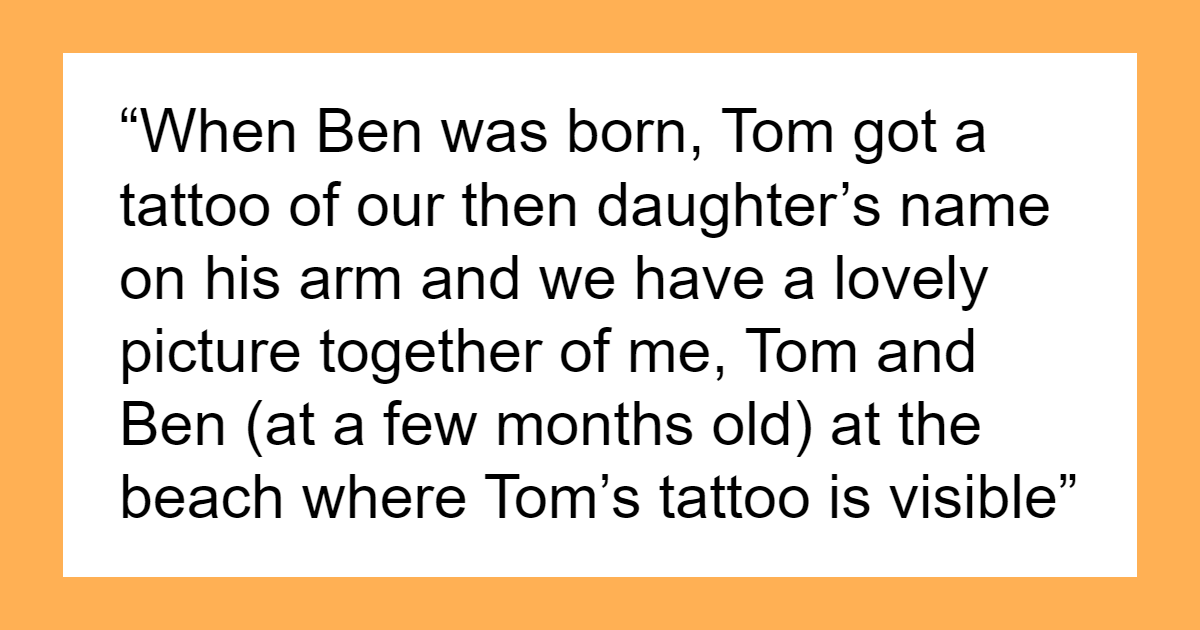
That is the emotional knot at the center of the viral story “Mom Agrees To Hide All Photos Of Her Son Pre-Transition Except For One, Gets Called Cruel.” A mother says she supports her transgender son and has agreed to remove or hide photos from before his transition. Yet she wants to keep one cherished image: a beach photo connected to happy memories of her late husband. The problem is that the photo includes a visible reminder of her son’s deadname, the name he no longer uses.
The online debate quickly split into familiar camps. Some people argued that the son’s request should be respected without hesitation. Others felt the mother was grieving and trying to hold on to one piece of family history. The truth, as usual, refused to sit neatly in one chair. This is not just a fight about a picture. It is about identity, privacy, grief, parental memory, and the delicate art of loving someone in the present without turning their past into a public display.
What Happened in the Story?
According to the reported account, the mother’s son, Ben, is a transgender man who transitioned as a teenager. His parents initially had difficulty adjusting, but his father eventually accepted him. Tragically, the father died before the family had fully settled into their new normal. The mother later agreed to hide photos of Ben from before his transition, understanding that seeing those images could be painful or uncomfortable for him.
There was one exception: a photo from a beach trip when Ben was a toddler. For the mother, the image represented a rare, sunny memory of her late husband. For Ben, it carried a painful reminder because his father’s tattoo in the photo showed Ben’s birth name. That name is now his deadname, a term commonly used for a name a transgender or nonbinary person was given earlier in life but no longer uses because it does not reflect who they are.
Ben wanted the photo removed. His mother wanted to keep it. Online commenters debated whether she was being cruel, sentimental, stubborn, grieving, or simply human. The answer may be less satisfying than a comment-section verdict: she may be several of those things at once.
Why Pre-Transition Photos Can Feel So Complicated
For many transgender people, pre-transition photos are not just old snapshots. They can feel like evidence being held up in a courtroom where their identity is forever on trial. A childhood photo may be harmless to one person and deeply uncomfortable to another. Some trans people enjoy keeping old photos as part of their full life story. Others would rather those images stay private, especially if they show them being presented as a gender they were never comfortable with.
That difference matters. There is no universal “trans rulebook” hidden behind a rainbow filing cabinet. Some people feel nostalgic about their pre-transition pictures. Some feel detached from them. Some feel pain, embarrassment, anger, or exhaustion. The respectful approach is not to guess. It is to ask, listen, and treat the person’s answer as meaningful.
In this case, Ben was not asking his mother to erase every memory. He was asking her not to display images that make him feel exposed or misnamed. From his point of view, the photo did not simply show a sweet beach day. It showed a name he had intentionally left behind, attached to his body and history in a way he could not control.
What Is a Deadname, and Why Does It Matter?
A deadname is a previous name that a transgender or nonbinary person no longer uses. Using it without consent can feel disrespectful, even when the person doing it claims they “didn’t mean anything by it.” Intent matters, but impact matters too. If someone tells you a name causes pain, the kind response is not to launch a courtroom defense of your intentions. It is to stop using it.
Names are not decorative labels. They are part of how people are recognized. For transgender people, a chosen name can be an important part of social transition and self-respect. Using the correct name and pronouns is one of the simplest ways family members can communicate, “I see you as you are.” It costs zero dollars, requires no advanced degree, and rarely causes property damage. A rare bargain in family life.
That does not mean families instantly adjust without emotional friction. Parents may have memories tied to an earlier name. They may feel grief, confusion, or fear of “getting it wrong.” Those feelings can be real. But they should be processed with another adult, a counselor, a support group, or a very patient journalnot placed on the transgender child as a burden to manage.
The Mother’s Side: Grief Is Not Always Logical
The mother’s attachment to the photo is understandable. It is connected not only to Ben’s childhood but also to her late husband. Grief often turns ordinary objects into emotional life rafts. A shirt, a voicemail, a coffee mug, or a faded photo can become a way of touching a person who is gone. When someone asks for that object to be removed, it may feel like a second loss.
That is why this story struck such a nerve. The mother was not keeping the photo because she rejected her son’s identity, at least not according to the account. She kept it because it connected her to a happier moment with her husband. To her, the photo may have said, “We were a family here.” To Ben, it may have said, “My old name is still on display.” Both interpretations can exist at the same time.
Still, grief does not automatically override someone else’s boundary. A parent can treasure a memory privately without displaying it in a way that causes pain. Love sometimes means moving the frame from the hallway to a keepsake box. The memory survives. The relationship breathes a little easier.
The Son’s Side: Privacy Is Not Erasure
One common criticism aimed at transgender people in these situations is that they are “trying to erase the past.” That framing misses the point. Asking someone not to display pre-transition photos is usually not an attempt to delete history. It is a request for privacy and dignity.
Most people already understand this in other contexts. Plenty of adults would rather their parents not display bath-time toddler photos, middle-school haircut disasters, or prom pictures with an ex who now sells questionable cryptocurrency advice. We accept that people grow, change, and gain a say in how their image is shared. Transgender people deserve that same basic courtesy, with the added sensitivity that old names and gender presentation can carry deeper emotional weight.
For Ben, the photo may have felt like a public reminder of a name that no longer belongs to him. Even if visitors did not know the meaning of the tattoo, he knew. Sometimes that is enough.
Is the Mom Cruel?
Calling the mother “cruel” may be too simple. But calling Ben “too sensitive” is also too simple. The better question is not, “Who is the villain?” It is, “What solution protects the son’s dignity while honoring the mother’s grief?”
A cruel response would be mocking Ben, refusing to use his name, displaying old photos to make a point, or treating his discomfort as dramatic nonsense. A caring-but-flawed response might be struggling to let go of one photo because it is tied to a deceased spouse. The difference matters.
However, once Ben clearly explains that the photo hurts him, the mother has a responsibility to take that seriously. She does not have to burn it, delete it, or pretend the beach day never happened. But she should consider whether displaying it is worth the damage it may cause to trust. In family relationships, being technically “allowed” to do something is not the same as being wise to do it.
Possible Compromises That Respect Everyone
The healthiest solution would not require anyone to win by making the other person lose. Several compromises could preserve the mother’s memory while respecting Ben’s boundary.
1. Keep the Photo Private
The mother could keep the photo in a private album, memory box, or digital folder rather than displaying it publicly. This protects her connection to the memory while reducing Ben’s discomfort. Private grief does not need a wall mount.
2. Edit or Crop the Image
If the visible tattoo is the central issue, the photo could be edited, cropped, blurred, or creatively reframed. Families edit photos all the time. We remove red eyes, photobombing strangers, and the occasional uncle mid-chew. Editing a deadname out of respect is hardly a scandal.
3. Choose a Different Photo of the Father
If the mother’s true need is to remember her husband, she might display another picture of him that does not include Ben’s deadname. The emotional purpose remains, but the conflict softens.
4. Ask Ben What Would Feel Acceptable
The mother could invite Ben into the decision: “I love this memory because it reminds me of your dad. I also hear that it hurts you. What version of keeping this memory would feel respectful?” That kind of question changes the conversation from a tug-of-war into teamwork.
What Families Can Learn From This Debate
This story is useful because it shows how support is not a single announcement. A parent cannot simply say, “I accept you,” and then retire from the work like they have completed a software update. Acceptance is practiced in small, repeated choices: using the right name, correcting relatives, asking before sharing old photos, and listening when something hurts.
It also shows that parents need support too. A parent may grieve expectations, old routines, or the version of family life they imagined. That grief does not mean they do not love their child. But it does mean they need somewhere appropriate to put those feelings. A transgender child should not have to become the emotional caretaker for a parent’s discomfort about their transition.
The best family conversations make room for both truth and tenderness. Ben can say, “That photo hurts me.” His mother can say, “That photo reminds me of your dad.” Then both can work toward a solution that says, “Our relationship matters more than the frame.”
Why Online Comment Sections Love a Family Trial
The internet adores a moral courtroom. Give people a family conflict and a little ambiguity, and suddenly everyone becomes a judge wearing pajamas. One side declares the mom heartless. Another side declares the son unreasonable. Someone inevitably says, “Back in my day,” and the entire thread starts smelling faintly of burnt toast.
But real families do not heal through verdicts. They heal through repair. A public debate may help readers think through boundaries and empathy, but Ben and his mother need something more practical than strangers’ applause. They need a conversation that does not begin with accusation and end with somebody slamming a door.
That is the missing piece in many viral family stories. We see the conflict frozen at its hottest moment. We rarely see the quieter follow-up: the apology, the compromise, the awkward but sincere coffee-table conversation, the edited photo placed in a private box, the son realizing his mother is grieving, the mother realizing her son is not rejecting his father but protecting himself.
How to Handle Pre-Transition Photos Respectfully
Families can avoid many painful conflicts by setting clear expectations around old photos. The key is consent. Before displaying, posting, tagging, texting, or casually passing around pre-transition pictures, ask the person what they are comfortable with.
A good question sounds like this: “Are there any older photos you would prefer I not display or share?” A better question adds control: “Would you like to choose which photos we keep out?” That approach tells the person their image belongs to them too.
Parents may worry that hiding photos means losing memories. It does not. Memories can be stored privately. They can be rewritten into stories that use the person’s correct name. They can be honored without exposing someone’s old identity. A family album can become more thoughtful without becoming empty.
Experience Section: What Similar Family Situations Often Teach Us
In families dealing with transition, photos often become emotional flashpoints because they appear simple but carry many layers. A parent might see a picture and remember a vacation, a birthday cake, or a child’s first day of school. Their transgender child might see the same picture and remember discomfort, misrecognition, or years of being called by a name that never felt right. Neither person is lying. They are reading the same image through different emotional histories.
One common experience is that parents need time to understand that support is not only about big dramatic moments. They may attend a coming-out conversation, say “I love you,” and assume the hardest part is over. Then the smaller moments arrive: changing a contact name in a phone, introducing their child correctly to relatives, removing old photos from social media, or correcting a grandparent who “keeps forgetting.” These moments may seem tiny to outsiders, but they often become the real proof of acceptance.
Another experience is that transgender people may feel guilty for asking for boundaries. A son like Ben might know his mother misses his father. He might understand that the photo matters to her. But understanding someone’s grief does not erase his own discomfort. Many trans people are asked, directly or indirectly, to make themselves smaller so others do not have to adjust. Over time, that can make family gatherings feel less like home and more like a performance review.
Parents, meanwhile, may fear that changing the family photo landscape means losing their child’s early years. A helpful reframe is this: the child in those photos did not disappear. The family is simply learning how to tell the story more accurately and respectfully. Instead of saying, “This was when you were our daughter,” a parent might say, “This was when you were little,” or “This was such a happy day with your dad.” The memory can remain warm without using language that wounds.
Some families create new rituals. They take updated family portraits. They build a new album using the person’s chosen name. They ask which childhood photos feel okay to keep visible. They privately store images that are meaningful but sensitive. These solutions may not be perfect, but they communicate effort. And in family repair, effort is not a small thing. It is the bridge.
The most successful families usually stop arguing over whether the request is “too much” and start asking what the request is trying to protect. In this case, Ben’s request protects his dignity. His mother’s attachment protects her grief. The challenge is not deciding whose feelings count. The challenge is finding a way for both sets of feelings to be treated with care.
Conclusion: The Photo Is Not More Important Than the Relationship
The story of the mom who agreed to hide all pre-transition photos except one is not really about a beach picture. It is about what families owe each other when memory and identity collide. The mother’s grief deserves compassion. Ben’s boundary deserves respect. The late father’s memory deserves tenderness. None of those truths cancels the others.
The best answer is not to shame the mother or dismiss the son. It is to recognize that love sometimes requires creativity. Keep the photo privately. Edit it. Replace it with another memory. Talk honestly. Apologize when needed. Above all, remember that a framed image should never become more precious than the living person standing in front of it.
Family history is not destroyed when it is handled with care. In fact, it becomes stronger. A respectful family album does not erase the past. It makes room for the person someone has always been trying to become.