There are few phrases in modern space history that can make engineers, schoolkids, retired astronauts, and people who still think Tang is futuristic all sit up at once: America is taking back human spaceflight. It sounds patriotic, sure. Cue the waving flags, the rocket exhaust, and at least one uncle saying, “Now that’s what I pay taxes for.” But the real story is much bigger than national pride.
America’s return to launching astronauts from its own soil is not just a symbolic comeback. It represents a major shift in how the United States builds spacecraft, funds exploration, partners with private companies, trains crews, protects national interests, and prepares for missions far beyond low Earth orbit. Human spaceflight is no longer only a government-run parade of heroic test pilots strapped to giant machines. It is becoming an ecosystem: NASA, SpaceX, Boeing, Axiom Space, commercial space stations, lunar landers, spacesuits, cargo vehicles, research labs, and eventually, maybe, hotels where the room service will be terrible but the view will be unbeatable.
The Long Pause After the Space Shuttle
When the Space Shuttle program ended in 2011, the United States did not stop being a space power. NASA still operated the International Space Station, sent robotic explorers across the solar system, managed world-class science missions, and worked with global partners. But something important changed: American astronauts could no longer launch into orbit from American soil on an American spacecraft.
For nearly a decade, NASA astronauts traveled to the International Space Station aboard Russia’s Soyuz spacecraft. Soyuz is a reliable, historically important vehicle, and international cooperation in space has often been one of humanity’s better ideas. Still, relying on another country for astronaut transportation was uncomfortable for a nation that had once sent people to the Moon with slide rules, courage, and computers less powerful than a singing birthday card.
The gap exposed a strategic problem. Human spaceflight is not just about reaching orbit. It is about national capability, engineering independence, industrial strength, workforce development, and resilience. If a country cannot launch its own astronauts, it has to negotiate access to space. If it can launch them regularly, safely, and affordably, it can shape what happens next.
Commercial Crew Changed the Game
The real comeback began with NASA’s Commercial Crew Program. Instead of designing, owning, and operating every part of the spacecraft system in the traditional way, NASA became a customer and partner. The agency set safety requirements, defined mission needs, invested in development, and allowed private companies to build and operate crew transportation systems.
This was not NASA stepping back from spaceflight. It was NASA changing lanes. Think of it less like retiring from driving and more like moving from building the entire highway by hand to setting the traffic laws, funding the bridge, and letting industry bring faster cars. The model encouraged competition, innovation, and cost discipline while keeping astronaut safety at the center.
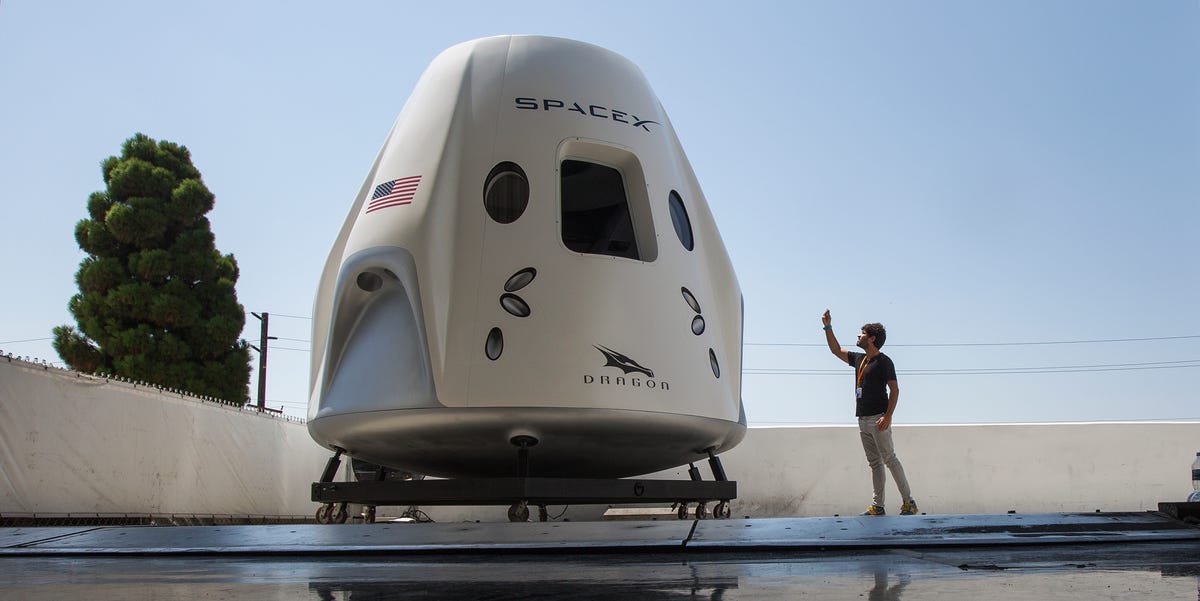
SpaceX’s Crew Dragon became the first major success of that approach. In May 2020, NASA astronauts Robert Behnken and Douglas Hurley launched from Kennedy Space Center aboard a Falcon 9 rocket and Crew Dragon spacecraft. The mission, known as Demo-2, restored America’s ability to send astronauts to orbit from U.S. soil. It also marked the first time NASA astronauts launched aboard a commercially built and operated American crew spacecraft.
That achievement was historic, but the more important part came after the applause. Crew Dragon did not remain a one-time stunt. It became an operational transportation system, regularly carrying astronauts to and from the International Space Station. Routine does not mean boring in spaceflight; it means the system is becoming dependable enough that the drama can move from “Will the rocket work?” to “What research can the crew accomplish once they arrive?” That is progress wearing a very practical pair of boots.
Why This Is More Than Flag-Waving
Yes, flags matter. Symbols inspire people, and space exploration has always depended on inspiration. But the return of American human spaceflight is more than national branding. It affects science, economics, diplomacy, defense, education, and the future of exploration.
1. It Strengthens National Independence
Independent crew launch capability gives the United States more control over its space schedule. NASA can plan station rotations, emergency contingencies, technology demonstrations, and future missions without depending entirely on foreign launch seats. In a world where geopolitics can shift faster than a rocket stage separates, that flexibility matters.
2. It Builds a Commercial Space Economy
Human spaceflight used to be almost entirely a government activity. Today, private companies are building spacecraft, launch vehicles, spacesuits, modules, and future destinations in orbit. This creates jobs, attracts investment, and builds supply chains across the country. The economic impact is not limited to rocket factories. It reaches software, advanced manufacturing, life-support systems, robotics, medicine, materials science, communications, and education.
3. It Frees NASA to Aim Farther
If commercial providers can handle transportation to low Earth orbit, NASA can focus more energy on the Moon, Mars, and deep-space technologies. That is the logic behind the current strategy: let industry help serve the orbital neighborhood while NASA pushes outward. Low Earth orbit becomes the training gym; the Moon becomes the proving ground; Mars becomes the long-term prize.
4. It Makes Space More Accessible
The word “accessible” should be used carefully. A ticket to orbit is not exactly priced like a bus pass. Still, commercial human spaceflight is opening doors that were once sealed shut. Private astronaut missions, commercial research flights, and new orbital habitats could allow more scientists, engineers, educators, and eventually civilians to experience space directly. The astronaut club is still exclusive, but the velvet rope is slowly moving.
The SpaceX Example: From Risky Bet to Reliable Workhorse
SpaceX’s role in this transformation is difficult to overstate. Crew Dragon proved that a commercial spacecraft could meet NASA’s demanding human-rating standards and carry astronauts safely to orbit. Falcon 9’s reusable booster technology also changed expectations about launch frequency and cost. For decades, rockets were largely single-use machines. Falcon 9 made landing a booster look so common that people sometimes forget it is basically a flying skyscraper reversing into a parking spot from the edge of space.
That reliability has had practical consequences. Crew Dragon has supported NASA missions, international astronaut flights, and private missions. It has also provided redundancy during difficult moments, including when Boeing’s Starliner program faced technical challenges. In human spaceflight, redundancy is not a luxury. It is oxygen for planning.
The Boeing Starliner Lesson: Space Is Still Hard
America’s human spaceflight comeback is not a fairy tale where every capsule sparkles and every valve behaves. Boeing’s Starliner has shown how difficult crewed spacecraft development remains. Starliner was designed to give NASA a second commercial crew transportation system, adding competition and backup capability. But its path has included delays, technical issues, and serious safety reviews.
The lesson is not that commercial spaceflight is easy or that one company has all the answers. The lesson is that human spaceflight requires humility. Rockets punish assumptions. Spacecraft punish shortcuts. Propulsion systems, software, thermal protection, docking hardware, life support, and abort systems all have to work together under conditions where “let’s pull over and check” is not an option.
NASA’s cautious handling of Starliner’s crewed test flight challenges also shows why oversight matters. Commercial partnership does not mean handing astronauts a helmet and saying, “Good luck, buddy.” NASA remains responsible for safety standards, mission assurance, and the difficult decisions that come when data says caution is wiser than celebration.
Artemis: The Comeback Goes Beyond Earth Orbit
The next chapter is Artemis, NASA’s campaign to return humans to the Moon and prepare for Mars. Artemis is not Apollo with better cameras. Apollo was a sprint driven by Cold War urgency. Artemis is intended to be a long-term program involving international partners, commercial companies, new spacesuits, lunar landers, surface mobility systems, the Orion spacecraft, the Space Launch System, and the Gateway lunar outpost concept.
Artemis II carried astronauts around the Moon and tested NASA’s deep-space human exploration systems. Artemis III is planned to focus on rendezvous and docking capabilities involving Orion and commercial spacecraft needed for future lunar landing operations. The program’s broader goal is sustained human presence around and on the Moon, not just another set of footprints and a quick goodbye.
That matters because the Moon is a natural laboratory and training ground. Astronauts can test habitats, power systems, mobility tools, dust mitigation, radiation protection, and resource-use technologies. Lunar dust alone is nasty enough to deserve its own villain soundtrack. It clings, scratches, infiltrates seals, and generally behaves like glitter from the underworld. Learning how to live and work around it will help engineers design systems for Mars.
Commercial Space Stations: Life After the ISS
The International Space Station has been one of humanity’s greatest engineering achievements. It has hosted decades of research, international crews, technology demonstrations, and medical studies. But the ISS is aging, and NASA plans to transition toward commercial low Earth orbit destinations as the station approaches the end of its operational life.
This is a major part of America’s “take back” moment. The future is not simply about launching astronauts; it is about giving them somewhere useful to go. Companies such as Axiom Space and others are working on commercial station concepts that could support research, manufacturing, astronaut training, and private missions. If successful, NASA would become one customer among many rather than the sole landlord of low Earth orbit.
That shift could be transformative. Microgravity research has applications in medicine, materials, biology, fluid physics, and advanced manufacturing. A more commercial orbital economy could make space-based research less rare and more practical. The dream is not only “humans in space,” but humans doing useful, repeatable, economically sustainable work in space.
Spacesuits, Landers, and the Hidden Machinery of Exploration
Public attention usually goes to rockets, because rockets are loud, fiery, and impossible to ignore. But human spaceflight depends on many quieter technologies. Spacesuits are wearable spacecraft. Docking systems are orbital handshakes. Life support systems are mechanical guardian angels. Lunar landers are elevators between worlds. Mission control software is the invisible nervous system holding everything together.
Axiom Space’s next-generation lunar spacesuit work is a good example. A suit for the Moon must protect astronauts from vacuum, temperature extremes, abrasive dust, radiation, and the physical demands of exploration. It must allow mobility, visibility, communication, and tool use. In other words, it must be a survival pod that lets you bend your knees. Anyone who has struggled to put on winter gloves can appreciate the engineering challenge.
Why Human Spaceflight Still Matters
Robots are excellent explorers. They do not need lunch, sleep, bathrooms, or reassuring words after a rough landing. Robotic missions have transformed our understanding of Mars, Jupiter, Saturn, asteroids, comets, and distant worlds. But humans bring something different: adaptability, intuition, speed of decision-making, and the ability to inspire other humans in a way no rover selfie can fully match.
Human spaceflight also creates pressure to solve hard problems. If people must survive in orbit or on the Moon, engineers must improve power systems, recycling technologies, medical monitoring, radiation shielding, food production, autonomy, and closed-loop life support. Many of those advances can benefit life on Earth. Space exploration has always been a demanding teacher. It gives homework in physics, chemistry, biology, economics, and patience.
The New Space Race Is Not Just Country vs. Country
It is tempting to describe the current era as a new space race between nations. That is partly true. The United States, China, Europe, India, Japan, Russia, and other players all have ambitions in space. But the modern race is also about systems. Which country can build the strongest partnership between government, industry, universities, regulators, and international allies? Which can launch often, learn quickly, manage risk, attract talent, and create sustainable markets?
America’s advantage may not come from one giant program, but from a network of programs. NASA provides expertise, mission goals, and credibility. Private companies bring speed, capital, manufacturing intensity, and competitive pressure. Universities train the workforce. Federal regulators manage public safety. International partners expand capability and legitimacy. That ecosystem is messier than a single government command structure, but it can also be more innovative.
Experiences That Show Why This Moment Feels Different
To understand why America’s human spaceflight comeback feels so powerful, imagine watching a launch from Florida’s Space Coast. The countdown begins as a calm voice moves through the final checks. People who were chatting a minute earlier suddenly go quiet. Kids climb onto shoulders. Phones rise into the air. The rocket is still sitting there, motionless, looking almost unreal against the sky. Then the engines ignite, and your brain needs a second to catch up with your body. The light comes first. Then the sound arrives like thunder that has been working out.
That experience is not just entertainment. It is a public reminder that engineering is real, national ambition is real, and the future is something people build with tools, math, sweat, and stubbornness. For many Americans, the return of crewed launches from U.S. soil reconnected spaceflight to place. Kennedy Space Center was no longer only a museum of Apollo and Shuttle memories. It was alive again, sending people upward.
There is also the experience inside the space community. Engineers who spent years testing valves, writing code, analyzing abort scenarios, and reviewing failure modes finally saw their work become a living mission. Teachers used launches to explain physics. Students saw career paths in aerospace, robotics, software, medicine, and materials science. Small suppliers in states far from Florida could point to a component and say, “We helped make that possible.” That is how a national space program becomes more than a logo.
For astronauts, the experience is even more layered. A modern crewed launch is both futuristic and deeply human. Astronauts ride in sleek spacecraft with touchscreens, autonomous docking systems, and advanced communications. Yet the core emotions are ancient: trust, fear, focus, teamwork, and the desire to explore what lies beyond the horizon. The spacecraft may be new, but the courage is familiar.
For ordinary viewers, this new era also changes the emotional texture of spaceflight. Instead of seeing human launches as rare historical events, people are beginning to see them as part of a growing rhythm. Cargo flights, crew rotations, private astronaut missions, lunar test flights, spacesuit reveals, and commercial station plans all create a sense that space is becoming an active workplace. Not easy. Not cheap. Not safe enough to treat casually. But active.
That is why the phrase “taking back human spaceflight” should not be heard as chest-thumping alone. The deeper experience is one of participation. A country watches itself regain a capability, then realizes the capability is only the doorway. Beyond it are new jobs, new risks, new discoveries, new ethical questions, and new responsibilities. The flag still matters. But the flag is not the mission. The mission is building a future where humans can travel, work, learn, and maybe one day live beyond Earth without treating every flight as a miracle.
Conclusion: The Flag Is Only the Beginning
America’s human spaceflight comeback is inspiring because it is visible: rockets rise, capsules dock, astronauts smile from orbit, and the nation gets a dramatic reminder that exploration is still part of its identity. But the deeper importance lies beneath the spectacle. The United States is rebuilding human spaceflight as a durable capability, not a one-time performance.
The future of American spaceflight will depend on safe commercial crew systems, reliable lunar infrastructure, next-generation spacesuits, commercial space stations, strong regulation, international cooperation, and a steady willingness to learn from failure. It will require less swagger than discipline, less nostalgia than engineering, and less “we’re back” than “now let’s do the work.”
Taking back human spaceflight is not about planting a flag and calling it a day. It is about building the ships, stations, suits, partnerships, and knowledge that allow humanity to go farther and stay longer. The flag may wave at the launchpad, but the real victory is what happens after the rocket disappears into the sky.