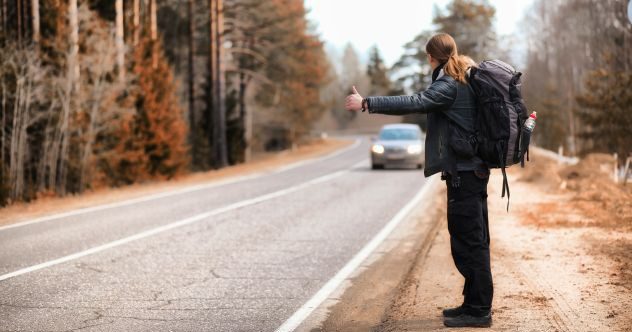
Hitchhiking looks simple from the outside: a raised thumb, a slowing car, a quick calculation by both driver and passenger, and then the road does what the road does bestcreates a story. Most rides disappear into ordinary memory. A few, however, become strange little trapdoors in history. One pickup changes a writer’s imagination. Another sends a future music icon toward a new city. One terrifying ride helps reshape crime laws. Another delivers a young man to the edge of an Alaskan wilderness and later sparks a national debate about freedom, risk, and romanticizing danger.
This is not a misty-eyed advertisement for climbing into random cars. Modern travel safety matters, and the world is not a folk song with cup holders. But hitchhiking history is full of moments when a small act of roadside trust became surprisingly influential. These ten historic hitchhiking stories show how culture, politics, literature, science, music, and even public safety were nudged by people who needed a lift.
Why Hitchhiking Became a Cultural Shortcut
In the United States, hitchhiking became especially visible during the Great Depression, when money was tight and roads were crowded with people looking for work, food, or a fresh start. Later, the practice became wrapped in the mythology of freedom: the open highway, the restless traveler, the idea that America could be understood one passing truck at a time. By the mid-20th century, hitchhiking had moved from necessity to symbol. It belonged to students, soldiers, writers, activists, drifters, and dreamers who thought a map was more of a suggestion than a command.
The following pickups mattered not because every driver knew they were carrying history. That is the funny thing about history: it almost never announces itself politely. Sometimes it just gets in, shuts the door, and asks, “How far are you going?”
1. Denis Johnson’s Terrifying Ride That Became Literary Gold
In April 1972, a young hitchhiker named Denis Johnson was picked up in the Midwest. The ride ended in a devastating car crash, but Johnson survived. Years later, that experience helped inspire “Car Crash While Hitchhiking,” one of the most unforgettable stories in his acclaimed collection Jesus’ Son. The story did not merely report an accident; it transformed confusion, shock, guilt, and damaged beauty into literature that still rattles readers.
Why it changed history
Johnson’s work became a landmark of late-20th-century American fiction. His road accident story helped define a voice that was raw, haunted, funny in the wrong places, and spiritually hungry. One ride became one of the most famous short stories about addiction, perception, and human fragility. Not bad for a trip nobody would have recommended on TripAdvisor.
2. Bob Dylan’s Hitchhike Toward New York and a New Sound
In 1961, 19-year-old Bob Dylan left Minnesota and made his way to New York City, partly by hitchhiking, with a head full of Woody Guthrie songs and a suitcase full of ambition. He was not yet “Bob Dylan” in the world-historical sense. He was a young musician chasing a hero, a scene, and a sound. Greenwich Village gave him all three.
Why it changed history
Dylan’s arrival in New York helped redirect American songwriting. Folk music, protest songs, rock lyrics, and the idea of the singer-songwriter were all transformed by his rise. His work influenced civil rights-era music, literary songwriting, and generations of artists who suddenly realized a pop song could carry poetry, politics, jokes, riddles, and thunder. One hitchhiked journey did not write “Blowin’ in the Wind,” but it helped get the writer to the room where the wind started blowing.
3. Jack Kerouac’s Roadside Rides That Helped Create the Beat Generation
Jack Kerouac’s travels across America were full of buses, cars, borrowed rides, and hitchhiking. Those restless trips fed the imagination behind On the Road, the novel that became a defining text of the Beat Generation. Kerouac did not simply write about transportation. He wrote about hunger: hunger for motion, talk, jazz, friendship, sex, God, and the next town glowing beyond the windshield.
Why it changed history
On the Road helped shape counterculture, road literature, youth rebellion, and the myth of the American highway. Its influence touched writers, musicians, filmmakers, and teenagers who suddenly believed that being confused at high speed counted as a philosophical position. Kerouac’s hitchhiking experiences became part of a larger artistic movement that challenged postwar conformity and made the road feel like a classroom with terrible suspension.
4. Che Guevara’s Lift-Filled Journey Across South America
Before he became a revolutionary icon printed on a million dorm-room posters, Ernesto “Che” Guevara was a medical student traveling through Latin America with Alberto Granado. Their famous trip began on a motorcycle, but after the machine gave up, they continued by other means, including hitchhiking and borrowed rides. Along the way, Guevara saw poverty, illness, labor exploitation, and inequality at close range.
Why it changed history
That journey helped reshape Guevara’s worldview. The rides themselves were not the revolution, but they carried him through the human evidence that later influenced his politics. His travel diary became part of the story of how a young doctor turned into one of the most controversial revolutionary figures of the 20th century. A broken motorcycle, a series of lifts, and a continent’s suffering helped redirect a life.
5. Christopher McCandless’s Last Ride to the Alaskan Wilderness
In April 1992, Christopher McCandless hitchhiked in Alaska and was picked up by Jim Gallien, who drove him toward the Stampede Trail. Gallien worried about McCandless’s light gear and lack of preparation, but McCandless continued into the wilderness. Months later, he was found dead in an abandoned bus. The story became widely known through Jon Krakauer’s reporting and the book Into the Wild.
Why it changed history
McCandless’s final ride became one of the most debated travel stories in modern America. To some, he symbolized idealism, independence, and the search for meaning outside consumer life. To others, he represented recklessness and dangerous romanticism. Either way, that pickup helped launch a cultural argument about wilderness, preparation, privilege, youth, and the seductive danger of believing nature is there to validate your personal brand.
6. Mary Vincent’s Ride That Helped Change Victims’ Rights Conversations
Not every history-changing hitchhiking pickup belongs to romance, art, or adventure. In 1978, teenager Mary Vincent accepted a ride while hitchhiking in California and survived an appalling attack. Her testimony helped convict her attacker, Lawrence Singleton. Years later, public outrage around the case and related legal debates contributed to tougher conversations about sentencing, violent crime, parole, and victims’ rights.
Why it changed history
Vincent became more than a survivor; she became part of a broader push for legal reform and victim advocacy. Her case forced lawmakers and the public to confront whether existing penalties were enough for extreme violence. It is one of the darkest entries in hitchhiking history, but also one of the clearest reminders that personal testimony can move public policy. Sometimes history changes because someone refuses to disappear.
7. Janis Joplin’s Ride to San Francisco and the Sound of the Sixties
In the early 1960s, Janis Joplin made her way from Texas to San Francisco with Chet Helms, a figure who later became central to the city’s rock scene. Joplin’s move west placed her in the orbit of the Bay Area’s exploding counterculture. There, her voiceraw, bluesy, wounded, and volcanicfound the audience it deserved.
Why it changed history
Joplin became one of the defining voices of 1960s rock, and San Francisco became a capital of psychedelic music and countercultural identity. Her arrival helped connect Texas blues influence with the Haight-Ashbury moment. The pickup did not create the Summer of Love by itself, but it helped deliver one of its most unforgettable voices to the right city at the right time. History occasionally has excellent timing and questionable fuel economy.
8. Ralph Nader’s Roadside Lessons and the Auto Safety Movement
Ralph Nader hitchhiked widely as a young man, and his experiences on American roads helped sharpen his attention to car crashes, unsafe design, and consumer protection. He later became famous for Unsafe at Any Speed, his 1965 critique of automobile safety standards and industry behavior.
Why it changed history
Nader’s work helped push auto safety into the national spotlight and contributed to a political climate that produced major vehicle safety legislation in the 1960s. Seat belts, crash standards, consumer advocacy, and federal safety oversight became part of everyday American life. Hitchhiking gave Nader a ground-level view of the road as ordinary people experienced it: messy, dangerous, and too often designed with confidence rather than caution.
9. Albert Bartlett’s Hitchhiked Arrival at the Atomic Age
During World War II, young physicist Albert Bartlett made his way toward the secret world of the Manhattan Project. His journey included hitchhiking to New Mexico and reporting through the project’s Santa Fe gateway. Bartlett later became associated with photographing and developing images connected to the first nuclear explosion at Trinity.
Why it changed history
No single hitchhiked ride created the atomic age, but Bartlett’s roadside arrival is a remarkable example of how immense historical projects were built from individual journeys. The Manhattan Project depended on scientists, technicians, clerks, drivers, guards, cooks, and photographers all converging on hidden places. One young man’s lift westward became a tiny but vivid thread in the story of nuclear history, scientific secrecy, and the frightening new power humans had placed in their own hands.
10. The Fictional Pickup in It Happened One Night That Changed Real Road Culture
One of the most influential hitchhiking pickups in history was fictional. In the 1934 film It Happened One Night, Clark Gable and Claudette Colbert helped turn hitchhiking into a glamorous, comic, and oddly educational screen moment. The movie did not invent hitchhiking, but it gave the practice a permanent place in popular imagination.
Why it changed history
Hollywood made hitchhiking visible, funny, flirtatious, and dramatically useful. The famous roadside scene helped shape how Americans pictured the act: part travel hack, part social experiment, part romantic chaos. Real people had been thumbing rides for years, especially during hard economic times, but film turned the gesture into a cultural symbol. Sometimes a fake pickup changes real behavior because movies are sneaky little instruction manuals wearing evening clothes.
What These Historic Hitchhiking Stories Have in Common
These stories differ wildly. Some are inspiring. Some are tragic. Some are complicated enough to make a historian reach for coffee and a legal pad. Yet they share one theme: hitchhiking compresses chance. A person who needs a ride enters a stranger’s moving world, and the outcome depends on timing, trust, personality, risk, and geography.
In music history, a lift can bring a young singer to the city where his voice will be heard. In literature, an accident can become a short story that permanently changes how readers feel about pain and perception. In politics, road experience can become public advocacy. In law, survival can become testimony. In science, one more traveler can join a secret project already bending the future.
That is why hitchhiking remains such a powerful metaphor. It is not only about transportation. It is about vulnerability, opportunity, and the strange fact that lives are often redirected by people whose names we barely know.
Roadside Lessons: Experiences From the World of Historic Hitchhiking
The experience of hitchhiking, at least in its classic form, begins before the ride arrives. There is the waiting: the roadside posture, the passing cars, the awkward performance of looking trustworthy while also trying not to look desperate. Hitchhiking turns the traveler into a public question. Every driver answers silently: yes, no, maybe, absolutely not, or “I would help, but my passenger seat currently contains a suspicious amount of laundry.”
Once a car stops, the entire social contract forms in seconds. The traveler reads the driver. The driver reads the traveler. Both people make a guess. That guess can become a harmless conversation, a lifelong memory, a warning, or, in rare cases, a turning point in history. What makes these famous hitchhiking stories so fascinating is that they reveal how much can fit inside an ordinary ride. A car becomes a moving confessional, classroom, newsroom, and theater.
Many historic hitchhikers were young, broke, restless, or searching for something they could not name. Dylan was searching for Guthrie and a musical future. Kerouac was chasing America itself, although America kept moving and refusing to sit still for the portrait. Guevara was moving through a continent and gradually seeing political reality in human faces. McCandless was chasing purity and escape, with results that still divide readers. These experiences show hitchhiking as both liberation and exposure. The road offers possibility, but it does not promise wisdom.
There is also a powerful democratic element to hitchhiking history. In a society divided by class, region, age, and profession, a hitchhiked ride throws strangers into conversation. A driver might be a trucker, student, farmer, soldier, musician, scientist, or parent on the way home. The passenger may carry a guitar, a notebook, a backpack, or a future nobody can yet see. For one stretch of road, social distance shrinks to the width of a gearshift.
Still, the darker stories matter. Hitchhiking has always involved risk, and romanticizing it without caution is irresponsible. The safest lesson is not “go hitchhike tomorrow.” It is that history is shaped by movement, chance, and human decisions made under imperfect information. Today, travelers have safer options: public transit, verified rideshares, location sharing, emergency contacts, and better planning tools. The spirit of the road can survive without pretending danger is charming.
The best hitchhiking experiences in history are not simply about getting from point A to point B. They are about what happens when point B changes the person who arrives. Sometimes the passenger becomes a Nobel-level songwriter, a revolutionary, a novelist, a victim advocate, a rock legend, or a symbol of wilderness debate. Sometimes the driver becomes the last witness before a myth begins. Either way, the pickup is never just a pickup after history gets through with it.
Conclusion: The Thumbprint of History
Hitchhiking history reminds us that enormous cultural changes can begin in small, almost casual moments. A ride to New York helps place Bob Dylan in the folk scene. A series of road trips gives Jack Kerouac the material for a generation-defining novel. A lift toward Alaska becomes the beginning of an American wilderness legend. A survivor’s testimony helps change public conversations about justice. Even a fictional hitchhiking scene in a Hollywood comedy changes how a nation imagines roadside adventure.
These ten hitchhiking pick-ups changed history because they carried more than passengers. They carried songs, books, warnings, movements, debates, images, and myths. The next time you see an old photo of a traveler with a thumb out, remember: sometimes the smallest gesture on the shoulder of the road can echo for decades.