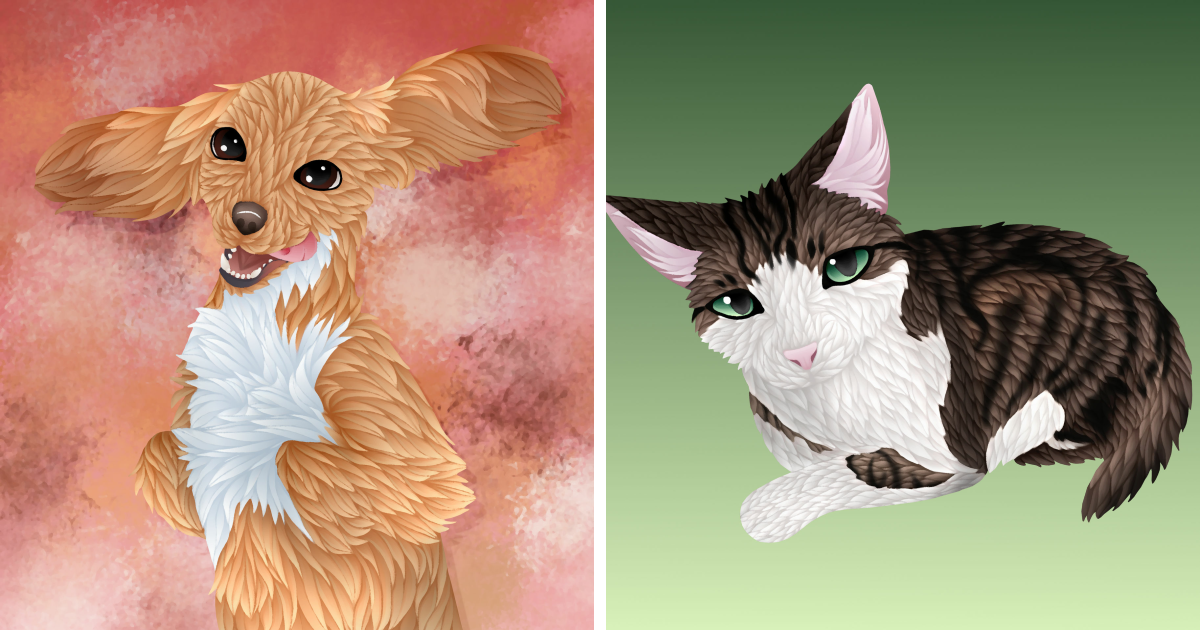
Every animal has a face that says something. A dog may look like it has just solved a crime. A cat may appear to be judging your life choices from a velvet throne. A rabbit can look shy, wise, and slightly suspicious of parsley all at once. That is why I make digital animal portraits in my unique art style: because animals are never just “cute.” They are expressive, emotional, funny, mysterious, and often more photogenic than the humans who pay the phone bill.
Digital animal portraits have become more than decorative art. They are personal keepsakes, memorial gifts, home decor, profile pictures, brand visuals, and heartfelt tributes to pets that feel like family. In the United States, pet ownership continues to grow, and millions of households see dogs, cats, birds, rabbits, reptiles, and other companions as central parts of daily life. That emotional bond is the secret ingredient behind custom animal portraits. People do not simply want a picture of a pet; they want a portrait that captures the goofy grin, the soft eyes, the noble pose, or the dramatic “I have never been fed” expression delivered five minutes after dinner.
My digital portrait style blends observation, illustration, personality, and a touch of playful exaggeration. I study the animal carefully, build the portrait with digital brushes and layered color, then shape the final image so it feels alive rather than copied. The goal is not to turn a pet into a flat sticker or a generic cartoon. The goal is to create artwork that says, “Yes, that is exactly him,” or “That is definitely her royal highness before knocking a glass off the table.”
Why Digital Animal Portraits Feel So Personal
A strong animal portrait begins with emotion. Technical skill matters, of course. Fur texture, eye reflections, proportions, color harmony, and clean edges all help the final piece look polished. But the real magic happens when the artwork captures personality. A golden retriever’s portrait should not feel the same as a sphynx cat’s portrait. A sleepy bulldog, a nervous rescue kitten, a confident horse, and a cockatoo with rock-star energy all deserve different visual treatment.
That is why custom pet portraits are popular as gifts. They work for birthdays, holidays, adoption anniversaries, memorials, and “just because my dog is handsome” moments. Unlike mass-produced wall art, a personalized animal portrait carries a story. It says the subject mattered enough to be studied, interpreted, and celebrated. In a world full of quick phone photos, a finished digital painting feels more intentional.
Digital artwork also offers flexibility. A portrait can be printed on canvas, framed as wall art, used as a phone wallpaper, turned into a greeting card, or adapted for social media. The same finished illustration can live in several places without losing quality when it is prepared correctly. That makes digital animal portraits practical as well as sentimental, which is a wonderful combinationlike a dog who is both adorable and willing to fetch the remote. Rare, but magnificent.
What Makes My Art Style Unique?
My unique art style is built around expressive realism with a playful twist. I do not aim for cold photographic copying. Cameras already exist, and they are annoyingly good at their job. Instead, I use the reference photo as a starting point, then push the portrait toward character. I may brighten the eyes, simplify the background, exaggerate a head tilt, soften a shadow, or bring out color notes that make the animal feel warmer and more vivid.
Expressive Eyes
The eyes are usually the emotional center of an animal portrait. They carry curiosity, loyalty, mischief, gentleness, or that famous cat expression that says, “I have tolerated you long enough.” In my process, I spend extra time building the eye structure with highlights, reflected color, soft shadows, and tiny details that create life. Even in a stylized portrait, believable eyes help the viewer connect instantly.
Painterly Fur and Texture
Fur is not just a pattern; it grows in directions, clumps, catches light, and changes color across the body. Short fur may need smooth transitions and small edge details. Long fur needs rhythm, flow, and carefully placed strands. Curly fur demands texture without becoming visual spaghetti. Digital brushes are perfect for this because they allow both broad painting and tiny finishing strokes. The trick is knowing when to add detail and when to stop before the portrait turns into a fur encyclopedia.
Color With Personality
My portraits often use rich, expressive color rather than plain realism. A black dog may include deep blues, warm browns, and violet shadows. A white cat may contain cream, peach, gray, and soft reflected tones. These colors help the portrait feel dimensional and artistic while still respecting the animal’s real appearance. Good color choices can turn a simple pet portrait into a piece of custom digital art that feels gallery-ready.
The Digital Portrait Process From Photo To Finished Artwork
Creating a digital animal portrait is a careful process. It may look effortless at the end, but behind the scenes there are sketches, corrections, zooming in too far, zooming out in panic, and occasionally asking the screen why a paw looks like a potato. The process usually follows several important stages.
1. Choosing The Right Reference Photo
A great portrait starts with a strong reference. The best photos show the animal clearly, with good lighting and visible eyes. A blurry photo can still be meaningful, especially for memorial portraits, but clear references allow more accurate structure and texture. I also look for personality. A technically perfect photo is nice, but a slightly silly photo with the perfect expression may create a far better portrait.
Whenever possible, I prefer references owned by the client or used with permission. This matters because photographs are creative works too. Ethical reference use protects photographers, clients, and artists. It also keeps the project focused on the animal being honored rather than on legal headaches, which are nobody’s favorite artistic medium.
2. Studying Shape And Anatomy
Before painting details, I study the animal’s structure. Dogs have different skull shapes depending on breed. Cats have flexible, elegant forms. Birds require attention to beak shape, feather groups, and posture. Horses need accurate planes around the face, muzzle, and neck. Even a stylized portrait works better when it is built on believable anatomy.
This does not mean every portrait must look like a scientific illustration. It means the artist needs to understand what is underneath the style. The better the structure, the more freedom there is to exaggerate, simplify, or decorate without losing the animal’s identity.
3. Building The Sketch
The sketch is where the portrait finds its foundation. I block in the head shape, ears, eyes, nose, mouth, and major fur masses. At this stage, I care more about proportion and expression than polish. A good sketch solves the biggest problems early. If the eyes are too far apart or the nose is angled strangely, no amount of beautiful shading will save it later. Digital tools make this stage forgiving because I can resize, rotate, and adjust elements without starting over.
4. Painting Base Colors
After the sketch, I lay in base colors. This stage creates the overall mood. I separate major areas such as fur, eyes, nose, collar, and background. Layers are useful here because they allow clean edits, but I try not to depend on too many of them. Too many layers can make the artwork feel stiff. Sometimes painting with fewer layers gives the portrait more natural energy, closer to traditional painting.
5. Adding Light, Shadow, And Texture
Once the base colors are in place, I build form with light and shadow. This is where the portrait begins to feel three-dimensional. I look for the direction of light, the soft planes of the face, the shine on the nose, the darker areas under the ears, and the reflected color around the eyes. Then I add fur texture gradually. The goal is to suggest detail, not draw every single hair. Nobody needs a 4,000-strand investigation of a terrier’s eyebrow, even if the eyebrow is impressive.
6. Creating A Background That Supports The Animal
The background should support the subject, not fight it for attention. Some portraits work best with clean solid colors. Others benefit from soft gradients, decorative shapes, botanical elements, stars, painterly textures, or a simple halo effect. I choose backgrounds based on the animal’s mood and the client’s goal. A dignified senior cat may need a calm, elegant backdrop. A chaotic puppy may deserve bright color and movement, because subtlety has clearly left the building.
7. Final Details And Polish
The last stage is refinement. I sharpen key edges, soften distracting areas, adjust contrast, brighten highlights, and make sure the portrait reads well at both large and small sizes. This matters because digital animal portraits are often viewed on screens before they are printed. If the image only works when zoomed in at 300%, it is not finished. A strong portrait should make an immediate impression from across the room and still reward close viewing.
Why Digital Tools Are Perfect For Animal Portraits
Digital art software has changed how artists work. Programs and apps now offer customizable brushes, layers, color controls, blending tools, high-resolution canvases, and easy export options. These features are especially helpful for animal portraits because they allow a balance of precision and experimentation.
For example, if I want a soft oil-paint effect, I can use painterly brushes. If I need crisp whiskers, I can switch to a fine brush. If the background color feels too cold, I can adjust it without repainting the entire portrait. If the client wants the bow tie changed from red to blue, digital tools make that possible without the artist quietly staring into the distance for ten minutes.
Digital painting also supports print preparation. A finished portrait can be exported at high resolution for canvas prints, posters, cards, or framed artwork. This is important because a portrait that looks good on a phone may not automatically print well. Good file setup, clean edges, correct dimensions, and thoughtful color choices help the final product look professional.
The Difference Between A Filter And A Handcrafted Digital Portrait
One common misunderstanding is that digital art is automatic. Some people imagine the artist pressing a “make it cute” button and then going for coffee. Sadly, that button does not exist. If it did, it would probably be guarded by a cat.
A handcrafted digital animal portrait is not the same as applying a filter to a photo. Filters can be fun, but they often treat every image the same way. True digital illustration involves decision-making at every stage: what to simplify, what to emphasize, where to add warmth, how to handle texture, and how to capture expression. The artist interprets the animal instead of merely processing the photo.
This human touch is especially important in memorial portraits. When someone commissions artwork of a pet who has passed away, accuracy and sensitivity matter deeply. The portrait must feel respectful, warm, and personal. Small detailsa favorite collar, a cloudy senior eye, a familiar ear foldcan carry enormous emotional weight. Digital art allows these details to be handled with care.
Animal Portraits As Home Decor And Storytelling
Custom animal portraits are also a form of storytelling in home decor. A living room wall with a portrait of the family dog says something about the household. A gallery wall of cats, horses, birds, and rescue pets becomes a visual family album. For people who love maximalist interiors, bold animal art adds humor and color. For minimalist homes, a clean digital portrait can offer a personal focal point without clutter.
Pet portraits also make excellent conversation pieces. Guests may politely ignore a generic landscape print, but they will absolutely ask about a dramatic portrait of a pug dressed visually like a tiny emperor. Animal art gives a home personality because animals already have personality. The artwork simply gives that personality a frame.
Tips For Commissioning A Digital Animal Portrait
If you are thinking about ordering a custom digital animal portrait, a little preparation helps the final artwork shine. First, gather several clear photos. Include close-ups of the face, full-body shots if needed, and any images that show personality. Second, explain what you love most about the animal. Is it the serious stare, the floppy ear, the huge smile, the elegant posture, or the way the pet looks permanently confused by ceiling fans?
Third, decide how you want to use the portrait. A social media avatar, a large canvas print, and a memorial keepsake may require different compositions. Fourth, share any preferred colors, background ideas, or style references. Good communication helps the artist create a portrait that feels personal rather than generic.
Experiences From Making Digital Animal Portraits In My Unique Art Style
Making digital animal portraits has taught me that every animal has a tiny universe hidden in its face. At first glance, two dogs of the same breed may look similar. After drawing them, they become completely different characters. One Labrador may have soft, patient eyes and a calm expression, like a retired school principal. Another may look like it just discovered mud and plans to make it everyone’s problem. Capturing that difference is one of the best parts of the work.
One of the most valuable lessons I have learned is that clients rarely talk about their pets in simple visual terms. They do not just say, “My dog is brown.” They say, “He follows me from room to room,” or “She used to sleep beside my desk,” or “He always looked guilty even before doing anything wrong.” These stories guide the portrait. A photo shows the face, but the story shows the spirit. When I paint, I try to keep both in mind.
I have also learned that small details can matter more than dramatic effects. A tiny white patch on the chest, one bent whisker, a cloudy old eye, a favorite collar tag, or a slightly crooked smile can make the portrait feel authentic. These details are easy to overlook if the artist focuses only on style. But when included carefully, they make the client feel seen. They say, “This is not just any animal. This is your animal.”
Digital painting has also made me more patient. Fur, feathers, scales, and whiskers all require different thinking. Long fur needs softness and movement. Short fur needs subtle color shifts. Feathers need structure. Reptile scales need rhythm without becoming too busy. I have had moments where a portrait looked awkward halfway through, and I had to trust the process. Many artworks go through an “ugly teenager” phase before they become beautiful. This is normal. It is also mildly terrifying.
Another experience that shaped my style is learning when not to overwork a portrait. Digital tools make it tempting to zoom in forever and polish every pixel until the artwork loses freshness. But portraits need life, not perfection. A loose brushstroke can feel more alive than a perfectly blended area. A slightly exaggerated highlight can express joy better than strict realism. My style became stronger when I stopped trying to make every portrait look photographic and started allowing painterly choices to show.
Some of the most emotional projects are memorial portraits. These require extra care. The client may only have a few old photos, sometimes blurry or dimly lit. In those cases, the challenge is not just technical; it is emotional. I try to preserve what matters most: the animal’s expression, warmth, and familiar presence. When someone says the finished portrait made them feel close to their pet again, that is the kind of feedback that stays with me.
I have also discovered that humor belongs in animal art. Pets are dignified, yes, but they are also ridiculous. A cat sitting like a grumpy accountant, a dog smiling with one ear flipped backward, a parrot looking like it owns a nightclubthese moments deserve celebration. My unique style allows room for charm and comedy without making the animal look silly in a careless way. The goal is affectionate humor, not mockery.
In the end, making digital animal portraits is about connection. It connects art with memory, technology with hand-crafted skill, and people with the animals they love. Every portrait is a small tribute to companionship. It is proof that a pet’s personality can outgrow a photo and become a piece of art with color, texture, and heart.
Conclusion
I make digital animal portraits in my unique art style because animals deserve artwork that feels as vivid as they are. A meaningful portrait is not only about accurate fur, bright eyes, or a polished background. It is about personality. It is about the way a pet tilts its head, stares into the camera, curls into a favorite sleeping position, or looks at a snack with spiritual devotion.
Digital tools give artists powerful ways to create custom animal portraits with flexibility, detail, and imagination. But the real value still comes from human observation and creative interpretation. A great portrait blends skill with affection. It turns a beloved animal into artwork that can be printed, shared, gifted, and treasured for years.
Whether the subject is a noble dog, a dramatic cat, a bright-eyed bird, a gentle horse, or a reptile with quiet superstar energy, every animal has a story worth painting. My job is to find that story and bring it to lifeone brushstroke, one highlight, and sometimes one gloriously weird expression at a time.