Note: This publish-ready article focuses on Disney’s 1996 animated film, blending verified production facts, cultural context, and reader-friendly analysis.
Disney’s The Hunchback of Notre Dame is one of those animated movies that makes viewers say, “Wait, this was rated G?” Released in 1996, the film arrived during the Disney Renaissance, the golden era that gave audiences The Little Mermaid, Beauty and the Beast, Aladdin, The Lion King, Pocahontas, Hercules, Mulan, and Tarzan. But even among that famous lineup, The Hunchback of Notre Dame stands apart like a cathedral bell ringing through a room full of pop songs.
Inspired by Victor Hugo’s 1831 novel, Disney’s version tells the story of Quasimodo, a kindhearted bell ringer hidden away in Notre Dame Cathedral by the cruel Judge Claude Frollo. When Quasimodo meets Esmeralda, a brave and compassionate dancer, he begins to challenge everything he has been told about the outside world, beauty, fear, and belonging.
It is dramatic, funny, visually massive, musically thunderous, and occasionally so intense that your popcorn may need emotional support. Below are 10 fascinating facts about Disney’s The Hunchback of Notre Dame that reveal why the movie remains one of the studio’s boldest animated features.
1. Disney Turned a Very Dark Novel Into a Family Film
Victor Hugo’s original The Hunchback of Notre-Dame, published in 1831, is not exactly bedtime material unless the bedtime goal is “quietly stare at the ceiling and question humanity.” The novel is tragic, sprawling, political, and deeply concerned with social injustice, architecture, religion, obsession, and fate.
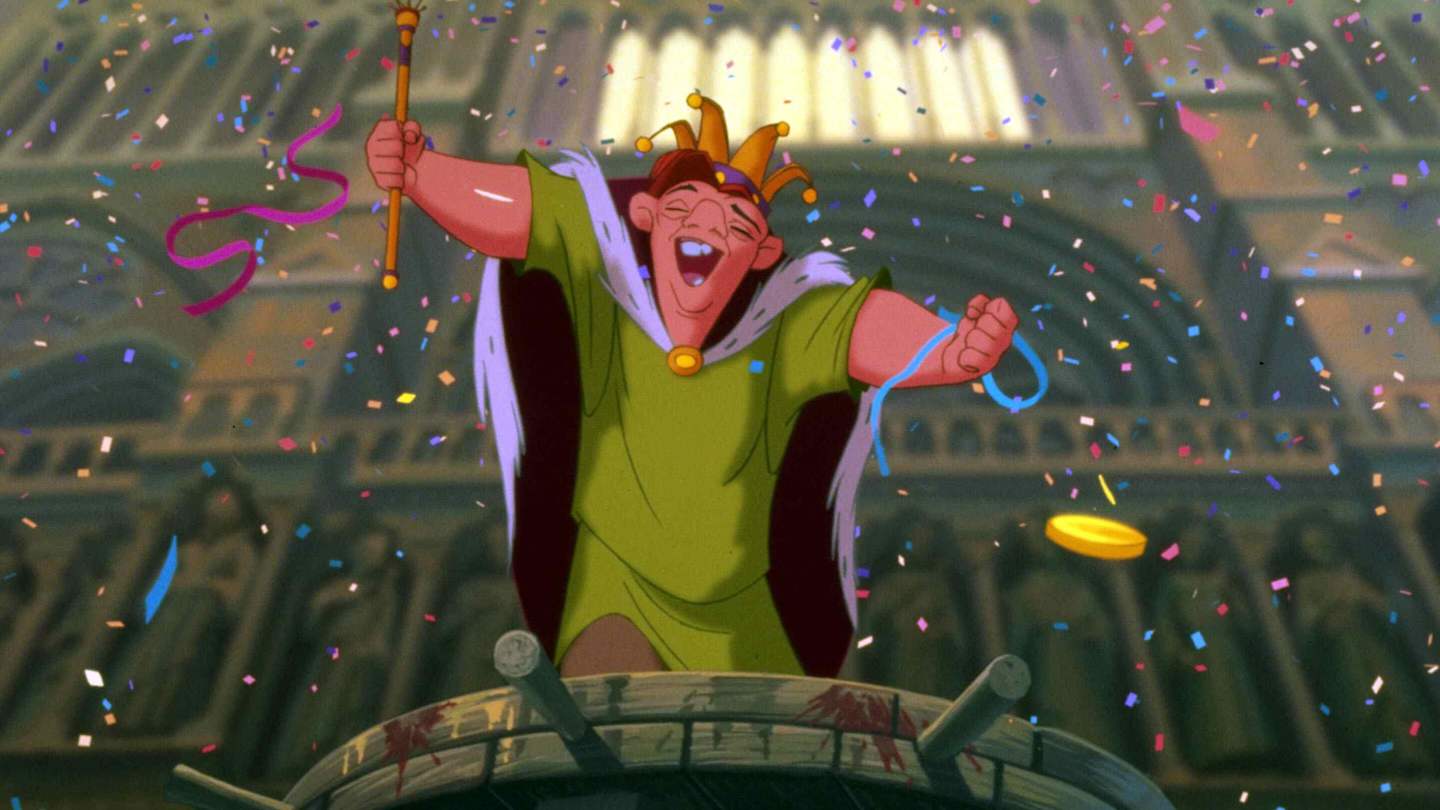
Disney’s adaptation softened the story significantly, especially the ending. In Hugo’s novel, the story moves toward tragedy; in Disney’s version, Quasimodo survives, becomes accepted by the people of Paris, and receives one of the studio’s most emotionally satisfying public embraces. That change was not just about making the movie more suitable for families. It also shifted the story’s center of gravity.
Instead of making the film primarily about doom, Disney made it about dignity. Quasimodo is not treated as a mysterious figure hiding in the background. He becomes the emotional heart of the movie: funny, shy, artistic, lonely, and brave. That focus helped transform a literary classic into an animated story about acceptance, prejudice, and the courage to be seen.
2. It Was Released in 1996 During the Disney Renaissance
The Hunchback of Notre Dame was released in the United States on June 21, 1996. It came at a time when Disney animation had regained enormous cultural power. After the success of The Little Mermaid, Beauty and the Beast, Aladdin, and The Lion King, audiences expected every new Disney animated musical to arrive with gorgeous animation, memorable songs, and enough emotional impact to make adults pretend they had “allergies.”
The film was directed by Gary Trousdale and Kirk Wise, the same directing team behind Beauty and the Beast. That matters because Beauty and the Beast had already proven that animated films could handle romance, atmosphere, and theatrical storytelling with sophistication. With Hunchback, Trousdale and Wise pushed that ambition even further.
Where many Disney Renaissance films built their stories around adventure, romance, or self-discovery, Hunchback leaned into moral conflict. It asked viewers to think about how society treats outsiders and how easily authority can become cruelty when wrapped in self-righteousness. Not bad for a movie that also includes three talking gargoyles cracking jokes from a bell tower.
3. The Voice Cast Was Packed With Distinctive Performers
The cast of Disney’s The Hunchback of Notre Dame brought theatrical weight and personality to the film. Tom Hulce voiced Quasimodo, giving him a vulnerable, youthful quality that makes the character feel warm rather than merely pitiful. Demi Moore voiced Esmeralda, adding confidence and defiance to a character who refuses to be intimidated by powerful men. Tony Jay voiced Frollo with chilling precision, turning every line into something polished, cold, and dangerous.
Kevin Kline played Captain Phoebus, giving the character a relaxed wit that helps him avoid becoming a cardboard heroic soldier. Paul Kandel voiced Clopin, the energetic narrator whose performance in “The Bells of Notre Dame” launches the film with the force of a stage musical. The gargoyles were voiced by Jason Alexander, Charles Kimbrough, and Mary Wickes, with Jane Withers later involved in completing Laverne’s role after Wickes died during production.
The result is a vocal ensemble that feels more Broadway than Saturday morning cartoon. The actors do not simply read lines; they shape personalities. Frollo’s menace, Quasimodo’s innocence, Esmeralda’s courage, and Clopin’s theatrical mischief all help make the film feel larger than life.
4. Alan Menken and Stephen Schwartz Created One of Disney’s Most Dramatic Scores
When people talk about the best Disney music, The Hunchback of Notre Dame deserves a very loud bell ring. The score was composed by Alan Menken, with lyrics by Stephen Schwartz. Menken was already a Disney musical legend thanks to films such as The Little Mermaid, Beauty and the Beast, and Aladdin. Schwartz had recently collaborated with Menken on Pocahontas.
For Hunchback, the music goes big. Really big. “The Bells of Notre Dame” opens the film like a cathedral-sized thunderclap, combining choir, narration, drama, and exposition. “Out There” gives Quasimodo his emotional anthem, turning his longing for ordinary human connection into a soaring musical statement. “God Help the Outcasts” offers one of Disney’s most compassionate songs, while “Hellfire” remains one of the darkest villain songs the studio has ever produced.
The soundtrack mixes traditional musical theater with choral grandeur and sacred-sounding textures. It does not just decorate the movie; it gives the story its spine. Without the music, Hunchback would still be beautiful. With the music, it feels monumental.
5. “Hellfire” Is One of Disney’s Most Intense Villain Songs
Disney villains often get memorable songs. Ursula has “Poor Unfortunate Souls.” Scar has “Be Prepared.” Gaston has, well, an entire pub full of people singing about his biceps. But Frollo’s “Hellfire” is in a different category.
The song explores guilt, obsession, desire, and hypocrisy. Frollo frames himself as righteous while blaming Esmeralda for his own feelings. That makes the number psychologically darker than a typical “I want power” villain song. He is not just planning to take over a kingdom or steal a magic lamp. He is wrestling with his own moral corruption and losing spectacularly.
Visually, the sequence is filled with firelight, shadow, red-robed figures, and religious imagery. It is dramatic, unsettling, and unforgettable. For many viewers, “Hellfire” is the moment they realize The Hunchback of Notre Dame is not playing by the usual animated musical rulebook. It is still Disney, but it has wandered into the Gothic section of the library and looks very comfortable there.
6. The Gargoyles Were Designed to Add Humor and Heart
Victor, Hugo, and Laverne are among the most debated characters in the movie. Some fans love them; others feel their comedy clashes with the film’s serious tone. Either way, their purpose is clear: they give Quasimodo companionship, comic relief, and a way to express thoughts he cannot share with other people.
In the story, Quasimodo has spent most of his life isolated in the bell tower. The gargoyles function as imaginary friends, emotional support, and a little bit of chaos carved in stone. They cheer him on, tease him, and encourage him to take risks. Their presence also helps make the film accessible to younger audiences, especially during scenes that might otherwise feel too heavy.
Are they tonally wild? Absolutely. One minute the movie is exploring persecution and moral abuse; the next, a gargoyle is making a joke like he wandered in from a vaudeville act. But that contrast is part of the film’s unusual identity. Hunchback is not neat. It is grand, messy, sincere, strange, and memorable.
7. Notre Dame Cathedral Is Practically a Character
Few Disney settings feel as important as Notre Dame Cathedral does in this film. The cathedral is not just a backdrop. It is Quasimodo’s home, prison, playground, sanctuary, and stage. Its towers, bells, shadows, and stone creatures shape the entire mood of the movie.
The animators made the building feel enormous and alive. Quasimodo moves through the cathedral with the ease of someone who knows every ledge, beam, bell, and secret corner. When he swings across ropes or climbs stone walls, the viewer feels both the danger and the freedom of his hidden world.
The film also uses the wider city of Paris to create contrast. The bell tower is high, private, and lonely. The streets below are colorful, noisy, crowded, and unpredictable. The Festival of Fools bursts with movement and humor, while the cathedral interiors carry silence and awe. That visual contrast helps the audience understand Quasimodo’s longing before he even says much. He does not simply want to go outside. He wants to belong to the human world he has watched from above.
8. The Animation Blended Hand-Drawn Art With Digital Tools
The Hunchback of Notre Dame arrived during a period when Disney was combining traditional hand-drawn animation with developing computer technology. The movie still has the warmth and expressiveness of classic 2D animation, but digital tools helped create scale, depth, and movement that would have been extremely difficult by hand alone.
Large crowd scenes, sweeping views of Paris, and dramatic camera movements around the cathedral helped give the film a cinematic scope. The Festival of Fools sequence, for example, feels packed with people, color, and motion. The city does not look like a flat stage; it feels like a living place.
One fun production-related detail often associated with the film is the sheer amount of drawing involved. Disney animation of this era required massive artistic labor, and Hunchback is remembered for the enormous number of pencils and drawings used to bring its world to life. In other words, before Quasimodo could ring one bell, a small forest of pencils had to bravely give itself to the cause.
9. The Premiere Was a Huge Event in New Orleans
The film did not simply appear quietly in theaters. Disney gave The Hunchback of Notre Dame a spectacular premiere in New Orleans on June 19, 1996, two days before its wide U.S. release. The choice of New Orleans made sense because of the city’s French cultural influence, architecture, music, and festive spirit.
The premiere included a major celebration connected to the Louisiana Superdome, complete with a parade and live entertainment. It was the kind of promotional event only Disney could make feel both like a movie launch and a civic festival. Imagine releasing a film about bells, cathedrals, crowds, and spectacle by creating an actual crowd spectacle. Subtle? Not exactly. Effective? Very Disney.
This massive launch showed how much confidence Disney had in the film. It was not treated as a small artistic experiment. It was promoted as a major animated musical event, even though its tone was more mature and morally complex than many family films of the period.
10. The Movie Earned Awards Attention and Built a Long Legacy
The Hunchback of Notre Dame was a commercial success, earning more than $300 million worldwide. It also received major awards recognition, including an Academy Award nomination for Best Original Musical or Comedy Score. That nomination makes sense: even people who debate the movie’s tone often agree that the music is extraordinary.
The film’s legacy continued beyond theaters. A direct-to-video sequel, The Hunchback of Notre Dame II, was released in 2002. Disney also expanded the story into stage productions, including a major musical version. The stage adaptation has become especially loved among theater fans because it leans even more heavily into the dramatic and choral power of the material.
Today, the movie is often described as one of Disney’s boldest animated features. It may not be as universally merchandised as The Lion King or as fairy-tale famous as Beauty and the Beast, but it has a passionate fan base. Many viewers discover it as children, then return as adults and realize, “Oh. This movie was saying a lot more than I understood.” That is the mark of a film with staying power.
Why Disney’s The Hunchback of Notre Dame Still Matters
The reason The Hunchback of Notre Dame continues to fascinate audiences is not just that it is darker than expected. Darkness alone does not make a movie meaningful. What makes this film endure is the way it uses darkness to highlight compassion.
Quasimodo’s story is about being judged before being known. Esmeralda’s story is about standing up for people who are mistreated. Phoebus’s story is about choosing conscience over orders. Frollo’s story is about the danger of power without empathy. These themes are not trapped in medieval Paris. They remain painfully recognizable.
The movie also challenges the usual Disney definition of a happy ending. Quasimodo does not “win” by getting the girl. Esmeralda loves Phoebus, and the film allows that truth to stand. Quasimodo’s victory is different: he steps into the world, receives acceptance, and no longer has to hide. That is a mature emotional resolution, and it is one of the film’s strongest choices.
In a studio catalog full of wishes, castles, and magical transformations, The Hunchback of Notre Dame offers a different kind of magic: the moment when a person who has been rejected finally feels seen.
Viewing Experience: What It Feels Like to Revisit the Movie Today
Watching Disney’s The Hunchback of Notre Dame today can be a surprisingly rich experience, especially for adults who first saw it as children. As a kid, you may remember the gargoyles, the bells, the Festival of Fools, or Quasimodo swinging through Notre Dame like the world’s most emotionally sincere parkour champion. As an adult, the heavier themes come forward with much more force.
The opening sequence alone feels different when revisited. “The Bells of Notre Dame” is not just an introduction; it is practically a mini-opera. It establishes character, conflict, tragedy, setting, and moral stakes in a few breathtaking minutes. Many animated films ease viewers into the story. Hunchback grabs you by the collar, points to a cathedral, and says, “We have things to discuss.”
One of the most powerful viewing experiences is realizing how carefully Quasimodo is written. He is gentle, but not weak. Innocent, but not foolish. Afraid, but still capable of great courage. His longing in “Out There” feels universal because it is not only about leaving a tower. It is about wanting to participate in life. Anyone who has ever felt excluded, underestimated, or stuck behind an invisible wall can recognize that feeling.
Esmeralda also becomes more impressive with time. She is compassionate without being passive, brave without being reckless, and funny without being reduced to comic relief. Her “God Help the Outcasts” scene remains one of the film’s emotional anchors because it contrasts sharply with the self-centered prayers around her. She does not ask for wealth or glory. She asks for mercy for people who are suffering. That is a simple idea, but the film presents it beautifully.
Then there is Frollo, who may be one of Disney’s most disturbing villains because he feels frighteningly human. He does not have magic powers. He is not a dragon, sea witch, or lion with a suspiciously theatrical mane. He is a powerful man who believes his cruelty is virtue. That makes him uncomfortable to watch, which is exactly the point.
Revisiting the movie also reveals why its tonal shifts remain so widely discussed. The gargoyle comedy can feel jarring beside scenes of persecution and obsession. Yet for some viewers, that unevenness makes the movie more interesting. It reflects a studio trying to balance family entertainment with unusually mature material. Not every swing lands, but the ambition is hard to ignore.
By the end, the film leaves a strong emotional aftertaste. It is not the easiest Disney Renaissance movie to categorize, and that may be why people keep returning to it. The Hunchback of Notre Dame is beautiful, strange, intense, funny, uncomfortable, and deeply sincere. Like Notre Dame itself, it is built from shadows and light, stone and song, fear and hope. That combination is exactly what makes it unforgettable.
Conclusion
Disney’s The Hunchback of Notre Dame remains one of the studio’s most ambitious animated films. It took a famously dark novel, reshaped it for family audiences, and still preserved major themes of injustice, compassion, isolation, and moral courage. With powerful music by Alan Menken and Stephen Schwartz, striking animation, a memorable voice cast, and one of Disney’s most complex villains, the film stands as a bold entry in the Disney Renaissance.
It may not be the lightest Disney movie, but that is exactly why it continues to matter. The Hunchback of Notre Dame reminds viewers that true beauty is not about appearance, status, or public approval. Sometimes, it is found in kindness, courage, and the willingness to stand with people the world has pushed aside. And yes, occasionally it comes with singing gargoyles. Nobody said masterpieces had to be completely normal.