Childhood nostalgia has a sneaky way of arriving uninvited. One minute you are a responsible adult comparing grocery prices like a tired accountant; the next, you see an ice cream cart, hear distant thunder, or smell an old book, and suddenly you are eight years old again, wearing questionable shorts and believing the ceiling fan might be a helicopter if you squint hard enough.
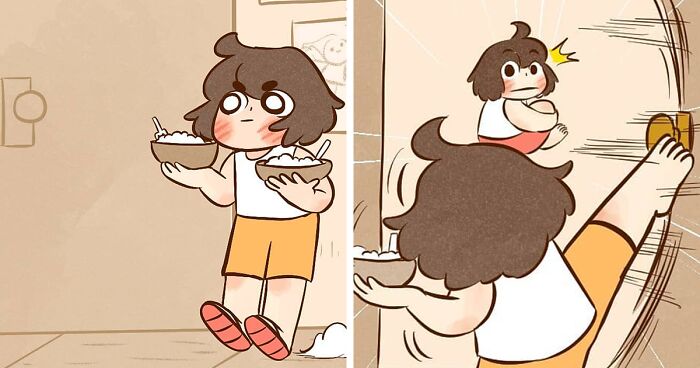
“My Childhood Nostalgia In 31 Wholesome Comics” captures exactly that feeling: the warm, funny, slightly dramatic memories that turn ordinary childhood moments into tiny legends. These comics, created by Tin, the artist behind the slice-of-life comic world Oh My Goles, revisit the little adventures that made growing up feel magical. They are not about superheroes saving the universe. They are about blankets becoming forts, clouds becoming friends, snacks becoming treasures, and imagination doing overtime without asking for a paycheck.
That is the charm of wholesome childhood comics. They remind us that childhood was not always perfect, but it was full of small, glowing scenes: waiting for rain, running from imaginary monsters, learning strange facts from grandparents, playing video games, getting a haircut that felt like a personal tragedy, and making wishes as if the sky had a customer service department.
Why Childhood Nostalgia Feels So Powerful
Nostalgia is more than “remembering the good old days.” Psychologists often describe it as a bittersweet emotion, meaning it mixes joy with a tiny pinch of longing. That combination is why childhood memories can feel both comforting and achy. You smile because you remember the moment, but you also realize you cannot step back into it. Time, annoyingly, refuses to accept returns.
Research on nostalgia has linked nostalgic memories with social connection, meaning, self-continuity, and emotional comfort. In plain English, remembering childhood can help people feel rooted. It reminds us that the adult answering emails today is still connected to the kid who once believed a duvet cover could become a royal cape. That bridge between past and present is one reason childhood comics resonate so deeply.
Comics are especially good at carrying nostalgia because they combine words, expressions, body language, timing, and visual exaggeration. A single panel can show the giant size of a childhood fear, the heroic importance of a biscuit, or the Olympic-level seriousness of racing raindrops down a window. What might take a long paragraph to explain can be captured in one tiny face drawn with perfect comic panic.
The Magic Behind “My Childhood Nostalgia In 31 Wholesome Comics”
The series works because it understands that childhood memories are rarely organized like formal stories. They arrive as snapshots: Grandma saying something unforgettable, a thunderstorm turning the house into a dramatic movie set, a train ride feeling like a grand expedition, or a haircut becoming a crisis worthy of a national press conference.
Tin’s comics lean into that honest randomness. Childhood is not a clean timeline. It is a drawer full of stickers, snack wrappers, broken crayons, and memories that somehow survived decades. The 31 wholesome comics feel like opening that drawer and finding a small version of yourself waving from the mess.
1. Everyday Moments Become Epic Adventures
One of the most relatable parts of the collection is how ordinary scenes become enormous through a child’s eyes. A train is not transportation; it is a rolling kingdom. A duvet cover is not bedding; it is a portal, a costume, a cave, and possibly a suspicious ghost. Thunder is not weather; it is the sky dropping furniture upstairs.
This is how children naturally interpret the world. They take what adults see as routine and turn it into a story. The comics capture that mental movie-making machine beautifully. They remind readers that childhood imagination did not need expensive toys or perfect conditions. Give a child a blanket, a shadow, a cloud, or a snack, and suddenly there is a plot.
2. Family Memories Carry the Warmest Weight
Comics like “Grandma” and other family-centered memories show why nostalgia often feels social. Many childhood scenes are not just about what happened, but who was there. A grandparent, parent, sibling, friend, teacher, or neighbor can become the emotional anchor of a memory.
That is why a simple family moment can hit harder than a grand vacation. We may forget the exact year or location, but we remember the feeling of being cared for. We remember someone laughing, scolding, feeding us, protecting us, or telling us a story with absolute confidence even if it sounded suspiciously made up. Grandparents, in particular, often become the keepers of childhood myth: part historian, part snack distributor, part mysterious wizard.
3. Childhood Fears Were Tiny but Terrifying
Wholesome nostalgia is not only soft and sunny. It also includes the fears that now seem funny: horror stories told at the wrong time, strange noises at night, elevators that felt like metal traps, and thunder that made every window look dramatic. These fears were real in the moment. A shadow on the wall was not “just a shadow.” It was clearly a creature with unpaid rent.
The comics handle childhood fear with affection rather than mockery. They show how kids try to understand a world that feels huge, unpredictable, and occasionally too loud. As adults, we laugh because we survived the monster under the bed. But we also recognize the emotional truth: childhood imagination made joy bigger, and it made fear bigger too.
Why Wholesome Comics Are So Shareable
Wholesome comics spread quickly online because they offer a break from the heavy, noisy parts of the internet. They are easy to read, emotionally clear, and instantly relatable. You do not need a complicated backstory to enjoy a comic about racing raindrops, playing video games, or wishing for something with full childhood seriousness.
Unlike sarcasm-heavy humor, wholesome comics invite people in. They say, “Remember this?” rather than “Look how clever I am.” That invitation creates connection. Readers share them with captions like “This was me,” “I forgot about this,” or “Why did we all do this?” The best nostalgic comics create a little community around a memory.
Visual Simplicity Helps the Emotion Land
The style of wholesome childhood comics usually relies on expressive faces, soft exaggeration, clear body language, and playful pacing. This makes the emotional beats easy to understand. A wide-eyed child looking at thunder says more than a paragraph about fear. A tiny figure buried in a duvet tells us everything about comfort, imagination, and the glorious childhood skill of disappearing from responsibility.
That simplicity is not laziness. It is smart storytelling. Comics do not need to draw every detail of a childhood bedroom to make readers remember their own. In fact, leaving space allows the audience to fill in the blanks with their personal memories. A comic window becomes your childhood window. A snack becomes your snack. A rainy day becomes the one you forgot you remembered.
The 31 Comic Themes That Make This Collection Relatable
The collection includes a mix of playful childhood snapshots: family, food, weather, school, imagination, games, strange fears, and tiny acts of rebellion. Titles such as “Biscuit,” “Thunder,” “Train,” “Duvet Covers,” “Weather Bender,” “White Hair,” “Elevator,” “Matilda,” “Bad Hearing,” “Cow,” “Horror Stories,” “Ice Cream Cart,” “Sailor Tin,” “Snow,” “Castle,” “Electric Fan,” “Bestest Cloud,” “Meat Spirit,” “Frog,” “I Wish,” “Haircut,” “Tremors,” “Racing Raindrops,” “Video Games,” “Fishing,” “Mango Flower,” “School,” and “Make Up” all point to the wonderfully random archive of childhood memory.
What makes these topics strong is their specificity. “Childhood nostalgia” is broad, but “racing raindrops on a window” is instantly vivid. “Imagination” is abstract, but pretending to control the weather like a tiny wizard is concrete. “Family memories” is general, but remembering Grandma in a comic panel can feel personal.
Food Memories: Biscuits, Ice Cream, and the Snack Economy
Many childhood memories are powered by food. Biscuits, ice cream carts, mango flowers, and mysterious kitchen smells can unlock entire emotional worlds. A snack was never just a snack when you were a child. It was currency, comfort, reward, negotiation tool, and sometimes the only thing standing between peace and a dramatic floor tantrum.
Food also links memory to the senses. Taste and smell are deeply connected to emotional recall, which is why one bite of a childhood treat can feel like opening a time capsule. Comics about food nostalgia work because they do not need to explain much. The reader already knows. We all had a snack that felt sacred.
Weather Memories: Thunder, Snow, Clouds, and Rain Races
Weather is one of childhood’s greatest special effects departments. Rain turns windows into racetracks. Clouds become animals, castles, or best friends. Snow turns the ordinary world into a clean white playground. Thunder transforms a quiet room into a suspense scene.
The weather-themed comics are especially wholesome because they show how children find entertainment in things adults often ignore. A rainy day may be inconvenient to an adult with errands, but to a child it can be a tournament, a concert, a science experiment, and a reason to press your face against the glass like a tiny philosopher.
School Memories: Tiny Lessons, Big Feelings
School nostalgia is complicated in the best way. It includes friendships, boredom, embarrassment, discovery, lunchboxes, pencils, classroom rules, and the legendary thrill of a teacher rolling in a TV cart. In childhood comics, school is often less about grades and more about feelings: wanting to belong, trying to understand adults, and surviving social moments that felt enormous.
A simple school memory can reveal the emotional scale of being young. Getting called on unexpectedly could feel like a courtroom trial. Bringing the wrong supplies could feel like public disgrace. Making a friend could feel like winning a championship. Childhood comics make those small dramas funny without dismissing how real they felt.
How Comics Reconnect Us With the Inner Child
The phrase “inner child” can sound like something embroidered on a pillow in a therapist’s waiting room, but the idea is useful. It refers to the playful, vulnerable, curious part of us that remembers what it was like to experience the world before adulthood added bills, passwords, and the mysterious need to stretch before sneezing.
Creating or reading childhood comics can reconnect people with that part of themselves. The act of drawing a memory turns it into something visible. It gives shape to feelings that may have been tucked away for years. For readers, the comic becomes a gentle prompt: What did I love? What scared me? What did I believe? What ordinary thing once felt magical?
This is why wholesome childhood comics do more than entertain. They help us remember that joy was often simple. A blanket fort did not need interior design. A video game did not need perfect graphics to be thrilling. A frog could become a full afternoon’s event. A cloud could be the best cloud because, obviously, it had personality.
Why Adults Need Childhood Nostalgia
Adult life rewards efficiency, productivity, and planning. Childhood nostalgia pushes back gently. It says, “Yes, your calendar is full, but remember when you stared at raindrops and picked a winner?” That reminder matters. It brings back playfulness, and playfulness is not childish. It is human.
When adults revisit wholesome memories, they often rediscover a softer way of seeing. Nostalgia can encourage gratitude for small things, compassion for our younger selves, and connection with others who remember similar experiences. It can also inspire creativity. Many artists, writers, and comic creators use childhood memories as raw material because those memories are emotionally vivid and visually rich.
The 31 comics in this nostalgia collection feel successful because they do not try to make childhood look perfect. Instead, they make it feel alive. Childhood was messy, funny, dramatic, awkward, and sweet. Sometimes all at once. Usually before breakfast.
Lessons From “My Childhood Nostalgia In 31 Wholesome Comics”
Small Memories Deserve Big Attention
The collection proves that a memory does not need to be grand to be meaningful. You do not need a once-in-a-lifetime event to tell a good story. Sometimes the best stories come from a haircut, a cloud, a school day, or a weird childhood theory about how the world works.
Humor Makes Nostalgia Easier to Share
Humor keeps nostalgia from becoming too heavy. A funny comic about childhood fear, confusion, or imagination allows readers to laugh with their past selves. That laughter is gentle. It does not shame the child we were; it celebrates the strange little genius who thought a fan might launch them into adventure.
Wholesome Art Builds Emotional Community
When people read nostalgic comics, they often respond with their own stories. One comic about an ice cream cart may lead someone to remember chasing one down the street. A comic about video games may spark memories of sibling rivalries and controllers with suspiciously sticky buttons. This exchange turns personal nostalgia into shared nostalgia.
500-Word Personal Experience Section: Growing Up Inside Tiny Comic Panels
Thinking about “My Childhood Nostalgia In 31 Wholesome Comics” feels like walking into an old room where every object suddenly remembers your name. The comics make me think of the way childhood turned the simplest places into entire universes. A living room was never just a living room. It was a battlefield, a castle, a stage, a spaceship, or a secret office where very important crayon documents were signed.
One of the strongest memories tied to this theme is the strange magic of rainy days. As a child, sitting by the window and watching raindrops slide down the glass felt like live sports. You chose one drop, named it something dramatic, and cheered silently as it merged, dodged, accelerated, and either won glory or disappeared into watery betrayal. No ticket required. No announcer needed. Just rain, glass, and the belief that your chosen raindrop had a destiny.
Another memory is the blanket world. Duvet covers, sheets, and pillows were the original architecture of imagination. A blanket over two chairs became a fort. A pillow wall became a military defense system. A sheet over your head became invisibility, even though every adult could clearly see your feet. That did not matter. Childhood logic was legally binding. If you could not see them, they could not see you. Science had not yet been consulted.
Food also had its own mythology. Ice cream carts felt like emergency vehicles for happiness. The sound of one approaching could turn a quiet afternoon into a neighborhood alert system. Biscuits, candies, fruit, and little homemade treats were not just food; they were emotional landmarks. You remember who gave them to you, where you sat, and whether you tried to make them last longer by taking bites smaller than legally necessary.
Then there were the fears. Childhood fear had incredible production value. Thunder was enormous. Dark hallways were suspicious. Horror stories told by older kids should have been illegal after sunset. Elevators felt mysterious, especially when they made noises that sounded like a robot clearing its throat. Looking back, those fears are funny, but they also show how intensely children feel the world. Everything is bigger when you are small.
What wholesome childhood comics understand is that these memories do not need polishing. Their charm comes from being oddly specific. The weird haircut. The frog you stared at for too long. The video game you played until your fingers felt heroic. The school day that seemed endless. The cloud that looked like something only you could identify. These are the moments that quietly build a person.
As adults, we often chase big milestones, but childhood nostalgia reminds us that life is also made of tiny scenes. A comic panel can preserve those scenes better than a photograph because it captures not only what happened, but how it felt. The world looked taller. The snacks tasted better. The rain had contestants. The fan had personality. The sky accepted wishes. And for a little while, everything ordinary was secretly magical.
Conclusion: Why These 31 Wholesome Comics Stay With Us
“My Childhood Nostalgia In 31 Wholesome Comics” is more than a cute comic collection. It is a reminder that childhood lives on in the tiny memories we carry: the weather we watched, the snacks we loved, the fears we outgrew, the games we played, and the family moments that still warm us from the inside.
These comics work because they honor the emotional truth of being a child. They do not need grand lessons or dramatic plot twists. Their power comes from recognizing the little things: a train ride, a thunderstorm, a haircut, a school day, a cloud, a frog, an ice cream cart. Through humor and tenderness, they remind readers that growing up does not mean losing the magic. Sometimes it simply means learning how to recognize it again.
Note: This article is an original, research-informed interpretation written for web publication. It discusses the topic in a fresh way without copying the source material or reproducing comic panels.