Some people tap their foot. Some click a pen until everyone nearby begins questioning their life choices. Others twist a ring, squeeze a stress ball, or roll a tiny object between their fingers while their brain tries to behave like a calm, organized filing cabinet instead of a browser with 47 tabs open.
That is where fidget toys come in. The best fidget toys for anxiety in 2024 are small, portable sensory tools designed to give restless hands something useful to do. They can offer tactile input, repetitive motion, gentle resistance, or quiet stimulation. For many people, that tiny bit of movement feels grounding during stressful meetings, homework sessions, long commutes, phone calls, waiting rooms, or those mysterious moments when anxiety shows up for no reason like an uninvited raccoon.
Still, let’s be clear: fidget toys do not “cure” anxiety. They are not a replacement for therapy, medication, breathing exercises, sleep, movement, or professional support when anxiety affects daily life. Think of them as helpful sidekicks. Batman has gadgets; anxious hands can have a squishy cube.
This guide breaks down 12 of the best fidget toys for anxiety in 2024, including options for adults, teens, students, office workers, kids, and anyone who wants calm without carrying a full yoga studio in their backpack.
What Makes a Good Fidget Toy for Anxiety?
A good anxiety fidget toy should be satisfying enough to use repeatedly but not so distracting that it steals your attention. The goal is gentle regulation, not accidentally launching a plastic spinner across the room during a Zoom call.
The best choices usually have a few qualities in common: they are quiet, durable, portable, easy to clean, age-appropriate, and matched to the user’s sensory needs. Some people prefer soft resistance, like a stress ball or gel cube. Others like smooth repetitive motion, such as a roller, chain, or ring. People who need stronger tactile input may prefer textured toys, putty, or twistable tools.
For children, safety matters even more. Avoid small parts for younger kids, check age labels, supervise use, and keep magnetic fidgets away from children who may put objects in their mouth. High-powered magnets can be dangerous if swallowed, so magnetic desk toys are best reserved for responsible teens and adults.
12 Best Fidget Toys for Anxiety in 2024
1. NeeDoh Nice Cube
Best for: squishy stress relief, teens, adults, sensory seekers
The NeeDoh Nice Cube became one of the most talked-about sensory toys because it delivers exactly what anxious hands often want: a slow, dense, satisfyingly squishy squeeze. Unlike a basic foam stress ball, this cube has a firmer gel-like feel that changes depending on how quickly you squeeze it. Slow pressure feels soft and calming; a faster squeeze feels more resistant.
It is especially useful for people who carry tension in their hands, clench their fists, or need a physical outlet during stressful moments. Keep one at your desk, by your bed, or in a school bag. It is not the most discreet fidget, because people will absolutely ask, “What is that?” But once they squeeze it, you may never get it back.
Why it works: The repetitive squeeze-and-release motion can create a grounding rhythm and help redirect nervous energy.
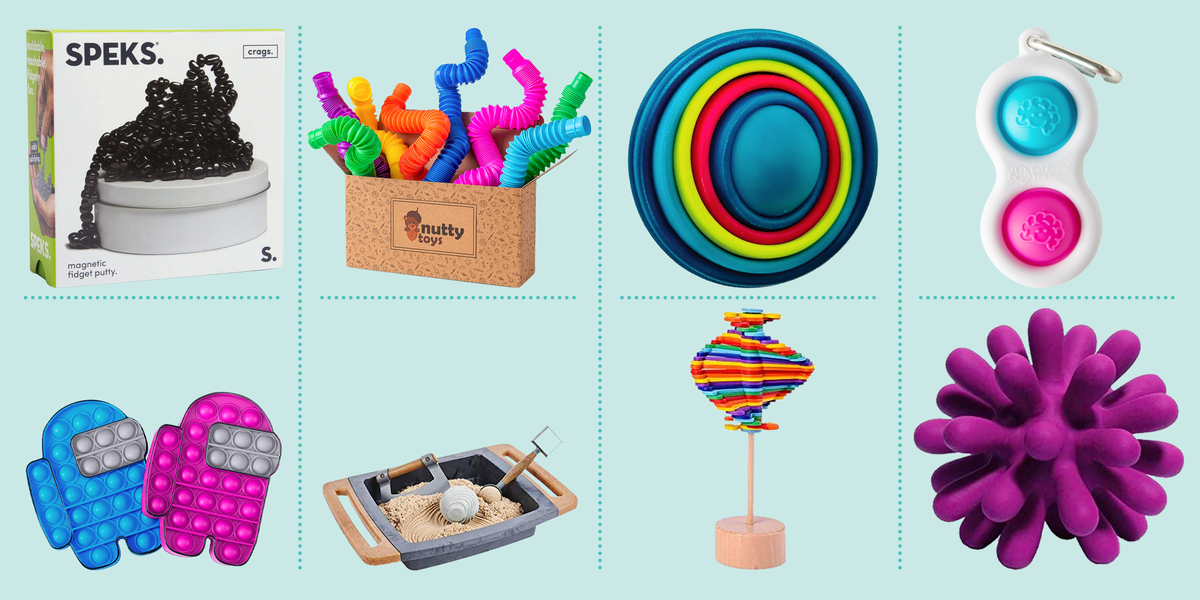
2. Speks Crags Magnetic Putty
Best for: adults, desk use, stylish sensory play
Speks Crags Magnetic Putty is not traditional putty. Instead, it uses small magnetic stones that clump, shift, and pour through your fingers like a tiny desk avalanche. It gives a mix of visual and tactile satisfaction, making it a strong choice for adults who want a fidget toy that looks more like a modern desk accessory than something borrowed from a kindergarten treasure box.
It is excellent for short breaks between tasks. You can scoop the stones, let them fall back into the tin, or shape them into small forms. The sensation is smooth, cool, and surprisingly calming. However, because it contains magnets, it is not appropriate for young children or households where small kids may access it.
Why it works: The combination of texture, movement, and visual feedback makes it ideal for mindful desk breaks.
3. Tom’s Fidgets Flippy Chain
Best for: quiet fidgeting, pockets, work, travel
The Flippy Chain is one of the most practical anxiety fidget toys because it is small, nearly silent, and easy to use with one hand. It usually features metal rings and chain links that flip around smoothly, giving your fingers a repetitive motion without lights, noise, or drama.
This is the kind of fidget toy you can use in a classroom, office, waiting room, or car ride without announcing your presence to the entire zip code. It fits in a pocket and can be attached to a keychain, making it great for people who lose small items because their brain files them under “probably somewhere.”
Why it works: The smooth flipping motion is predictable, quiet, and easy to repeat during anxious moments.
4. ONO Roller Jr.
Best for: adults, office use, silent fidgeting
The ONO Roller Jr. is designed for people who want a fidget toy that feels grown-up. It works by rolling two cylinders in your hand, creating a smooth, continuous motion. There are no clicks, pops, or squeaks, which makes it ideal for meetings, study sessions, and shared spaces.
Compared with brighter fidget toys, the ONO Roller has a clean design and a more premium feel. It is especially good for people who tend to click pens, crack knuckles, or constantly reach for their phone when stressed. The motion keeps your hand occupied without pulling your eyes away from the task.
Why it works: It gives anxious energy a quiet physical outlet while supporting focus.
5. Tangle Therapy Relax Toy
Best for: textured touch, hand movement, sensory regulation
The Tangle Therapy Relax Toy is a classic for a reason. It is made of connected curved segments that twist and turn endlessly in your hands. Many versions include soft rubberized textures, which add extra tactile feedback for people who like bumps, ridges, and movement.
This is a great fidget toy for anxiety because it does not require a learning curve. You simply twist it, fold it, rotate it, and let your fingers wander. It is helpful during reading, phone calls, therapy sessions, or moments when you feel restless but do not want to scroll through your phone for the fourteenth time.
Why it works: Continuous twisting gives the hands movement while the texture adds calming sensory input.
6. Crazy Aaron’s Thinking Putty
Best for: creative fidgeting, stronger hand input, teens and adults
Thinking Putty is a flexible choice because it can be stretched, rolled, pulled, bounced, kneaded, and shaped. For people who need more hand resistance than a simple fidget cube provides, putty can be deeply satisfying.
It is especially useful for people who like to keep their hands busy while brainstorming, studying, or processing emotions. Some versions include color shifts, sparkles, or glow effects, which add visual interest. The downside is that putty is less convenient in messy environments. Use it at a desk or table, and do not introduce it to carpet unless you enjoy household mysteries.
Why it works: The kneading motion can help release tension and provide stronger tactile feedback.
7. Fat Brain Toys Simpl Dimpl
Best for: kids, backpacks, quick sensory breaks
The Simpl Dimpl is a small keychain-style pop toy with silicone bubbles that press in and out. It is simple, colorful, and portable. For younger users, it can be a friendly introduction to fidget toys without too many moving parts.
Adults may like it too, especially if they enjoy the satisfying pop of bubble-wrap but do not want to explain why they are hoarding shipping materials. The main thing to consider is sound. It is quieter than many toys, but it still makes a soft popping noise, so it may not be perfect for silent classrooms or formal meetings.
Why it works: The pop-in, pop-out action gives clear tactile feedback and a predictable rhythm.
8. Fidget Dodecagon
Best for: people who need variety
A fidget dodecagon is a multi-sided handheld toy with different buttons, switches, gears, joysticks, rollers, and textures. It is basically a tiny amusement park for your fingers. For someone who gets bored with one type of motion, this can be a strong option.
The downside is that some features may make noise, so it is not always ideal for quiet environments. But for home use, travel, or a calm-down kit, it offers a lot of sensory choices in one compact tool. It can also help users discover what kind of fidgeting actually feels best: clicking, rolling, spinning, rubbing, or pressing.
Why it works: Multiple textures and actions let users switch between sensory inputs depending on their mood.
9. Möbii Fidget Ball
Best for: one-handed fidgeting, texture lovers, older kids and adults
The Möbii Fidget Ball is made from interlocking rings that create a smooth, looped texture. You can roll it in your palm, rotate the rings, or simply rub the surface with your thumb. It is small, elegant, and more discreet than brightly colored toys.
This is a good choice for people who like repetitive touch rather than squeezing or clicking. It can work well during phone calls, reading, or waiting in line. Because it is small, it should be kept away from younger children who may put things in their mouth.
Why it works: The looping texture gives a calming tactile pattern without requiring much effort.
10. Pop Tubes
Best for: kids, sensory play, movement breaks
Pop tubes are plastic tubes that stretch, bend, and make a popping sound when pulled. They are fun, affordable, and popular with children who need a more active sensory outlet. They can be used for stretching, bending, twisting, connecting, and making shapes.
Are they discreet? Absolutely not. Pop tubes are the extroverts of the fidget world. They make noise and demand attention. But for home use, therapy rooms, play breaks, or sensory corners, they can be excellent tools for kids who need to release energy physically.
Why it works: The stretching resistance and popping sound provide strong sensory feedback.
11. Acupressure Rings
Best for: adults, discreet use, tactile pressure
Acupressure rings are small metal rings that roll up and down the finger, creating firm prickly pressure. They are not painful when used gently, but they do provide a stronger sensation than soft fidgets. Many adults like them because they are tiny, affordable, and easy to keep in a pocket or pencil case.
These are especially useful for people who need grounding through touch. Rolling the ring slowly can bring attention back to the body during anxious thoughts. However, they may not be comfortable for people with sensitive skin, so start gently.
Why it works: The firm pressure creates a noticeable tactile sensation that may help redirect attention.
12. ARK Chewable Jewelry
Best for: oral sensory needs, supervised use, kids and teens
Some people fidget with their hands. Others chew pencils, hoodie strings, nails, pen caps, or anything else unfortunate enough to enter the danger zone. Chewable jewelry gives oral sensory seekers a safer alternative when chosen correctly.
ARK-style chewable pendants are designed for chewing and come in different firmness levels. They can be useful for kids, teens, and adults who need oral input to feel regulated. The key is to choose age-appropriate products, inspect them often for wear, and follow the manufacturer’s safety guidance. Chewable jewelry should never be shared, and it should be replaced if damaged.
Why it works: It gives oral sensory input in a more intentional and hygienic way than chewing random objects.
How to Choose the Best Fidget Toy for Anxiety
Match the Toy to the Situation
A loud pop tube may be perfect at home but terrible during a test. A silent roller may be perfect for work but too subtle for a child who needs big sensory feedback. Think about where the toy will be used most: school, office, bedroom, therapy, car, travel, or bedtime routine.
Choose the Right Sensory Style
If you like pressure, choose stress balls, gel cubes, putty, or acupressure rings. If you like motion, choose rollers, chains, Tangles, or fidget balls. If you like visual calm, choose magnetic stones, sensory bottles, or slow-moving desk toys. If you like oral input, choose safe chewable jewelry made for that purpose.
Keep It Quiet When Needed
For work, school, and public places, quiet fidget toys are usually best. Look for rollers, rings, chains, smooth stones, or soft squishies. Save the clicking, popping, stretching, and squeaking toys for home unless everyone around you has saint-level patience.
Think About Cleaning
Fidget toys live in pockets, backpacks, desks, and sometimes on floors. Choose washable materials when possible. Silicone, plastic, and metal are usually easier to clean than foam or sticky gel toys. Putty should stay in its container when not in use, because nobody wants a surprise blob in a backpack.
Check Age and Safety Labels
Small parts, magnets, and chewable items require extra attention. For younger children, choose larger toys without detachable pieces. For teens and adults, magnetic and more complex fidgets can be fine when used responsibly, but they should still be kept away from younger siblings and pets.
Do Fidget Toys Really Help Anxiety?
Fidget toys may help some people feel calmer by giving nervous energy a physical outlet. They can also support grounding by bringing attention back to touch, pressure, rhythm, or movement. For example, squeezing a stress ball during a tense phone call may help someone avoid nail biting. Rolling a quiet fidget during homework may help another person stay seated longer.
However, results vary. Some people find fidgets calming; others find them distracting. The best approach is to test different types and notice how your body responds. A useful fidget should make it easier to stay present, not harder.
For ongoing anxiety, fidget toys work best as part of a broader toolkit. That may include deep breathing, exercise, journaling, therapy, enough sleep, reducing caffeine, mindfulness, or talking with a trusted professional. A fidget toy is a tool, not a magic wand. If magic wands worked, most of us would have used one on our inbox by now.
500-Word Experience Section: What It Feels Like to Use Fidget Toys for Anxiety
The first thing many people notice about fidget toys is not some dramatic movie-style transformation. Nobody squeezes a stress ball once and suddenly floats through life like a relaxed cloud wearing sunglasses. The real benefit is usually smaller and more practical. It is the tiny pause between feeling overwhelmed and reacting. It is having something to do with your hands when your thoughts start running laps.
Imagine sitting before a presentation. Your stomach feels busy, your fingers keep moving, and your brain is rehearsing every possible disaster, including one where the projector becomes sentient and judges your font choice. A quiet fidget toy, like an ONO Roller or Flippy Chain, gives that nervous energy somewhere to go. Your hand moves, but your eyes can stay on your notes. The motion becomes a rhythm. It does not erase anxiety, but it may turn the volume down a notch.
For students, the experience can be similar. A teen doing homework may reach for a Tangle or Simpl Dimpl when reading feels impossible. The toy gives just enough stimulation to stay seated without turning the study session into a full escape mission. For kids, a squishy toy or pop fidget can become part of a calm-down routine. They may not have the words to explain stress, but they can squeeze, press, stretch, and slowly return to themselves.
Adults often prefer fidget toys that do not look childish. This is why magnetic stones, smooth rollers, acupressure rings, and minimalist desk toys are so popular. They blend into a workspace. A person can use them during a meeting without feeling like they brought a party favor to quarterly planning. The best adult fidget toys feel intentional, not embarrassing.
One helpful experience is learning which texture matches your anxiety style. Some people want firm resistance because stress feels like pressure in the body. They may prefer a NeeDoh cube or putty. Others feel overstimulated and need something smooth and quiet, like a Möbii ball or roller. Some people need sharp sensory grounding, so an acupressure ring feels better than a soft toy. There is no universal “best” because anxiety is annoyingly personal.
Another useful lesson: convenience matters. A fidget toy that stays in a drawer is basically decorative anxiety furniture. The most helpful one is the toy you actually carry, keep nearby, and use before stress hits level ten. Put one in a backpack, one near your desk, or one beside your bed. Make it easy to reach.
Over time, fidget toys can become part of a small ritual: breathe in, squeeze slowly, breathe out, release. Roll the ring. Twist the Tangle. Press the bubble. Notice the texture. Return to the moment. It is simple, but simple can be powerful. In a world that constantly asks the brain to multitask, a small object in the hand can quietly say, “Stay here.”
Final Thoughts
The best fidget toys for anxiety in 2024 are not one-size-fits-all. The right choice depends on age, setting, sensory preference, noise tolerance, and safety needs. For quiet adult use, the ONO Roller Jr., Flippy Chain, Speks Crags, and acupressure rings are strong picks. For kids and teens, the Simpl Dimpl, NeeDoh Nice Cube, Tangle Therapy Relax Toy, Pop Tubes, and fidget dodecagon offer more playful sensory support.
The smartest strategy is to choose one or two toys that match your real-life routines. Keep them where anxiety usually appears: your desk, backpack, car, bedside table, or study space. Used thoughtfully, a fidget toy can become a small but meaningful part of an anxiety toolkitquiet, portable, and much less annoying than clicking a pen until your friends stage an intervention.