Once upon a timeline scroll, mugshots stopped being just bleak legal receipts and turned into viral thirst traps.
From an alleged assassin whose photo ignited fevered comment sections, to a Hollywood icon whose decades-old booking photo keeps resurfacing as “proof” that some people are genetically incapable of taking a bad picture, the internet has turned the police lineup into a rankings list.
This article breaks down how we got from Luigi Mangione to Keanu Reeves (and the other 29 faces in between), why “criminal heartthrob” culture keeps exploding, and what it says about desire, power, and our very questionable sense of priorities.
The Rise Of The Viral Mugshot Crush
Mugshots were designed as bureaucratic evidence: flat lighting, neutral face, bad vibes.
Then social media, celebrity culture, and meme pages arrived and collectively said, “But what if… he’s kinda cute?”
Police departments began posting booking photos online; blogs, tabloids, and Twitter/X did the rest.
A single flattering angle plus a chaotic comments section could turn an unknown defendant into a global talking point overnight, long before a judge sees a shred of evidence.
Psychologists and media critics point to a messy cocktail: our obsession with true crime, the appeal of “bad boy/girl” narratives, algorithmic outrage, and an online attention economy that rewards anything extremebeauty, horror, or ideally, both in one image.
When you wrap serious allegations in a made-for-TikTok jawline, clicks follow. So do ethical landmines.
From Headlines To Heart-Eyes: Key Cases Shaping The Trend
Think of the “31 viral mugshots” less as a definitive countdown and more as an ecosystem:
a rotating cast of arrestees, celebrities, and semi-famous strangers whose faces people share, rate, and remix.
Here are some of the most influentialand complicatedfigures in that gallery.
1. Luigi Mangione: When “Hot Assassin” Culture Crosses A Line
Luigi Mangione’s mugshot circulated in late 2024 after he was arrested and charged in connection with the fatal shooting of a major health care executive.
Within hours, social media comment sections were calling him a “hot assassin,” editing his image into fan cams, and half-jokingly proposing marriagedespite the gravity of the allegations and the devastation felt by the victim’s family.
This reaction triggered fierce backlash from journalists, ethicists, and officials who argued that aesthetic obsession was trivializing a potential political and corporate violence story.
Mangione’s case underlined a crucial point: when alleged murder becomes a meme, something is deeply off in the culture, not just in the algorithm.
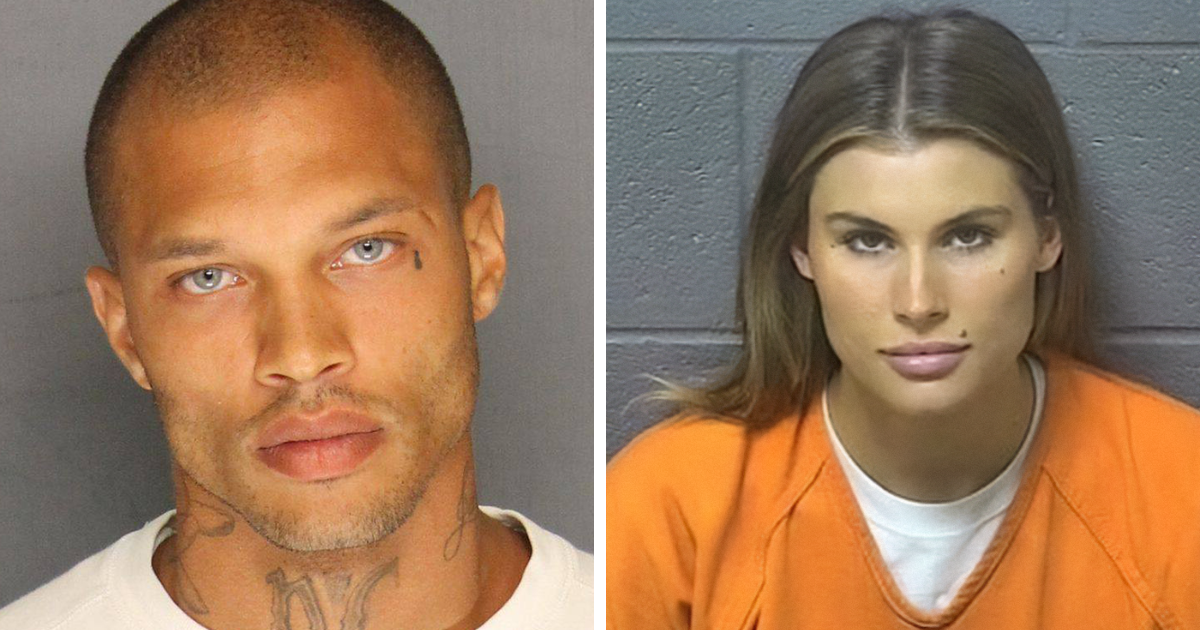
2. Jeremy Meeks: The Original “Hot Felon” Blueprint
In 2014, a California police department posted a routine lineup of suspects on Facebook.
One face detonated the internet: Jeremy Meeks, whose striking eyes and bone structure turned a weapons and gang-related arrest into a viral fantasy.
His mugshot attracted tens of thousands of likes, landed him a modeling contract while he was still incarcerated, and turned “hot felon” into a global phrase.
Meeks’ story is the template: real criminal record, real victims and community impact, yet also real transformation.
Post-release, he built a legitimate career in fashion and entertainment.
For supporters, he embodies second chances; for critics, he is Exhibit A of how attractiveness can soften public outrage and create a fame pipeline that simply doesn’t exist for most defendants.
3. Mekhi Alante Lucky: “Prison Bae” And The Power Of One Photo
A few years later, another mugshot went viral: Mekhi Alante Lucky, often nicknamed “Prison Bae,” known for his mismatched eyes and high-fashion features.
His arrest photo spread rapidly, brought a modeling contract, and reinforced the idea that a booking image could double as a portfolio shot.
Lucky’s trajectory, like Meeks’, fueled a dangerous-but-irresistible narrative: if you are photogenic enough, your worst day might secretly be your big break.
It’s a seductive story for the internetand a deeply uneven one in reality, where race, class, and the nature of the alleged crime shape who gets romanticized and who gets written off.
4. Keanu Reeves: The Calm, Confusingly Charming Outlier
Yes, even Keanu Reeves has a mugshot in circulationstemming from a 1993 DUI arrest.
The black-and-white photo resurfaces every time people rank “sexy mugshots,” partly because he looks like someone paused a 90s indie film, not a police intake.
Reeves later addressed the incident, cooperated, and has spent decades carefully rebuilding a reputation as one of Hollywood’s most grounded, generous figures.
His inclusion in “criminal heartthrob” compilations is complicated: a relatively low-level offense, sincere accountability, and a career defined more by kindness than chaos.
Yet his image is constantly repackaged as proof that “some people even look good in a mugshot”blurring the line between documentation and aesthetic object.
5. The TikTok-Era “Hot Mugshot” Cameos
Filling out the metaphorical list are dozens of lesser-known viral mugshots:
the sorority student whose smiling booking photo sparked “she’s guilty of stealing hearts” jokes;
local arrestees who end up on “hot felon” fan pages;
and faces reposted thousands of times with zero context beyond “rate this criminal 1–10.”
Some face minor charges and lean into the brief fame. Others are accused of serious crimes and become fandom objects before trials even begin.
In both scenarios, mugshots drift from legal records to entertainment content, and the people behind themvictims, families, defendantsget flattened into punchlines and Pinterest boards.
Why We Keep Falling For Criminal Heartthrobs
1. The Bad-Boy Myth, Rebranded For The Feed
The trope is older than the internet: charming outlaws, dangerous lovers, rockstars with rap sheets.
Viral mugshots simply hand us bite-size visuals for the same fantasy.
A striking portrait plus a hint of danger activates a narrative we already know: “He’s broken, but I see the real him,” or “She’s wild, but in a fun way.”
2. Algorithms Reward Extremes
Platforms boost whatever gets strong reactions.
A booking photo that is unexpectedly attractive is built for virality: it’s shocking, easy to share, and invites instant commentary.
Outrage and thirst coexist in the same thread, which is perfect for engagement metrics and terrible for nuance.
3. Parasocial Morality: Hotness As Character Witness
We like to think we’re rational, but study any viral mugshot thread and you’ll see a pattern:
people use appearance as a shortcut for guilt, innocence, or redemption.
Attractive defendants are framed as misunderstood, “too pretty for prison,” or worthy of a second chance; less conventionally attractive faces rarely get the same empathy.
4. True Crime Culture And Emotional Distance
Podcasts, documentaries, and memes have turned crime into bingeable content.
When a mugshot is one more tile in an endless feed, it’s easier to joke about “conjugal visits” than to sit with the reality of violence, trauma, or systemic injustice.
Objectifying defendantswhether as monsters or as crushescreates emotional distance.
The problem is that both extremes erase real people and real harm.
The Ethical Problem With Ranking “Hot” Criminals
Let’s be honest: scrolling a gallery titled “31 Hottest Mugshots” is darkly entertaining.
It’s also ethically messy.
- Presumption of innocence: Many viral mugshots feature people who have not been convicted. Turning them into pin-ups or punchlines before trial undercuts basic fairness.
- Victims and families: Imagine seeing strangers rate your loved one’s accused killer like a celebrity crush. The disconnect is brutal.
- Permanent stigma: Long after charges are dropped or sentences served, the mugshot lives on as a meme. Employers, partners, and neighbors canand dofind it.
- Bias and inequality: Not everyone gets the “heartthrob” edit. Race, gender, and class heavily influence who is framed as dangerously attractive, who is demonized, and who is forgotten.
Some newsrooms have begun limiting mugshot use or removing galleries, arguing that public safety rarely justifies permanent digital shaming.
It’s a quiet correction to years of turning arrests into clickable entertainment.
How To Look Without Losing The Plot
You can acknowledge that a mugshot is visually striking without turning crime into a fandom.
A more responsible way to consume and publish this content:
- Remember that charges are not convictions, and images lack context.
- Don’t romanticize serious violence or elevate alleged killers into folk heroes.
- Platform stories of accountability and reform, not just photogenic shock value.
- If you’re a publisher, add disclaimers, update outcomes, and avoid framing people as prizes.
In other words: you’re allowed to have eyes, but maybe also keep a conscience.
Real-World Experiences: What Viral Mugshots Teach Us (Approx. )
To understand how surreal this culture has become, look at how different people experience a “hot mugshot” moment in real time.
Picture a mid-level social media editor at a local newsroom.
It’s 10:30 p.m., she’s scheduling posts, and a booking photo crosses her screen: sharp jawline, soft lighting, instantly “shareable.”
She knows that if she frames it with a cheeky caption, engagement will spikenew followers, more reach, happier bosses.
She also knows there’s a victim in the police report whose name will never trend.
Hit publish, and she’s feeding the machine. Hold back, and she risks being labeled “boring” in a metrics-obsessed industry.
That tensionbetween ethics and viralityis now baked into everyday newsroom life.
Then there’s the defense attorney who walks into court with a client who accidentally went viral.
Jurors have seen the memes.
Some think the client is “too handsome to be dangerous,” others assume anyone that famous online must be guilty of something.
The lawyer now has to fight not only the prosecution, but an algorithm-shaped narrative already living inside people’s heads.
A single flattering or unflattering frame has, in practice, become unauthorized evidence.
Consider the brands and content creators who quietly test the edges.
A lifestyle page reposts a mugshot with a winking caption; a clothing label slides into a defendant’s DMs about “future opportunities”; a meme account turns open criminal cases into aesthetic posts.
Most will say, “It’s just jokes” or “Everyone else is doing it.”
But those jokes normalize a world where criminal justice is set dressing, and real harm is background noise for engagement farming.
On the flip side, there are people whose lives genuinely pivot because a mugshot went viral.
Jeremy Meeks and Mekhi Alante Lucky are the rare examples where internet fascination led to modeling careers and financial stability after prison.
Their stories are often cited as proof of “look, good things can come from bad choices.”
But talk privately to advocates working with formerly incarcerated people and you’ll hear a harsher reality:
most individuals with recordsbeautiful or notstruggle to find housing, jobs, or basic grace.
The fantasy that a mugshot is a lottery ticket distracts from the structural barriers everyone else still faces.
Finally, think about the audience: us.
Many users double-tap a “hot mugshot” with no malice, treating it like any other viral micro-moment.
But each like, share, or flirty comment is a tiny vote for what kind of content platforms surface next.
Over time, those casual reactions help train feeds to prioritize spectacle over nuance, faces over facts.
The takeaway isn’t that you must never notice an attractive face in a mugshotit’s that you should notice what happens next.
Do we reduce a serious case to a meme?
Do we forget the alleged victims entirely?
Do we reward publishers who turn court dockets into dating catalogs?
Or do we start asking harder questions about why we’re more comfortable flirting with an accused killer in the comments than confronting the systems that produce both crime and punishment?
From Luigi Mangione to Keanu Reeves and every viral mugshot in between, the story is no longer just about “31 criminal heartthrobs.”
It’s about what our reactions revealand whether we’re ready to stop confusing charisma with character.
Conclusion
Viral mugshots live at the intersection of beauty, power, crime, and clickbait.
They expose our biases, our appetite for spectacle, and our tendency to hand out empathyor condemnationbased on a single, stylized second of someone’s life.
Enjoy the internet’s chaos if you must, but remember: behind every “criminal heartthrob” headline is a real case, real consequences, and a culture that desperately needs better taste than a “hottest felons” bracket.
SEO Summary For Publishers
sapo: From the alleged “hot assassin” Luigi Mangione to Keanu Reeves’ unexpectedly iconic 1993 booking photo, viral mugshots have turned criminal records into trending content and “hot felons” into internet heartthrobs. This in-depth look unpacks 31 headline-making images, the cases and careers behind them, the role of social media algorithms, and the ethical fallout of treating real crime like a crushable aesthetichelping readers (and publishers) enjoy the drama without losing sight of the real-world stakes.