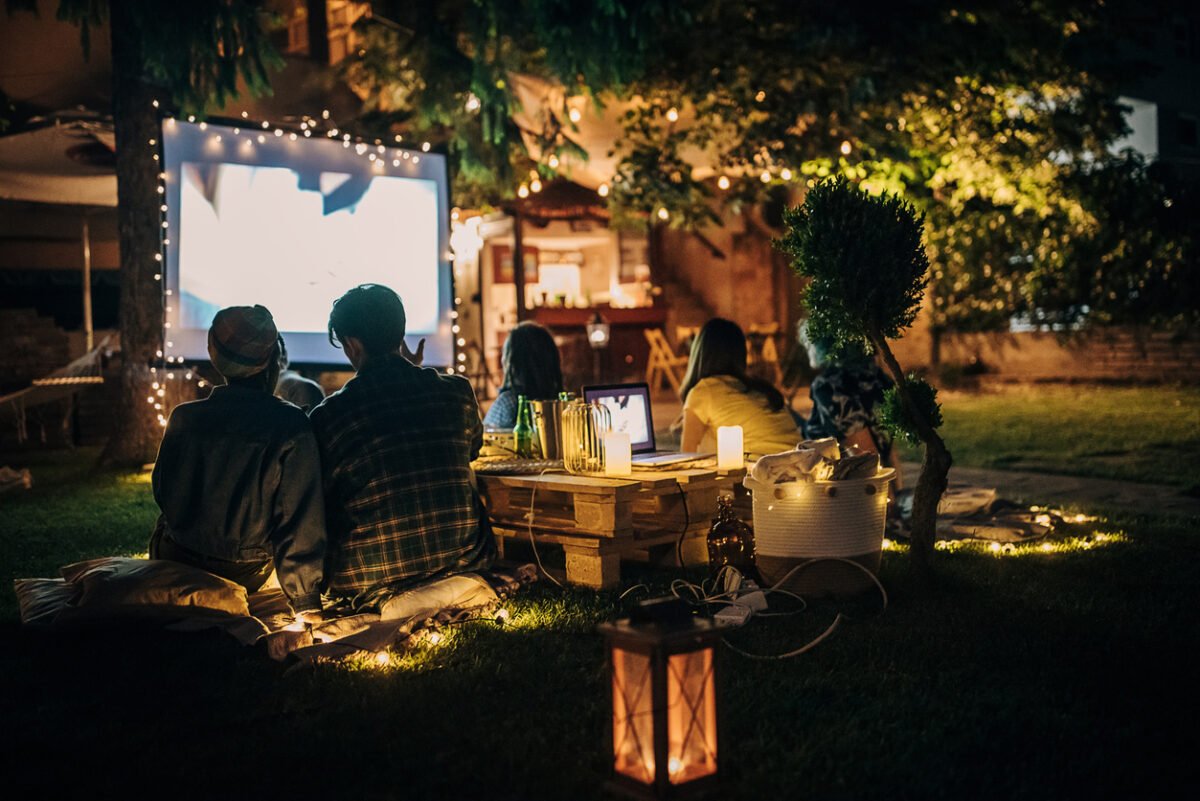
A backyard movie night combines the best parts of going to the theater with the best parts of staying home. You get a giant screen, buttery popcorn, and a shared cinematic experiencewithout paying premium prices for a soda large enough to qualify as carry-on luggage.
However, a memorable outdoor movie night requires more than pointing a projector at the garage and hoping the Wi-Fi cooperates. The screen needs to stay put, the dialogue must be audible, electrical cords must be protected, and guests need somewhere comfortable to sit. You also have to consider weather, insects, neighborhood noise, and the possibility that someone will spend 20 minutes browsing before choosing the movie everyone already suggested.
This guide explains how to create the ultimate backyard theater, from choosing equipment and arranging seating to serving snacks and avoiding common technical disasters.
Start With a Simple Backyard Movie Night Plan
Before buying equipment or inflating a screen the size of a small apartment building, decide what kind of event you are hosting. A quiet family movie night requires a different setup from a neighborhood gathering with 25 guests.
Answer a few practical questions:
- How many people are attending?
- Will children, older adults, or pets be present?
- How large is the available viewing area?
- Where are the nearest outdoor electrical outlets?
- How late can you reasonably play amplified sound?
- What indoor backup space is available?
Choose the movie before guests arrive. For mixed-age gatherings, select something broadly appealing and check its rating, length, and content. A two-hour family adventure is generally easier to manage than a three-and-a-half-hour historical epic that ends after everyone’s bedtime.
Send invitations with the start time, movie title, expected temperature, and a reminder to bring a blanket or lawn chair. Tell guests when the movie will actually beginnot merely when the snack table opens.
Choose the Best Location for Your Outdoor Theater
Look for a flat section of the yard with enough depth for the screen, projector, seating, and safe walking paths. The screen should face away from streetlights, porch fixtures, bright windows, and other sources of ambient light. Projectors perform best when competing light is minimized, so waiting until after sunset generally produces a stronger image.
Check the ground for holes, sprinkler heads, exposed roots, low branches, pet surprises, and anything else capable of turning a relaxed movie night into an urgent-care subplot. Mow the lawn a day earlier rather than immediately before the event; freshly cut grass can be damp and may irritate guests with allergies.
Consider the location of neighboring homes. Positioning speakers toward your audienceand away from the property linecan improve clarity without requiring excessive volume.
Prepare for Weather Changes
Check the forecast several days ahead and again on the afternoon of the event. Light wind may be manageable, but strong gusts can turn a sheet or inflatable screen into a sail. Rain and sensitive electronics are an even worse pairing.
Create a clear cancellation or indoor-relocation plan. Do not continue an outdoor event when thunder or lightning is nearby. The National Weather Service recommends moving people into a substantial enclosed building or hard-topped vehicle when lightning threatens.
Select the Right Backyard Movie Projector
The projector is the heart of a backyard cinema. It does not need to be the most expensive model available, but it should provide adequate brightness, suitable resolution, reliable inputs, and enough throw distance for your planned screen size.
Brightness Matters More Outdoors
Projector brightness is commonly expressed in ANSI or ISO lumens. A low-output portable projector may work after dark on a modest screen, but the picture can appear washed out when nearby lights or twilight remain visible. Brighter projectors offer more flexibility, especially when using a large screen, although darkness still improves contrast dramatically.
Be cautious when comparing inexpensive models that advertise enormous brightness numbers without specifying a recognized measurement standard. Resolution also matters. A native 1080p projector is a practical target for a sharp, enjoyable outdoor image, while 720p may be acceptable for smaller screens and casual viewing.
Calculate Throw Distance Before Movie Night
Throw distance is the space required between the projector lens and the screen. It varies by model and determines how large the projected image can become. Check the manufacturer’s calculator or manual before arranging the yard.
Place the projector on a stable table, cart, or stand. Aim the lens as directly as possible at the center of the screen. Excessive side angles create a trapezoidal picture and force heavy keystone correction, which can reduce usable image quality. Sony notes that a projector positioned out of alignment with the screen can produce a visibly trapezoidal image.
Once the projector is level, adjust the image size and focus. Avoid placing it where guests will repeatedly walk through the beam unless you want an evening filled with giant shadow puppets.
Create a Smooth, Stable Projection Screen
A dedicated outdoor projector screen usually produces the cleanest result, but it is not the only option. A smooth white wall, garage door, blackout cloth, or tightly stretched white sheet can work for a budget-friendly backyard movie setup. Bob Vila, Epson, and Home Depot all describe simple screen surfaces as practical options for casual outdoor viewing.
The keyword is smooth. Wrinkles distort the picture, and a garage door covered with windows, handles, and decorative panels may make every actor look as though they are appearing through a waffle iron.
If using a sheet:
- Choose thick white fabric rather than thin, translucent material.
- Iron or steam major wrinkles beforehand.
- Stretch all four sides tightly.
- Add weight or secure anchors along the bottom.
- Place dark fabric behind it if light passes through.
Inflatable screens are convenient and impressive, but the blower may add background noise. Secure the frame according to its instructions and keep stakes, ropes, and tie-downs visible so guests do not trip over them.
Test the Movie Source and Internet Connection
A backyard movie night can use a laptop, streaming stick, Blu-ray player, game console, or projector with built-in streaming apps. Confirm that the source works with the projector’s available HDMI, USB-C, or wireless connections.
Streaming introduces several possible complications: weak Wi-Fi, app updates, expired logins, device authorization, and content restrictions. Sign in before guests arrive and play several minutes of the selected movie. If your connection is unreliable, legally download the title for offline viewing when the service allows it or use physical media.
Keep compatible adapters, an extra HDMI cable, batteries, and a power strip available. Turn off laptop notifications and automatic sleep settings. Nobody needs to see your low-battery warningor a private group-chat previewduring the dramatic final scene.
Use External Speakers for Clearer Dialogue
Built-in projector speakers may be acceptable for two or three viewers sitting nearby, but they often struggle in an open yard. Outdoor spaces lack the walls that normally reflect and contain sound. A portable Bluetooth speaker, powered speaker pair, soundbar, or small PA system can make dialogue much easier to understand. Consumer electronics guides commonly recommend external speakers for outdoor projector setups.
Place the speakers near the audience or at the front edges of the seating area. Two moderately powered speakers aimed inward usually provide more even coverage than one speaker blasting from the screen.
Test Bluetooth audio carefully because some device combinations introduce a delay between the picture and sound. A wired audio connection is often more reliable. Keep the volume high enough for clear dialogue but low enough to respect neighbors, sleeping children, and local noise rules.
Arrange Comfortable, Unobstructed Seating
Create seating zones rather than scattering chairs randomly. Put blankets, floor cushions, beanbags, and low loungers in front. Place standard lawn chairs behind them, with taller chairs and standing tables at the back. This tiered arrangement gives more guests an unobstructed view and follows the same general approach recommended by outdoor entertaining guides.
Leave aisles on both sides so people can reach the snack table or restroom without climbing over anyone. Keep pathways free of cables, stakes, coolers, toys, and garden tools.
Provide more seats than you think you need. Guests may not enjoy sharing one narrow camping chair simply because your original head count looked mathematically efficient.
Set out blankets even during summer. Temperatures can drop after sunset, and some guests will treat a 72-degree evening as though an Arctic front has arrived. Add a basket for spare pillows and lightweight throws.
Add Lighting Without Washing Out the Screen
Path lighting helps guests move around safely, but bright overhead bulbs will weaken the projected image. Use warm, low-level lighting behind the seating area and along walkways.
Good options include:
- Solar path lights
- Battery-powered lanterns
- LED candles
- Dimmed string lights behind the audience
- Small clip-on lights near the food station
Avoid placing decorative lights beside or behind the screen where they can compete with the picture. Turn brighter task lights on during setup and intermission, then dim them when the movie begins.
Serve Movie Snacks That Work Outdoors
Popcorn is the natural star of the snack table because it is inexpensive, portable, and easy to customize. Create a popcorn bar with individual bags or cups and toppings such as Parmesan, cinnamon sugar, ranch seasoning, chocolate candies, or pretzel pieces.
Other backyard movie night foods include:
- Boxed candy and fruit snacks
- Nachos with individual dip cups
- Mini hot dogs or sliders
- Soft pretzels
- Pizza slices
- Cookies or brownies
- Bottled water, lemonade, and canned drinks
Use trays, baskets, or lidded containers to reduce spills and discourage insects. Position the food table behind the seating area so late snack runs do not block the screen.
Keep perishable foods cold in insulated coolers and serve smaller quantities that can be replenished. USDA guidance says perishable food should generally not remain at room temperature longer than two hours, or one hour when the outdoor temperature exceeds 90 degrees Fahrenheit.
Reduce Mosquitoes and Other Uninvited Critics
Mosquitoes are rarely impressed by your movie selection, but they will attend anyway. In the days before the event, empty containers that collect standing water, including buckets, toys, flowerpot saucers, and uncovered equipment. Both the CDC and EPA recommend eliminating standing water around the home to reduce mosquito breeding sites.
Provide EPA-registered insect repellent and place circulating fans near the seating area when practical. Common registered skin-applied repellent ingredients include DEET, picaridin, and oil of lemon eucalyptus. Guests should follow the product label and supervise applications involving children.
Cover food, wipe up sweet drinks quickly, and place trash cans away from the main seating zone. Avoid smoky fires close to the audience or screen; drifting smoke can obscure the image and send guests shuffling around the yard like a confused evacuation scene.
Handle Electricity and Cables Safely
Use extension cords labeled for outdoor use, and inspect them for cuts, exposed wires, loose plugs, or damaged insulation. The U.S. Consumer Product Safety Commission warns that unsuitable or damaged extension cords can create electrical shock and fire hazards.
Connect equipment to a properly protected outdoor receptacle, preferably one with ground-fault circuit interrupter protection. Keep connections off wet grass and away from pools, sprinklers, puddles, and areas where drinks may spill.
Route cords along the edges of the viewing area rather than through the middle. Use outdoor-rated cord covers or secure cords where necessary without crushing or damaging them. Do not create a chain of overloaded power strips and extension cords.
Protect the projector from moisture and allow ventilation around its air intakes. Unless the equipment is specifically rated for permanent outdoor installation, bring it inside immediately after the event.
Follow a Stress-Free Movie Night Schedule
One or Two Days Before
- Confirm the weather forecast and backup plan.
- Test the movie, projector, screen, speakers, and cables.
- Check streaming logins and device updates.
- Charge speakers, remotes, lanterns, and battery packs.
- Prepare dry snacks and organize serving supplies.
Two Hours Before Guests Arrive
- Set up and secure the screen.
- Arrange seating and walking paths.
- Route electrical and audio cables.
- Place trash and recycling containers.
- Prepare coolers and covered food stations.
Thirty Minutes Before Showtime
- Focus and align the projector.
- Play a scene containing both dialogue and music.
- Adjust speaker placement and volume.
- Dim unnecessary lights.
- Invite guests to collect snacks and settle in.
A complete rehearsal is one of the most valuable steps. Home Depot and other outdoor theater guides recommend testing the setup before the event rather than discovering compatibility or sound problems in front of a waiting audience.
Common Backyard Movie Night Mistakes
Starting Before It Is Dark Enough
Even a capable projector can look disappointing in bright twilight. Plan social time and snacks before sunset, then begin the movie when the screen can produce convincing contrast.
Depending Entirely on Wi-Fi
Test the connection at the exact projector location. A signal that is strong in the kitchen may become unreliable at the far end of the lawn.
Using a Loose Screen
A moving or wrinkled surface can be distracting. Stretch and secure the screen before focusing the projector.
Placing the Projector in a Walkway
Keep it behind the audience, use rear projection when appropriate, or create a protected equipment zone.
Forgetting About Dialogue
Explosions are easy to hear. Quiet conversations are not. Test a dialogue-heavy scene rather than judging the sound system with only the opening music.
Making the Event Too Complicated
A simple screen, dependable projector, clear speaker, comfortable chair, and bowl of popcorn can outperform an elaborate setup that requires 17 apps and a minor degree in network engineering.
Real-World Backyard Movie Night Experiences and Lessons
The most useful backyard movie night lessons often appear after the first eventusually five minutes after the opening credits, when changing the setup becomes inconvenient.
One common first-time experience begins with a white sheet tied between two trees. It looks perfectly smooth in daylight, but a light breeze arrives after sunset and turns every dramatic close-up into a gently rolling ocean. The practical lesson is not that sheets are bad screens. It is that all four corners and the bottom edge need tension. Adding clips, side ropes, and a weighted lower support can transform a floppy sheet into a respectable display.
Sound produces another surprise. During the afternoon test, the projector’s built-in speaker may seem loud enough because the host is standing two feet away. Once 15 guests arrive, people begin talking, chairs move farther back, and outdoor background noise swallows half the dialogue. A single portable speaker placed near the center of the audience can make a bigger improvement than increasing the screen size. Two speakers positioned toward the front corners are even better when they can be connected without noticeable audio delay.
Food service also benefits from experience. Placing every snack in open bowls creates an attractive display for approximately seven minutes. Then humidity softens the popcorn, insects discover the candy, and three guests reach across one another during an important scene. Individual popcorn bags, covered containers, and a separate drink cooler make the event cleaner and easier. They also reduce the chance of someone knocking over a two-liter bottle during the quietest moment in the film.
Seating deserves more thought than many hosts expect. Adults may cheerfully agree to sit on blankets when invitations are sent, but enthusiasm can fade after 40 minutes on hard ground. A mixture of low and high seating works best. Children can use cushions near the front, while adults who need back support can sit in chairs behind them. Keeping a few spare chairs available is wise, even when guests promise to bring their own.
Weather teaches the most expensive lessons. A clear afternoon does not guarantee a dry evening, and electronics should never be left outside simply because the clouds “probably look harmless.” Experienced hosts identify an indoor shelter location before setup and keep plastic covers nearby only for rapid equipment protectionnot as permission to continue operating devices in rain.
The movie selection itself can influence the atmosphere. Visually engaging comedies, adventures, musicals, animated films, and familiar classics often work well because guests can follow them despite brief distractions. A complex mystery with whispered dialogue may be less forgiving when people are opening snack bags, guiding children to the restroom, or debating whether a nearby sound came from the movie or an actual raccoon.
Finally, experienced hosts learn to accept small imperfections. Outdoor movie nights are not commercial theaters. A moth may cross the projector beam. A dog may bark during the emotional speech. Someone will ask what happened immediately after returning from the snack table. These moments are not necessarily failures; they are part of the charm.
The goal is not technical perfection. It is to create a comfortable setting where friends, relatives, or neighbors can enjoy a story together under the night sky. When the screen is steady, the sound is clear, and the popcorn supply remains healthy, the backyard becomes one of the best seats in the house.
Conclusion
The ultimate backyard movie night depends on a handful of well-executed basics: a dark viewing area, a stable screen, a properly positioned projector, understandable audio, comfortable seating, safe power connections, and a tested movie source. Add low lighting, easy snacks, insect control, and a sensible weather plan, and the evening can feel special without becoming complicated.
Set everything up early, perform a complete test, and solve technical problems before guests arrive. After that, dim the lights, pass the popcorn, and enjoy the show. Your backyard may not have reclining theater seats or a 40-foot screen, but it does offer fresh air, familiar company, and considerably fewer sticky floors.
Note: Equipment capabilities, electrical conditions, weather risks, and local noise requirements vary. Follow product instructions, use outdoor-rated accessories, and move the event indoors whenever conditions become unsafe.