At first glance, scabies and psoriasis can both look like your skin has decided to start a dramatic side quest. They may cause itching, redness, irritation, bumps, scaling, and enough Googling to make anyone nervous. But underneath the surface, these two conditions are very different. Scabies is an infestation caused by tiny mites that burrow into the skin. Psoriasis is a chronic immune-mediated condition that speeds up skin cell growth and creates inflamed, scaly patches.
That difference matters. A psoriasis cream will not kill scabies mites, and scabies medicine will not calm an overactive immune response that drives psoriasis. In other words, guessing is not the best game plan here. The sooner you understand the difference between scabies vs psoriasis, the easier it is to seek the right diagnosis, avoid spreading scabies if it is present, and choose treatment that actually fits the problem.
This guide explains how scabies and psoriasis differ in appearance, symptoms, diagnosis, treatment, contagiousness, and everyday management. Think of it as a skin detective briefingminus the magnifying glass, unless your dermatologist brings one.
Scabies vs Psoriasis: The Quick Difference
The main difference is cause. Scabies happens when the human itch mite, Sarcoptes scabiei, burrows into the upper layer of the skin. The rash and intense itching are caused by the body’s allergic reaction to the mites, eggs, and waste. Scabies is contagious and usually spreads through prolonged skin-to-skin contact.
Psoriasis, on the other hand, is not caused by a bug, fungus, poor hygiene, or anything you can catch from another person. It is a chronic inflammatory condition involving the immune system. Skin cells multiply too quickly, causing thickened, inflamed, scaly plaques. Psoriasis is not contagious, even when it looks red, flaky, or irritated.
What Scabies Looks Like
Scabies can be sneaky. The mites are microscopic, so you usually do not see the actual culprit. Instead, you see the chaos they leave behind. A scabies rash often appears as small red, pink, brown, or skin-colored bumps. These bumps may look like tiny pimples, insect bites, or irritated dots. In some people, especially those with darker skin tones, the rash may appear grayish, purple-brown, or darker than the surrounding skin.
One of the classic clues is the presence of burrows. These are thin, wavy, slightly raised lines on the skin where mites have tunneled. They may look like tiny pencil marks, scratches, or short threads just under the surface. Burrows can be hard to spot, especially if scratching has caused scabs or infection.
Common scabies locations
Scabies mites tend to prefer warm, protected areas of the body. Common spots include:
- Between the fingers
- Wrists and elbows
- Armpits
- Waistline and belt area
- Buttocks
- Genital area
- Around the nipples
- Feet and ankles
In infants, young children, older adults, and people with weakened immune systems, scabies may also affect the scalp, face, neck, palms, and soles.
The itch pattern of scabies
Scabies itching is often intense and commonly gets worse at night. Many people describe it as a deep, maddening itch that makes sleep difficult. If several people in the same household suddenly develop night itching, scabies moves higher on the suspect list. The itch may continue for several weeks after successful treatment because the body is still reacting to mite debris, but new burrows or fresh bumps may mean reinfestation or incomplete treatment.
What Psoriasis Looks Like
Psoriasis has a different personality. The most common type, plaque psoriasis, typically causes well-defined patches of thick, raised, inflamed skin covered with scale. On lighter skin, plaques often look red or pink with silvery-white scaling. On brown or Black skin, psoriasis may appear violet, dark brown, gray, or reddish-brown, and the scale may look less “silvery” than textbook photos suggest.
Psoriasis plaques may crack, bleed, burn, sting, or itch. They often appear more symmetrical than scabies, meaning both elbows, both knees, or matching areas of the body may be affected. Unlike scabies, psoriasis usually does not create thin burrow lines.
Common psoriasis locations
Psoriasis can occur anywhere, but it commonly shows up on:
- Scalp
- Elbows
- Knees
- Lower back
- Nails
- Hands and feet
- Skin folds, such as under the breasts or around the groin
Psoriasis can also affect the nails, causing pitting, thickening, discoloration, separation from the nail bed, or a crumbly texture. Scabies can irritate skin around the nails, but nail changes are much more characteristic of psoriasis or other nail conditions.
Scabies vs Psoriasis Appearance: Side-by-Side Comparison
| Feature | Scabies | Psoriasis |
|---|---|---|
| Main cause | Microscopic mites burrowing into the skin | Overactive immune system and rapid skin cell growth |
| Contagious? | Yes, usually through prolonged skin-to-skin contact | No, psoriasis is not contagious |
| Typical look | Small bumps, pimple-like rash, burrows, scratch marks | Thick, raised, scaly plaques or inflamed patches |
| Itching | Often severe, especially at night | Can itch, burn, or sting, but severity varies |
| Common areas | Finger webs, wrists, waist, armpits, genitals | Scalp, elbows, knees, lower back, nails |
| Treatment goal | Kill mites and prevent reinfestation | Reduce inflammation, scaling, and flares |
Symptoms: How They Feel Different
Scabies tends to announce itself with relentless itching. The discomfort can feel out of proportion to what the rash looks like. Someone may have only scattered bumps but feel as if their skin is hosting a tiny midnight marching band. The itching often becomes worse in bed because warmth can intensify the sensation.
Psoriasis symptoms are usually more chronic and flare-based. A person may notice plaques that persist for weeks or months, improve, then return. Psoriasis can be itchy, but it may also feel sore, tight, dry, cracked, or burning. Scalp psoriasis may flake like severe dandruff, while nail psoriasis may cause changes that are easy to mistake for a fungal infection.
Is It Scabies, Psoriasis, or Something Else?
Here is where skin conditions like to keep everyone humble. Eczema, contact dermatitis, bedbug bites, fungal infections, folliculitis, drug reactions, and other rashes can overlap with scabies or psoriasis. A rash between the fingers might suggest scabies, but it could also be eczema. A scaly patch on the elbow might suggest psoriasis, but it could also be dermatitis or a fungal rash.
Because the treatments are so different, a professional diagnosis is especially helpful when symptoms are new, severe, spreading, painful, infected, or not improving. This is even more important for babies, pregnant people, older adults, immunocompromised people, and anyone with widespread skin symptoms.
How Scabies Is Diagnosed
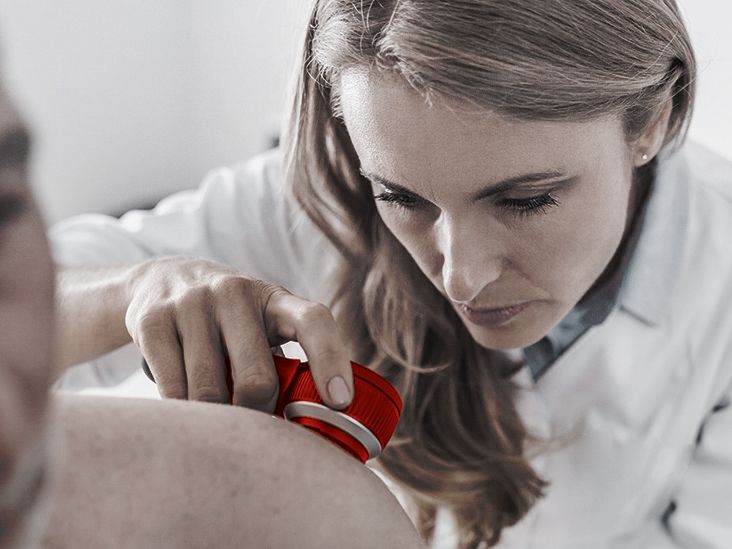
A healthcare professional may diagnose scabies by examining the skin from head to toe and asking about symptoms, close contacts, household itching, and timing. The provider may look carefully between the fingers, around the wrists, and at other common mite-friendly areas.
To confirm scabies, a clinician may gently scrape a small area of skin or use another method to collect material from a suspected burrow. The sample can be examined under a microscope to look for mites, eggs, or mite waste. Finding any of these confirms the diagnosis. However, scabies can still be suspected clinically even when mites are not found, because the little troublemakers are not always easy to catch in the act.
How Psoriasis Is Diagnosed
Psoriasis is usually diagnosed through a skin exam and medical history. A clinician looks at the shape, thickness, scale, color, and location of plaques. They may ask about family history, previous flares, joint pain, nail changes, infections, stress, medications, and triggers.
In unclear cases, a skin biopsy may be done. This involves removing a small sample of skin and examining it under a microscope. A biopsy can help distinguish psoriasis from eczema, fungal infections, cutaneous lupus, or other inflammatory skin conditions.
Treatment for Scabies
Scabies treatment focuses on killing mites, treating close contacts, and preventing reinfestation. Prescription scabicides are required. Over-the-counter anti-itch creams may temporarily calm symptoms, but they do not eliminate scabies mites.
Common scabies treatments
Permethrin 5% cream is commonly used as a first-line treatment. It is typically applied to clean skin, usually from the neck down in adults, and left on for the recommended time before washing off. Infants and young children may need treatment applied to the scalp, face, neck, and body, according to a clinician’s instructions.
Oral ivermectin may be prescribed in some cases. It is often given in two doses spaced about one to two weeks apart. It may not be appropriate for everyone, including certain children or pregnant people, so medical guidance matters.
Sulfur ointment may be used in specific situations, including for some infants, when recommended by a healthcare professional. Other prescription options may be considered depending on age, pregnancy status, severity, drug availability, and local guidance.
Household steps for scabies
Treating the person with symptoms is only half the battle. Close contacts often need treatment at the same time, even if they are not itchy yet. Bedding, towels, and recently worn clothing should be washed in hot water and dried on a hot cycle when possible. Items that cannot be washed can be sealed in a plastic bag for several days. Scabies mites generally do not survive long away from human skin, so there is no need to treat your home like a disaster movie set. Skip insecticide sprays and fumigation; they are not recommended for human scabies.
Treatment for Psoriasis
Psoriasis treatment depends on the type, severity, location, and impact on quality of life. The goal is not to “kill” anything. Instead, treatment aims to reduce inflammation, slow rapid skin cell growth, soften scale, relieve itching, and prevent flares.
Topical treatments
For mild to moderate psoriasis, topical medication is often the first step. Options may include corticosteroids, vitamin D analogs, retinoids, salicylic acid, calcineurin inhibitors for sensitive areas, and newer nonsteroidal anti-inflammatory creams or foams. Moisturizers can also help reduce dryness, cracking, and irritation, although they are not enough for every flare.
Phototherapy and systemic treatment
Moderate to severe psoriasis may require phototherapy, oral medication, injected medication, or biologic therapy. Biologics target specific parts of the immune system involved in psoriasis inflammation. These treatments can be very effective, but they require medical evaluation, monitoring, and discussion of risks, benefits, cost, and personal health history.
Lifestyle and trigger management
Psoriasis is not caused by lifestyle, but certain habits and triggers can influence flares. Stress, skin injury, infections, smoking, heavy alcohol use, cold weather, and some medications may worsen symptoms in certain people. Maintaining a healthy weight, limiting alcohol, avoiding tobacco, protecting skin from injury, and managing stress can support treatment, though they do not replace prescribed medication.
Can You Have Scabies and Psoriasis at the Same Time?
Yes, it is possible. Having psoriasis does not make someone immune to scabies. In fact, scabies may be harder to recognize in someone who already has chronic skin plaques, scaling, or itch. Scratching from scabies can also irritate existing psoriasis and make the skin look angrier than usual.
If a person with known psoriasis suddenly develops intense nighttime itching, new bumps between the fingers, genital itching, or household members with similar symptoms, it is worth considering scabies. On the flip side, if someone treated for scabies continues to have thick plaques on the elbows, knees, scalp, or nails, psoriasis may also need evaluation.
When to See a Doctor
See a healthcare professional if you suspect scabies, because prescription treatment is needed and close contacts may require care. You should also seek medical attention if itching is severe, the rash is widespread, symptoms affect a baby or older adult, or there are signs of infection such as warmth, swelling, pus, increasing pain, red streaks, or fever.
For possible psoriasis, make an appointment if scaly patches persist, keep returning, crack or bleed, affect the scalp or nails, or interfere with sleep, work, clothing choices, or confidence. Also mention joint pain, morning stiffness, swollen fingers or toes, heel pain, or back stiffness, because these can be signs of psoriatic arthritis.
Practical Tips While You Wait for an Appointment
Avoid scratching as much as possible, which is easier to type than to do. Keep nails short, use cool compresses, and wear soft, breathable clothing. Do not share towels or bedding if scabies is suspected. Avoid applying strong steroid creams to an undiagnosed rash unless directed by a clinician, because steroids can change how rashes look and may worsen some infections.
For scaly, dry plaques that seem consistent with psoriasis, fragrance-free moisturizer may help reduce cracking and discomfort. For suspected scabies, moisturizer may soothe irritated skin, but it will not treat the infestation. That distinction is important: comfort care is nice, but correct treatment is the main event.
Experience-Based Notes: What People Often Notice in Real Life
In everyday life, the difference between scabies and psoriasis is not always obvious on day one. Many people first notice itching and assume it is dry skin, detergent irritation, stress, or a random allergy. With scabies, the “something is not right” moment often arrives at night. A person may feel mostly fine during the day, then crawl into bed and suddenly feel like their skin has turned into a notification system with no snooze button. The rash may be small, but the itch can feel enormous. Another real-world clue is timing: if a partner, roommate, child, or close contact starts itching too, scabies deserves serious consideration.
Psoriasis experiences tend to unfold differently. Instead of a sudden household itch mystery, many people notice stubborn patches that keep returning in familiar places. One elbow clears, then the scalp flares. A knee plaque improves, then winter weather brings it back like an unwanted seasonal subscription. People with psoriasis often describe frustration with flakes on dark clothing, plaques that crack during cold months, or the awkwardness of strangers assuming the condition is contagious. It is not, but explaining that repeatedly can become exhausting.
Another common experience is misidentification. Scabies bumps may be mistaken for mosquito bites, bedbug bites, eczema, or hives. Psoriasis may be confused with dandruff, ringworm, eczema, or an allergic reaction. This is why pattern matters. Scabies often spreads through close contact and causes intense itching, especially at night. Psoriasis often has a longer flare-and-remission pattern, with thicker plaques and recurring locations.
Treatment experiences are also different. With scabies, the hardest part is often coordination. Everyone who needs treatment should usually be treated at the same time, and laundry needs to be handled properly. People sometimes feel embarrassed, but scabies is not a character flaw. It can happen in clean homes, busy households, college dorms, care facilities, and anywhere close contact occurs. The mite does not check your housekeeping score before moving in.
With psoriasis, the challenge is patience and long-term management. A cream may help one flare but not another. A treatment may work well for months, then need adjustment. Stress, illness, weather, skin injuries, and skipped routines can all influence symptoms. Many people do best when they track triggers, moisturize consistently, follow their treatment plan, and tell their clinician when the condition affects sleep, mood, intimacy, or daily confidence.
The biggest lesson from real-life experiences is simple: do not rely on appearance alone. Skin is dramatic, lighting is deceptive, and internet image searches can turn a mild rash into a full-blown panic spiral. A proper diagnosis can save time, money, discomfort, and unnecessary treatment. Whether the issue is scabies, psoriasis, or something else entirely, the right next step starts with knowing what you are actually treating.
Conclusion
Scabies and psoriasis can both cause itching and visible skin changes, but they are fundamentally different conditions. Scabies is a contagious mite infestation that needs prescription scabicide treatment and contact management. Psoriasis is a chronic immune-mediated disease that is not contagious and often requires anti-inflammatory skin care, topical medication, phototherapy, or systemic treatment depending on severity.
If the rash is intensely itchy at night, appears between the fingers or around the wrists, or affects multiple close contacts, scabies may be the stronger possibility. If the rash forms thick, recurring, scaly plaques on areas like the scalp, elbows, knees, lower back, or nails, psoriasis may be more likely. Still, overlap happens, and many other conditions can mimic both. When in doubt, let a healthcare professional solve the mysteryyour skin has already done enough freelancing.
Note: This article is for educational purposes only and does not replace medical diagnosis or treatment. If you suspect scabies, psoriasis, infection, or a worsening rash, contact a qualified healthcare professional.