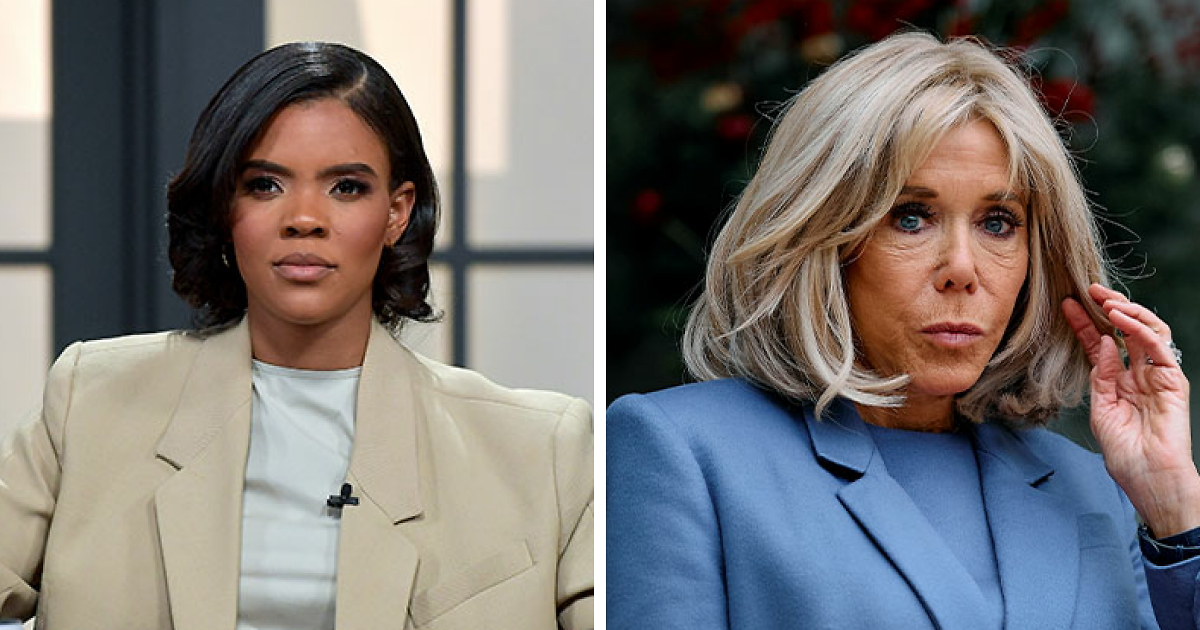
Note: This article discusses a viral political-media controversy involving Candace Owens and Brigitte Macron. It treats the gender-related allegations about Brigitte Macron as disputed and widely reported as false, and it does not endorse or repeat them as fact.
Introduction: A Viral Comment, a Global Lawsuit, and the Internet’s Favorite Bad Habit
Some viral moments arrive like a fire alarm in a library: loud, awkward, and impossible to ignore. That was the mood after Candace Owens made another provocative remark about Brigitte Macron, the wife of French President Emmanuel Macron, during a heated media exchange that quickly became online headline material. The phrase "Did she measure it?" became a shorthand for the disbelief many viewers feltnot just because of the remark itself, but because it landed in the middle of an already serious defamation fight.
The controversy is not simply another celebrity squabble with better lighting. It sits at the intersection of political commentary, internet conspiracy culture, defamation law, gender-based harassment, and the modern media economy where outrage can be converted into clicks faster than a barista can misspell your name.
At the center is Owens, a conservative commentator known for combative political takes, and Brigitte Macron, a public figure who has been targeted for years by baseless rumors about her gender and identity. Those rumors were amplified in the United States after Owens publicly promoted them, including through a podcast series. Emmanuel and Brigitte Macron responded by filing a defamation lawsuit in Delaware in July 2025, accusing Owens of spreading false claims for attention and profit.
So why did this latest Candace Owens Brigitte Macron comment leave viewers in disbelief? Because it felt less like political analysis and more like a collision between shock-jock theater and real legal consequences. The moment raised a bigger question: when does "just asking questions" become public harm?
What Happened Between Candace Owens and Brigitte Macron?
The viral moment emerged from Owens’ continued insistence on claims about Brigitte Macron that have been denied by the Macrons and described by major fact-checkers and news organizations as false or baseless. During a contentious exchange, Owens doubled down with crude language about Brigitte Macron’s body, prompting visible pushback and stunned reactions from viewers.
The reason the clip traveled so quickly was not merely the shock value. The comment came after the Macrons had already taken legal action in the United States. In other words, this was not a random podcast rant floating in the digital fog. It was commentary tied to an active, high-profile lawsuit involving the sitting president of France and the first lady of France.
According to multiple reports, the Macrons’ lawsuit accused Owens of promoting a narrative that Brigitte Macron was born male and had assumed another identity. The complaint alleged that Owens continued repeating the claims despite requests for retraction. Owens, for her part, has argued that the lawsuit is an attack on her speech and has denied backing down.
That tensionbetween free speech rhetoric and defamation allegationsis exactly why the story keeps generating oxygen. Online audiences love a feud. Courts, however, tend to be less entertained by viral confidence when evidence enters the room wearing a suit and carrying exhibits.
Why the Comment Shocked Viewers
1. It Was Personal, Not Policy
Political commentators criticize presidents, spouses, parties, and public institutions every day. That is normal democratic noise. But viewers often react differently when commentary targets a person’s body, family, age, gender, or private life. The Candace Owens Brigitte Macron controversy crossed into territory many people saw as invasive and demeaning.
The comment did not debate French pension reform, European security, diplomacy, or the Macron presidency. It focused on a private anatomical claim. That shift is why many viewers reacted with disbelief. It sounded less like public-interest commentary and more like a school cafeteria rumor that somehow got a microphone, a studio, and a monetization strategy.
2. The Legal Context Made It Even Stranger
Owens’ remarks did not happen in a vacuum. The Macrons filed a defamation suit in Delaware Superior Court in July 2025. The case reportedly includes 22 counts and names Owens and business entities connected to her media operation. The lawsuit claims that the repeated allegations caused reputational and personal harm.
That legal backdrop matters. When someone is already being sued over a set of statements, repeating or intensifying those statements can become legally risky. It is the media equivalent of seeing a wet floor sign and deciding the best response is tap dancing.
3. It Highlighted the Internet’s Appetite for Conspiracy
The Brigitte Macron rumor is part of a broader online habit sometimes called "transvestigation," where public figuresoften women in politics, entertainment, or sportsare falsely scrutinized and accused of hiding their gender identity. These claims usually rely on blurry photos, body-shaming, circular logic, and the classic conspiracy recipe: one cup suspicion, two cups selective screenshots, and absolutely no peer review.
Viewers were stunned because the exchange showed how far such claims can travel once they become content. A rumor begins in fringe circles, gets repackaged by influencers, receives attention from opponents and defenders, and eventually becomes a global legal drama. The original evidence may be weak, but the algorithm does not ask for a bibliography before serving dessert.
The Lawsuit: Why the Macrons Took the Fight to the U.S.
The Macrons’ lawsuit against Candace Owens is significant because it places a foreign political family inside the American defamation system. In the United States, public figures face a high bar in defamation cases. They generally must show that a defendant made false statements with "actual malice," meaning knowledge of falsity or reckless disregard for the truth.
That standard is difficult by design. American law strongly protects speech, especially political speech. But those protections are not unlimited. A speaker cannot simply label a damaging factual claim as opinion if it asserts something specific and false about a real person.
The Macrons’ complaint reportedly argues that Owens ignored evidence, rejected retraction demands, and used the controversy to promote her platform. Owens has countered that she is being targeted for asking questions and exercising First Amendment rights. The court will have to examine not just what was said, but how it was framed, repeated, monetized, and defended.
For SEO readers trying to understand the case, here is the plain-English version: free speech protects a lot, including harsh opinions, satire, and political criticism. But if a public commentator repeatedly makes factual claims that a court finds false and harmful, the words "I was just asking" may not function like a magic invisibility cloak.
Brigitte Macron and the Human Cost of Viral Rumors
Brigitte Macron has long been a target of public fascination because of her marriage, age difference with Emmanuel Macron, and role as France’s first lady. Public attention is part of political life, but there is a difference between scrutiny and harassment.
Reports from France have described online abuse aimed at Brigitte Macron, including false claims about her gender and sexuality. In January 2026, a Paris court found ten people guilty of cyberbullying her by spreading degrading and malicious content. That ruling showed the issue was not limited to one American commentator or one viral clip. It was part of a wider online campaign that had real-world consequences.
The personal toll is easy to underestimate from behind a screen. Viral rumors turn private individuals into public puzzles. They invite strangers to treat family photos, old documents, facial features, and life milestones like evidence in a detective game nobody consented to join. The internet calls it research. The target may experience it as humiliation.
Why Candace Owens’ Style Gets Attention
Candace Owens has built a media identity around confrontation. Her public brand often blends political commentary, cultural criticism, anti-establishment messaging, and a willingness to say things mainstream outlets will not. Supporters see her as fearless. Critics see her as reckless. Both groups tend to watch, which is the whole problem and the whole business model.
In the attention economy, outrage can be extremely profitable. A shocking claim creates clips. Clips create reactions. Reactions create counter-reactions. Before long, the original issue is no longer the only product. The argument itself becomes the product, shrink-wrapped and sold in ten-minute segments.
This is why the Brigitte Macron controversy has lasted so long. Each new remark restarts the cycle. Critics condemn it, supporters defend it, journalists cover it, fact-checkers respond, and social platforms distribute the chaos like confetti at a parade nobody admits attending.
The Difference Between Asking Questions and Spreading Claims
One common defense in conspiracy-driven commentary is the phrase "I’m just asking questions." Questions are important. Journalism depends on questions. Courts depend on questions. Science depends on questions. Toddlers in grocery stores also depend on questions, though usually about why cereal has a tiger.
But there is a difference between asking a question and laundering a claim through punctuation. If a commentator repeatedly suggests a specific damaging conclusion, promotes a multi-part series around it, and dismisses contrary evidence, the question mark may not change the substance of the message.
Responsible questioning includes context, evidence, humility, and correction when facts do not support the theory. Irresponsible questioning keeps moving the goalposts until the stadium is in another state.
How Viewers Reacted: Disbelief, Anger, and Exhaustion
Viewer reactions to the Candace Owens Brigitte Macron comment generally fell into three categories.
First, some viewers were shocked by the crudeness. They saw the remark as unnecessary, invasive, and beneath serious commentary. For them, the issue was basic decency: political debate should not require anatomical speculation.
Second, some viewers focused on the legal risk. They wondered why Owens would continue making such remarks while facing litigation. To them, the moment looked like someone poking a bear, except the bear had a legal team and a Delaware case number.
Third, supporters of Owens framed the controversy as proof that powerful figures want to silence dissent. This reaction is common in influencer-driven disputes. The lawsuit itself becomes content, and the defendant can cast legal accountability as persecution. Whether that argument succeeds in court is a separate matter.
The Media Lesson: Viral Does Not Mean Verified
One of the most important takeaways from this controversy is simple: viral content is not the same as verified content. A clip can be widely shared because it is funny, shocking, cruel, strange, or emotionally satisfying. None of those qualities make it true.
In fact, false claims often travel well because they are designed for maximum emotional grip. They offer mystery, villains, hidden truths, and a sense that the viewer is smarter than the establishment. That feeling can be addictive. It turns ordinary scrolling into a treasure hunt, except the treasure is often misinformation wearing a fake mustache.
Good media consumption requires slowing down. Before believing a claim about someone’s identity, family, or private history, ask: Who benefits from this? What evidence is being shown? Has it been verified by credible sources? Is the claim specific enough to be defamatory? Has the person targeted denied it? Are fact-checkers finding supportor finding smoke machines?
Why This Story Matters Beyond Candace Owens and Brigitte Macron
The controversy matters because it reveals how public women are often targeted. Brigitte Macron is not the only prominent woman to face gender-based conspiracy theories. Similar false claims have targeted politicians, athletes, entertainers, and spouses of political leaders. The pattern is familiar: if a woman is visible, powerful, unconventional, older, younger, athletic, stylish, private, outspoken, or simply inconvenient, someone online may decide her body is public property.
This kind of discourse harms more than one person. It normalizes invasive speculation. It stigmatizes transgender people by treating trans identity as scandal. It also punishes cisgender women who do not fit narrow expectations of femininity. In short, nobody wins except the engagement dashboard.
The Brigitte Macron case also raises difficult questions for platforms. Should social media companies reduce the spread of defamatory conspiracy theories? Should influencers face more consequences for monetizing false claims? How should courts balance free speech with reputational harm in a borderless media environment?
There are no easy answers, but there is one obvious starting point: public conversation improves when evidence matters more than performance.
Experience Section: What This Controversy Teaches Anyone Who Lives Online
Most people have had some version of this experience: you open your phone for one harmless minute, maybe to check the weather, and twenty minutes later you are reading a thread from a stranger with a cartoon avatar explaining an international conspiracy using three cropped photos and the phrase "wake up." The Candace Owens and Brigitte Macron controversy is a large-scale version of that everyday internet trap.
The first experience many viewers can relate to is the feeling of being pulled into a story before understanding it. A shocking headline appears. A clip is edited for maximum drama. A commentator sounds confident. The comments section is already on fire. Before you know it, your brain starts treating the claim as important simply because everyone is reacting to it. That is how virality creates urgency without necessarily creating truth.
The second experience is social pressure. In online spaces, people often feel pushed to choose a side instantly. Either you believe the influencer, or you are a gullible defender of elites. Either you reject the claim, or you are accused of hiding something. This binary thinking is exhausting, and it is terrible for public understanding. Real life has evidence, uncertainty, context, and legal standards. The internet prefers jerseys.
The third experience is the discomfort of watching private dignity become public entertainment. Even people who dislike Emmanuel Macron’s politics may feel uneasy about turning Brigitte Macron’s body and family history into a spectacle. That discomfort is healthy. It reminds us that public figures are still human beings. A democracy needs criticism, satire, investigation, and accountability. It does not need a microscope pointed at someone’s private anatomy because an influencer found a profitable storyline.
The fourth lesson is practical: never confuse confidence with proof. The louder someone says they are certain, the more important it becomes to check what they are actually presenting. Screenshots can be misleading. Old photos can be misidentified. Family names can be twisted. Court rulings can be misrepresented. A theory can feel detailed and still be wrong. A thousand puzzle pieces do not create a picture if half of them came from a different box.
The fifth experience is realizing that outrage is often a business model. Every reaction helps the story grow. Hate-watching still counts as watching. Quote-posting still spreads the clip. Angry comments still feed the machine. Sometimes the most powerful response to bad-faith content is not a dramatic rebuttal, but refusing to become unpaid marketing for it.
For readers, the best habit is simple: pause before sharing. Look for credible reporting. Separate allegations from established facts. Notice when a story relies on humiliation instead of evidence. And remember that if a claim requires a person to publicly prove intimate details about their body to satisfy strangers online, something has already gone badly wrong in the conversation.
Conclusion: The Real Story Is Bigger Than One Viral Line
The headline "Did She Measure It?" captures the absurdity of the moment, but the deeper story is not funny. Candace Owens’ comment about Brigitte Macron left viewers in disbelief because it showed how conspiracy-driven media can turn private identity into public sport, even while legal consequences are unfolding.
The case is now part of a broader debate about free speech, defamation, online harassment, and the economics of outrage. Owens may frame her remarks as fearless questioning. The Macrons argue they are defamatory falsehoods that caused real harm. Courts will weigh the legal arguments, but the public can already draw one lesson: attention is not evidence, and cruelty is not courage.
In a healthier media culture, political commentary would punch up at power, not down into a person’s private dignity. Until then, every viral clip asks viewers to make a choice. We can reward the loudest claim, or we can reward the best-supported one. The first option is easier. The second is how adults keep the internet from becoming a haunted carnival with Wi-Fi.