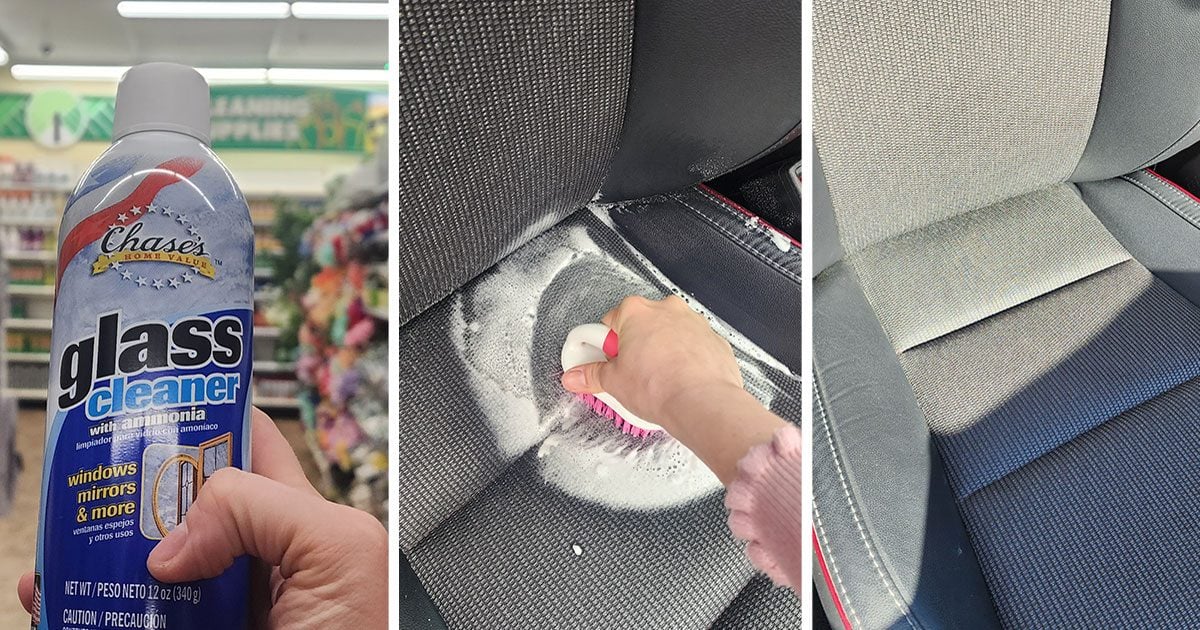
Car seats live a hard life. Coffee takes a corner too fast, kids treat the back seat like a mobile snack bar, muddy shoes arrive without an invitation, and somehow a mysterious ring-shaped stain appears even though nobody remembers spilling anything. Then TikTok arrives with the kind of solution the internet loves: grab a cheap foaming glass cleaner from Dollar Tree, spray it on the stained upholstery, scrub, wipe, and watch the dirt disappear.
It sounds almost suspiciously easy. Glass cleaner belongs on windows, right? Yet the viral Dollar Tree glass cleaner car seat hack has attracted attention because foaming glass cleaners can sometimes loosen greasy grime and visible water marks from fabric upholstery surprisingly well. Online detailing communities have discussed similar techniques for years, and recent viral demonstrations have shown dirt visibly transferring from cloth seats to towels after treatment.
There is, however, one giant cup-holder-sized warning: not every car seat material should be cleaned with household glass cleaner. Automakers frequently recommend mild soap, water, or dedicated automotive upholstery products, and some specifically warn against household or glass cleaners. So before turning your passenger seat into a chemistry experiment, it pays to understand why the hack can work, how to test it safely, and when you should absolutely leave the glass cleaner where it belongs.
What Is the TikTok Dollar Tree Glass Cleaner Hack?
The viral method is wonderfully uncomplicated. A foaming glass or glass-and-surface cleaner from Dollar Tree is sprayed onto stained cloth upholstery. The cleaner is then worked gently into the fabric using a microfiber towel or soft upholstery brush. As the foam loosens the dirt, a clean towel is used to absorb the moisture and grime.
One version of the trend featured The Home Store Glass & Surface Cleaner, an inexpensive foaming product sold by Dollar Tree. Similar foaming glass cleaners have also been recommended informally by automotive detailers for certain water rings and light upholstery stains. The attraction is obvious: a product costing only a few dollars may appear to accomplish what an expensive detailing appointment would do.
That does not mean every glass cleaner is interchangeable. Formulas can contain different solvents, surfactants, fragrances, alcohols, or ammonia, and manufacturers sometimes change formulations. Always read the current label rather than assuming the can you bought today is identical to the one somebody used in a two-year-old TikTok video.
Why Can Glass Cleaner Remove Stains From Cloth Car Seats?
Foam Helps Keep the Cleaner Near the Surface
Foaming products have one useful advantage when cleaning upholstery: they tend to sit on the surface instead of immediately soaking deep into the seat cushion. That can make light spot cleaning easier because the foam has time to interact with grime while you agitate it with a towel.
This is especially helpful because oversaturating cloth car seats is one of the easiest ways to turn one stain into a larger problem. Too much moisture can soak into the foam beneath the upholstery, prolong drying time, create water rings, or contribute to unpleasant odors. AutoZone and AAA both advise using cleaning liquid sparingly rather than drenching automotive upholstery.
Cleaning Agents Break Up Everyday Grime
Glass and multi-surface cleaners are designed to remove fingerprints, oily films, dirt, and other residues. Many car-seat stains contain exactly that sort of material. A dried coffee splash, greasy fast-food fingerprint, or dirty water mark may respond because the cleaner helps separate the contamination from the upholstery fibers.
Think of it less as the glass cleaner possessing mysterious TikTok powers and more as ordinary cleaning chemistry showing up for an unexpected side job.
The Towel Does More Work Than People Realize
One satisfying feature of these viral videos is the dirty towel reveal. But that towel is not merely there for dramatic effect. Microfiber helps capture loosened soil while absorbing cleaner and moisture.
Professional cleaning guidance consistently recommends blotting or lifting stains rather than aggressively grinding them deeper into fabric. BISSELL, Consumer Reports, Good Housekeeping, and automotive-care sources all emphasize controlled moisture and clean microfiber towels when working on upholstery.
How to Try the Dollar Tree Glass Cleaner Car Seat Hack Safely
If you have ordinary cloth upholstery and your vehicle manufacturer does not prohibit the product, you can approach the hack cautiously. The goal is not to recreate a viral video by emptying half the can onto the driver’s seat. Your seat does not need a foam party.
Step 1: Check Your Owner’s Manual
Start with the vehicle-care section of your owner’s manual. Different manufacturers use different fabrics, coatings, dyes, flame-retardant treatments, synthetic leathers, and protective finishes.
Ford generally recommends mild soap and water for many interior surfaces and dedicated fabric cleaner for heavier stains. More importantly, some Ford guidance explicitly warns against household and glass cleaners on interior upholstery because they may stain or discolor fabric and potentially interfere with material treatments.
If your manual says not to use glass cleaner, TikTok does not overrule the people who built the seat.
Step 2: Identify the Seat Material
This hack is mainly discussed for cloth upholstery. Do not automatically use it on leather, faux leather, suede-like materials, Alcantara-style surfaces, perforated upholstery, or specialty interiors.
For example, Tesla’s cleaning guidance recommends warm water and mild soap for general interior stains and cautions against various stronger cleaning agents. It also advises against spraying seats directly.
Leather deserves an automotive leather cleaner and, when appropriate, conditioner. Treating every seat material like generic polyester is a fast route from “viral cleaning hack” to “why is this patch suddenly lighter?”
Step 3: Vacuum First
Vacuum the entire seat before adding moisture. Use a crevice tool around seams and a brush attachment across the fabric.
Why bother? Because loose dirt plus liquid equals mud. Rubbing muddy grit through upholstery fibers is approximately as productive as washing your kitchen floor while wearing dirty hiking boots.
Automotive cleaning experts routinely recommend vacuuming before wet cleaning because crumbs, dust, sand, and pet hair are easier to remove while dry.
Step 4: Perform a Hidden Spot Test
Apply a tiny amount of cleaner to an inconspicuous area, such as the lower side of the seat. Blot it, allow it to dry completely, and check for fading, color transfer, stiffness, rings, or texture changes.
A wet test patch can look perfect and then dry into a slightly different shade, so patience matters. Give the area enough time to reveal whether your brilliant $1.50 experiment is actually brilliant.
Step 5: Use a Small Amount of Foam
If the test is successful, apply a modest amount to the stained area. Whenever possible, spraying the product onto a microfiber cloth first gives you better control than blasting the seat directly.
Work in small sections. You want the upholstery damp enough for cleaning, not wet enough to require a canoe.
Step 6: Agitate Gently
Use a soft upholstery brush or microfiber towel to work the cleaner across the stain. Avoid violent scrubbing. Aggressive brushing can fuzz fabric fibers, spread stains, or create a visibly different texture.
For a ring-shaped stain, clean slightly beyond the visible edge and feather the moisture outward. Sometimes cleaning only the darkest center leaves another ring when everything dries.
Step 7: Blot With a Clean Microfiber Towel
Press and lift repeatedly with a clean towel. As dirt transfers into the towel, rotate to a fresh section.
If the towel is turning brown, gray, or coffee-colored, congratulations: that color is better on the towel than on your seat.
Step 8: Remove Excess Residue
Depending on the product instructions, a lightly damp microfiber towel can help remove remaining cleaner. Do not flood the upholstery with rinse water.
Using too much cleaning product can leave residue that attracts more dirt later. More cleaner does not automatically mean more clean; sometimes it just means more stuff that needs to be removed afterward.
Step 9: Let the Seat Dry Completely
Leave the doors or windows open in a secure, ventilated area. A fan can speed drying. Avoid sitting on the upholstery until it is completely dry.
Consumer Reports recommends allowing cleaned cloth interiors to dry thoroughly, because trapped moisture is exactly the sort of houseguest that eventually brings odors along with it.
What Types of Car Seat Stains Might Respond?
Water Rings
Water rings are among the stains most frequently associated with foaming-glass-cleaner detailing tricks. In many cases, what looks like a simple water stain actually contains dissolved dirt that moved outward as the liquid dried.
Cleaning a slightly wider section of fabric rather than attacking only the ring can produce a more even finish.
Coffee and Soda
Light beverage stains may respond well when they consist primarily of water-soluble residue and ordinary grime. Fresh spills are easier than stains that have survived three summers, two road trips, and a previous owner’s attempt to hide them under a seat cover.
For heavily colored drinks, repeated gentle treatment may work better than one aggressive scrubbing session.
Greasy Dirt
Because glass and surface cleaners are formulated to cut through fingerprints and oily films, some light grease-related grime may lift from synthetic cloth upholstery.
Large oil stains, however, may require a specialized automotive degreaser or upholstery cleaner.
General Dinginess
If an armrest or seat bolster has slowly turned darker from skin oils and everyday use, controlled cleaning may improve it significantly. But when the entire seat is dirty, spot-cleaning one tiny area can create a suspiciously clean island surrounded by years of grime.
In that case, cleaning the whole upholstery panel uniformly is usually smarter.
When the TikTok Hack Is the Wrong Solution
Leather and Specialty Upholstery
Glass cleaner should not be your default cleaner for leather seats. Leather and coated synthetic upholstery can have protective finishes that react poorly to inappropriate solvents or high-pH cleaners.
Use products designed for the specific material, and follow the vehicle manufacturer’s recommendations.
Unknown or Delicate Fabric
If you cannot identify the upholstery or the car is valuable, rare, recently restored, or equipped with unusual interior materials, experimentation is unnecessary risk.
A professional detailer may cost more than a Dollar Tree cleaning can, but replacing damaged upholstery costs considerably more than both.
Protein and Biological Stains
Milk, pet accidents, vomit, blood, and similar organic stains can penetrate deeply and produce odors. An enzyme-based upholstery cleaner is often more appropriate because it is formulated to break down organic contamination. AutoZone similarly recommends enzyme cleaners for protein-based and pet stains.
Deeply Soaked Stains
If the spill reached the seat padding, cleaning only the fabric surface may make the stain look better without addressing what remains underneath.
A portable carpet and upholstery extractor can flush and recover contaminated solution more effectively. Extraction is especially useful for large beverage spills, accumulated dirt, and persistent odors. BISSELL and other upholstery-care specialists recommend deeper extraction when simple spot treatment is not enough.
Glass Cleaner vs. Dedicated Car Upholstery Cleaner
The Dollar Tree glass cleaner hack wins two categories immediately: price and convenience. If you already own the cleaner and your cloth upholstery tolerates it, fixing one small water ring may cost almost nothing.
A dedicated upholstery cleaner, however, has a major advantage: it is actually designed and labeled for upholstery. Products intended for automotive fabric are generally easier to match with manufacturer recommendations, and many provide specific directions for stain removal and residue management.
Laboratory testing by Good Housekeeping also shows that upholstery cleaners vary considerably in how well they handle different stains and materials, which is a reminder that there is no single magic formula for coffee, grease, pet messes, dirt, and every fabric type.
The best approach is therefore wonderfully unexciting: use the safest effective product for the material and stain. Sometimes that could be the inexpensive foaming cleaner. Sometimes it is mild soap and water. Sometimes it is an enzyme treatment. And sometimes the correct answer is an extractor and an afternoon of questioning why anyone allowed a chocolate milkshake in the back seat.
Common Mistakes That Can Make Car Seat Stains Worse
Using Too Much Cleaner
Oversaturation pushes moisture and dissolved contamination deeper into the cushion. Apply less than you think you need, then repeat if necessary.
Skipping the Patch Test
A two-minute spot test can prevent permanent discoloration. This may be the least glamorous step in cleaning, which is probably why it rarely gets its own TikTok montage.
Scrubbing Too Aggressively
Cleaning should remove the stain, not remodel the upholstery fibers. Gentle agitation is usually enough.
Using the Same Towel Everywhere
Once a towel is dirty, continuing to scrub with it can redeposit grime. Keep multiple microfiber towels available.
Mixing Cleaning Chemicals
Never combine glass cleaner with bleach, ammonia-containing cleaners, acids, or other household chemicals unless the labels explicitly state that doing so is safe. Different products can produce dangerous fumes or unexpected reactions.
Ignoring Drying Time
A seat can feel dry on top while remaining damp underneath. Ventilation and patience prevent musty smells and recurring marks.
Practical Experience: What Happens When You Approach the Hack Like a Detailer
Consider a realistic weekend-cleaning scenario. A light-gray cloth passenger seat has three problems: a faint coffee splash near the front edge, a circular water ring in the center, and general darkening where passengers slide into the car. This is exactly the type of seat that makes a cheap stain-removal trick tempting.
The first surprise comes before any cleaner is used. A thorough vacuum already improves the seat noticeably. Dust along the stitching disappears, crumbs emerge from places that apparently contain their own ecosystem, and the fabric looks brighter simply because loose dirt is gone.
Next comes the hidden patch test. This feels slow when the goal is instant gratification, but it changes the entire process. If the fabric dries normally, there is confidence to continue. If the patch fades or becomes stiff, the experiment ends before the visible portion of the seat becomes the victim.
For the water ring, using a very small amount of foam and gently working beyond the outline usually makes more sense than soaking the exact circle. The first microfiber pass may pick up an impressive amount of gray-brown residue. That is the moment when the TikTok hack feels almost magical.
The second pass is usually less exciting but more important. A clean, slightly damp microfiber towel removes remaining residue and evens out the surrounding area. Rather than repeatedly blasting the seat with more foam, controlled wiping prevents the upholstery from becoming saturated.
The coffee stain is more stubborn. One treatment may lighten it without completely removing it. Instead of escalating immediately to aggressive scrubbing, letting the area dry and reassessing can reveal whether another targeted application is necessary. Two gentle treatments often make more sense than one upholstery wrestling match.
The darker entry bolster presents another lesson: stains are easier than accumulated soil. When an entire section has gradually absorbed skin oils and everyday dirt, cleaning one patch can expose how dirty the rest of the seat has become. Suddenly the “problem” is not a stain anymore; it is that the freshly cleaned area looks suspiciously new.
At that point, cleaning the surrounding fabric evenlyor using a dedicated upholstery machineproduces a better cosmetic result.
The biggest practical lesson is that technique matters at least as much as the product. Vacuuming first, limiting moisture, using clean microfiber towels, working patiently, and drying thoroughly are what transform a cheap cleaning experiment into something resembling responsible detailing.
There is also a psychological advantage to beginning with the mildest approach. You can always clean again. You cannot easily reverse bleached fabric, damaged coatings, warped foam, or a permanent halo created by oversaturation.
And that may be the most useful takeaway from the entire viral trend. The internet loves miracle products because “spray carefully, test first, use minimal moisture, and follow the owner’s manual” is not exactly thrilling content. But those boring precautions are what keep an inexpensive hack inexpensive.
Is the Dollar Tree Glass Cleaner Car Seat Hack Worth Trying?
For ordinary cloth upholstery, a small stain, a compatible formula, and a successful hidden patch test, the TikTok Dollar Tree glass cleaner hack may be a surprisingly effective budget option. Foaming cleaners can loosen grime, microfiber towels can lift it away, and the low price makes the experiment attractive.
But the hack is not universal. Vehicle manufacturers may specifically advise against household or glass cleaners, and leather, synthetic leather, delicate coatings, or specialty fabrics require different care. Dedicated automotive upholstery cleaner remains the safer default when you are uncertain.
So yes, the viral trick has some logic behind itbut treat it as a possible cleaning technique rather than a sacred internet commandment. Check the manual, test first, use very little product, and stop immediately if the material reacts poorly.
Your reward may be a cleaner seat for pocket change. At the very least, you will finally find out whether that mysterious stain was removable dirt or a permanent historical record of the day someone dropped an iced latte at 45 miles per hour.
Final Takeaway
The Dollar Tree glass cleaner car seat hack works for the same reason many good cleaning techniques work: loosen the soil, agitate gently, transfer it into an absorbent towel, and avoid drowning the material. The bargain cleaner may perform impressively on some cloth stains, especially light water rings and everyday grime, but upholstery compatibility matters more than viral popularity.
Before using any unconventional cleaner, consult your vehicle’s care instructions and patch-test an inconspicuous area. For leather, specialty upholstery, deep spills, biological stains, or valuable interiors, choose a material-specific cleaner or professional detailing instead.
Note: Cleaning-product formulas and vehicle upholstery specifications can change. Always follow the current product label and the cleaning instructions supplied by your vehicle manufacturer.