Human beings have built skyscrapers, mapped the ocean floor, flown beyond Earth, and invented refrigerators that can criticize our grocery choices. Yet nature still occasionally reminds us that sharp teeth, defensive instincts, infectious bites, and poorly timed farm animals were here first.
The most famous deaths caused by animals are not all straightforward attacks. In some cases, a bite led to a deadly infection. In others, an animal caused a fall, a workplace accident, or a medical emergency that proved fatal. The cases below were selected for their historical significance, public impact, unusual circumstances, and lasting influence on wildlife safety or popular culture.
This subject deserves accuracy as well as sensitivity. These were real people, not punchlines, and the animals involved were usually behaving according to instinct rather than auditioning for the role of history’s next supervillain.
10. Philip of France: The Pig That Changed a Royal Succession
Philip of France was the eldest son of King Louis VI and had already been crowned junior king, making him the expected heir to the French throne. In 1131, while riding through Paris, the teenage royal encountered an obstacle that no court strategist had anticipated: a wandering pig.
According to medieval accounts, the animal ran into the path of Philip’s horse. The horse stumbled, throwing Philip violently to the ground. His injuries proved fatal.
The pig did not attack Philip in the usual sense. It was simply in exactly the wrong place at exactly the wrong moment. Nevertheless, its appearance altered the French succession. Philip’s younger brother, Louis VII, eventually became king and married Eleanor of Aquitaine, helping set in motion political events that would reshape France and England.
Some historical turning points arrive with armies and speeches. This one arrived with hooves, a snout, and absolutely no understanding of constitutional consequences.
9. Diane Whipple: A Dog Attack That Transformed a Legal Debate
Diane Whipple was a talented athlete and lacrosse coach living in San Francisco. On January 26, 2001, she was returning to her apartment when two large Presa Canario dogs belonging to neighbors attacked her in the hallway.
The dogs had reportedly displayed aggressive behavior before the fatal incident. Whipple suffered catastrophic injuries and died at age 33. The case became one of the most widely discussed fatal dog attacks in American history, partly because of the unusual background of the dogs and partly because prosecutors pursued serious criminal charges against their owners.
The resulting trials forced courts and the public to confront a difficult question: When does irresponsible animal ownership become criminal conduct? The case demonstrated that a fatal encounter with a domestic animal is rarely explained by breed alone. Training, control, socialization, previous warning signs, and owner decisions all matter.
Whipple’s death remains an important case in discussions of dangerous-dog laws and owner accountability. It also serves as a reminder that familiarity does not automatically equal safety. An animal can be domesticated without being responsibly managed.
8. Taylor Mitchell: The Exceptionally Rare Fatal Coyote Attack
Canadian folk singer Taylor Mitchell was only 19 when she went hiking alone in Cape Breton Highlands National Park in Nova Scotia in October 2009. During the hike, she was attacked by coyotes and suffered injuries that later killed her.
Fatal coyote attacks on adults are extraordinarily uncommon, which made Mitchell’s death especially shocking. Coyotes generally avoid people, and encounters more often involve an animal retreating than attacking. Investigators and wildlife researchers examined several possible contributing factors, including the size and behavior of eastern coyotes in the region.
Mitchell had recently released an album and was touring to build her career. Her death received international attention, transforming a promising young musician into the central figure in one of North America’s most unusual wildlife tragedies.
The incident did not prove that coyotes are naturally eager to hunt hikers. It showed that rare combinations of animal behavior, environmental conditions, isolation, and vulnerability can produce an event far outside the normal pattern.
7. Karl Patterson Schmidt: The Scientist Who Documented a Fatal Snakebite
Karl Patterson Schmidt was a respected American herpetologist associated with Chicago’s Field Museum. In September 1957, he was examining a young boomslang, a venomous African tree snake, when it bit his thumb.
Schmidt underestimated the danger. Boomslangs are rear-fanged, and their venom was not as thoroughly understood at the time as it is today. Instead of treating the bite as an immediate medical emergency, Schmidt went home and began recording his symptoms.
His notes described nausea, chills, bleeding, and other progressive effects. The journal became a haunting scientific record of envenomation. Schmidt died roughly a day after the bite.
Boomslang venom interferes severely with the body’s ability to control bleeding. The delayed progression can be deceptive because a victim may initially remain conscious and mobile while dangerous internal processes are developing.
Schmidt’s death became famous not because he intentionally sacrificed himself for science, as some dramatic retellings suggest, but because expertise and misjudgment collided. His experience demonstrates an uncomfortable truth: knowing a great deal about an animal does not make its venom negotiate.
6. Jean Batten: A Record-Breaking Aviator Killed by an Untreated Dog Bite
Jean Batten was one of the most celebrated aviators of the 1930s. The New Zealand pilot completed record-setting solo flights between continents and became known for her skill, glamour, and determination. Newspapers sometimes called her the “Garbo of the Skies.”
Decades after her aviation triumphs, Batten was living quietly on the Spanish island of Majorca. In 1982, a dog bit her while she was out walking. The wound became infected, but she did not obtain adequate treatment. The infection eventually spread to her lungs, causing fatal complications.
Batten died alone at age 73, and the outside world did not learn what had happened for years. Her final chapter was startlingly different from the daring public life that had made her famous.
Her death illustrates how an animal-related fatality may unfold slowly rather than through an immediate attack. Even an apparently limited bite can introduce bacteria deep into tissue. The animal may leave within seconds, while the actual emergency develops over days.
5. Manolete: Spain’s Legendary Matador and the Bull Named Islero
Manuel Rodríguez Sánchez, better known as Manolete, was among the most admired bullfighters of the 20th century. His controlled, upright style made him a national celebrity in postwar Spain.
On August 28, 1947, Manolete entered the arena in Linares and faced a Miura bull named Islero. During the final phase of the fight, Islero drove a horn into the matador’s upper thigh and groin region, causing a devastating wound. Manolete died the following day.
Medical details surrounding his death have been debated, including questions about blood loss, shock, treatment, and the transfusions he received. What is not disputed is that the goring initiated the fatal crisis.
Spain reacted with national grief. Manolete had become more than an athlete or entertainer; he represented an entire cultural tradition. His death also revealed the central contradiction of bullfighting: the spectacle depends upon carefully controlled danger, but a bull has never signed the choreography agreement.
Islero’s name became permanently linked with the event and later inspired the name of a Lamborghini model, giving automotive history one of its darker pieces of trivia.
4. King Alexander of Greece: A Monkey Bite With Political Consequences
King Alexander of Greece suffered one of history’s most consequential animal bites in October 1920. While walking on the royal estate, he encountered a confrontation involving his dog and a monkey kept on the property. When Alexander tried to separate the animals, another monkey attacked and bit him.
The wounds became infected. Despite medical care, the 27-year-old king developed severe systemic illness and died on October 25, 1920.
Before antibiotics, animal bites could be extraordinarily dangerous. A relatively small puncture might carry bacteria deep beneath the skin, leading to sepsis even when the original injury did not appear immediately fatal.
Alexander’s death also created a political vacuum during a turbulent period in Greek history. Changes in leadership and the return of his father, Constantine I, affected Greece’s domestic politics and military direction.
It is tempting to summarize the episode as “a monkey changed European history.” That description is cheeky, but not entirely wrong. The larger causes were political and military; the monkey simply delivered the most unexpected plot twist.
3. Dawn Brancheau: The SeaWorld Death That Changed Marine-Animal Safety
Dawn Brancheau was an experienced SeaWorld trainer known for her work with orcas. On February 24, 2010, she was interacting with Tilikum, a large male killer whale, during a performance in Orlando when the animal pulled her into the water. Brancheau died during the incident.
Her death triggered an investigation by the Occupational Safety and Health Administration. Regulators concluded that close contact between trainers and orcas presented a recognized workplace hazard and cited SeaWorld for safety violations. The case eventually reached a federal appeals court.
The tragedy also became a central subject in the documentary Blackfish, which intensified debate about captive orcas, entertainment programs, trainer safety, and marine-mammal welfare.
Orcas are intelligent, powerful predators whose behavior cannot be made completely predictable through experience or training. Brancheau’s skill was not in doubt. The central problem was that a human worker was operating in close proximity to an animal weighing several tons, with no meaningful physical control if the interaction changed suddenly.
Her death influenced industry practices and demonstrated why professional confidence must be supported by physical barriers, emergency systems, and enforceable safety protocols.
2. Timothy Treadwell: The “Grizzly Man” Tragedy
Timothy Treadwell spent 13 summers living near brown bears in Alaska’s Katmai National Park and Preserve. He filmed the animals, gave educational presentations, and argued passionately for their protection. His unusually close interactions made him famous, controversial, and eventually the subject of Werner Herzog’s documentary Grizzly Man.
In October 2003, Treadwell and his companion, Amie Huguenard, remained in the park later in the season than usual. Both were killed by a bear near their campsite.
Treadwell believed he had developed a special understanding of the bears. Park professionals, however, criticized his habit of approaching them closely and treating wild predators as though trust could override instinct.
His death is often discussed as a cautionary tale about romanticizing wildlife. Bears are not evil, and Treadwell’s affection for them was sincere. The problem was the removal of boundaries. By repeatedly entering their space, he normalized a level of contact that left little room for changing conditions, food stress, defensive behavior, or one unfamiliar animal.
Wildlife appreciation is not measured by how close a person can stand to a predator. Sometimes the deepest form of respect is a telephoto lens and several hundred feet of extremely boring distance.
1. Steve Irwin: The Stingray Encounter That Shocked the World
Steve Irwin, the exuberant Australian conservationist known worldwide as the Crocodile Hunter, spent his career working around crocodiles, snakes, and other potentially dangerous wildlife. His enthusiasm made animal education feel like an adventure conducted at maximum volume.
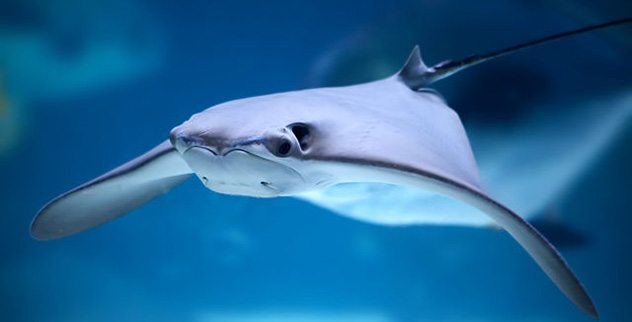
On September 4, 2006, Irwin was filming underwater at Batt Reef near Australia’s Great Barrier Reef. While swimming near a stingray, he was struck in the chest by the animal’s barbed tail. The barb caused a catastrophic injury, and Irwin died at age 44.
The circumstances were unusually rare. Stingrays are generally defensive rather than aggressive and commonly use their barbs when they feel trapped or threatened. Fatalities are uncommon, particularly when compared with the vast number of people who swim, dive, or fish in stingray habitat.
Irwin’s death became the best-known modern example of a fatal wildlife encounter because it seemed both shocking and tragically ironic. A man famous for handling visibly dangerous animals was killed during a relatively routine underwater encounter with a creature most people do not consider a major threat.
His legacy, however, is not defined only by the accident. Irwin helped millions of viewers care about reptiles, habitat preservation, wildlife rescue, and conservation. His family continued that mission through Australia Zoo and related programs.
The fairest lesson from his death is not that stingrays are killers. It is that wildlife encounters can contain unpredictable variables, even when the person involved is highly experienced and the species is normally peaceful.
What These Famous Animal-Related Deaths Have in Common
These cases involve radically different animals, locations, and historical periods, yet several patterns appear repeatedly.
Animals Do Not Need Malicious Intent to Be Deadly
A pig crossing a road, a frightened stingray, or a dog carrying bacteria does not need to “attack” in a calculated way. Intent is a human concept. Animal-related deaths often result from defensive movements, environmental stress, poor handling, accidental contact, or a chain of secondary complications.
Experience Can Reduce Risk Without Eliminating It
Irwin, Brancheau, Schmidt, Manolete, and Treadwell all had substantial experience around the animals involved in their deaths. Familiarity provided knowledge, but it also increased exposure. In some situations, repeated successful interactions may encourage a person or organization to accept risks that would alarm an outsider.
Medical Complications Matter
Alexander of Greece and Jean Batten did not die instantly from their bites. Infection turned localized injuries into systemic emergencies. Manolete’s death likewise involved the medical consequences that followed his initial wound. Modern treatment has improved survival, but punctures, bites, scratches, and envenomation still deserve prompt professional evaluation.
Human Decisions Shape Most Encounters
Animal behavior is only one part of the story. Workplace design, pet ownership, medical decisions, park rules, training methods, food storage, and proximity frequently determine whether an encounter remains harmless or becomes catastrophic.
Practical Experiences and Lessons From Famous Animal Deaths
Real-world wildlife professionals often describe safety as a system rather than a feeling. A person may feel calm around a bear, confident beside a trained marine mammal, or comfortable handling a snake. None of those emotions changes the animal’s physical power. Good safety practices are designed for the moment when confidence turns out to be wrong.
The first practical lesson is to preserve distance. National parks commonly establish minimum viewing distances because animals require space to behave naturally. A visitor who moves closer for a photograph may block an escape route, approach young animals, or trigger defensive behavior without realizing it. Zoom lenses are cheaper than emergency surgery and require considerably less paperwork.
The second lesson is to avoid treating repeated success as proof of permanent safety. A trainer may complete hundreds of interactions without injury. A researcher may handle many venomous animals. A hiker may pass wildlife safely for years. Those experiences demonstrate that precautions often work; they do not prove that precautions are unnecessary.
Third, any animal bite should be taken seriously. Dog, cat, monkey, bat, and wildlife bites may introduce bacteria or create concerns about rabies and other infections. Cleaning a wound is important, but it is not a substitute for professional medical assessment. Waiting for a bite to “look bad” can waste valuable time because deep infection may advance beneath a relatively small surface injury.
Fourth, workplace safety should not depend solely on the skill of an individual employee. The death of Dawn Brancheau illustrated the limits of behavior-based controls when a worker is placed within reach of an enormous animal. Barriers, protected positions, reliable communication, emergency procedures, and the authority to stop an unsafe interaction create layers of protection. “Our best trainer can handle it” is not an engineering control.
Fifth, people should learn species-specific guidance before entering wildlife habitat. Advice for black bears may differ from advice for grizzly bears. Responses to coyotes, cougars, snakes, bison, or marine animals are not interchangeable. The correct strategy depends on the species, the setting, the animal’s behavior, and whether an encounter is defensive or predatory. Local rangers and wildlife agencies are better guides than a viral video filmed by someone holding a selfie stick.
Finally, these stories should increase respect, not hatred, toward animals. Killing or harassing members of a species after a rare tragedy usually ignores the ecological and behavioral context. Most wild animals avoid humans when given adequate space. Responsible coexistence means reducing attractants, securing pets and food, following closures, controlling domestic animals, and accepting that nature is not a theme park assembled for our convenience.
The most useful experience to take from these famous deaths is therefore not fear. It is disciplined humility. Humans can study animals, train them, photograph them, and protect them, but we cannot repeal biology.
Conclusion
The top 10 famous deaths caused by animals range from royal accidents and infected bites to fatal encounters with bears, coyotes, an orca, a bull, and a stingray. Some happened in wilderness areas, while others occurred in homes, laboratories, arenas, and professional facilities.
The animals were rarely monsters. More often, tragedy emerged when natural behavior collided with human proximity, inadequate safeguards, medical delays, or simple bad luck. Remembering these cases responsibly means honoring the people involved while resisting sensational claims about entire species.
Nature is beautiful, fascinating, and occasionally equipped with horns. Admire accordingly.