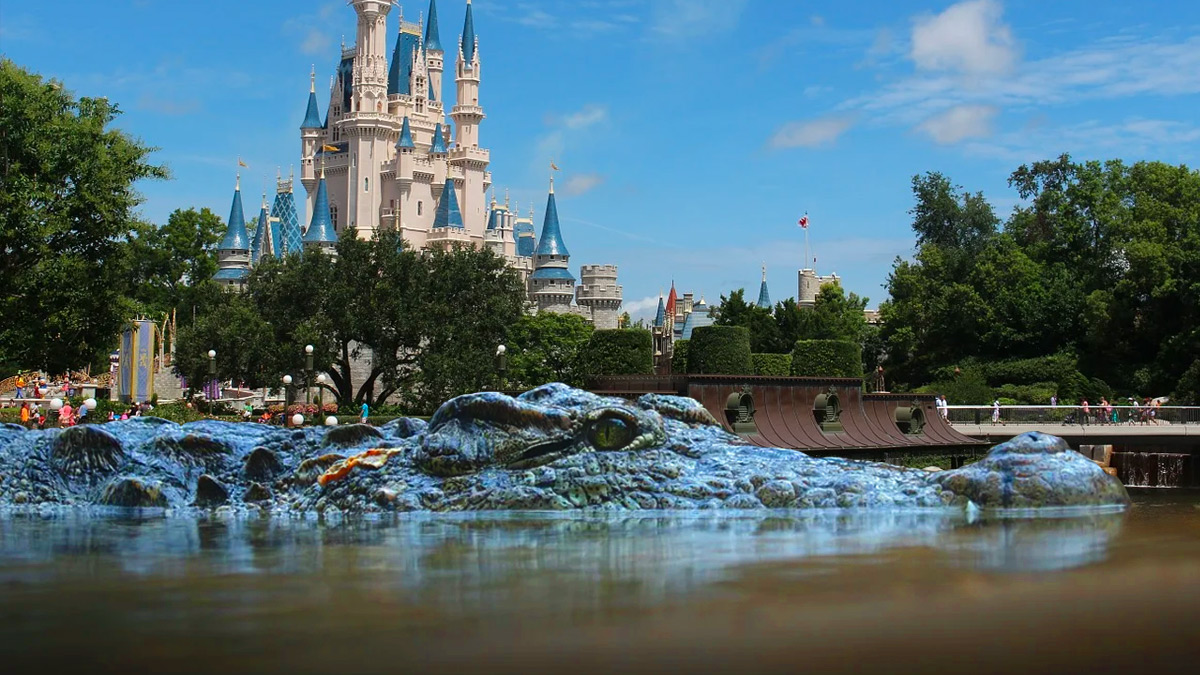
Disney has spent a century selling magic, optimism, and the comforting idea that good usually wins by the final musical cue. Castles sparkle. Bluebirds help with chores. Talking mice somehow manage a better work-life balance than most adults. But behind the glow of nostalgia, Disney’s history also contains some genuinely uncomfortable chapters. That does not make the company uniquely villainous, and it does not erase the joy generations of families have found in Disney movies and parks. It simply means the story is bigger than the souvenir shop version.
If you look closely, Disney’s past includes labor unrest, racially insensitive storytelling, attractions built on outdated stereotypes, painful political entanglements, and a few moments when the carefully polished image of “safe family entertainment” collided with reality. In other words, the House of Mouse has had its shadows. And if we are being honest, those shadows are part of what makes the company’s history worth examining. A legacy that lasts this long is never spotless. It is layered, messy, and occasionally awkward enough to make even Mickey loosen his bow tie.
This deeper look at dark moments from Disney’s past is not about cheap outrage. It is about context. It is about understanding how one of America’s most influential entertainment brands reflected the blind spots of its time, resisted criticism in key moments, and later tried to revise, soften, or retire parts of its own mythology. If Disney taught us anything, it is that transformation is possible. Even so, not every pumpkin becomes a carriage on the first try.
The Magic Factory Had a Labor Crisis
The 1941 animators’ strike shattered Disney’s family image
One of the darkest chapters in Disney history arrived long before streaming, theme park reservation systems, or adults arguing online about whether a live-action remake “ruined their childhood.” In 1941, Disney animators went on strike, and the conflict badly damaged the warm, paternal image Walt Disney had cultivated inside the studio.
The background matters. Disney had expanded rapidly after the success of Snow White and the Seven Dwarfs. The company moved into a new Burbank studio, but success came with tension. Employees complained about pay inequities, inconsistent credits, and the sense that some artists were treated like stars while others were expected to feel grateful for the privilege of drawing dwarfs for a living. Gratitude, as it turns out, is a weak substitute for fair labor practices.
When the strike began in May 1941, it exposed a serious rift between Walt Disney and many of the artists who helped build the company’s reputation. What made the moment so striking was the contrast between Disney’s public image and internal reality. The studio had sold harmony, teamwork, and hand-crafted wonder. Outside the gates, however, workers carried signs and demanded better wages, overtime pay, clearer job classifications, and proper screen credit.
The dispute did not last forever, but it lasted long enough to leave scars. Federal mediation eventually helped end the standoff, and many worker demands were addressed. Even so, the emotional damage lingered. Disney’s internal culture changed. Trust frayed. Several important artists left. The old idea that the studio was one big happy creative family took a direct hit, and it never fully recovered in its original form.
This strike matters in any honest account of Disney’s dark history because it punctures the myth that genius alone built the empire. Disney’s success came from talented teams, not just a single visionary at a drawing board. The strike forced that truth into public view. It also showed that even a company devoted to dreams could stumble badly when dealing with the people actually making them.
Song of the South and the Danger of Nostalgic Fantasy
The film became Disney’s most enduring historical embarrassment
If one title sums up the phrase “dark moments from Disney’s past,” it is probably Song of the South. Released in 1946, the film blended live action and animation and introduced songs and characters that would echo through Disney culture for decades. But its reputation has been haunted almost from the beginning by criticism that it romanticized the post-Civil War South and softened the brutal realities of slavery and racial hierarchy.
The uncomfortable part is that Disney was warned. According to historical accounts, Disney sought feedback from Black intellectuals and civil rights voices during development. Yet the final result still leaned into a dreamy plantation nostalgia that many critics found deeply offensive. The NAACP objected to the film’s portrayal of Black life and argued that it offered a dangerously sanitized vision of the past. That criticism was not a modern social media pile-on. It was there at the time.
The premiere itself added another layer of ugliness. Disney celebrated the opening in Atlanta, but because of segregation, James Baskett, the Black actor who played Uncle Remus, could not attend the theater with the white stars. That fact alone says more than a dozen polished press releases ever could. Disney was presenting a sentimental fable of Southern racial harmony while the real South was still enforcing exclusion in plain view.
For years, Disney continued to profit from the film’s imagery even as the movie itself became increasingly awkward to defend. The company rereleased it several times before effectively locking it away. It was never embraced as part of the modern Disney canon in the same way other classics were. Eventually, even Disney leaders signaled that the film no longer fit the image the company wanted to project.
What makes this episode especially important is that it reveals a recurring Disney pattern: preserve the appealing pieces, quietly bury the troubling foundation. The music and characters lived on. The larger racial problem remained harder to confront. That selective memory helped keep the brand shiny, but it also delayed a more honest reckoning with the film’s legacy.
Old Attractions Carried Old Stereotypes
The parks were not immune from the company’s blind spots
Disney fans often talk about the parks as if they exist outside history, suspended in an eternal state of churros, parades, and engineered happiness. But theme parks are not neutral spaces. They tell stories. And for a long time, some of those stories were built on stereotypes that aged badly.
Splash Mountain is the most obvious example. For decades, one of Disney’s most beloved rides drew heavily from Song of the South. Many visitors enjoyed the attraction without thinking much about its source material, which is exactly how nostalgia tends to work: it sands down the rough edges until the problem looks like “just the soundtrack.” But the criticism never really disappeared. Over time, it grew louder, and Disney eventually replaced the ride’s old framework with a story tied to The Princess and the Frog.
That change did not happen in a vacuum. It reflected a larger willingness, however delayed, to admit that some Disney classics and “classic” attractions carried racist or colonial assumptions. Jungle Cruise also came under scrutiny for depictions of Indigenous Africans that leaned on old adventure-story tropes rather than anything resembling respectful representation. Disney later revised the attraction to remove some of the most glaring material.
Pirates of the Caribbean underwent a similar reconsideration. For years, one famous scene presented women as items in a bridal auction. Fans defended it as tradition, comedy, or harmless camp. But the scene increasingly felt less like charming old-fashioned storytelling and more like a reminder that “beloved classic” is not the same thing as “beyond criticism.” Disney eventually changed the sequence, turning the former prize figure into a pirate with agency instead of a person standing there to be bought.
The same reckoning reached Disney’s film library. On Disney+, some older movies carry content advisories acknowledging harmful stereotypes and negative depictions. That move does not erase the company’s earlier choices, but it does suggest a shift in approach. Instead of pretending the older material is perfectly innocent, Disney has started to frame some of it as historical evidence of how entertainment once normalized biased portrayals.
That may frustrate people who want childhood favorites left untouched, but the truth is pretty simple: nostalgia is not a cleaning product. It does not scrub history. It just makes it easier to ignore until someone finally turns on the lights.
Walt Disney and the Politics of Suspicion
The HUAC testimony still clouds his legacy
Another dark chapter came in 1947, when Walt Disney testified before the House Un-American Activities Committee during the early Cold War panic over communism in Hollywood. In that testimony, he named people he believed were Communist sympathizers, including Herbert Sorrell, one of the labor figures associated with the 1941 strike.
This episode still matters because it connects labor conflict, personal resentment, and national political fear. The anti-communist climate of the late 1940s was already toxic, and Hollywood became one of its favorite stages. Disney did not invent that atmosphere, but he stepped into it willingly. The testimony contributed to a public image of Walt Disney as a man who could carry grudges and align himself with authority when he felt threatened.
To be fair, history around Walt Disney is often oversimplified. Some accusations made about him over the decades have been debated or challenged by biographers and former associates. Still, the HUAC testimony is not a rumor or an internet ghost story. It happened. And it remains one of the clearest examples of Disney’s past intersecting with one of America’s ugliest periods of ideological policing.
For a company later associated with idealized Americana, the irony is hard to miss. Disney sold the fantasy of freedom, optimism, and possibility while its founder participated in a moment that narrowed freedom through fear. It is one more reminder that the Disney brand has always stood at the intersection of innocence and power, and power does not stay innocent for long.
Even the “Safest Place” Image Had Cracks
Disneyland’s aura of control did not prevent tragedy
Disney parks are famous for choreography. The music swells on cue. The sidewalks gleam. Even the trash cans seem as if they were placed by a committee of perfectionists with engineering degrees and a deep fear of visual clutter. That obsession with control helped Disney sell the parks as cleaner, safer, and more orderly than ordinary amusement parks. Most of the time, that reputation held. But not always.
One of the most sobering reminders came in 1998, when a metal cleat pulled loose from the sailing ship Columbia at Disneyland. The accident seriously injured guests and an employee, and one man later died. Investigators later concluded that misuse of equipment and inadequate training played a role. The case cut sharply against Disney’s carefully managed image because it suggested that even in the most polished environment, human error and institutional failure could still have devastating consequences.
The importance of this moment is not that Disney parks are uniquely dangerous. The opposite is closer to the truth: these incidents are rare, which is precisely why they hit so hard. The brand promises a world where risks feel controlled and family time feels protected. When something goes badly wrong inside that system, the emotional shock is bigger than it would be elsewhere. Disney is not just selling rides. It is selling trust.
That is why park accidents and safety controversies cast such a long shadow. They expose the gap between immaculate design and ordinary vulnerability. No amount of themed landscaping can fully remove the fact that real people operate real machinery in real conditions. The fantasy may be meticulously engineered, but reality still reserves the right to interrupt the parade.
Why These Dark Moments Still Matter
It would be easy to read all of this and conclude that Disney’s past is simply a pile of hypocrisy with a catchy soundtrack. That would be too simple. The more interesting truth is that Disney’s dark moments matter because the company has been so culturally powerful for so long. Disney did not just reflect America. In many ways, it helped shape how America imagined itself: wholesome, forward-looking, family-centered, and eager to turn conflict into a singable lesson by the closing credits.
That is exactly why the darker chapters deserve attention. The 1941 strike reveals the tension between creativity and labor. Song of the South shows how nostalgia can sanitize injustice. Stereotyped rides and films demonstrate how mass entertainment can normalize damaging ideas while calling them tradition. HUAC testimony reveals how quickly patriotism can slide into fear-driven conformity. Park safety failures remind us that no brand, no matter how polished, transcends human limits.
To Disney’s credit, the company has made visible efforts to revisit some of this history. It has revised rides, added advisories, elevated more diverse stories, and made stronger public commitments around inclusion. Those steps do not erase the past, but they do suggest that the company understands the old strategy of “smile harder and hope nobody asks questions” no longer works.
And maybe that is the most useful takeaway. The value of revisiting Disney’s dark history is not to cancel every memory or shame anyone for liking old movies. It is to grow up as an audience. You can still love the artistry, the music, the craftsmanship, and the joy Disney has created while also admitting that some of the magic came wrapped in myths, exclusions, and serious mistakes. Mature fandom is not disloyalty. It is just fandom without the blindfold.
The Experience of Revisiting Disney as an Adult
There is a very specific feeling that happens when you revisit Disney as an adult and realize the magic did not disappear, but your eyesight got sharper. As a kid, you watch the castle, the songs, the funny sidekicks, and the fireworks. You do not stop in the middle of a catchy chorus to ask, “Wait, why is that character coded this way?” Children experience stories through wonder first. Adults experience them through layers. Sometimes those layers are warm. Sometimes they are uncomfortable. Often they are both at once.
That is why dark moments from Disney’s past can feel strangely personal. Disney is not just a company to many people; it is memory infrastructure. It is grandparents, VHS tapes, family vacations, Halloween costumes, bedtime routines, and songs permanently fused to the wiring of the brain. So when people learn about the 1941 strike, or the history of Song of the South, or the old stereotypes embedded in certain rides and films, the reaction is not always purely intellectual. It can feel like discovering that a cheerful room in your childhood house had a cracked wall hidden behind the wallpaper.
For some people, that discovery creates defensiveness. They do not want the past complicated because the memories are precious. That response is understandable. Nobody enjoys being told that the thing they loved at age seven came with a side of historical baggage. But another response is possible, and frankly more useful: curiosity. Instead of treating criticism as an attack on joy, adults can treat it as an invitation to see the full picture.
That fuller experience can actually deepen appreciation. You can admire Disney’s technical brilliance and storytelling reach while also recognizing the ways it mirrored the prejudices and power structures of its era. In fact, understanding the blind spots often makes the achievements clearer. You start to see not just what Disney created, but what it chose to emphasize, what it ignored, and what later generations had to correct.
There is also something oddly grounding about walking through a Disney park or rewatching an old film with that awareness. The place feels less like a floating kingdom outside time and more like what it really is: a human creation, built by talented people with imagination, ambition, flaws, biases, and business goals. The magic becomes less innocent, but not necessarily less interesting.
In many families, these conversations are already happening naturally. Parents watch older titles with their kids and pause to explain stereotypes. Adults revisit attractions they loved years ago and notice details that once slid by unnoticed. Friends argue over whether changing an old ride improves it or dilutes it. Those conversations can be messy, but they are healthy. They mean culture is alive. They mean audiences are no longer consuming stories like passive tourists on a guided boat ride while the skipper points only where the company wants them to look.
And that, in the end, may be the most valuable experience tied to Disney’s darker history: it teaches people how to love culture intelligently. You do not have to burn the castle down to admit the foundation had issues. You do not have to reject every cherished memory to say, “Yes, this mattered to me, and yes, parts of it were wrong.” If anything, that honesty is its own kind of maturity. Maybe even its own kind of magic.