The Chair "Superleggera" looks almost too slender to trust. Its legs are narrow, its woven seat appears airy, and the entire frame seems to have been drawn with a sharpened pencil rather than built in a furniture workshop. Then someone sits on it, the chair remains perfectly composed, and the joke is suddenly on every bulky dining chair in the room.
Designed by Italian architect Gio Ponti and manufactured by Cassina as model 699, the Superleggera chair is one of the most recognizable achievements of postwar Italian design. Its name means “super-light,” which is refreshingly honest advertising: the classic version weighs approximately 3.7 pounds, or 1.7 kilograms. That is lighter than many laptops, small enough to lift with one finger, and considerably easier to move than the dining chair currently holding three jackets and a reusable shopping bag.
Yet low weight is only the beginning of its story. The Superleggera combines traditional chair-making, industrial experimentation, structural precision, and a playful sense of elegance. It proves that minimal furniture does not have to feel cold and that strength does not have to arrive wearing combat boots.
What Is the Superleggera Chair?
The Superleggera is a lightweight wooden side chair developed by Gio Ponti in collaboration with Cassina during the 1950s. It entered production in its definitive form in 1957 and became known officially as the 699 Superleggera.
The chair typically features a solid ash frame, sharply tapered legs, a gently curved ladder-style back, and either a woven rattan seat or an upholstered seat. Its proportions are compact, but it does not look cramped. Instead, every part appears carefully reduced until only the essential structure remains.
This combination of simplicity and technical sophistication has earned the Superleggera a place in important design and art collections, including those of the Museum of Modern Art, the Metropolitan Museum of Art, the Art Institute of Chicago, and the Denver Art Museum. It is simultaneously a useful household object and a museum-worthy example of modern furniture designalthough placing a velvet rope around your dining table may be taking the tribute a little too far.
Super-light does not mean visually insignificant
Many lightweight products feel temporary. The Superleggera does not. Its thin frame creates a strong graphic outline, particularly when viewed from the side. The rear legs continue upward to form the back supports, while the horizontal rails establish a rhythm that is simple without becoming dull.
The result is a chair that occupies very little visual space while still having a distinct personality. It can sit beside a rustic farmhouse table, a glass-topped modern table, or an aggressively sculptural contemporary table without looking confused about how it got there.
From the Chiavari Chair to a Modern Design Icon
The Superleggera did not appear from a vacuum. Ponti drew inspiration from the traditional Chiavari chair, sometimes called the chiavarina, which originated in the Ligurian town of Chiavari. These chairs were admired for their slim wooden components, woven seats, and impressive strength relative to their weight.
Rather than copying the traditional chair, Ponti studied its structural intelligence. He recognized that the Chiavari form had already solved a challenge that modern designers found fascinating: how to make furniture lighter without making it fragile.
Tradition became a starting point, not a cage
Ponti retained the basic idea of a lightweight wooden frame but simplified its decorative vocabulary. Traditional turned elements gave way to cleaner lines. The structure became more geometric, and the silhouette was adapted to suit modern interiors and manufacturing methods.
This approach is important because the Superleggera is sometimes described as a minimalist chair. That is partly true, but it misses the warmth of the design. Ponti was not removing material simply to make the chair look severe. He was searching for a clearer, livelier expression of the chair’s purpose.
Years of refinement led to model 699
The road to the finished Superleggera involved repeated experimentation. Ponti and Cassina first developed lighter chair models, including the Leggera, before reducing the structure further. The final model was not the result of one inspired sketch followed by an early lunch. It emerged from years of testing proportions, joints, materials, and manufacturing tolerances.
By 1957, the design had reached the balance Ponti wanted. The frame was extraordinarily light, yet it remained practical enough for regular use. Cassina’s production expertise was essential: elegant drawings do not keep a chair from collapsing during dinner, but carefully engineered joinery and skilled craftsmanship do.
How the Superleggera Chair Is Constructed
At first glance, the Superleggera appears almost self-explanatory. It has four legs, a seat, and a back. Case closed. In reality, its apparent simplicity depends on unusually precise construction. When a design contains so little material, every component has to perform exceptionally well.
A solid ash frame
Ash is particularly suitable for lightweight furniture because it combines strength, resilience, and flexibility. It can be shaped into slender components while retaining the toughness needed to withstand everyday loads. Its grain also gives the frame a subtle natural character, even when the chair is finished with lacquer.
The frame may look delicate, but it is not merely decorative. Each rail, support, and joint contributes to the distribution of weight. Removing one element or casually changing its thickness could alter the performance of the entire chair.
Triangular legs measuring only about 18 millimeters
One of the chair’s most famous technical details is the cross-section of its legs. Cassina describes the triangular section as measuring only about 18 millimeters. This geometry helps the legs appear exceptionally fine while placing material where it can contribute effectively to rigidity and strength.
The triangular profile also changes how the chair responds to light. Depending on the viewing angle, one surface may appear bright while another falls into shadow. Consequently, the legs can look even slimmer than their already modest dimensions suggest.
A woven or upholstered seat
The traditional version uses a hand-woven seat, commonly described as rattan or cane. The woven surface keeps the chair light, allows a slight degree of flexibility, and reinforces its connection to Italian craft traditions.
Upholstered versions offer a softer appearance and a wider range of colors and materials. They may suit formal dining rooms, hospitality environments, or interiors in which a woven seat would introduce too much texture. Purists may prefer cane, while comfort seekers may favor upholstery. Both camps can remain friends.
Why Such a Thin Chair Can Be So Strong
The Superleggera demonstrates an important engineering principle: strength is not determined by bulk alone. Material selection, geometry, grain direction, joinery, and load distribution can matter as much as thickness.
Ponti’s chair avoids unnecessary mass, but it does not randomly shave material from important areas. The rails stabilize the frame, the back posts connect visually and structurally with the rear legs, and the seat frame helps hold the lower structure together. Its components work as a coordinated system rather than as a collection of skinny sticks hoping for the best.
A frequently repeated story claims that a Superleggera was thrown from an upper-floor window to demonstrate its durability and survived the landing. Although versions of the tale vary and it should be treated as part of the chair’s design folklore, it expresses the central idea accurately: Ponti wanted lightness and strength to coexist.
The chair was also famously promoted through images of a child lifting it with one finger. That visual communicated the product more effectively than a paragraph full of measurements. It was playful, memorable, and wonderfully difficult for competing furniture companies to answer without hiring unusually athletic toddlers.
Gio Ponti’s Philosophy of Essential Design
Gio Ponti worked across architecture, furniture, ceramics, lighting, publishing, and industrial design. He helped found Domus magazine and became one of the leading voices of twentieth-century Italian design. His projects ranged from domestic objects to major buildings, including Milan’s Pirelli Tower.
Across these different scales, Ponti repeatedly pursued lightness, clarity, and a sense of visual energy. He did not treat functional objects as neutral equipment. A chair, handle, tile, or coffee machine could enrich daily life through form, color, proportion, and imagination.
The Superleggera embodies this philosophy because its technical logic is inseparable from its appearance. It is beautiful because it is efficiently structured, but it is not merely an engineering exercise. The upward sweep of the back, the delicate rails, and the crisp relationship between straight and curved lines give it a poetic quality.
In other words, Ponti did not reduce the chair until nothing remained. He reduced it until its personality became impossible to miss.
The Superleggera and Postwar Italian Modernism
The chair emerged during a period when Italian manufacturers and designers were redefining the relationship between craft and industry. After World War II, companies such as Cassina developed advanced production capabilities while continuing to draw on skilled woodworking traditions.
The Superleggera captures this combination perfectly. It looks handcrafted because its details require care, yet its consistency depends on controlled production. It respects a regional furniture tradition while speaking the international language of modern design.
Unlike some modernist furniture, it does not resemble laboratory equipment. The warm wood, woven seat, and familiar dining-chair form make it approachable. Its innovation reveals itself gradually. A person may first notice that it is elegant, then that it is unusually light, and finally that its tiny legs appear to be violating several informal rules of furniture construction.
This balance helps explain the design’s longevity. The Superleggera is unmistakably associated with the 1950s, yet it does not feel trapped there. It can support a historically informed interior, but it does not require a record player, a cocktail cart, and someone discussing abstract expressionism nearby.
How to Decorate With a Superleggera Chair
Use a full set around a dining table
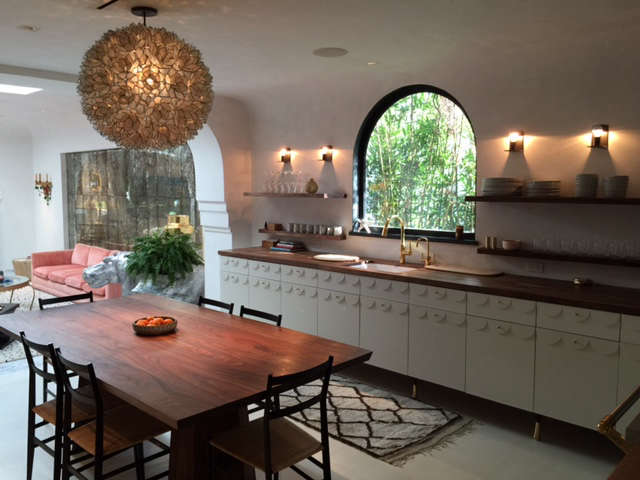
A group of Superleggera chairs creates a light, rhythmic arrangement around a dining table. Because the frames are visually open, they work especially well in smaller dining rooms where heavier seating could make the space feel crowded.
For a coherent modern look, pair them with a simple wood, stone, or glass table. For greater contrast, place them around a chunky antique table. The difference in visual weight can make both the table and chairs appear more interesting.
Place one chair in a bedroom or entryway
The compact profile makes the chair useful outside the dining room. A single Superleggera can sit beside a bedroom dresser, near an entry console, or in a dressing area. It provides practical seating without turning the corner into what appears to be a waiting room.
An upholstered version may feel more inviting in a bedroom, while a woven seat emphasizes texture and craftsmanship in an entryway.
Mix it with contemporary furniture
The Superleggera pairs surprisingly well with contemporary pieces because its form is direct rather than nostalgic. It can soften a room dominated by metal and glass or bring visual discipline to a colorful, eclectic interior.
Different finishes also change its character. A natural finish feels warm and craft-oriented. Black lacquer makes the chair sharper and more graphic. White or brightly colored versions may appear playful, particularly against patterned walls or tiled floors.
Let negative space do some work
Because the chair is visually light, avoid burying it beneath excessive cushions, throws, or decorations. One small seat pad may be practical, but seven decorative pillows would be an administrative burden for everyone involved.
Its greatest decorative strength is the space that remains visible around and through it. Give the chair enough room for its silhouette to register.
Buying, Identifying, and Caring for a Superleggera
Authentic Superleggera chairs have been produced by Cassina in different finishes and seat configurations. Buyers should examine manufacturer markings, construction quality, dimensions, provenance, and the condition of the woven or upholstered seat. Because the chair is famous and visually simple, look-alike products are common.
That does not automatically make every similar chair worthless. Many attractive lightweight chairs descend from the same broad Chiavari tradition. However, a chair advertised and priced as an authentic Cassina Superleggera should have evidence supporting that claim.
Inspect the joints rather than judging weight alone
A genuine example should feel controlled and stable despite its low mass. Check for movement at the joints, repairs around the seat frame, splits in the legs, and damage to the back rails. Vintage chairs deserve particularly careful inspection because decades of improper storage or enthusiastic leaning can affect even an excellent design.
Clean it gently
Dust the wooden frame with a soft, dry cloth. For minor marks, use a lightly dampened cloth and dry the area promptly. Avoid soaking woven cane or exposing the chair to extreme heat, moisture, or prolonged direct sunlight.
A damaged woven seat should be repaired by someone experienced with cane or rattan furniture. A heroic weekend involving hardware-store rope and online optimism may produce a seat, but probably not the seat Gio Ponti had in mind.
Living With the Superleggera: An Experience-Based Perspective
The most surprising part of using a Superleggera-style chair is how often its weight changes ordinary behavior. Moving a conventional dining chair usually requires no serious effort, but it still involves gripping the back, dragging or lifting the frame, and negotiating around the table. The Superleggera almost eliminates that small moment of resistance. It can be repositioned with one hand while the other carries a plate, opens a curtain, or gestures dramatically during a discussion about where everyone should sit.
That ease becomes especially noticeable in a small home. Imagine a dining area that also serves as a workspace, homework station, project table, and occasional gift-wrapping headquarters. Lightweight chairs can be moved against a wall in seconds, carried into another room for guests, or arranged around the table without scraping heavily across the floor. The chair does not dictate how the room must function. It cooperates.
Visually, the experience is equally important. A room containing several Superleggera chairs does not feel packed with furniture, even when every seat is in use. The narrow legs and open backs allow flooring, rugs, and table bases to remain visible. This can make a modest dining room appear calmer and more spacious.
Sitting in the chair may also challenge expectations. The first impression is often caution: surely something this thin should be approached with the same delicacy as an antique birdcage. Once seated, however, the frame feels purposeful rather than weak. The woven seat offers a subtle flexibility, while the upright back encourages a composed dining posture.
It is not a lounge chair, and it does not pretend to be one. A person planning a six-hour movie marathon may prefer deeper upholstery and a footrest roughly the size of a small island. For meals, conversations, desk work, or short reading sessions, the Superleggera provides supportive seating without enveloping the body.
The woven seat contributes significantly to the sensory experience. It feels slightly springy and allows air to circulate, which can be pleasant in warm weather. Its texture also contrasts with the smooth wooden frame. Over time, the woven surface may become the part owners watch most carefully, particularly in homes with pets, young children, metal-studded clothing, or relatives who believe every chair is secretly a stepladder.
An upholstered model creates a different mood. It feels less rustic and may be more forgiving during long dinners, but it also appears visually denser. Choosing between the two is less about identifying a universally superior version and more about deciding whether the room needs texture, softness, color, or historical character.
Guests tend to notice the chair even when they do not recognize it. Some respond to the proportions, others to the craftsmanship, and nearly everyone reacts when they lift it. The low weight turns an otherwise serious design object into something interactive. People want to pick it up, examine the legs, and ask whether it is really safe to sit on. That moment of discovery is part of its charm.
Daily use also reveals the intelligence of its modest scale. The chair slides easily beneath many tables and does not dominate a room when viewed from a distance. One example can function as an accent chair, but a full set creates a repeated pattern of slim verticals and horizontal back rails. The effect is orderly without feeling institutional.
There are practical compromises. Owners must avoid careless dragging, monitor woven seats for damage, and remember that visual delicacy invites curiosity. The chair may also feel too upright for someone who prefers deep, cushioned seating. Nevertheless, its combination of mobility, durability, and visual clarity remains unusually relevant to modern homes, where rooms are frequently expected to perform several jobs.
Living with a Superleggera is therefore not mainly about possessing a famous design. It is about experiencing how thoughtful reduction can make an object easier to handle, easier to place, and easier to enjoy. The chair asks very little from a room, yet it contributes structure, history, and personality. That is an impressive workload for something weighing less than a well-fed house cat.
Why the Superleggera Chair Still Matters
The Chair "Superleggera" remains relevant because it answers questions that designers continue to ask: How little material is truly necessary? Can a mass-produced object preserve the intelligence of handcraft? Can furniture be practical, durable, and joyful at the same time?
Gio Ponti and Cassina answered those questions with a chair that appears almost effortless. Behind that apparent ease lies careful engineering, respect for tradition, skilled production, and years of refinement.
The Superleggera is not famous merely because it is light. It is famous because its lightness changes how the chair looks, moves, functions, and relates to a room. Every narrow component supports the same clear idea. Nothing feels accidental, and very little feels excessive.
More than six decades after its introduction, model 699 continues to demonstrate that good design does not always need to shout. Sometimes it can simply sit quietly at the table, looking elegant and weighing less than the centerpiece.