Note: Clean HTML body only, ready for web publishing.
Ever walk into your home, look around, and think, Why does this place feel like it’s shrinking? The walls probably aren’t moving in. Your furniture, layout, lighting, and decorating choices are just staging a very convincing performance.
Designers say a home usually feels cramped for a handful of repeat reasons, and the frustrating part is that many of them come from well-meaning decisions. You buy the extra chair because guests might come over. You hang dramatic curtains because they looked glamorous online. You keep every basket, candle, tray, and side table because each one seemed harmless on its own. Then one day your living room starts feeling like it needs a traffic report.
The good news is that making a home feel more open does not always require knocking down walls, spending a fortune, or suddenly becoming the kind of person who owns only three beautiful bowls and “lives intentionally.” More often, it is about choosing the right scale, improving flow, editing what is visible, and letting the room breathe.
Below are five of the biggest design mistakes that can make your home feel smaller than it really is, plus smart, designer-inspired ways to fix them without stripping your rooms of personality.
1. Oversized or Bulky Furniture Is Eating the Room Alive
Let’s start with the biggest offender, sometimes literally: furniture that is too large, too deep, too heavy-looking, or just too much for the room. A giant sectional can be cozy in the right space, but in a smaller living room it often acts like a diva on opening night. It demands all the attention, takes over the floor plan, and leaves everything else awkwardly circling around it.
Designers often warn that cramped homes are not always caused by having too many pieces. Sometimes it is just one or two pieces that are wildly out of proportion. An oversized sofa, chunky recliner, broad coffee table, or dining set with thick visual weight can make the room feel stuffed even when you have not technically overfurnished it.
Why it feels cramped
Large furniture reduces clear sightlines, narrows walking paths, and creates a heavy visual block. Pieces that sit low and wide can also make the room feel squatter, especially if they have skirted bases or solid panels that hide the floor underneath.
How designers fix it
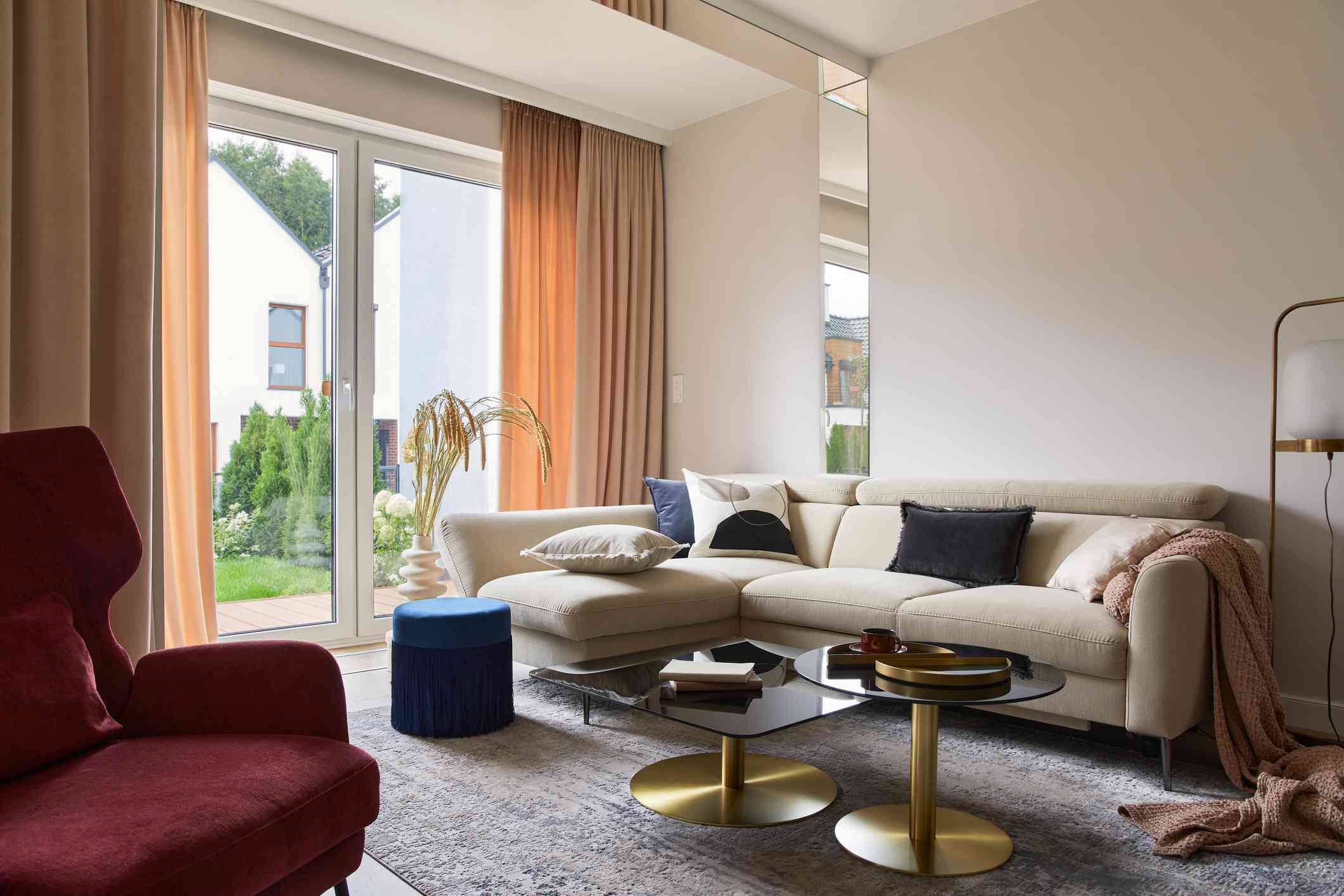
Choose furniture that matches the room’s scale, not your fantasy version of a giant suburban den. That may mean a sofa with slimmer arms, chairs with open or exposed legs, a round coffee table instead of a rectangular bruiser, or a dining bench that tucks in more neatly than multiple bulky side chairs.
Multifunctional furniture helps, too. Ottomans with storage, nesting tables, drop-leaf dining tables, and console desks that can do double duty are favorites in smaller homes because they reduce the number of separate pieces you need. The room instantly feels lighter when every item is earning its keep.
One more twist: smaller does not always mean tiny. Designers often prefer well-scaled furniture over a collection of mini pieces that look apologetic. A room with one right-size sofa and a pair of airy chairs can feel bigger than a room filled with lots of little pieces that clutter up the perimeter.
2. Your Layout Is Blocking Flow Instead of Supporting It
A room can have beautiful furniture and still feel cramped if the layout is working against you. This is where many homes go wrong. People tend to arrange furniture based on habit rather than movement. The sofa gets shoved against a wall. A chair gets squeezed near a doorway. A side table appears where your knee would really prefer it did not. Suddenly the room is technically furnished but emotionally exhausting.
Good design is not just about how a room looks from one angle. It is about how it works when someone actually lives in it. If you have to zigzag around a coffee table, sidestep a basket, or perform a tiny ballet move every time you pass through the room, the space will feel tighter than it is.
Why it feels cramped
Poor layout interrupts natural circulation. It makes the eye stop and start instead of moving smoothly through the room. Ironically, pushing every piece against the wall can also make a room feel smaller because it emphasizes the edges and leaves the middle feeling strangely tense rather than open.
How designers fix it
Start by identifying the natural pathways in the room. Where do people enter? Where do they sit? Where do they need to move comfortably? Once you know the routes, avoid putting obstacles in them. Keep the main traffic areas clear and give furniture groupings room to relate to each other rather than scattering them like reluctant party guests.
In many spaces, “floating” furniture even slightly can help. A sofa pulled a few inches off the wall, a chair angled into a conversation area, or a rug that anchors the seating zone can make the room feel more intentional and less boxed in. This is especially true in open-concept homes, where layout needs to define zones without choking them.
Also, do not underestimate the value of editing. If a room only works when every small table, pouf, plant stand, and magazine rack is in place, the room probably has too many supporting actors.
3. Too Much Visible Stuff Is Creating Instant Visual Noise
Clutter is the classic culprit, but it is worth defining correctly. Clutter does not just mean mess. A room can be neat and still feel crowded if too many things are visible at once. Open shelves stuffed with decor, countertops packed with canisters, entry tables loaded with keys and mail, and living rooms sprinkled with tiny accessories all create visual static.
Designers frequently point out that homes feel more spacious when the eye has places to rest. If every surface is doing the most, the room starts to feel busy, compressed, and strangely tiring. This is why a room full of cute objects can still feel less inviting than one with fewer, better-chosen pieces.
Why it feels cramped
Too many visible items fragment the room. Instead of reading the space as one calm whole, your eye reads a hundred little interruptions. That makes the room feel crowded, even if the square footage has not changed.
How designers fix it
Use the “less but better” rule. Swap lots of tiny items for a few larger, more intentional accents. Instead of five small vases, try one sculptural vase. Instead of a shelf crammed with random decor, create grouped moments with breathing room around them.
Closed storage is another hero here. Cabinets, baskets, media units with doors, and lidded boxes help keep practical life from visually spilling into every room. Vertical storage can also make a major difference by taking pressure off the floor and freeing up circulation space.
If you love displaying personal items, be selective rather than silent. A home should still feel lived in. The goal is not to strip your rooms into a beige witness protection program. It is to make sure your favorite things look chosen, not accumulated.
4. Your Rugs, Curtains, and Decor Are the Wrong Scale
Here is one of design’s sneakiest truths: a room can feel cramped not because the big items are wrong, but because the supporting pieces are. A rug that is too small, curtains hung too low, art that is undersized for the wall, or decor scattered at random can make a room feel choppy and undersized.
This is the part that surprises people. They think small room equals small rug. Small room equals small artwork. Small room equals tiny side tables. Designers usually disagree. When accessories are too small, the room can feel disconnected and fussy. Nothing anchors the space properly, so everything looks like it is floating around without a plan.
Why it feels cramped
Bad scale breaks visual harmony. Small rugs can make furniture feel oversized. Low-hung curtain rods visually shorten the walls. Undersized art can leave walls feeling awkwardly empty while the rest of the room feels crowded with furniture.
How designers fix it
Go bigger where it counts. Choose a rug large enough to visually connect your furniture grouping. Hang curtains higher to draw the eye up and make the ceiling feel taller. Use art with enough presence to match the wall and the furniture below it.
Mirrors are helpful here, too, but only when used thoughtfully. A well-placed mirror can bounce light and create depth. A mirror reflecting a pile of clutter, on the other hand, is just clutter with ambition.
And while color is not the villain some people make it out to be, strong contrast can segment a room. If you want a smaller space to feel calmer and more expansive, keep major surfaces visually cohesive. You can still bring in personality through texture, wood tones, textiles, art, and smaller color accents.
5. You Are Starving the Room of Light
Nothing makes a home feel cramped faster than a room that is dark for no good reason. Heavy window treatments, blocked windows, a single overhead light, dark corners, and furniture that interrupts natural light can all make a room feel smaller, flatter, and more closed in.
Designers consistently come back to light because it changes the perception of space almost instantly. A brighter room feels more open. A layered room feels more dimensional. A room with sunlight reaching the far corners feels less like a box and more like an actual place humans would enjoy inhabiting.
Why it feels cramped
Dark rooms compress visually. Shadows collect in corners, details disappear, and the boundaries of the space can feel heavier. If the room has only one harsh ceiling fixture, it may feel smaller and less comfortable even when it is technically illuminated.
How designers fix it
Let natural light do its job. Avoid blocking windows with bulky furniture, dark drapes, or overcrowded sills. Use airy curtains when privacy is needed, and hang them high enough to make the windows appear larger.
Then layer your lighting. A good room usually needs more than one source: overhead lighting, lamps, sconces, and accent lighting can work together to reduce shadows and create warmth. This matters in small homes because balanced light softens hard edges and helps the space feel intentional rather than cramped.
Lighter surfaces can also help reflect light around the room. That does not mean every wall must be stark white. It just means your overall palette and finishes should support brightness instead of swallowing it.
How to Make a Cramped Home Feel Better Fast
If your home is feeling tight, the fix is usually not one dramatic gesture. It is a series of small, smart corrections:
- Choose fewer, better-scaled furniture pieces.
- Open up your walkways and rethink traffic flow.
- Reduce visible clutter and use more closed storage.
- Scale up rugs, curtains, and art where needed.
- Bring in more natural and layered light.
In other words, the solution is not to make your home feel empty. It is to make it feel edited. A well-designed room has personality, comfort, and function, but it also has air. It gives your eyes somewhere to land and your body somewhere to move without bumping into a pouf that seemed cute at the time.
The best homes are not the biggest ones. They are the ones that understand proportion, purpose, and restraint. When those three things work together, even a modest room can feel generous.
Real-Life Experiences: What Cramped Spaces Actually Feel Like
Anyone who has lived in a too-full room knows that cramped design is not just a visual problem. It changes how you use your home. A crowded entryway makes coming home feel annoying instead of relaxing. A packed living room discourages people from actually sitting down and staying awhile. A dark dining room can make even a nice meal feel oddly heavy, like the room itself needs a nap.
One common experience happens after a furniture upgrade. Someone replaces a modest sofa with the plush sectional they always wanted, only to realize the room now feels like it is orbiting one giant object. The new sofa may be lovely on its own, but the side tables no longer fit naturally, the coffee table feels squeezed, and walking through the room becomes a daily obstacle course. That is when people discover the difference between liking a piece of furniture and having a piece that actually suits the room.
Another familiar scenario shows up in homes where every wall has become a storage opportunity. Hooks, shelves, cabinets, baskets, ledges, and organizers start as practical solutions, but eventually the room begins to look like it is working overtime. Even when everything is technically organized, the sheer amount of visible stuff can make the space feel mentally noisy. People often describe this as feeling restless at home without quite knowing why.
Lighting creates its own version of the problem. Many homeowners do not notice how cramped a room feels until they change the lighting and suddenly everything improves. A corner once written off as awkward turns out to be perfectly pleasant with a lamp. Curtains that once looked elegant turn out to be stealing half the daylight. A room can feel bigger not because anything moved, but because the light finally reached the walls properly.
Then there is the emotional side of clutter. A home can become cramped through good intentions: kids’ artwork you want to save, inherited furniture you feel guilty replacing, decorative pieces collected over time, or “temporary” storage solutions that quietly become permanent roommates. People do not usually make their homes feel cramped on purpose. It happens gradually, through attachment, convenience, and the belief that one more item will not make a difference. Then one day the room feels full before the day has even begun.
The encouraging part is that homes can improve quickly once you notice the patterns. Removing one chair, changing one rug, shifting one lamp, or clearing one overstuffed surface can create immediate relief. That feeling is often what convinces people to keep going. The room starts to feel lighter, movement gets easier, and the space finally supports daily life instead of getting in the way of it.
A home does not need perfect square footage to feel good. It needs enough openness to let people move, relax, and breathe. That is what designers are really aiming for when they talk about proportion, flow, and editing. Underneath all the design language is a simple goal: your home should feel like a place that gives you space back, not one that takes it away.
Conclusion
If your home feels cramped, the issue is probably not the size of the house. More often, it is a design mismatch between what the room needs and what the room is currently carrying. Oversized furniture, awkward layouts, visual clutter, poor scale, and weak lighting can all make perfectly decent spaces feel tight and tiring.
The fix is refreshingly practical. Edit more. Measure better. Let light in. Create room to move. Choose pieces that support the space instead of overpowering it. Do that, and your home can feel bigger, calmer, and far more comfortable without a single sledgehammer entering the chat.