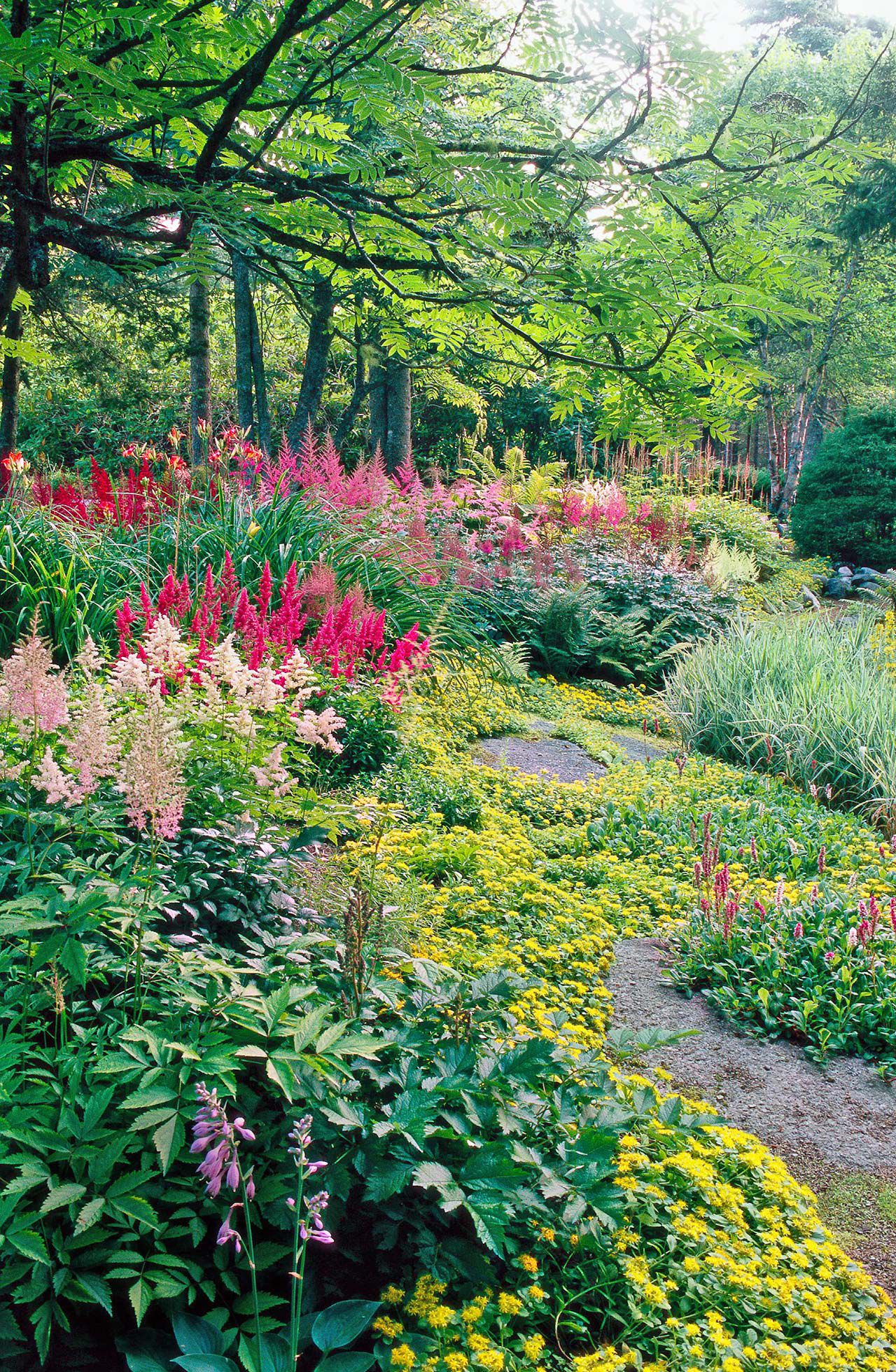
If you’ve got a gloomy corner where the sun only shows up for a cameo appearance, congratulations: you’re sitting on prime real estate for a vibrant shade garden. Shade doesn’t mean “nothing grows here.” It means “welcome to the land of lush foliage, dreamy textures, and flowers that don’t melt into crispy sadness by July.”
This guide shares 20 shady garden corner ideas that turn low-light spots into intentional, layered, eye-catching garden momentsplus practical tips for the trickiest shade scenarios (hello, dry shade under trees).
Before You Plant: A Quick Shade-Corner Check
1) Figure out what kind of shade you actually have
Shade isn’t one thing. A corner can be dappled shade (light filtered through branches), part shade (a few hours of sun), or deep shade (mostly sky-free). The plant list changes fast depending on what you’ve got, so observe the spot for a day or twomorning, midday, and late afternoon.
2) Dry shade is the boss level
If your corner sits under mature trees, you’re dealing with root competition and often drier soil. The goal is to improve soil gently (top-dressing, compost, leaf mold) without wrecking roots, then choose plants that can handle the conditions.
3) Think in layers (nature does)
The fastest way to make shade look “designed” is to layer: taller backdrop (shrubs/small trees), mid-layer (perennials), and ground layer (groundcovers). Your corner will go from “sad” to “storybook” with the same square footage.
20 Shady Garden Corner Ideas
1) Build a “woodland edge” with a curved border
Instead of boxing the corner into a rectangle, give it a gentle curve like a woodland path would. Use ferns, hostas, heuchera (coral bells), and woodland natives to mimic the forest floor. Curves soften hard angles near fences and foundations and make a corner feel like a destinationnot a leftover.
2) Add an anchor shrub for year-round structure
Shade gardens can look amazing in summer and a little… emotionally unavailable in winter. Fix that with an evergreen or semi-evergreen anchor (think boxwood in many regions, or shade-tolerant broadleaf evergreens where they thrive). Then “decorate” around it with seasonal stars.
3) Create a foliage “color palette” (yes, shade has color)
Flowers are optional; foliage is forever. Pick 2–3 main foliage toneslike deep green, silver, and chartreuseand repeat them. Try chartreuse heuchera, golden Japanese forest grass, silver-brushed ferns, and dark-leafed heuchera for contrast that reads from across the yard.
4) Use a shade-tolerant groundcover carpet to unify the corner
A groundcover “rug” makes everything above it look intentional. Options vary by region, but the strategy is the same: choose a plant that matches the moisture and light, then mass it. The visual payoff is huge, and it reduces weeds (your future self says thank you).
5) Make a stepping-stone micro-path (even if it goes nowhere)
A tiny path tricks the brain into seeing a corner as a feature. Lay a few flat stones or pavers that lead into the planting. Tuck low growers between stones (where appropriate) and edge the path with ferns or compact hostas for that “I meant to do this” look.
6) Add a small bench or bistro chair (instant garden room)
One chair can turn shade into a retreat. Place seating where you can see layered foliage up close. Bonus points for a small side tablebecause hydration matters, and also because iced tea deserves a throne.
7) Go vertical with a trellis or obelisk
Shady corners often lack height. Add a trellis against a fence or an obelisk in a bed to pull the eye up. Shade-tolerant climbers vary by climate, but even without vines, a structure gives the corner backbone and helps it feel finished.
8) Tuck in a birdbath or shallow water bowl
Wildlife loves sheltered shade. A simple birdbath or wide bowl of water adds sparkle and movement (and it’s one of the easiest upgrades you can make). Keep it clean and refill often, especially in warm months.
9) Use containers to dodge tree-root competition
When roots make digging miserable, containers save the day. Plant shade-friendly combos in pots and cluster them in the corner for a lush, layered look. Mix textures: fern fronds, trailing ivy, coleus foliage, and heuchera color all play nicely together.
10) Make a “hosta gallery wall” (seriously)
Hostas come in sizes and patterns that feel like collecting art: blue-green, gold, variegated, giant, miniature. Group 3–5 varieties with contrasting leaf shapes, then repeat one favorite throughout the bed so it feels curatednot chaotic.
11) Add a shade-loving flowering moment with hellebores
Want flowers that don’t demand full sun like a diva demands a spotlight? Hellebores bring early-season blooms and handsome evergreen foliage in many climates. Tuck them where you’ll see them from a window or paththose early flowers are a mood-lifter.
12) Create a “green meditation corner” with texture layers
For a calm, modern shade corner, lean into greens and textures: ferns, sedges (Carex), glossy-leafed groundcovers, and big-leafed perennials. Vary leaf size and shapefine, medium, boldso the corner looks rich even without flowers.
13) Use mulch or leaf mold for a woodland finish
Shade beds look more natural with a soft, forest-floor surface. A 2–3 inch mulch layer helps conserve moisture and reduces weeds, while leaf mold (decomposed leaves) improves soil over time. Keep mulch pulled back from plant crowns to avoid rot.
14) Plant a shade shrub “backdrop” for depth
A tall, leafy backdrop makes the corner feel deep and layered. In many regions, shade-tolerant shrubs (including classic options like azaleas in suitable climates) create that “garden wall” effect. Then you can paint in the foreground with perennials and groundcovers.
15) Brighten deep shade with light-colored hardscape
If the corner is truly dim, lighten the visuals: pale gravel, lighter pavers, a light-painted trellis, or a bright pot. Think of it as adding “reflectors” in a shady movie scene. The plants will look greener, and the space won’t feel like a void.
16) Add a focal point with a statement pot
One oversized pot can anchor a corner the way a small tree mightwithout the digging. Choose a bold container shape, then plant a simple recipe: one upright (a fern or small shrub), one filler (heuchera or begonia where appropriate), and one spiller (creeping Jenny in suitable climates, ivy, or another trailer).
17) Turn a shady corner into a nursery bed
Shady, sheltered areas are perfect for “holding” plantsnew purchases, divisions, and cuttingsuntil you decide where they belong. Keep it tidy with repeated groundcover and a defined edge so it looks intentional, not like a botanical waiting room.
18) Design for seasonal change with spring ephemerals
Some of the most magical shade moments happen in spring. Consider woodland bulbs and ephemerals that shine before trees fully leaf out. Pair them with later-emerging perennials so the corner stays full after the early show ends.
19) Solve a shaded slope with erosion-friendly planting
Shady slopes can wash out and look patchy. Use plants that knit soil togethergroundcovers and clumping, grass-like plants (such as certain sedges) can help. Add stepping stones for access, and layer leaf mulch to reduce runoff splash and keep soil covered.
20) Layer soft lighting for nighttime glow
Shade corners can disappear after darkunless you add gentle lighting. Path lights or a subtle uplight on a focal shrub make the corner feel like part of the landscape at night. Keep it warm and restrained; you’re aiming for “enchanted garden,” not “airport runway.”
Put It Together: 3 Ready-to-Use Shady Corner “Recipes”
Recipe A: Dry shade under trees (the stubborn corner)
- Structure: One compact shrub or sturdy perennial grouping as an anchor
- Mid-layer: Tough shade perennials with good foliage
- Ground layer: A drought-tolerant, shade-capable groundcover or sedge
- Finish: Leaf mold + mulch, plus consistent watering the first season
Recipe B: Dappled shade “woodland glow”
- Backdrop: Shrubs or tall perennials
- Texture: Ferns + hostas + heuchera
- Season: Add spring ephemerals for early magic
- Hardscape: Stepping stones and a simple bench
Recipe C: Foundation shade corner (near a house)
- Lighten: Brighter containers or pale hardscape accents
- Planting: Shade containers + a repeated groundcover edge
- Style: One focal pot + one small path light for evening curb appeal
Maintenance That Keeps Shade Gardens Looking Lush (Not Wild)
- Water smart: Shade soils can stay moist longer, but dry shade under trees still dries out fastcheck soil before assuming.
- Feed gently: Top-dress with compost rather than constant digging.
- Mulch right: Keep mulch off crowns and stems; 2–3 inches is usually plenty.
- Repeat plants: Repetition reads “designed,” even if you’re improvising.
- Edit annually: Remove what sulks, divide what thrives, and pretend it was always the plan.
Real-World Lessons From Shady Corners (Experience Notes)
Shade gardening looks effortless in photoslike the plants politely arranged themselves while you sipped lemonade. Real life is a little messier, and that’s normal. Here are practical, field-tested lessons that show up again and again when gardeners tackle a shady corner and try to make it actually vibrant.
Lesson 1: The “shade” problem is often a “root + soil” problem. Many gardeners blame low light when the real issue is what’s happening underground. Under mature trees, you’re competing with a network of roots that are very good at stealing water and nutrients. The workaround isn’t to fight the tree (you will lose). Instead, work on the surface: add compost as a top-dressing, use leaf mold, and mulch to reduce evaporation. When planting, think “pockets” rather than “tilling the whole area.” You’re creating small, improved zones where new plants can get established without you slicing through major roots.
Lesson 2: Containers are not a compromisethey’re a cheat code. If digging is miserable or you’re trying to avoid disturbing roots, a cluster of pots can deliver instant lushness. A shady corner with three containersone tall, one medium, one lowcan look styled in a weekend. The trick is cohesion: repeat one foliage color (like chartreuse or deep green), repeat one material (all terracotta or all matte black), and vary texture (fern + coleus + trailing ivy). It reads intentional, not random yard-sale chic.
Lesson 3: In shade, texture does the heavy lifting. In sunny beds, flowers can carry the show. In shade, you want leaf shapes doing the work: broad hosta leaves next to feathery ferns, ruffled heuchera next to blade-like grasses, glossy groundcover next to matte foliage. When gardeners get frustrated with a shade corner, it’s often because everything is the same size and texturegreen blobs in different zip codes. Mix bold, medium, and fine textures and the corner suddenly has depth.
Lesson 4: The best shade corners have a “reason to enter.” A stepping stone path, a bench, a birdbath, a big potone small invitation makes a corner feel like a destination. Without that, shade can look like leftover space. With it, the same plants feel like a designed garden room. And yes, even a micro-path that leads nowhere is allowed. Gardens are allowed to be a little theatrical.
Lesson 5: Expect a first-year lullthen a leap. Shade perennials and groundcovers often spend their first season establishing roots rather than throwing a party above ground. It’s common for a new shade corner to look “fine” in year one and then suddenly become lush in year two. The biggest mistake is overcorrecting too soondigging, moving, replantingbecause it “isn’t full yet.” Water consistently in the first season, mulch properly, and let the plants settle in. Your future shade garden will reward patience with that layered, woodland richness everyone pretends happened overnight.
Final Thoughts
A shady corner doesn’t need to be bright to be beautiful. With layered planting, strong foliage choices, and one or two simple hardscape cues, you can turn shade into a lush retreat that looks purposeful all season. Pick a “recipe,” repeat a few plants for cohesion, and remember: in shade gardening, texture is the sparkle.