Hair-loss shampoo lives in that dramatic corner of the beauty aisle where hope, science, and very shiny packaging all make intense eye contact. One bottle promises “thicker-looking hair.” Another whispers “scalp renewal.” A third practically looks ready to file your taxes and rebuild your hairline by Friday. But what can the best hair-loss shampoos actually do?
The honest answer: a good shampoo can help create a healthier scalp environment, reduce breakage, remove buildup, make strands look fuller, and support hair that is already trying its best. It cannot magically reverse every type of hair loss, replace dermatologist-guided treatment, or make a sleeping follicle wake up because the label used a dramatic gold font. Still, the right formula can be a useful part of a broader thinning-hair routine.
This guide pulls together dermatologist guidance, consumer testing insights, beauty-lab style evaluation, and real-world product performance to rank 18 standout shampoos for thinning hair, shedding, weak strands, scalp buildup, breakage, and volume. The famous “tested by 700 people” idea matters because hair care is personal: fine hair, textured hair, color-treated hair, oily scalps, dry scalps, postpartum shedding, and stress-related shedding all behave differently. One shampoo does not rule them all. Hair is not a democracy, but it does hold elections in your shower.
What Hair-Loss Shampoo Can and Cannot Do
Before we get to the bottles, let’s clean up the biggest myth: shampoo alone is rarely a true regrowth treatment. Many cases of hair loss are connected to genetics, hormones, scalp inflammation, illness, medication, stress, nutritional issues, autoimmune conditions, or age-related changes. For pattern hair loss, ingredients like minoxidil have stronger clinical support than rinse-off shampoos.
That said, shampoos can still matter. A scalp covered in oil, flakes, product residue, irritation, or inflammation is not exactly a five-star resort for hair follicles. A smart shampoo can help by cleansing gently, calming the scalp, reducing dandruff-related shedding, strengthening fragile strands, and improving the look of density. Think of shampoo as the stage crew, not always the lead actor. Without it, the show can get messy.
How We Chose These 18 Hair-Loss Shampoos
For this ranking, we looked for products that fit at least one of five useful categories: scalp support, anti-breakage care, thickening effect, lightweight volume, or targeted ingredients such as ketoconazole, peptides, caffeine, niacinamide, rosemary oil, salicylic acid, biotin, keratin, or strengthening proteins. We also considered consumer testing feedback, expert commentary, formula logic, value, texture, scent, ease of use, and suitability for different hair types.
The phrase “promote growth” is used carefully here. In shampoo language, it usually means supporting the conditions for healthier-looking growth, helping hair appear fuller, or reducing breakage so existing hair can reach longer lengths. If you are seeing sudden shedding, bald patches, scalp pain, redness, scaling, or fast changes in density, pause the shampoo treasure hunt and speak with a dermatologist. Your scalp deserves answers, not just another bottle with a leaf on it.
The 18 Best Hair-Loss Shampoos for Growth, Thickness, and Stronger-Looking Hair
1. Nizoral Anti-Dandruff Shampoo
Best for: Flaky, itchy, oily, or dandruff-prone scalps.
Nizoral is popular because it contains ketoconazole, an antifungal ingredient commonly used for dandruff and seborrheic dermatitis. Why does that matter for thinning hair? Scalp inflammation and flaking can contribute to shedding or make hair feel weaker. Nizoral is not a cosmetic “volume in a bottle” shampoo; it is more of a serious scalp reset. Use it as directed, usually a few times per week rather than daily, and follow with conditioner on the lengths if your hair feels dry.
2. Briogeo Destined for Density Peptide Shampoo
Best for: Fuller-looking hair with a modern peptide-focused formula.
Briogeo’s density line is designed for people who want a luxurious shampoo that still takes thinning concerns seriously. Peptides, biotin, and scalp-friendly ingredients help support stronger-looking strands without making hair feel like it has been coated in pancake batter. It is especially appealing for people who want volume, shine, and a clean beauty-leaning formula.
3. Nécessaire Rosemary Shampoo for Thinning Hair
Best for: Shedding-prone hair and minimalist routines.
Rosemary has become the social media ingredient of the decade, and while shampoo is not the same as a leave-on scalp treatment, a well-made rosemary shampoo can support a clean, balanced scalp. Nécessaire keeps the vibe sleek, simple, and scalp-focused. It is a strong pick for anyone who wants a non-fussy formula that feels more “dermatology shelf” than “unicorn smoothie.”
4. Paul Mitchell Tea Tree Scalp Care Anti-Thinning Shampoo
Best for: Scalp freshness and lightweight volume.
This shampoo is often recommended for thinning hair because it combines a refreshing cleanse with botanicals such as tea tree, ginseng, and turmeric. It is a good option for people whose scalp gets oily quickly or whose hair falls flat by lunchtime. The tingle is pleasant for many users, though very sensitive scalps should patch-test first.
5. Nioxin System Cleanser Shampoo
Best for: Structured thinning-hair routines.
Nioxin is one of the best-known names in thinning hair care because it offers systems based on hair type, chemical treatment, and thinning level. The cleanser helps remove sebum and buildup while making the scalp feel cleaner and hair look denser. It is not the softest, creamiest shampoo on earth, but for people who love a methodical routine, Nioxin feels satisfyingly organized.
6. Pura D’Or Original Gold Label Anti-Thinning Biotin Shampoo
Best for: Botanical ingredient fans.
Pura D’Or has built a loyal following with a blend of biotin, pumpkin seed oil, nettle, saw palmetto, and other plant-based ingredients. The formula is aimed at reducing breakage and improving hair strength and fullness. It is a friendly daily-style option for people who want a sulfate-free shampoo with a long ingredient list that sounds like it went to a wellness retreat.
7. Vegamour GRO Revitalizing Shampoo
Best for: Fine hair that needs body without heaviness.
Vegamour’s GRO line is designed around the idea of supporting thicker-looking hair with vegan, scalp-conscious ingredients. The shampoo works best for people who want softness, shine, and light volume rather than a harsh squeaky-clean finish. It pairs well with the brand’s leave-on serum, although the shampoo alone should be judged mainly as a cleanser and cosmetic thickening support.
8. Nutrafol Root Purifier Scalp Microbiome Shampoo
Best for: Scalp buildup and balanced cleansing.
Nutrafol’s shampoo focuses less on dramatic lather and more on scalp balance. It is a strong choice for people who use styling products, dry shampoo, oils, or leave-on scalp treatments and need a cleanser that helps remove residue without making hair feel stripped. A cleaner scalp can make the rest of your hair routine work better, which is basically teamwork with bubbles.
9. BondiBoost HG Shampoo
Best for: Breakage-prone hair and fuller-looking lengths.
BondiBoost HG Shampoo is popular with people seeking longer, stronger-looking hair. Its appeal comes from a blend of strengthening and scalp-supporting ingredients, plus a lightweight feel that does not flatten fine hair. It is especially useful when the “hair loss” problem is actually breakage: hair snapping at the ends or mid-lengths rather than falling from the root.
10. Mielle Rosemary Mint Strengthening Shampoo
Best for: Textured hair, curls, and strengthening routines.
Mielle’s Rosemary Mint line is widely loved for its fresh scent and strengthening focus. The shampoo can be useful for curls, coils, protective-style routines, and hair that needs a little more support against breakage. Because minty formulas can feel intense, sensitive scalps may prefer using it occasionally instead of every wash.
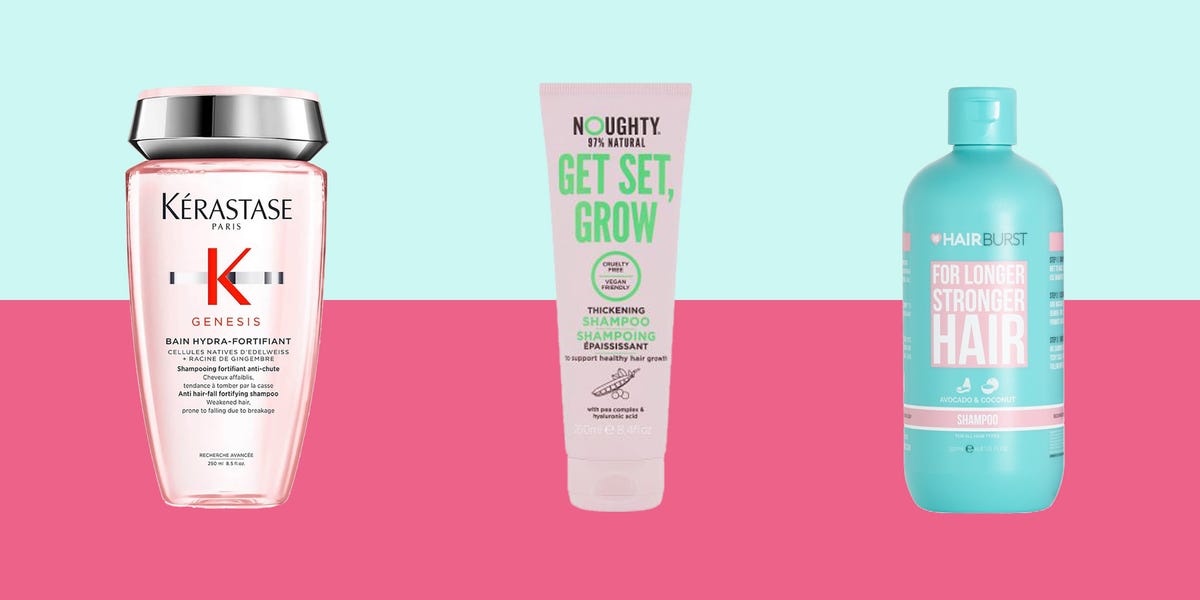
11. Kérastase Genesis Bain Hydra-Fortifiant Shampoo
Best for: Fragile hair and breakage reduction.
Kérastase Genesis is a salon-level pick for hair that seems to break if you look at it too confidently. It is not cheap, but the formula is elegant, the lather feels expensive, and the hair tends to feel smoother after use. This is ideal for people dealing with breakage from brushing, heat styling, coloring, or general overachiever hair damage.
12. Virtue Flourish Shampoo for Thinning Hair
Best for: Premium thickening and volume.
Virtue Flourish targets thinning hair with a strengthening, volumizing approach. The shampoo is known for helping hair feel fuller and more lifted at the roots, especially when paired with a lightweight conditioner. If your hair is fine, limp, or easily weighed down, this is one of the more elegant options on the list.
13. L’Oréal Professionnel Serioxyl Advanced Shampoo
Best for: Clarifying and densifying fine hair.
L’Oréal Professionnel’s Serioxyl line is built around the appearance of denser-looking hair and a cleaner scalp. It is especially useful for fine hair that gets oily fast or loses volume quickly. The formula gives that salon-wash feeling: clean, airy, and more polished, like your roots finally remembered they had a job.
14. Redken Extreme Shampoo
Best for: Damaged hair that is breaking, not truly shedding.
Sometimes hair loss panic is actually breakage wearing a disguise. Redken Extreme is a smart pick when strands are weak from bleach, heat, chemical services, or rough styling. It helps reinforce damaged hair so it can retain length. If your hairbrush is full of short snapped pieces rather than full-length hairs with bulbs, start thinking strength and repair.
15. Pantene Pro-V Miracles Grow Strong Shampoo
Best for: Budget-friendly strengthening.
Pantene’s Grow Strong shampoo is proof that a useful thinning-hair routine does not have to cost more than dinner. It focuses on smoother, stronger-feeling hair and is easy to find in drugstores. It is a practical pick for anyone who wants a reliable strengthening shampoo without needing a spreadsheet, a coupon strategy, and emotional support at checkout.
16. TRESemmé Beauty-Full Strength Shampoo
Best for: Affordable anti-breakage care.
TRESemmé Beauty-Full Strength is a good everyday option for reducing the look and feel of breakage. It is not a medical hair-loss treatment, but it can help hair feel smoother, stronger, and easier to manage. The large bottle also makes sense for households where shampoo mysteriously disappears at the speed of a streaming subscription renewal.
17. Aveda Botanical Repair Strengthening Shampoo
Best for: Plant-powered damage repair.
Aveda Botanical Repair is a beautiful choice for people who want a premium, aromatic shampoo focused on strengthening and damage care. It is especially nice for hair that feels rough, dull, or fragile. The scent is very Aveda: spa-like, herbal, and slightly capable of making your bathroom feel more emotionally stable.
18. Garnier Whole Blends or Garnier Ultimate Blends Honey Strengthening Shampoo
Best for: Gentle strengthening on a budget.
Garnier’s strengthening shampoos are approachable, affordable, and good for people who want softer hair with less breakage. Honey-inspired formulas tend to be smoothing and comforting, making them useful for dry lengths. For very fine hair, apply conditioner only from mid-length to ends so the roots do not collapse like a poorly planned soufflé.
Key Ingredients to Look For in Hair-Loss Shampoo
Ketoconazole
Best for dandruff, seborrheic dermatitis, and scalp inflammation. It may support healthier hair indirectly by improving scalp conditions, though it should not be treated as a guaranteed regrowth cure.
Caffeine
Caffeine is common in thickening and scalp-stimulating shampoos. It may help energize the scalp environment, but because shampoo is rinsed off, results vary.
Peptides and Proteins
Peptides, keratin, rice protein, silk protein, and wheat protein can make hair feel stronger and fuller. These are especially useful for breakage-prone hair.
Biotin
Biotin is famous, but topical biotin in shampoo is not a miracle ingredient. It can still be part of a strengthening formula, especially when combined with other supportive ingredients.
Niacinamide, Salicylic Acid, and Gentle Exfoliants
These help support scalp comfort and remove buildup. A clean scalp helps hair look fresher, fuller, and less weighed down.
Rosemary Oil
Rosemary is trendy for a reason, but expectations should stay realistic. In shampoo, it is best viewed as a scalp-supporting ingredient rather than a guaranteed regrowth treatment.
How to Use Hair-Loss Shampoo for Better Results
First, give the product time. Most testing panels and dermatology-informed routines look at results over several weeks, not one dramatic shower. Use the shampoo consistently for six to eight weeks unless your scalp becomes irritated.
Second, massage the shampoo into the scalp, not just the hair. The scalp is where oil, flakes, sweat, and product buildup live. Use your fingertips, not your nails, and massage for 30 to 60 seconds before rinsing. This improves cleansing and turns your shower into a tiny scalp spa, minus the cucumber water.
Third, condition strategically. If your roots are fine or oily, apply conditioner from mid-length to ends only. If your hair is curly, coily, bleached, or dry, you may need a richer conditioner to prevent breakage. The best shampoo can still fail if the rest of the routine leaves hair tangled and vulnerable.
Finally, track what is actually happening. Full-length hairs falling from the root, short broken pieces, itchy flakes, widening part lines, and thinning edges all point to different problems. A shampoo can help some of these, but not all of them.
When to See a Dermatologist
See a dermatologist if shedding begins suddenly, you notice bald patches, your scalp hurts or burns, you see redness or heavy scaling, your part is widening quickly, or hair loss continues for more than a few months. Hair loss can be connected to thyroid issues, iron levels, medications, hormonal changes, autoimmune conditions, stress, illness, or genetics. Getting the right diagnosis can save time, money, and a cabinet full of half-used bottles judging you silently.
Real-Life Experience: What Using Hair-Loss Shampoos Actually Feels Like
Using a hair-loss shampoo is less like flipping a switch and more like testing a roommate. At first, everyone seems promising. The bottle looks clean. The scent is nice. The lather behaves. Then week three arrives, and you start noticing the details: Is your scalp itchy? Are your roots flat? Does your hair feel stronger, or does it feel coated? Does the conditioner help, or does it turn your head into a decorative oil slick?
The most common experience people report is not sudden regrowth but better manageability. Hair may feel cleaner at the roots, lighter after washing, easier to detangle, and less likely to snap during brushing. For someone with breakage, that can look like “growth” because hair finally stays on the head long enough to gain length. This is why anti-breakage shampoos are important: they do not create new follicles, but they can help protect the hair you already have.
Another real-world lesson is that scalp type matters more than marketing. An oily, flaky scalp may respond beautifully to a ketoconazole or clarifying shampoo, while a dry, color-treated scalp may rebel like it has formed a union. Fine hair usually likes lightweight formulas with volume and minimal residue. Curly and coily hair often needs more moisture and slip to prevent tangles and mechanical breakage. Bleached hair may need bond repair and proteins, but too much protein can make some hair feel stiff. Hair care is chemistry with a shower curtain.
People also learn quickly that “natural” does not automatically mean gentle. Rosemary, mint, tea tree, and essential oils can feel refreshing, but they can also irritate sensitive scalps. On the other hand, some traditional formulas with classic cleansing agents may work perfectly for certain users. The best test is boring but effective: use one new product at a time, keep the rest of your routine steady, and watch your scalp for four to six weeks.
There is also an emotional side. Hair shedding can feel scary because it is visible: in the drain, on the pillow, on your shirt, in your brush, and somehow once on your laptop keyboard even though nobody invited it there. A good shampoo routine can give people a sense of control, but it should not turn into panic-buying every product on the internet. If shedding is significant, the best experience may be a two-track approach: use a gentle, supportive shampoo while also getting medical guidance.
The happiest users are usually the ones with realistic expectations. They choose a shampoo for a specific reason: dandruff control, less breakage, more volume, gentler cleansing, or scalp buildup. They do not expect one rinse-off product to solve genetics, hormones, nutrition, stress, and styling damage by itself. That mindset makes it easier to notice real wins: fewer tangles, less snapping, calmer scalp, better lift, shinier lengths, and hair that looks more alive even before styling.
In short, the best hair-loss shampoo is not always the most expensive or the loudest. It is the one that matches your scalp, your hair type, and your actual problem. If it helps your scalp feel comfortable, keeps your strands stronger, and makes wash day less dramatic, that is a win worth keeping in the shower.
Final Verdict
The best hair-loss shampoos can support healthier-looking growth by improving scalp condition, reducing breakage, and making hair look thicker. For dandruff-related shedding, Nizoral is a practical medicated choice. For luxury density care, Briogeo, Virtue, Kérastase, and Aveda stand out. For affordable strengthening, Pantene, TRESemmé, and Garnier are easy wins. For scalp-focused routines, Nutrafol, Nioxin, Paul Mitchell, and L’Oréal Professionnel deserve attention.
Just remember: shampoo is one tool, not the entire toolbox. If hair loss is sudden, patchy, painful, or progressive, talk with a dermatologist. If the issue is breakage, buildup, oiliness, or flatness, the right shampoo may make a very real difference. Your hair does not need a miracle. Sometimes it just needs the right cleanser, a patient routine, and fewer panic purchases at midnight.