Note: This article is written in standard American English for web publication. It is based on real surviving historical recordings and avoids unnecessary source-link clutter inside the body content.
History is usually quiet. It arrives in oil portraits, marble statues, stern textbook paragraphs, and black-and-white photos where everyone looks like they just smelled bad soup. But every now and then, the past gets noisyin the best possible way. Thanks to old wax cylinders, early discs, radio broadcasts, newsreels, and modern audio restoration, we can actually hear the voices of historical figures who once seemed locked behind glass.
Listening to historical voice recordings is strangely intimate. A photograph shows a face. A letter shows a mind. But a voice? A voice walks into the room, clears its throat, and says, “Yes, I was real.” Some recordings are crisp enough to feel surprisingly modern. Others sound like they were rescued from a haunted beehive. Either way, they turn history from something you study into something you experience.
Below are 17 historical figures whose voices you can actually listen to today. Some recordings are famous. Some are rare. Some are scratchy, brief, and wonderfully odd. All of them remind us that the people who shaped history had accents, pauses, breath, rhythm, and occasionally the dramatic delivery of someone trying to defeat a gramophone horn in single combat.
Why Historical Voice Recordings Matter
Old audio recordings are not just curiosities for history lovers with excellent headphones and too much coffee. They preserve personality. They reveal how people spoke before modern broadcasting flattened public speech into smoother, more casual patterns. Early recordings also show how technology shaped performance. Speakers often talked slowly, loudly, and with theatrical clarity because early microphones and acoustic recording horns were not exactly forgiving. If you mumbled into a wax cylinder, congratulations: you invented unintelligible fog.
These voices also challenge our imagination. We may picture a president as booming, a poet as delicate, or an inventor as confident. Then we hear the recording and discover something more human: a thinner tone, a clipped accent, a nervous pace, a dry sense of humor. Historical audio does not replace written history, but it adds texturelike discovering the soundtrack to a museum.
17 Historical Figures Whose Voices You Can Actually Listen To
1. Alexander Graham Bell
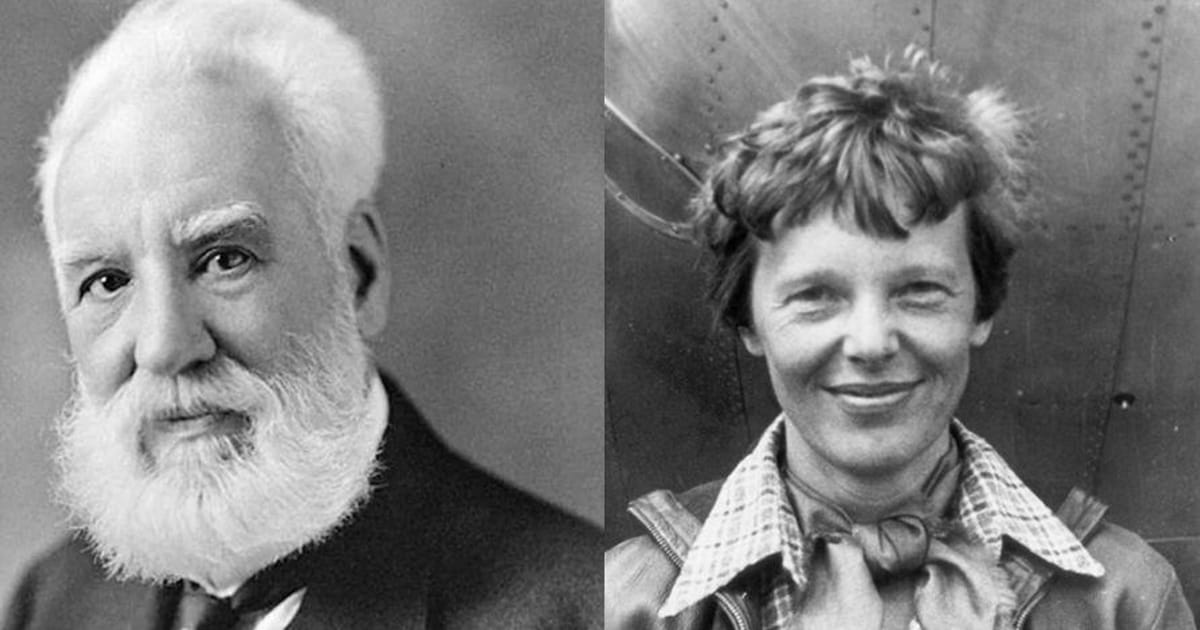
Alexander Graham Bell is famous for helping change how humans communicate, so it feels almost poetic that his own voice survived. A restored 1885 experimental recording from Bell’s Volta Laboratory lets listeners hear him identify himself. The sound is faint and ghostly, but the emotional effect is huge: the man associated with transmitting voices across distance reaches us across time. Not bad for someone whose “audio equipment” looked like it belonged in a steampunk dentist’s office.
2. Thomas Edison
Thomas Edison’s connection to recorded sound is legendary. His phonograph, developed in 1877, made it possible to record and play back the human voice in a practical way. Recordings connected to Edison and his laboratory help us understand not only the inventor but the birth of the recording industry itself. Hearing Edison is like hearing the guy who built the doorway step through it and say, “Yes, this works.”
3. Florence Nightingale
Florence Nightingale, the pioneering nurse and reformer, recorded an appeal in 1890 in support of veterans of the Light Brigade. Her surviving voice is one of the most moving pieces of Victorian audio. It is formal, deliberate, and powerful. The recording reminds us that Nightingale was not merely “the lady with the lamp,” as if history hired her for atmospheric lighting. She was a serious public health reformer with a voice that carried moral authority.
4. Alfred, Lord Tennyson
Alfred, Lord Tennyson was one of the great poets of the Victorian age, and recordings preserve him reading his own work. Hearing Tennyson read “The Charge of the Light Brigade” is fascinating because it gives modern listeners access to poetic rhythm as performed by the poet himself. The quality is rough, but the cadence matters. It is not just literature on a page; it is poetry leaving the mouth of the person who made it.
5. Otto von Bismarck
Otto von Bismarck, the German statesman known as the “Iron Chancellor,” was recorded in 1889 on an Edison wax cylinder. The recording is extraordinary because Bismarck was born in 1815closer to the Napoleonic era than to the age of radio. His voice, preserved in crackle and distortion, feels like a door opening into the 19th century. It is not polished. It is not easy listening. But it is real, and that is the magic.
6. Helmuth von Moltke the Elder
Field Marshal Helmuth von Moltke the Elder was also captured on an Edison-era recording. Born in 1800, he is among the earliest-born people whose voice survives in playable form. That fact alone is enough to make the hairs on a history nerd’s arm stand up and salute. The recording is brief and imperfect, but it allows listeners to hear a man whose life began during the age of Napoleon and ended in the age of recorded sound.
7. Leo Tolstoy
Leo Tolstoy, author of War and Peace and Anna Karenina, made phonograph recordings in the early 20th century. In surviving audio, Tolstoy’s voice has a meditative, elder-statesman quality. That feels appropriate for a writer who spent much of his later life wrestling with morality, faith, society, and the difficult art of not being impressed by aristocratic nonsense. Listening to Tolstoy is a reminder that literature was once spoken before it was studied.
8. Theodore Roosevelt
Theodore Roosevelt’s voice often surprises people. Many expect a thunderous roar from the Rough Rider president, but early recordings reveal a higher, sharper, more energetic delivery. His speeches were made during the acoustic recording era, which affects tone and pitch, but his personality still bursts through. Roosevelt sounds intense, urgent, and determinedas if he might challenge the microphone to a boxing match after the speech.
9. Woodrow Wilson
Woodrow Wilson’s voice survives through early political recordings, including speeches from the World War I era. His delivery is measured and professorial, which makes sense for a former university president who carried the classroom into politics. Whether one agrees with his ideas or criticizes his record, hearing Wilson speak adds dimension to a figure often encountered through policy debates and diplomatic history.
10. Calvin Coolidge
Calvin Coolidge, famous for being quiet enough to make a library look rowdy, also left voice recordings. His speaking style is controlled, formal, and very much of the early radio age. Coolidge’s recorded voice gives listeners a useful contrast with later presidents who mastered warmer broadcast styles. He does not sound like he is trying to be your living-room companion. He sounds like he has arrived to deliver a statement, then leave before anyone starts unnecessary small talk.
11. Amelia Earhart
Amelia Earhart’s voice can be heard in surviving recordings and speeches. The aviation pioneer speaks with clarity and calm confidence, reflecting the public persona that made her a global celebrity. Her voice matters because Earhart has often been surrounded by mystery, speculation, and myth. Audio pulls her back from legend and into reality: a disciplined pilot, a skilled communicator, and a woman who understood the power of public attention.
12. Franklin D. Roosevelt
Franklin D. Roosevelt transformed presidential communication through radio. His “fireside chats” made national crises feel personal and understandable to millions of Americans. Unlike earlier recordings that can sound distant and mechanical, FDR’s radio voice feels intentionally intimate. He spoke as if explaining events across a kitchen table, which was exactly the point. In the middle of economic depression and war, his voice became part of American public life.
13. Mahatma Gandhi
Mahatma Gandhi’s surviving voice recordings are limited, but they are deeply significant. One of the best-known recordings comes from his 1931 visit to London, where he spoke at Kingsley Hall. Gandhi’s voice is gentle, deliberate, and reflective. It does not sound like political theater. It sounds like moral argument delivered without decoration. That quietness is part of its power; he did not need thunder when discipline would do.
14. Winston Churchill
Winston Churchill’s voice is among the most recognizable of the 20th century. His wartime speeches, recorded and broadcast, helped define Britain’s public mood during World War II. Churchill understood language as armor. His delivery was slow, heavy, and dramatic, with pauses large enough to park a tank in. Some famous speeches were recorded after their original parliamentary delivery, but Churchill’s recorded voice remains central to his historical image.
15. Albert Einstein
Albert Einstein’s voice survives in radio addresses and filmed recordings. Many listeners expect the wild-haired genius to sound mystical or booming. Instead, his voice is accented, careful, and thoughtful. That makes sense. Einstein was not a cartoon genius shouting equations at the furniture. He was a reflective public intellectual who spoke about science, peace, refugees, and human responsibility in a world becoming dangerously modern.
16. Harry Houdini
Harry Houdini, the escape artist and magician, made recordings on Edison wax cylinders in 1914. Hearing Houdini is a treat because stage performers of his era depended heavily on voice, timing, and showmanship. His surviving recording has the punchy, projected quality of someone used to commanding a room without wireless microphones, LED screens, or a social media team yelling, “Don’t forget to like and subscribe.”
17. Martin Luther King Jr.
Martin Luther King Jr.’s voice is one of the most important recorded voices in American history. His speeches and sermons preserve not only words but cadence, musicality, urgency, and moral force. King’s voice demonstrates why audio matters: reading a transcript can be powerful, but hearing the rises, pauses, and repetitions reveals the full architecture of his oratory. The recording carries the emotional temperature of the moment.
What These Old Voices Teach Us About History
These recordings teach us that history was not silent, stiff, or sepia-toned. It was noisy, accented, imperfect, and alive. The people we now call historical figures were not born as monuments. They were speakers, performers, persuaders, readers, reformers, inventors, and leaders trying to be heard by the technology of their time.
They also teach us humility. A wax cylinder can survive while entire buildings vanish. A few seconds of audio can outlast empires. A voice recorded as a novelty can become a priceless cultural artifact. The survival of historical voice recordings often depended on accidents: a cylinder saved in a cabinet, a disc stored in a collection, a broadcast preserved by an institution, or a restoration specialist with the patience of a saint and the ears of a detective.
For SEO-minded readers searching for “historical voice recordings,” “voices of famous historical figures,” or “old audio recordings,” the real lesson is simple: sound makes history searchable in a different way. We do not only look up what people said. We search for how they sounded when they said it.
Listening Experience: What It Feels Like to Hear the Past
The first experience most people have with historical voice recordings is surprise. Not mild surprise, either. More like, “Wait, that is what he sounded like?” We build imaginary voices for historical figures without realizing it. A Civil War-era general must sound deep and gravelly. A Victorian poet must sound elegant and velvety. A famous inventor must sound confident and modern. Then the recording begins, and the past politely ruins our assumptions.
Early recordings can be difficult at first. The hiss, crackle, warble, and limited frequency range may make the speaker sound farther away than they really are. Some voices seem too high because of recording speed or playback issues. Some sound overly formal because people were performing for a machine they did not fully trust. Imagine being told, “Please speak into this horn, and your voice may live forever.” Most of us would suddenly talk like we were addressing Congress from inside a trumpet.
But after a minute, your ear adjusts. The noise becomes part of the atmosphere. You stop expecting studio quality and start listening for human details: a breath before a sentence, a rolled consonant, a strange vowel, a confident pause, a nervous rush. These details are tiny, but they are intimate. They make a famous person feel less like a chapter heading and more like someone who once stood in a room, leaned toward a device, and hoped the future could hear them.
There is also something emotionally odd about hearing very old voices through modern speakers. You might listen on a phone, with earbuds, while sitting in traffic or eating cereal, and suddenly Florence Nightingale or Theodore Roosevelt is sharing the same airspace as your morning routine. The contrast is almost funny. One moment you are skipping an ad; the next moment a voice from more than a century ago is reminding you that time is a very strange landlord.
Historical recordings also create a stronger memory than text alone. Students who hear Churchill’s pace, King’s rhythm, or FDR’s calm radio manner often remember the historical context better because sound gives information an emotional handle. The voice becomes a mental bookmark. It tells the brain, “This mattered to real people.” That is why teachers, writers, podcasters, museum curators, and history fans keep returning to archival audio. It transforms passive learning into a direct encounter.
The best way to listen is patiently. Do not judge an 1890 wax cylinder by podcast standards. Use headphones if possible. Read a short background note before listening, then play the recording twice. The first time, your brain will fight the static. The second time, the person will begin to appear. By the third time, you may notice something unexpectedly moving: history does not feel dead when it has a voice.
Conclusion
Historical voice recordings are among the closest things we have to time travel. They do not show us everything, and they can be technically messy, but they preserve something no statue can: breath, tone, pace, hesitation, personality. From Alexander Graham Bell’s experimental recording to FDR’s fireside chats, from Florence Nightingale’s Victorian appeal to Martin Luther King Jr.’s unforgettable oratory, these voices let us hear history as lived human experience.
The next time a historical figure seems distant, look for a recording. You may discover that the past does not whisper from a textbook. Sometimes it crackles, pops, clears its throat, and speaks.