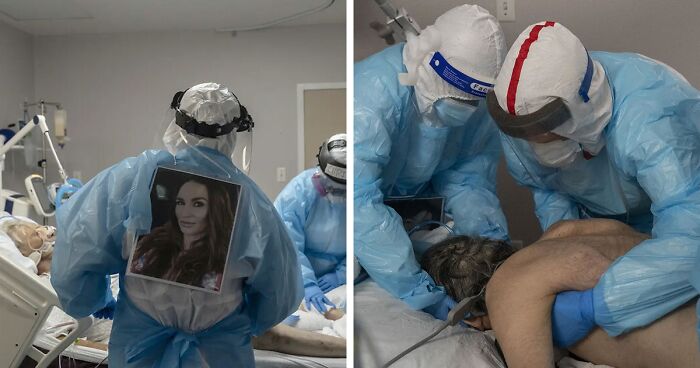
Some photographs do not need dramatic lighting, clever filters, or a caption that screams, “Please feel something.” They simply show the truth, and the truth does the heavy lifting. That is exactly why the COVID-19 hospital images captured by photojournalist Go Nakamura inside United Memorial Medical Center in Houston became so powerful. They did not present the pandemic as a graph, a press conference, or a political argument. They showed beds, gloved hands, exhausted nurses, patients eating holiday meals alone, and doctors trying to offer comfort through layers of plastic and fear.
During the worst waves of COVID-19, hospitals became the place where national headlines turned into human faces. The phrase “healthcare system under pressure” sounded technical on television, almost polite. But inside an ICU, pressure meant a nurse skipping lunch, a respiratory therapist adjusting oxygen, a doctor calling another family with bad news, and a patient staring at a ceiling instead of seeing loved ones. Nakamura’s hospital photography captured that reality with unusual intimacy: not as spectacle, but as evidence.
This article looks at ten types of images from that hospital series and explains why they still matter. These pictures are not just about one hospital, one photographer, or one city. They are about what COVID-19 did to patients, families, medical workers, and the idea of ordinary life. Spoiler: ordinary life turned out to be wildly underrated.
Why These COVID-19 Hospital Photos Still Matter
COVID-19 was measured in cases, hospitalizations, ventilators, deaths, and vaccination rates. Those numbers were necessary, but numbers can become strangely weightless after people hear them every day. A photograph breaks through that numbness. One image of a doctor holding a lonely patient can explain isolation more forcefully than a dozen charts. One picture of medical staff dancing for a few seconds at a nursing station can show both exhaustion and survival instinct. Humans, apparently, will find rhythm even in a crisissometimes because rhythm is the only thing keeping the room from collapsing emotionally.
Go Nakamura’s work inside United Memorial Medical Center became widely recognized because it showed the pandemic as hospital workers actually lived it: messy, repetitive, tender, frightening, and occasionally absurd in the way only real life can be. The ICU was not a movie set. There were IV poles, PPE carts, food trays, monitors, fogged-up face shields, and people doing their jobs while carrying a level of stress most workplaces would consider an emergency all by itself.
10 Pictures That Reveal The Reality Of COVID-19 In Hospitals
1. The Doctor Hugging A COVID-19 Patient
The most unforgettable image from Nakamura’s hospital coverage shows Dr. Joseph Varon comforting an elderly COVID-19 patient on Thanksgiving Day. The patient was isolated, frightened, and reportedly wanted to be with his wife. The doctor, covered in protective gear, wrapped his arms around him. It was a hug, but not the kind people take for granted at airports or family dinners. It was a medically complicated, emotionally necessary act of humanity.
This picture became a symbol because it captured the cruel math of the pandemic: patients needed touch at the exact moment touch had become dangerous. Hospitals had to restrict visitors to reduce transmission, but the emotional cost was enormous. In this single frame, the doctor became caregiver, messenger, family stand-in, and witness.
2. The Patient Alone In An ICU Bed
Another kind of image from COVID-19 wards shows a patient lying alone, surrounded by machines. The room is full, technically speakingthere are monitors, tubes, oxygen lines, alarms, and staff moving in and outbut emotionally it feels empty. That emptiness was one of the defining features of COVID-19 hospital care.
Before the pandemic, a seriously ill patient might have had relatives sitting nearby, arguing softly over coffee, asking questions, holding hands, and making nurses explain the same thing three times. During COVID-19, many families had to wait outside the hospital or connect through phones and tablets. The ICU became both a treatment space and a lonely island.
3. Medical Staff Preparing To Enter The COVID Unit
Photos of doctors and nurses putting on PPE may look routine now, but in 2020 they carried the tension of a pre-battle ritual. Masks, gowns, gloves, face shields, and hair covers became the armor of healthcare workers. Every step mattered. A loose glove, a rushed removal, or a contaminated surface could mean exposure.
These images remind readers that hospital work became physically uncomfortable in ways outsiders rarely saw. Staff sweated through gowns, spoke through muffled masks, repeated safety steps hundreds of times, and still worried about bringing the virus home. Even a simple taskchecking a patient’s vitalsrequired preparation that felt like suiting up for the moon, except the moon had beeping monitors and no lunch break.
4. The Nurse Holding A Patient’s Hand
Some COVID-19 hospital pictures are quiet: a gloved hand holding another hand, a nurse leaning close to hear a patient, a staff member pausing beside a bed. These moments matter because they show care beyond clinical treatment. COVID-19 care was not only about oxygen saturation and medications. It was also about fear management.
Patients often struggled to breathe, and panic can make breathlessness feel even worse. A calm voice, steady eye contact, or a hand on the arm could become part of the care plan. In a normal year, that might sound sentimental. In a COVID-19 ICU, it was practical medicine with a heartbeat.
5. The Intubation Or Procedure Scene
Hospital photo essays also showed teams performing high-risk procedures, including airway-related care and tracheostomies. These images are intense because they reveal the technical side of COVID-19 treatment. The public often heard that patients were “on ventilators,” but few understood what that meant inside the room: multiple professionals coordinating around a fragile body while trying to protect themselves from viral exposure.
Such photographs are not easy to look at, and they should not be easy. They remind us that severe COVID-19 was not just “a bad flu,” not just a few days in bed, and definitely not something solved with a motivational quote and soup. For many patients, it became a fight for oxygen managed minute by minute.
6. The Thanksgiving Meal In The ICU
One of the most human scenes from the hospital series involved Thanksgiving inside the COVID-19 unit. A patient eating turkey and pie in a hospital bed is almost surreal. The holiday is supposed to mean crowded tables, too many side dishes, and at least one relative giving an unsolicited opinion. In the ICU, it became a tray, a mask nearby, and a staff member doing their best to make the day feel less abandoned.
This picture works because of the contrast. The food says “home.” The room says “danger.” Together, they show how COVID-19 invaded rituals that normally help people feel grounded. Even celebration had to pass through infection control.
7. Staff Briefing At The Nursing Station
Images of staff gathered at a nursing station may look less dramatic than a bedside emergency, but they reveal how hospitals actually function. Care is a team sport. A COVID-19 unit depended on nurses, physicians, respiratory therapists, aides, cleaners, cafeteria workers, administrators, and support staff. No single hero could carry the whole thing, no matter how inspiring the soundtrack might be.
These photos also show fatigue in posture: shoulders slightly dropped, eyes fixed on screens, bodies leaning against counters for a second of rest. The nursing station became command center, break room, emotional checkpoint, and sometimes the only place where staff could process what had just happened before the next alarm sounded.
8. The Short Moment Of Dancing
One memorable image from Nakamura’s work shows medical staff dancing to a Christmas song at the nursing station. At first glance, it may seem out of place. Why would anyone dance in a COVID-19 ICU? But that is exactly why the image is important. Joy did not mean everything was fine. It meant people were still alive enough to steal ten seconds from despair.
In hospitals, small rituals matter. A joke, a song, a shared snack, or a tiny dance can keep a team from emotionally flatlining. The pandemic did not erase healthcare workers’ personalities. It squeezed them. The occasional laugh was not disrespectful to suffering; it was one of the ways staff survived being surrounded by it.
9. The Exhausted Worker Resting
Photos of healthcare workers restingor trying tobecame some of the most relatable images of the pandemic. A staff member napping at a station, leaning against a wall, or sitting in silence tells a story of physical depletion. Burnout was not an abstract wellness buzzword. It was written on faces, in body language, and in the way people moved through long shifts.
The pandemic exposed a hard truth: hospitals are built on human endurance, and human endurance has limits. Nurses and doctors were praised as heroes, but praise does not replace staffing, sleep, PPE, mental health support, or safe working conditions. A thank-you sign is nice. A manageable patient load is better.
10. The Final Call, The Last Touch, The Unseen Family
Some of the most devastating COVID-19 hospital images did not need to show death directly. A phone call to a family, a staff member standing quietly after a patient’s decline, or a covered body leaving a room could say enough. Hospitals became places where medical workers carried messages no one wanted to receive.
The unseen people in these photographs are the families. They were present through screens, phone calls, prayers, and anxious waiting. Their absence inside the frame was part of the story. COVID-19 separated people at the precise moments when closeness usually matters most: fear, crisis, recovery, and goodbye.
What These Images Teach Us About Hospital Reality
The ten picture themes above show that COVID-19 hospital photography was never just about illness. It was about systems under pressure. When hospitalizations rise, everything tightens: bed capacity, staffing, supplies, communication, emotional bandwidth, and time. A patient may experience that pressure as waiting. A nurse may experience it as another double shift. A doctor may experience it as another family call. A cleaner may experience it as another room that must be disinfected perfectly because safety depends on invisible details.
These images also challenge the clean, simple stories people sometimes prefer. The pandemic was not only tragedy. It also contained competence, tenderness, improvisation, and courage. Staff members did not stop being funny, tired, scared, stubborn, hungry, or human. Patients did not become statistics. They remained spouses, parents, workers, neighbors, and people who wanted to go home.
The best pandemic photography does not tell viewers what to think. It slows them down long enough to see. Nakamura’s work did that by staying close to ordinary moments inside an extraordinary crisis. A meal tray. A gloved hand. A doctor’s hug. A tired face shield. These details made the emergency visible.
Experience-Based Reflections: What It Felt Like To Witness These Hospital Images
For many people, seeing COVID-19 hospital photos was the first time the pandemic became emotionally real. Before that, the crisis might have existed as alerts on a phone, arguments about masks, canceled flights, empty grocery shelves, and awkward video calls where everyone said, “Can you hear me?” at least twice. But a hospital photograph changed the scale. It took a global event and placed it inside one room, beside one bed, with one patient trying to breathe.
The experience of looking at these images was uncomfortable because they removed distance. It is easy to debate public health in broad terms. It is harder to look at a patient alone on Thanksgiving and pretend the consequences are theoretical. Viewers could imagine their own parents in that bed, their own spouse waiting for a call, their own nurse friend working behind the plastic shield. The photographs turned empathy from a nice idea into a responsibility.
There was also a strange feeling of guilt in seeing them. Many people were at home, frustrated by boredom, canceled plans, or the crushing sameness of quarantine days. Then a hospital image appeared: a nurse with mask marks pressed into her face, a doctor still working after hundreds of consecutive days, a patient celebrating a holiday from an ICU bed. Suddenly boredom looked like a privilege. Not a fun privilegenobody is putting “sourdough loneliness” on a luxury brochurebut still a form of safety many patients and healthcare workers did not have.
These photos also created a deeper respect for small acts of care. A staff member serving a meal was not just delivering food. They were preserving dignity. A nurse holding a hand was not just being kind. They were standing in for a family temporarily kept away. A doctor hugging a patient was not just offering comfort. He was answering a human need that medicine alone could not solve.
Another powerful experience was recognizing how tired healthcare workers looked. Not movie tired, where someone has one tasteful smudge on their cheek and still delivers a perfect speech. Real tired. The kind of tired that settles into the shoulders and eyes. The kind that makes a ten-second dance at a nursing station feel like a small rebellion against despair. Those moments mattered because they showed that resilience is not the absence of pain. Sometimes resilience is continuing to care while carrying pain carefully enough that it does not crush the next patient who needs you.
Looking back, the hospital images remain valuable because memory fades quickly when society wants to move on. People naturally want normal life back. They want concerts, travel, school, work, birthdays, and the sacred American tradition of complaining about traffic. But remembering is not the same as being stuck. Remembering helps communities prepare better, protect healthcare workers, take public health seriously, and honor those who lived through the hardest rooms of the pandemic.
Conclusion
Go Nakamura’s COVID-19 hospital photographs captured more than a medical emergency. They captured isolation, exhaustion, teamwork, grief, humor, and compassion inside one of the most difficult chapters in modern healthcare. The images from United Memorial Medical Center showed what statistics could not: the emotional architecture of a pandemic. Behind every hospitalization number was a bed. Behind every bed was a person. Behind every person was a family, a care team, and a story interrupted by a virus.
The reality of COVID-19 at hospitals was harsh, but these pictures also revealed something deeply human. Even when faces were hidden behind masks and shields, care was visible. It appeared in a handhold, a meal, a procedure, a dance, a briefing, a hug. That is why these images still matter. They remind us that healthcare is not only science and systems; it is also presence. And during COVID-19, presence became one of the rarest and most powerful gifts of all.