Cabin windows have a very specific job description. They need to frame that pine-tree view like a postcard, block nosy neighbors if your “remote getaway” is actually twenty feet from another rental, keep heat inside when winter gets dramatic, and still look charming enough to make everyone say, “Wow, this place has character.” No pressure, tiny rectangle of glass.
The right cabin window treatments can completely change how a room feels. A bare window may look clean and open, but it can also feel unfinished, cold, or overly bright at the exact moment you want to nap under a quilt. On the other hand, heavy curtains can make a small cabin feel like a cave if they are chosen without thought. The sweet spot is a balance of warmth, privacy, texture, light control, and rustic style.
Whether your cabin is a lakeside retreat, a mountain hideaway, a woodland rental, or a cozy backyard guest house, these cabin window treatment ideas will help you dress the windows beautifully without smothering the view. From woven wood shades to café curtains, reclaimed wood valances, blackout panels, and smart layering tricks, here are ten practical and stylish ways to make cabin windows work harderand look better while doing it.
Why Cabin Window Treatments Need a Different Approach
A cabin is not a formal city apartment, and that is exactly its charm. Window treatments for cabins should feel relaxed, natural, and slightly collected over time. The goal is not perfection; it is comfort with personality. Think linen that wrinkles gracefully, wood that shows its grain, wool that looks ready for a snowy morning, and hardware that does not appear afraid of a little mud on the boots.
Cabins also tend to have design challenges that regular homes may not. Rooms are often smaller. Ceilings may be lower. Windows may be oddly shaped, placed close to furniture, or surrounded by wood paneling. In colder regions, window coverings must help reduce drafts and improve comfort. In sunny locations, they may need to filter glare while protecting fabrics and wood finishes from fading. And in vacation rentals, they need to be durable enough for guests who believe curtain rods are also towel racks. They are not, but here we are.
1. Woven Wood Shades for Natural Cabin Texture
Woven wood shades are one of the easiest wins for cabin window treatments. Made from materials such as bamboo, grasses, reeds, jute, or other natural fibers, they bring in texture without feeling fussy. They pair beautifully with log walls, stone fireplaces, leather chairs, and rustic floors because they look like they belong in a room surrounded by trees.
Best for: living rooms, dining nooks, sunrooms, and lake cabins
Use woven wood shades when you want privacy and filtered light, but still want the room to feel airy. They are especially good for large windows where full curtains might look bulky. In a cabin living room, woven shades can soften the window without hiding the view completely. For more privacy, choose a lined version. For bedrooms, consider adding blackout lining or pairing woven shades with side panels.
Design tip: choose a tone that either matches your woodwork or gently contrasts with it. If your cabin has dark logs, a medium or light woven shade can keep the room from feeling too heavy. If your walls are pale pine, deeper bamboo or walnut-toned shades can add depth.
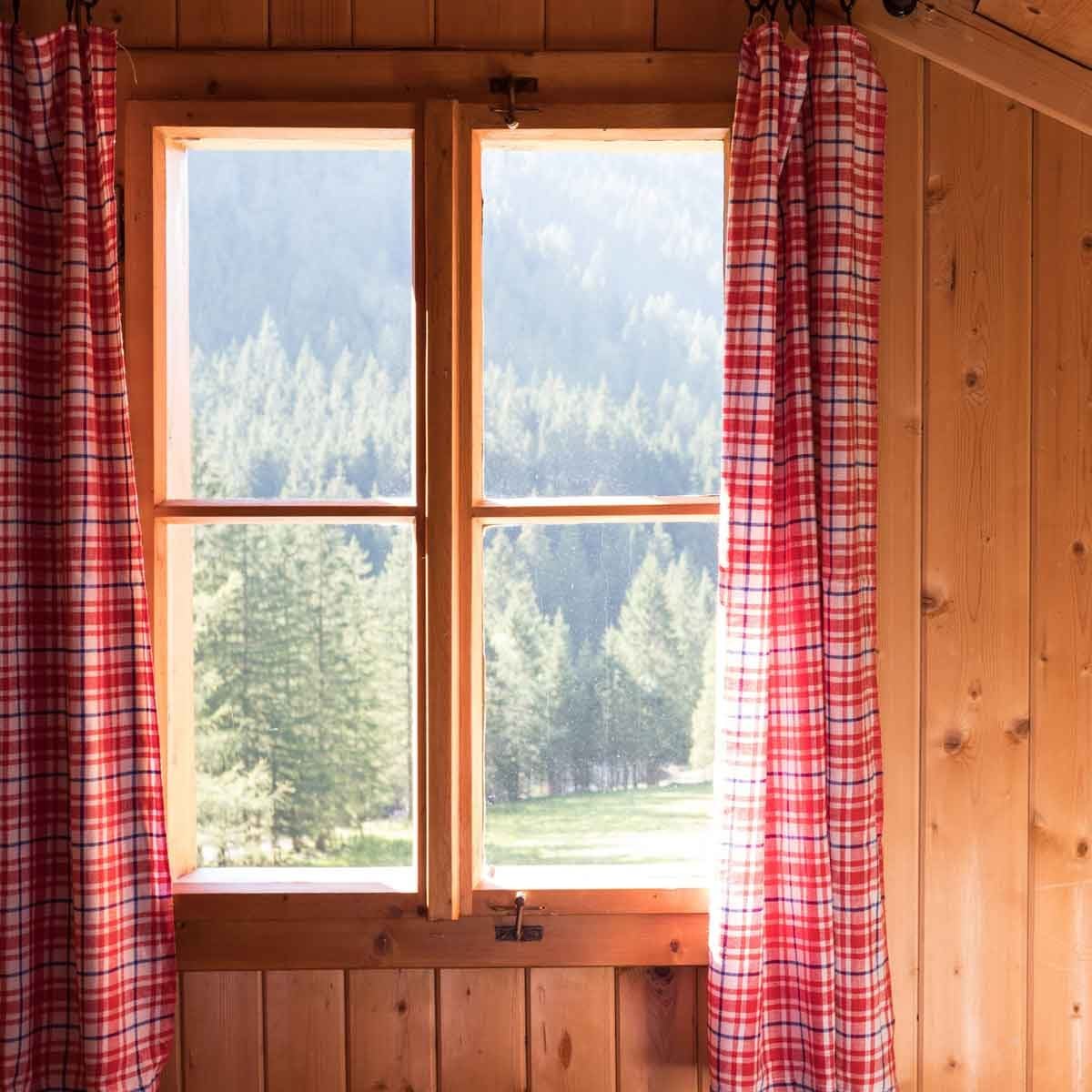
2. Plaid Curtains for Classic Cabin Character
Few things say “cabin” faster than plaid curtains. They are cozy, nostalgic, and just a little bit outdoorsy, like they might know how to build a fire even if you personally still need three tries and a YouTube tutorial. Plaid works especially well in bedrooms, dens, and family rooms because it adds pattern without feeling too polished.
Best for: bedrooms, reading corners, and rustic family rooms
Red buffalo check is the bold classic, but it is not the only option. Navy and cream plaid feels lakeside and fresh. Green and tan plaid works beautifully in forest cabins. Brown, charcoal, and ivory checks create a more understated lodge look. If the room already has a lot of wood grain, stone, and patterned rugs, choose a smaller plaid or muted colors so the space does not start arguing with itself.
For a more elevated look, hang plaid curtains high and wide. Mounting the rod closer to the ceiling makes the windows feel taller, while extending the rod beyond the trim allows the panels to stack outside the glass. That means more sunlight during the day and less fabric blocking your mountain view.
3. Linen Drapes for a Soft, Relaxed Cabin Look
Linen drapes are ideal when you want a cabin to feel calm, breezy, and quietly stylish. They have enough texture to feel natural but enough softness to keep a room from becoming too rugged. If plaid curtains are the flannel shirt of cabin design, linen drapes are the well-worn chambray shirt: casual, dependable, and somehow always appropriate.
Best for: modern cabins, Scandinavian cabins, and neutral interiors
Choose off-white, oatmeal, flax, gray, or soft sage linen for an easygoing look. These tones work beautifully with exposed beams, painted paneling, woven rugs, and simple furniture. Linen also moves nicely in a breeze, which makes it great for lake houses and cabins with screened porches nearby.
One thing to remember: linen usually filters light rather than fully blocking it. That is wonderful in a living area, but not always ideal in a bedroom unless you enjoy waking up at sunrise with the enthusiasm of a farm rooster. For sleeping spaces, use lined linen drapes or layer them over blackout shades.
4. Cellular Shades for Insulation and Comfort
Cellular shades, also called honeycomb shades, are a smart choice for cabins where comfort matters as much as style. Their structured pockets trap air, which helps reduce heat transfer at the window. In plain English: they can help a cabin feel warmer in winter and cooler in summer. That is especially useful in mountain cabins, older cottages, and weekend retreats where windows may be charming but not exactly cutting-edge technology.
Best for: bedrooms, lofts, drafty windows, and four-season cabins
Cellular shades come in light-filtering and room-darkening options. Light-filtering versions are great for common areas where you want privacy without losing brightness. Room-darkening or blackout versions are better for bedrooms, bunk rooms, and media spaces. Top-down, bottom-up cellular shades are particularly useful because they let you cover the lower part of the window for privacy while leaving the upper glass open for natural light.
For the best look in a cabin, choose warm neutrals rather than stark white. Cream, taupe, soft gray, and tan blend more naturally with wood interiors. If you are layering them with curtains, let the shade handle the practical job and let the fabric bring the personality.
5. Café Curtains for Kitchens and Breakfast Nooks
Café curtains cover only the lower portion of a window, which makes them perfect for spaces where you want privacy but still want sunshine. They are charming, affordable, and friendly to DIY projects. In cabin kitchens, they add instant coziness without blocking the view of trees, snow, water, or whichever squirrel has decided it owns the deck.
Best for: kitchens, bathrooms, mudrooms, and small windows
Use café curtains in simple fabrics like cotton, linen blends, ticking stripe, gingham, or small-scale floral prints. A cabin kitchen with open shelves and wood countertops can look especially sweet with cream café curtains on a black or oil-rubbed bronze rod. For a more rustic approach, use a tension rod inside the frame and choose fabric with a natural weave.
Café curtains are also practical in bathrooms because they allow light in from the top while keeping the lower glass covered. If moisture is an issue, choose washable fabric and avoid anything too heavy. A cabin bathroom should smell like cedar and soap, not like damp fabric that has made poor life choices.
6. Reclaimed Wood Valances for Rustic Personality
A reclaimed wood valance can add architectural interest to a plain cabin window. It works especially well when you want to hide shade hardware or add rustic character without using a lot of fabric. Old barn boards, weathered planks, or stained pine can all create a simple box-style valance that feels handmade and intentional.
Best for: kitchens, living rooms, bunk rooms, and rental cabins
This idea is great for cabins with small windows because it adds style without taking up floor space or crowding the room. A wood valance can be left raw, stained, whitewashed, or painted to match trim. For a more polished look, pair it with a roller shade or Roman shade underneath. For a more rugged look, let the wood grain and knots do the talking.
Keep proportions in mind. A valance that is too tall can make a small window look squat. As a general rule, simple is better. Let the reclaimed wood add texture, not steal the entire scene like a dramatic guest at dinner.
7. Roman Shades for Tailored Cabin Style
Roman shades are a wonderful option when you want fabric softness but do not have room for full curtains. They fold neatly when raised and create a smooth panel when lowered. In cabins, Roman shades can look classic, modern, rustic, or cottage-inspired depending on the fabric.
Best for: bedrooms, bathrooms, kitchens, and compact rooms
For a traditional cabin, consider Roman shades in plaid, ticking stripe, herringbone, or warm solid linen. For a modern cabin, choose a clean neutral fabric with subtle texture. For a lakeside cottage feel, try blue-and-white stripes or soft chambray. Roman shades are especially useful near furniture, built-ins, or kitchen counters where long curtains would be awkward.
If privacy and sleep quality are priorities, choose a lined Roman shade. In a bedroom, a blackout-lined Roman shade can keep the look clean while blocking early morning light. In a kitchen, a washable or performance fabric is a practical choice because cooking steam and fabric are not always best friends.
8. Interior Shutters for Durability and Privacy
Interior shutters are sturdy, timeless, and practical. They work beautifully in cabins because they feel architectural rather than decorative. Wood or faux wood shutters can control light, add privacy, and stand up to everyday use better than delicate fabrics.
Best for: bathrooms, bedrooms, lake cabins, and high-traffic rentals
Shutters are especially useful in bathrooms and bedrooms where privacy matters. They can be adjusted throughout the day, allowing light in while blocking direct views. In a cabin with lots of natural wood, stained shutters can blend in beautifully. In a painted cottage-style cabin, white or soft cream shutters can brighten the room.
For rustic spaces, avoid overly glossy finishes. Matte, satin, or natural wood finishes usually feel more appropriate. If your cabin has very small windows, half-height shutters can preserve daylight while adding privacy. For a vacation rental, shutters are also easier to clean than long drapes and less likely to end up tangled, stained, or mysteriously “customized” by guests.
9. Blackout Curtains for Better Sleep
Blackout curtains may not sound romantic, but anyone who has tried sleeping in a cabin bedroom at 5:30 a.m. in July knows they are basically luxury technology. They block light, add privacy, and can help make bedrooms feel quieter and cozier.
Best for: bedrooms, bunk rooms, nurseries, and media areas
The trick is choosing blackout curtains that do not look like they belong in a conference room. Look for fabrics with texture: cotton canvas, linen-look weaves, brushed twill, velvet, or wool-blend styles. Deep green, charcoal, navy, rust, and warm beige all work well in cabin interiors. Avoid shiny synthetic finishes unless your design goal is “ski lodge meeting room,” which is probably not the dream.
For maximum performance, hang blackout curtains high and wide so they cover the window edges. If light leaks around the sides, consider wraparound rods or layering with inside-mounted shades. In bunk rooms, blackout panels can be the difference between peaceful sleep and children announcing sunrise like tiny town criers.
10. Layered Window Treatments for Style and Function
Layering is one of the best cabin window treatment ideas because cabins often need more than one solution. A shade alone may provide privacy but not enough softness. Curtains alone may look pretty but offer limited insulation. Put them together, and suddenly the window is doing teamwork.
Best for: primary bedrooms, large living room windows, and four-season cabins
A classic layered formula is woven wood shade plus linen drapes. The shade adds texture and daytime privacy; the drapes add softness and nighttime coverage. Another strong combination is cellular shade plus plaid curtains, especially in colder climates. In a kitchen, try a Roman shade with a small wood valance. In a bathroom, use shutters with a small fabric topper if you want extra charm.
Layering also helps you change the mood of the room throughout the day. Open everything in the morning for sunlight. Lower the shade in the afternoon to reduce glare. Close the curtains at night for privacy and warmth. It is like having a lighting plan, privacy plan, and cozy plan all living on one window.
How to Choose the Best Cabin Window Treatment
Before buying anything, think about what each window needs to do. A living room picture window may be all about view and light control. A bedroom window needs privacy and darkness. A bathroom window needs moisture-friendly materials. A kitchen window needs something washable and compact. A loft window may need insulation more than decoration.
Measure carefully before ordering blinds, shades, or curtains. Cabin windows are often not as identical as they look, especially in older properties. Measure each window separately, including width, height, depth, and any obstacles such as handles, trim, outlets, heaters, or built-in benches. Nothing ruins a design mood faster than a beautiful shade that is half an inch too wide and now lives permanently in a closet.
Cabin Window Treatment Materials That Work Well
Natural materials usually look best in cabin interiors. Linen, cotton, wool blends, bamboo, jute, rattan, wood, and iron all fit the relaxed, outdoorsy mood. These materials add texture, which is important because many cabins rely on simple color palettes. Texture keeps neutral rooms from feeling flat.
That said, do not ignore performance. Faux wood shutters may be better than real wood in damp bathrooms. Washable cotton may be smarter than delicate fabric in kitchens. Cordless shades are cleaner-looking and safer in homes with children. Blackout linings are valuable in bedrooms. Insulating shades are worth considering for cold climates. The best cabin window treatments are not just pretty; they earn their keep.
Color Ideas for Cabin Window Treatments
Cabin colors are often inspired by nature, which makes choosing window treatments easier. Look to the view outside: pine green, bark brown, stone gray, lake blue, clay red, wheat beige, and snow white. These colors feel connected to the setting and rarely look out of place.
If your cabin is dark, choose lighter window treatments to brighten it. Cream linen, pale woven shades, or soft gray Roman shades can keep the room from feeling heavy. If your cabin is very light or modern, add warmth with camel, rust, olive, or walnut-toned shades. For a playful cabin, use small doses of pattern: plaid in a bedroom, stripes in a kitchen, or a vintage-inspired floral in a reading nook.
Common Mistakes to Avoid
One common mistake is covering every window the same way. A cabin does not need matching treatments in every room. It needs treatments that solve each room’s problem while still feeling related. You can use woven shades in the living room, café curtains in the kitchen, blackout panels in the bedroom, and shutters in the bathroom, as long as the colors and materials feel connected.
Another mistake is choosing fabric that is too formal. Heavy silk, shiny damask, and ornate swags can look out of place in a rustic cabin unless the entire space is intentionally dramatic. Most cabins look better with simple lines, natural texture, and honest materials.
Finally, do not forget the hardware. Curtain rods, rings, brackets, and tiebacks matter. Black iron, aged brass, oil-rubbed bronze, wood rods, leather straps, and simple hooks often work better than shiny chrome. Hardware is the handshake between the window treatment and the room; make sure it is not wearing the wrong outfit.
Real Experiences and Practical Lessons from Cabin Window Treatments
One of the biggest lessons from decorating cabins is that the view should usually be treated like the main artwork. If the window faces a lake, forest, mountain ridge, or even a quiet snowy yard, the treatment should frame the view rather than fight it. In real-life cabin spaces, the best results often come from choosing window coverings that disappear when open and add comfort when closed.
For example, in a small cabin living room with dark wood walls, heavy curtains can make the room feel smaller almost immediately. A better solution is often an inside-mounted woven shade with simple side panels. During the day, the shade can be raised and the panels pulled wide so the window stays open and bright. At night, the shade provides privacy, while the curtains soften the room. The space still feels rustic, but not like it is preparing for hibernation.
Bedrooms tell a different story. Many cabin owners start with pretty light-filtering curtains because they look charming in photos. Then the first summer morning arrives, and the room becomes bright enough to interrogate a raccoon. That is when blackout lining becomes a hero. A practical cabin bedroom usually benefits from either blackout curtains, blackout Roman shades, or cellular shades paired with fabric panels. The room can still look warm and inviting, but sleep gets the respect it deserves.
Kitchen windows are another place where experience teaches restraint. Long curtains near sinks, stoves, or prep counters are rarely convenient. They get splashed, stained, or caught on cabinet hardware. Café curtains, washable Roman shades, or simple roller shades usually work better. They provide enough softness without becoming part of dinner. In a rustic kitchen, a ticking stripe café curtain can look charming while still being easy to remove and wash.
Bathrooms require even more practical thinking. Moisture can be tough on fabric and natural fibers, especially in small cabins with limited ventilation. Faux wood shutters, washable café curtains, or moisture-tolerant roller shades are often safer choices. If you love the look of woven wood, use it in a powder room or well-ventilated bath rather than directly beside a steamy shower.
Another real-world lesson: cabin windows are not always square, even when they look innocent. Older cabins settle. Handmade frames shift. Trim can be uneven. This is why measuring every window matters. Two windows on the same wall may differ just enough to make one shade fit perfectly and the other behave like it was ordered for a different house. Measure width at the top, middle, and bottom. Measure height on both sides. Write everything down, because memory becomes surprisingly creative at the home improvement store.
Layering also proves its value over time. A cabin may feel bright and breezy in July but chilly and exposed in January. Layered treatments let the same room adapt. Woven shades, cellular shades, and lined curtains can work together to manage changing seasons. In vacation cabins, this flexibility is especially useful because different guests have different comfort levels. Some want sunlight at sunrise. Others want total darkness until coffee has been legally introduced.
The most successful cabin window treatments feel intentional but not overdesigned. They let natural materials shine, support the way the room is used, and make the cabin feel more comfortable in every season. A good window treatment does not need to shout. It just needs to quietly make the room warmer, softer, more private, and better looking. That is a pretty impressive resume for fabric, wood, or a humble little shade.
Conclusion
Cabin window treatments should do more than cover glass. They should support the mood of the home, protect privacy, manage light, improve comfort, and highlight the natural setting outside. The best options often combine rustic texture with practical performance: woven wood shades for warmth, cellular shades for insulation, café curtains for charm, shutters for durability, and blackout curtains for better sleep.
Start with the needs of each room, then choose materials and colors that feel connected to the cabin’s surroundings. A mountain cabin may call for plaid, wooly textures, and insulating shades. A lake cabin may look best with linen, woven woods, and soft blue accents. A modern cabin may need simple Roman shades and clean-lined drapes. Whatever your style, the right window treatments can make a cabin feel finished, functional, and deeply invitingthe kind of place where even the windows look ready for a long weekend.