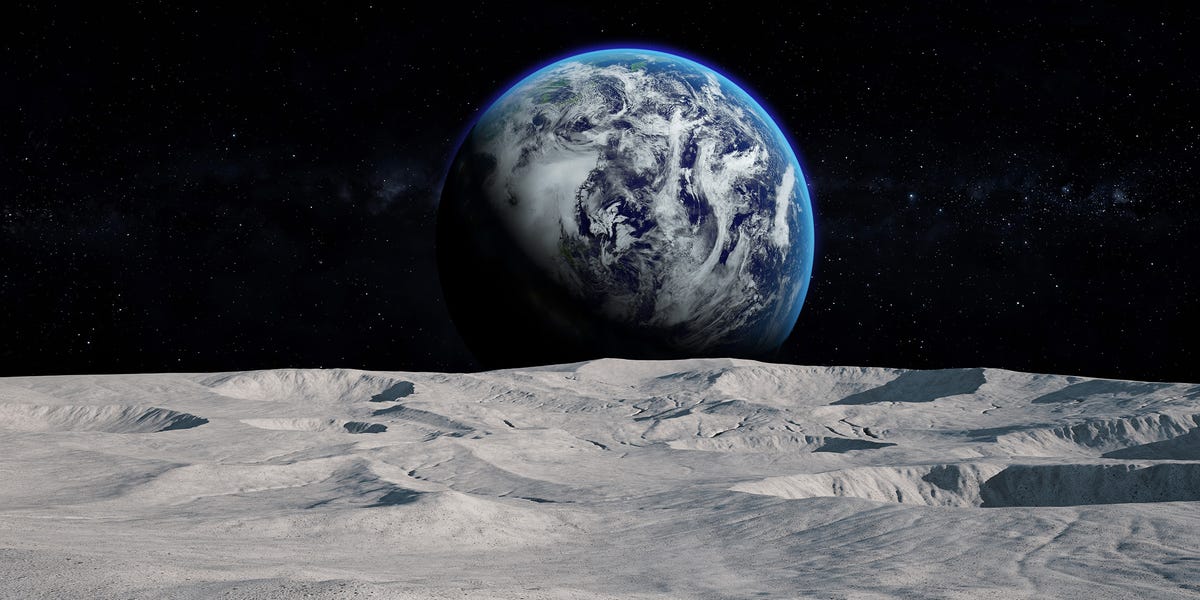
If you’ve ever looked at a picture of Titan (bigger than Mercury) and thought,
“How is that a moon?”congrats. You’ve stumbled into one of astronomy’s
favorite party tricks: size is impressive, but it’s not the boss.
The simplest way to tell a planet from a moon isn’t a rulerit’s a family tree.
Planets are the major bodies that orbit a star. Moons are natural satellites that orbit
planets (and sometimes dwarf planets or even asteroids). That’s the headline. The fun part
is all the edge cases, exceptions, and cosmic “well, technically…” moments.
Quick definitions (without the headache)
What counts as a planet?
In our solar system, scientists commonly lean on the International Astronomical Union (IAU)
definition: a planet (1) orbits the Sun, (2) is massive enough for gravity to pull it into a
nearly round shape, and (3) has “cleared the neighborhood” around its orbitmeaning it’s the
dominant gravitational presence along its path.
That third rule is the spicy one. It’s the reason Pluto was reclassified as a dwarf planet:
Pluto is round and orbits the Sun, but it shares its orbital zone with lots of other Kuiper Belt
objects rather than dominating it.
What counts as a moon?
A moon is a naturally formed object that orbits a planetbasically a natural satellite.
Moons can also orbit dwarf planets and even some asteroids (yes, asteroids can have moons; the universe
is an overachiever).
So if planets are “main characters” orbiting a star, moons are the supporting cast orbiting those main
characters. Sometimes the supporting cast steals the show (looking at you, Europa and Enceladus).
The big differences that actually matter
Here are the key distinctionsno fluff, no memorized lists, and no pretending this won’t come up again
the next time you watch a space documentary.
| Feature | Planets | Moons |
|---|---|---|
| What they orbit | Usually a star (in our solar system: the Sun) | A planet (and sometimes a dwarf planet or asteroid) |
| Orbital “dominance” | Clears/controls its orbital neighborhood | Does not need to clear anything; it’s the one orbiting |
| Role in the system | Primary body of its orbit (not a satellite) | Secondary body gravitationally bound to a larger one |
| Typical number | Eight planets in our solar system | Hundreds of moons, with counts increasing as we discover more |
| Can be bigger than a planet? | Yes, planets vary in size | Also yessome moons are larger than Mercury, yet still moons |
1) Orbit hierarchy: “Who’s orbiting whom?”
This is the #1 practical difference. Planets orbit stars. Moons orbit planets (or other non-star bodies).
If you know what an object orbits, you can usually classify it in one sentence.
2) Planets “run the lane”; moons “ride along”
The IAU planet definition includes orbital dominanceoften described as clearing the neighborhood.
In plain English: a planet’s gravity either absorbs, ejects, or controls most similarly sized objects near its orbit.
A moon doesn’t need to be dominant; it’s already in a gravitational relationship where the planet is the primary partner.
3) Shape is a clue, not the verdict
Bigger worlds tend to be round-ish because gravity pulls them toward hydrostatic equilibrium. Many major moons are round.
Many small moons are potato-shaped. But roundness alone can’t label something a planetotherwise lots of moons (and dwarf planets)
would jump the line.
4) Geology can be equally wild on moons
If you’re picturing moons as boring gray pebbles, your mental model is overdue for an update.
Moons can have thick atmospheres, weather, oceans under ice, volcanoes, and tectonic activity.
A moon can be a full-on worldjust a world that orbits a planet.
5) Formation routes differ (but overlap)
Planets generally form in a star’s protoplanetary disk. Moons can form in multiple ways: co-forming in disks around young planets,
assembling from collision debris, or getting captured by a planet’s gravity. Some of these pathways can look similar from afaranother reason
classification leans heavily on orbital relationships.
Why size can fool you (Titan and Ganymede say hi)
Here’s the mind-bender: the largest moons can be bigger than the smallest planets.
Jupiter’s moon Ganymede is larger than Mercury. Saturn’s moon Titan is also larger than Mercury.
Yet neither is a planet, because they orbit planetsnot the Sun.
Titan: the moon that acts like a planet on weekends
Titan has a thick atmosphere (mostly nitrogen) and stable surface liquids in lakes and seasfeatures we normally associate with “planet behavior.”
But Titan is gravitationally bound to Saturn as a satellite. Orbit decides the label.
Ganymede: the heavyweight champion of moons
Ganymede isn’t just big; it’s a geologically fascinating icy world with strong evidence for an underground ocean.
Again: it’s a moon because it orbits Jupiter. If you moved Ganymede to orbit the Sun on its own and it met the IAU criteria,
the conversation would change fast.
The takeaway: “moon” does not mean “small.” It means “natural satellite.” That’s it. The universe doesn’t care
about our expectations; it only cares about gravity and orbital mechanics.
Gray areas: dwarf planets, double systems, and quasi-moons
Dwarf planets: the “round, but not dominant” category
Dwarf planets are not planets under the IAU definition, even though they orbit the Sun and are round-ish.
The key difference is orbital dominance: dwarf planets share their orbital zone with many objects of comparable size.
Fun twist: dwarf planets can have moons. Pluto has multiple moons, including Charon. So you can have a moon orbiting a dwarf planet,
and it’s still a moon.
Double systems: Pluto and Charon’s “complicated relationship status”
Pluto and Charon orbit a shared center of mass (a barycenter) that lies outside Pluto. That’s unusually “binary-like,” and people sometimes
casually call it a double system. But in standard usage, Pluto is still classified as a dwarf planet and Charon as its moon.
Quasi-moons and co-orbitals: not quite moons, but not strangers
Space is full of objects that dance with planets in weird ways: co-orbitals, quasi-satellites, Trojan companions, temporary captures, and dust
clouds in gravitational balance points. Some of these are “moon-adjacent” in behaviorbut they aren’t necessarily moons in the strict,
stable-orbit sense.
Translation: the solar system is not a tidy filing cabinet. It’s more like a messy garage where gravity keeps rearranging the boxes.
The moon count keeps changing
Even “How many moons are there?” is a moving target. As telescopes improve and surveys get better, new moons (especially small, distant, irregular ones)
can be added to official lists. That’s why different reputable sources can quote different totals depending on the date and what they choose to count
(planetary moons vs. small-body satellites, for example).
How planets and moons form
How planets form (the short, honest version)
Planets form from the leftover gas and dust around a young star. Small particles clump, clumps collide, and gravity keeps upgrading the “starter kit”
into larger bodies. Over time, the solar system becomes less of a demolition derby and more of an organized neighborhood.
How moons form (three main origin stories)
-
Co-formation in a disk: Giant planets can have a disk of material around them (a mini version of the star’s disk).
Moons can form in that circumplanetary disk, which helps explain orderly systems of major moons. -
Impact debris: A big collision can throw material into orbit around a planet; that debris can clump into a moon.
This is a leading explanation for how Earth’s Moon formed. -
Capture: A passing object can get snagged by a planet’s gravity (often with help from complex interactions).
Captured moons are frequently irregularodd shapes, tilted orbits, and “I did not come here willingly” energy.
Tidal locking: why some moons always show the same face
Many moons end up tidally locked, meaning their rotation period matches their orbital period. That’s why Earth’s Moon always shows us roughly the same
hemisphere. Tidal forces also transfer energy and can slowly change orbits over long timescales, which is part of why the Moon is gradually drifting
away from Earth.
Why the difference matters (beyond trivia night)
Classification isn’t just a labeling contestit affects how scientists model solar system dynamics, how they compare worlds, and how they plan missions.
When engineers design an orbiter for a moon, they care about the planet’s gravity well, radiation belts, and orbital resonances. When astronomers
categorize exoplanets, they’re trying to understand formation histories and system architecturenot merely handing out “planet badges.”
It also matters culturally. People get attached to categories (Pluto fans, I see you), and that’s not entirely silly. The words we use shape how we
teach science and how we imagine our place in space. But science also changes as new data arrives, which is why definitions get debated and refined.
A quick checklist to tell them apart
Next time you’re staring at a space image and your brain asks, “Planet or moon?” run this quick diagnostic:
Step 1: What does it orbit?
- If it orbits a star (like the Sun), it’s a candidate planet (or dwarf planet, or small body).
- If it orbits a planet, it’s a moon (natural satellite).
- If it orbits a dwarf planet or asteroid, it can still be a moon (a natural satellite of that body).
Step 2: Is it a satellite?
If the object is orbiting a larger non-star body, it’s a satellite by definition. That alone usually settles the “moon” question.
Step 3: If it orbits the Sun, is it dominant?
For solar system objects: if it’s round-ish and orbits the Sun, the difference between planet and dwarf planet hinges on whether it has cleared
its orbital neighborhood.
Step 4: Don’t let size trick you
Remember Titan and Ganymede. Orbit beats size. Always.
Experiences to try: making “planet vs moon” click in real life
Definitions are nice, but experiences are sticky. If you want this topic to go from “I read it once” to “I can explain it while half-asleep,”
try these real-world, low-effort activitiesno rocket license required.
1) Do a “sky audit” from your backyard
On a clear evening, step outside and find the Moon first. You’ll notice it’s bright, detailed, and obviously changing night to night.
Now find a bright “star” that doesn’t twinkle muchoften that’s a planet like Venus or Jupiter. The experience is subtle but important:
planets and the Moon can both look like bright dots, but the Moon shows a disk and phases dramatically. That visible “world-ness” is a reminder
that moons aren’t just accessories; they’re worlds with their own behavior.
2) Watch Jupiter’s moons move (and feel instantly powerful)
If you have even a modest pair of binoculars or a small telescope, Jupiter can be a revelation. You’ll often see tiny points lined up beside it:
the Galilean moons. Check again the next night andboomthey’ve shifted. That simple observation teaches the planet/moon relationship better than a
paragraph ever could: Jupiter is the primary; the moons are orbiting it. You’re not memorizing a definitionyou’re witnessing orbital hierarchy.
3) Build a “who-orbits-whom” mental map with a free app
Use a sky map app and tap on objects you see. Most apps show what each body orbits, its type, and sometimes its satellites.
The repeated pattern (planet → has moons; moons → orbit a planet) trains your brain fast. After a few sessions, you start thinking like a dynamicist:
classification becomes about gravitational relationships, not vibes.
4) Try a kitchen-table gravity demo (seriously)
Place a heavy ball (a “planet”) on a bedsheet and roll a marble (a “moon”) around it. You’ll see stable-ish orbits, decays, and escape paths depending on
speed and distance. Now imagine the heavy ball is the Sun and the marble is a planet. Then add a second marble orbiting the first marblecongrats,
you’ve made a planet–moon system with laundry and optimism.
5) Visit a planetarium and listen for the language
Planetariums are sneaky teachers. Notice how presenters describe objects: “This moon of Saturn…” or “This planet orbits the Sun…”
The phrasing is consistent because it reflects real structure. Hearing those words while seeing the scale and motion helps lock in the distinction.
6) Keep a one-week observation journal
Write down where the Moon is each night and what phase it’s in. Then track one bright planet’s position relative to nearby stars.
After a week, you’ll feel the difference between rapid local change (Moon phases and position) and slower wandering (planets shifting over time),
which echoes the ancient origin of “planet” as “wanderer.” It’s a small ritual that turns abstract definitions into lived understanding.
The best part of these experiences is that they naturally reinforce the core rule: planets and moons are both worlds, sometimes equally dramatic.
The difference isn’t “cool vs. less cool.” It’s “primary orbit vs. satellite orbit.” Once you’ve watched moons move around Jupiter with your own eyes,
the taxonomy stops feeling like paperworkand starts feeling like physics.