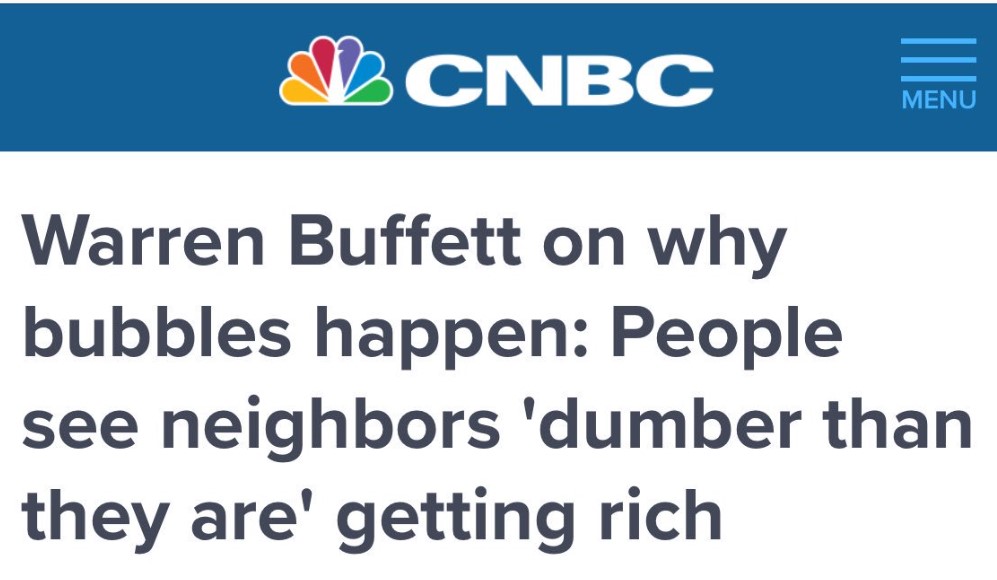
Nothing tests an investor’s discipline quite like watching someone with less experience, less knowledge, and possibly less interest in reading anything longer than a social-media caption make a fortune.
You researched businesses, studied valuations, diversified your portfolio, and patiently waited for compound growth. Meanwhile, your neighbor bought an asset after hearing about it during a barbecue and made enough money to start using the phrase “generational wealth” without irony.
This situation produces more than ordinary jealousy. It creates a dangerous mixture of social comparison, investor FOMO, overconfidence, regret, and wounded pride. That cocktail can make intelligent people abandon sensible investment strategies and chase whatever happens to be rising fastest.
The uncomfortable truth is that markets do not distribute short-term rewards according to intelligence, effort, or virtue. Sometimes careful investors lose while reckless speculators win. Sometimes a terrible decision produces a wonderful result. The market does not issue report cards explaining that the winner merely guessed correctly.
The Moment Investing Becomes Personal
An investment return is normally just a number. It becomes emotionally explosive when it belongs to someone you know.
Hearing that an anonymous trader earned 300% on a speculative stock is interesting. Hearing that your brother-in-law earned 300% is an attack on your identity. You know his weaknesses. You remember when he forgot the password to his own Wi-Fi. If he is suddenly giving financial advice from the driver’s seat of a new sports car, your brain does not calmly calculate expected returns.
It asks, “Why him and not me?”
This is where investment decisions stop being purely financial. Money becomes a scoreboard for intelligence, status, courage, and personal worth. Missing a rally starts to feel like public failure, even when avoiding that rally was consistent with a perfectly reasonable plan.
Social Comparison Changes the Definition of Success
Before seeing someone else get rich, an investor may be satisfied with an 8% annual return. After a coworker boasts about doubling money in six months, that same 8% suddenly looks like financial oatmeal: healthy, dependable, and deeply unexciting.
Nothing about the portfolio changed. The reference point changed.
Human beings naturally evaluate progress by comparing themselves with people nearby. Unfortunately, the comparison is rarely fair. We compare our entire portfolio with another person’s best trade. We see the winning screenshot but not the losing positions, borrowed money, taxes, sleepless nights, or future losses.
Social media intensifies the problem by turning investing into a nonstop highlight reel. Profits are posted immediately. Losses quietly disappear into the digital basement.
Why Smart Investors Are Especially Vulnerable
Intelligence does not immunize anyone against investor psychology. In some cases, it provides better tools for rationalizing an emotional decision.
A smart investor can build an impressive argument for almost any trade. Give that person a rising price chart, three favorable data points, and a bruised ego, and an elegant investment thesis may appear before lunch.
Knowledge Can Create Overconfidence
Investors who know more than average may assume they can enter a speculative market, recognize the top, and exit before everyone else. They do not view themselves as part of the herd. They imagine themselves walking beside the herd while taking detailed notes.
The plan usually sounds reasonable: buy now, enjoy the momentum, and sell before sentiment changes. The difficulty is that thousands of other participants have invented exactly the same plan.
Overconfidence also encourages excessive trading. Each new transaction feels like another opportunity to demonstrate skill. Yet frequent trading introduces costs, taxes, timing errors, and more chances for emotion to interfere. Activity can look like competence even when it is quietly damaging performance.
Being Right Too Early Feels Like Being Wrong
Suppose an investor correctly identifies an asset as dangerously overpriced. The price then rises another 50%. From a valuation perspective, the investor may still be right. From a social perspective, the investor looks foolish while the reckless buyer looks brilliant.
This is one reason bubbles can continue longer than skeptics expect. Rising prices do not merely attract uninformed newcomers. They put pressure on informed doubters. Professional investors may fear losing clients, falling behind a benchmark, or appearing hopelessly out of touch. Individual investors may fear being the only person at dinner without an exciting success story.
Eventually, skepticism becomes emotionally expensive. Buying the asset brings immediate relief because the investor is finally participating. Unfortunately, emotional relief is not the same thing as an attractive entry price.
How FOMO Turns Price Into Proof
In ordinary analysis, price is something to evaluate. During a speculative boom, price becomes evidence that the story must be true.
The asset rises because people are buying. More people buy because the asset is rising. Commentators create explanations for the increase, and those explanations attract still more buyers. A feedback loop forms between price, attention, confidence, and participation.
This process can affect stocks, houses, cryptocurrencies, collectibles, commodities, private companies, and nearly anything else with a price chart. The object changes. The psychology wears the same outfit.
The Emotional Stages of Chasing a Boom
The cycle often begins with dismissal. The investor calls the rising asset ridiculous and predicts an imminent collapse.
Next comes irritation. The ridiculous asset continues rising, and its owners become increasingly vocal.
Then comes investigation. The skeptic begins reading bullish articles “just to understand what these people are thinking.” Soon, a small purchase seems intellectually justified.
After the purchase rises, confidence replaces caution. The investor increases the position and rewrites the story: this was not capitulation but early recognition of a major structural trend.
Finally, risk becomes invisible. The investor stops asking what could go wrong and starts calculating how wealthy the position will become if recent returns continue.
At that point, the market has performed its favorite magic trick: transforming a cautious observer into a passionate believer at a much higher price.
Luck Is Often Mistaken for Skill
One of the hardest lessons in investing is that a good outcome does not prove a good decision.
A person can buy an asset for weak reasons and still make money. Someone can also make a thoughtful, probability-based decision and lose. Over short periods, luck can overwhelm process so completely that the least disciplined participant appears to be the most talented.
Imagine two investors. One studies a company’s balance sheet, competitive advantages, cash flow, and valuation before deciding not to buy. The other chooses the stock because its ticker symbol looks funny. The stock triples.
The second investor receives applause. The first receives a lesson in humility, plus several unsolicited text messages.
The danger begins when the lucky investor interprets the gain as evidence of exceptional skill. Position sizes grow. Diversification shrinks. Borrowed money may enter the picture. A strategy that survived one spin of the roulette wheel is treated as a permanent wealth machine.
Early success can therefore increase future risk. The first gain does not merely add money; it strengthens confidence in the behavior that produced it.
From Individual Envy to Market Bubble
A bubble is not created by one person making an irrational choice. It emerges when millions of people respond to one another.
Visible profits attract attention. Attention attracts capital. New capital lifts prices. Rising prices create more visible profits. Each stage appears to validate the previous one.
The dot-com era offered stories of companies becoming valuable simply by attaching themselves to the internet. The housing boom encouraged buyers to believe property prices could rise indefinitely. Cryptocurrency surges created overnight millionaires and a new vocabulary for mocking cautious investors. Meme-stock episodes showed how online communities could combine humor, identity, resentment, and speculation into dramatic price movements.
These periods differ in important economic details, but they share a behavioral engine: people become interested because others are getting rich.
Why Warnings Often Make the Boom Stronger
Skeptical warnings can initially reinforce the enthusiasm. When critics predict a crash and prices rise instead, believers interpret the failure of the prediction as proof that traditional analysis no longer applies.
The phrase “this time is different” rarely arrives wearing a name tag. It appears through claims that an old valuation rule is obsolete, a new technology eliminates conventional risk, or a growing community will permanently support the price.
Sometimes the innovation really is important. The internet changed the world. Blockchain technology created new systems. Housing is genuinely valuable. The mistake is assuming that a valuable innovation makes every price reasonable.
Why Missing Out Hurts More Than Losing Quietly
Traditional discussions of risk focus on losing money. Investors also experience the pain of watching money they did not make.
This imaginary loss can feel remarkably real. An investor who avoided a speculative asset may calculate the fortune that “would have” existed after buying at the bottom and selling at the top. Naturally, this fantasy includes perfect timing, full position sizing, and no taxes. It is less a calculation than financial fan fiction.
Regret then pushes the investor toward action. Buying ends the discomfort of standing outside the party. Even a small position provides a sense of belonging.
That is why FOMO investing is so powerful. It does not promise only profit. It promises emotional relief, social inclusion, and protection from future embarrassment.
How to Keep Someone Else’s Wealth From Controlling Your Portfolio
Define What Winning Means Before the Market Gets Exciting
An investor without a personal definition of success will borrow one from the loudest person nearby. Establish goals based on retirement, financial independence, education, housing, or other real needs. A portfolio built for your life does not need to defeat your neighbor’s cryptocurrency account.
Judge Decisions by Process, Not Immediate Outcomes
Ask whether the decision was based on reasonable evidence, appropriate risk, and a repeatable method. A profitable gamble remains a gamble. A disciplined decision does not become foolish merely because it temporarily underperforms.
Create a Waiting Period
When a sudden opportunity feels urgent, delay action for at least a day or two. Write down why the investment is attractive, what could invalidate the thesis, and how much you could lose. Excitement dislikes paperwork, which is precisely why paperwork helps.
Use Position Sizing as an Emotional Safety Valve
Some investors can resist a trend entirely. Others obsess over it until they finally make an oversized purchase. A small, predefined speculative allocation may satisfy curiosity without threatening the core financial plan. The key is deciding the limit before enthusiasm takes over.
Reduce Exposure to Financial Theater
A steady stream of profit screenshots can distort your perception of normal returns. Curate social-media feeds, limit portfolio checking, and remember that people who are quietly compounding wealth rarely produce exciting daily content.
Keep a Decision Journal
Record what you expected when making an investment and why. Later, compare the result with the original reasoning. This prevents memory from turning every lucky trade into evidence of genius and every loss into something that was supposedly obvious all along.
Experiences From the Front Row of Investor FOMO
Consider the experience of a fictional but highly recognizable investor named Daniel. He has a stable career, a diversified retirement account, an emergency fund, and a sensible long-term plan. For years, he feels financially responsible. Then a younger coworker named Jake begins talking about a speculative investment that has risen dramatically.
Daniel initially laughs. Jake cannot explain the asset’s economics, but he can explain exactly how much money he has made. Every few days, he announces another gain. He replaces his old car, books an expensive vacation, and begins describing himself as an investor rather than someone who bought one thing that went up.
Daniel tells himself he is not jealous. He is merely concerned about Jake’s risk management. Curiously, this concern requires checking the asset’s price seven times a day.
At home, Daniel mentions Jake’s success to his spouse. The conversation is casual until she asks, “Why didn’t we buy any?” That innocent question lands like a quarterly performance review.
Daniel starts researching. At first, he searches for evidence that the investment is a bubble. Then he searches for balanced analysis. Finally, he searches for bullish forecasts. His research has not changed his personality; it has changed its assignment.
He makes a small purchase. The price rises the next morning, producing more satisfaction than several years of steady retirement contributions. Daniel increases the position. He tells himself that the larger purchase is funded by profits, although the market does not distinguish between original capital and winnings once both are at risk.
For several weeks, Daniel feels transformed. He checks the market before getting out of bed. A rising price improves his mood. A decline makes him impatient with his family and distracted at work. The investment now occupies far more mental space than its initial dollar value justified.
Then the price falls sharply. Daniel does not sell because the decline makes the asset “cheaper.” It falls again. He searches for reassuring commentary and finds an online community insisting that critics are manipulating the market. The same social proof that encouraged him to buy now encourages him to hold.
Eventually, Daniel sells at a painful loss. Jake also loses much of his paper fortune, though this is discussed less frequently than the new car.
The most useful part of Daniel’s experience is not the prediction that speculative investments always collapse. Some continue rising, and some early participants become genuinely wealthy. The lesson is that Daniel allowed another person’s outcome to rewrite his goals, time horizon, risk tolerance, and research process.
Months later, he reviews what happened. His biggest mistake was not failing to forecast the price. It was confusing envy with analysis. He did not buy because the investment fit his financial plan. He bought because someone he considered less knowledgeable was winning without him.
Daniel creates new rules. Any investment inspired by another person’s profit receives a 72-hour waiting period. Speculative positions cannot exceed a small percentage of his portfolio. He writes down a selling rule before buying. Most importantly, he stops treating someone else’s wealth as evidence of his own failure.
The next boom still bothers him. He remains human, not a marble statue of disciplined asset allocation. But he recognizes the sensation earlier. Instead of asking, “How do I catch up?” he asks, “What would I think about this investment if nobody I knew owned it?”
That question does not guarantee perfect decisions. It does something more practical: it gives Daniel a chance to make his own decision.
Conclusion: The Market Does Not Care Who Deserves to Win
Seeing less-skilled people get rich creates one of investing’s strongest emotional pressures. It challenges identity, patience, and the belief that careful behavior should receive immediate rewards.
Markets, however, are not meritocracies over short periods. Intelligence can lose to luck. Discipline can trail speculation. A foolish idea can rise much farther than expected, and a sensible strategy can look embarrassingly dull.
The goal is not to eliminate envy or FOMO. That would require replacing the human brain with a spreadsheet, and even spreadsheets occasionally produce errors. The goal is to recognize when social comparison has entered the decision-making process.
Another investor’s gain may be interesting information, but it is not a command. Their portfolio was not designed for your goals, their risk may be invisible, and their impressive result may reflect luck that has not yet received its final examination.
Long-term investing becomes easier when success is measured against personal objectives rather than the loudest winner in the room. Someone will always get richer faster. The investor who accepts that fact gains something valuable: the freedom to follow a plan without needing every passing boom to provide emotional validation.
Note: This article is intended for educational purposes and does not constitute personalized financial, tax, or investment advice.