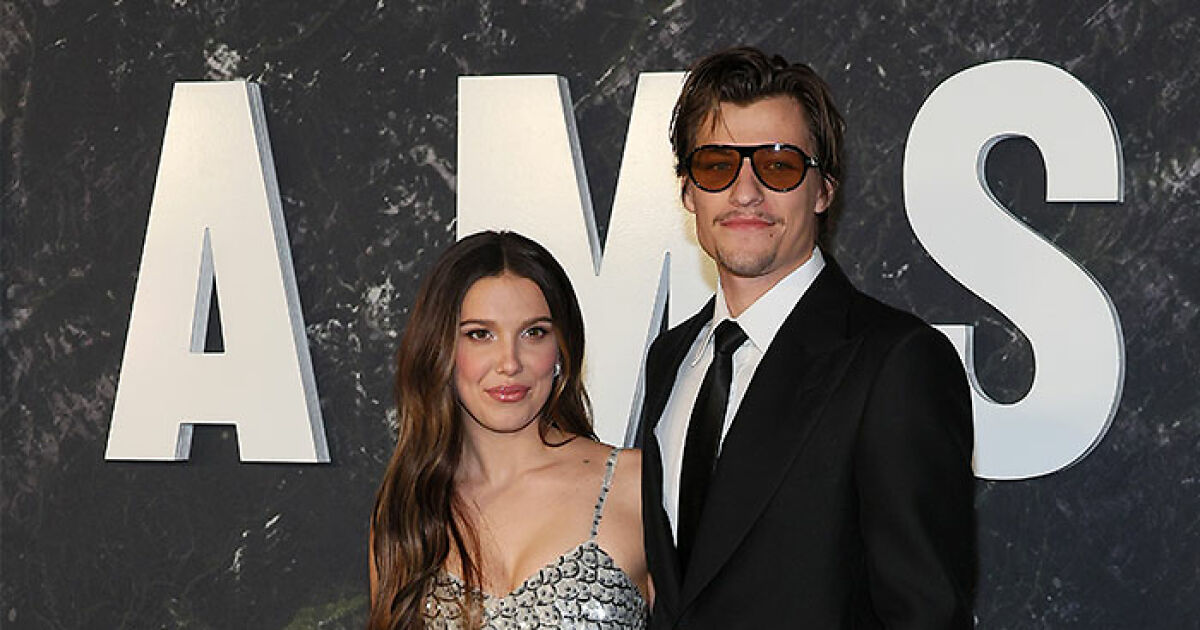
Celebrity news used to arrive in glossy magazines and awkward TV interviews. Now it arrives like a fire alarm in your group chat. One clip, one screenshot, one chaotic social post, and suddenly the internet is acting like civilization has collapsed because an actress updated her name. That is basically what happened when Millie Bobby Brown revealed that the name many fans grew up saying is no longer her legal one.
The short version is juicy enough to power a week of headlines: Millie Bobby Brown first revealed in 2025 that “Bobby” was never her original middle name. Then, months later, she made it clear that after marriage, she had gone a step further and changed her legal name to Millie Bonnie Bongiovi. Cue the online gasp. Cue the think pieces. Cue the “we are in hell” energy from one corner of social media.
But this story is more interesting than a simple fan meltdown. It touches on celebrity branding, marriage traditions, modern feminism, parasocial fandom, and the very weird way the internet acts when a famous young woman makes a personal choice. So let’s unpack what changed, why people reacted so intensely, and why this moment says as much about the audience as it does about Millie Bobby Brown herself.
The Reveal That Sent the Internet Into a Spiral
The first plot twist came earlier in 2025, when Brown revealed that her real middle name is Bonnie, not Bobby. For years, “Millie Bobby Brown” had sounded so natural, so perfectly celebrity-ready, that most people assumed it was the full legal truth. Nope. According to Brown, “Bobby” was essentially a stage-name choice she adopted early on because it sounded right and, in her words, was done for fun.
That alone was enough to make fans blink twice. But the bigger reveal came later, during a playful interview moment that quickly escaped the internet’s containment unit. Brown clarified that her full legal name had changed again after marriage. She wasn’t just Millie Bonnie Brown anymore. She said it plainly: she had dropped both “Bobby” and “Brown,” and the legal name was now Millie Bonnie Bongiovi.
On paper, this is not exactly a meteor strike. People change names after marriage every day. Actors also keep stage names all the time. Hollywood is practically built on reinvention, rebranding, and names that sound a little more camera-friendly than the originals. And yet this particular reveal hit social media like someone had canceled the moon.
Why? Because to fans, “Millie Bobby Brown” is not just a legal name. It is a brand, a memory, a pop-culture landmark, and for many viewers, the name attached to their first encounter with Eleven on Stranger Things. So when that identity shifted, some people reacted as though they had personally lost custody of a familiar era.
What Changed, Exactly?
“Bobby” Was Always More of a Public Name Than a Birth Name
This is the detail that made many people do a cartoon-style double take. Brown was born Millie Bonnie Brown. “Bobby” was a professional choice, not the original middle name on her birth identity. That means one of the most recognizable names in modern streaming-era fame was already a curated version of who she was.
And honestly, that is not unusual. Actors, musicians, models, and authors have been adjusting names for clarity, rhythm, memorability, or privacy forever. Some do it to stand out. Some do it because the original name is hard to pronounce in certain markets. Some do it because the stage version simply has better sparkle. “Millie Bobby Brown” has sparkle. A lot of it.
Marriage Changed the Last Name Piece of the Puzzle
Brown married Jake Bongiovi in 2024, and by late 2025 she confirmed that she had legally taken his surname. That turned the equation into something new: Millie Bonnie Bongiovi. For fans who had only just adjusted to learning that “Bobby” was not the original middle name, this felt like getting hit by a second plot twist before the first one had fully loaded.
Some entertainment watchers immediately assumed that because her legal name changed, her professional name would disappear too. But those are not the same thing. A celebrity can have a legal name on official documents and a different working name on movie posters, credits, interviews, and business ventures. That distinction matters, and it is a big reason the internet’s panic meter may have been set a little too high.
Why Fans Reacted So Strongly
The headline phrase “fans are furious” is not entirely fake, but it needs context. A loud slice of online commentary absolutely treated the name change like a symbolic crisis. Some posts framed the decision as old-fashioned. Others argued that Brown, who is more famous than her husband, should not have dropped the surname that built her brand. A few comments turned the whole thing into a referendum on feminism, fame, and marriage politics in 2025.
But that was only half the story. Plenty of people rushed to defend her. Their argument was simple: choice is the point. If a woman wants to keep her name, great. If she wants to combine names, great. If she wants to take a spouse’s surname, also great. The modern view is supposed to make room for agency, not replace one rigid expectation with another equally bossy one.
That tension is what made the reaction so intense. The name change was not just read as a name change. It became a cultural Rorschach test. Depending on the commenter, it signaled romance, tradition, personal freedom, branding disaster, or some kind of internet betrayal. That is a lot of emotional cargo for a set of syllables.
There is also a very online reason the backlash caught fire: fans often feel a strange ownership over celebrity identity. Once a star becomes part of your cultural furniture, you start to feel like the public version of them belongs to everybody. The haircut becomes a debate. The outfit becomes a debate. The relationship becomes a debate. And yes, the name becomes a debate too.
In other words, this was never just about paperwork. It was about whether the public version of Millie Bobby Brown should remain frozen in the form that first became famous. The internet often says it loves authenticity, but it gets awfully nervous the moment a celebrity changes anything familiar.
The Bigger Pattern: Brown Has Been Watched, Judged, and Over-Interpreted for Years
The reaction to her name did not happen in a vacuum. Brown has spent much of her adolescence and young adulthood under a microscope. In 2025, she publicly pushed back against the way her appearance, style, and body were being discussed in the media. Her frustration was clear: people seemed unable to accept that the child they met on screen had become an adult on her own terms.
That context matters. Once someone has been endlessly analyzed for how they look, dress, speak, date, and age, even a personal update like a name change starts getting treated like public property. Brown’s name reveal became another example of the same broader phenomenon: the belief that a young woman who grew up in public must somehow explain every evolution to the audience like she is filing quarterly reports.
And that expectation is exhausting. People want child stars to stay adorable, recognizable, and emotionally available forever. They want the familiarity without the actual passage of time. But time does what time does. Children become adults. Adults make choices. Identities shift. Careers mature. Names change. That is not a scandal. That is life with a better lighting setup.
What This Means for Her Career and Public Brand
Here is where the internet should probably lower its blood pressure. A legal name change does not automatically erase a public brand. It is entirely possible for Brown to remain professionally known as Millie Bobby Brown while using Millie Bonnie Bongiovi in legal or personal contexts. Celebrities do this all the time because public recognition matters, and a famous name carries business value.
In fact, keeping a well-known professional name can be the most practical move imaginable. It protects search visibility, audience familiarity, franchise continuity, and brand partnerships. It also avoids sending every editor, streamer, and casting database into a paperwork-themed nervous breakdown.
So no, this does not mean the credits on every past project will suddenly change. It does not mean the world forgot who Eleven is. It does not mean the “Millie Bobby Brown” era has been launched into the sun. It just means that the person behind the brand made a legal and personal decision that reflects where her life is now.
Why This Story Landed So Hard in Pop Culture
There is a reason this story spread faster than a spoiler on premiere night. It combines three irresistible ingredients of modern celebrity coverage: a familiar star, a personal reveal, and a social-media-ready conflict. Add marriage, identity, fandom, and a name people have said for nearly a decade, and you have a perfect recipe for discourse stew.
It also arrived at a moment when Brown’s public life was already being discussed from multiple angles. She was no longer just the kid from Stranger Things. She was a married adult, a businesswoman, a star with a mature public image, and a person trying to define herself beyond the version the audience first met. That shift tends to make fans either grow with a celebrity or panic like someone moved the furniture in their emotional living room.
The smartest reading of the story is not that Brown “betrayed” her fans or that critics were entirely irrational. It is that names carry meaning. They are tied to family, career, memory, and identity. So when a beloved celebrity changes one, people project their own values onto the decision. The problem begins when projection turns into entitlement.
A Better Take Than Outrage
If there is one calm, adult takeaway from all this chaos, it is this: a celebrity’s legal name is not a group project. Fans can be surprised. They can prefer the old professional branding. They can even think the new legal name sounds unexpected. But fury feels a bit dramatic for a choice that belongs to one person.
And maybe that is the funniest part of this whole episode. The internet loves to say, “Be yourself.” Then someone says, “Okay, I will,” and suddenly everyone is acting like they need a panel discussion, a PowerPoint, and emotional support snacks.
Millie Bobby Brown’s name change is not the end of an era. It is the continuation of a very familiar celebrity story: a young star grows up, takes control of her identity, and discovers that the public is always more comfortable with evolution in theory than in practice.
Related Experiences: Why So Many People Had Big Feelings About This
One reason this story exploded is that name changes touch a nerve far beyond celebrity culture. For a lot of people, a name is not just a label. It is family history, cultural identity, personal branding, childhood memory, and emotional shorthand all rolled into one. So when someone changes a name, especially a famous person, people tend to react as if the person has rewritten a chapter they had memorized.
That feeling is common in everyday life too. People change names after marriage, after divorce, for professional reasons, for gender expression, for privacy, for religion, or simply because the original name never felt quite right. And no matter the reason, somebody always has an opinion. A parent may feel sentimental. A friend may say the old name sounded better. A coworker may get weirdly attached to “tradition.” Suddenly a deeply personal choice becomes a community debate nobody asked for.
That is part of why Brown’s reveal resonated. Even people who are not die-hard fans have probably seen a version of this situation in real life. Maybe a friend took a spouse’s name and got judged for being “too traditional.” Maybe someone kept their last name and got judged for being “not committed enough.” Maybe a couple combined names and got treated like they had invented algebra. There is often no winning. The audience simply changes the rules depending on what choice was made.
There is another layer here too: people grew up with Millie Bobby Brown. Audiences first met her as a very young actor, and that creates a false sense of permanence. When a celebrity enters public life as a child, many viewers unconsciously lock that person into a fixed image. They want the same face, same vibe, same name, same energy. When adulthood arrives with real-life changes, it can feel jarring to the people watching from the outside.
But that discomfort belongs to the audience, not the person living the life. Growing up means changing. Sometimes that change is visual. Sometimes it is emotional. Sometimes it is legal. Brown’s story highlights how difficult it can be for the public to let a young woman evolve without commentary. The same internet that says women should have freedom also seems deeply committed to conducting performance reviews every time a woman exercises it.
There is also the social-media factor. Online platforms reward the most dramatic interpretation possible. “Interesting celebrity name update” does not travel nearly as fast as “we are in hell.” Calm nuance gets left at the curb while outrage speeds away in a glitter-covered convertible. That is why one viral post can make a reaction seem universal, even when the broader response is actually mixed.
In the end, the experience surrounding Brown’s name change feels familiar because it mirrors a modern truth: people are comfortable cheering for individuality until individuality becomes specific. Then suddenly they want explanations, votes, and approval forms. That tension is not unique to Millie Bobby Brown. She just happened to live it under stadium lights, with millions of people refreshing the comments section.
Conclusion
Millie Bobby Brown’s legally changed name became a viral conversation not because the paperwork itself was shocking, but because it collided with internet expectations about fame, marriage, branding, and womanhood. Yes, some fans were angry. Yes, others defended her instantly. But the most useful takeaway is simpler than the headlines: the public may know the brand, yet the person still gets to decide the name attached to her life.
So whether you see this story as romantic, practical, surprising, or deeply none of your business, one thing is clear: Millie Bobby Brown knows exactly who she is, even if the internet is still trying to update its files.