A long-lost French submarine, La Minerve, vanished beneath the Mediterranean in 1968 with 52 sailors aboard. More than half a century later, a high-tech search vessel finally found its resting place off Toulon, turning one of France’s most haunting naval mysteries into a story of technology, persistence, and long-delayed closure.
Some mysteries fade with time. Others sit quietly on the seafloor, waiting for better maps, better machines, and a generation stubborn enough to keep asking questions. The discovery of the French submarine Minerve belongs firmly in the second category.
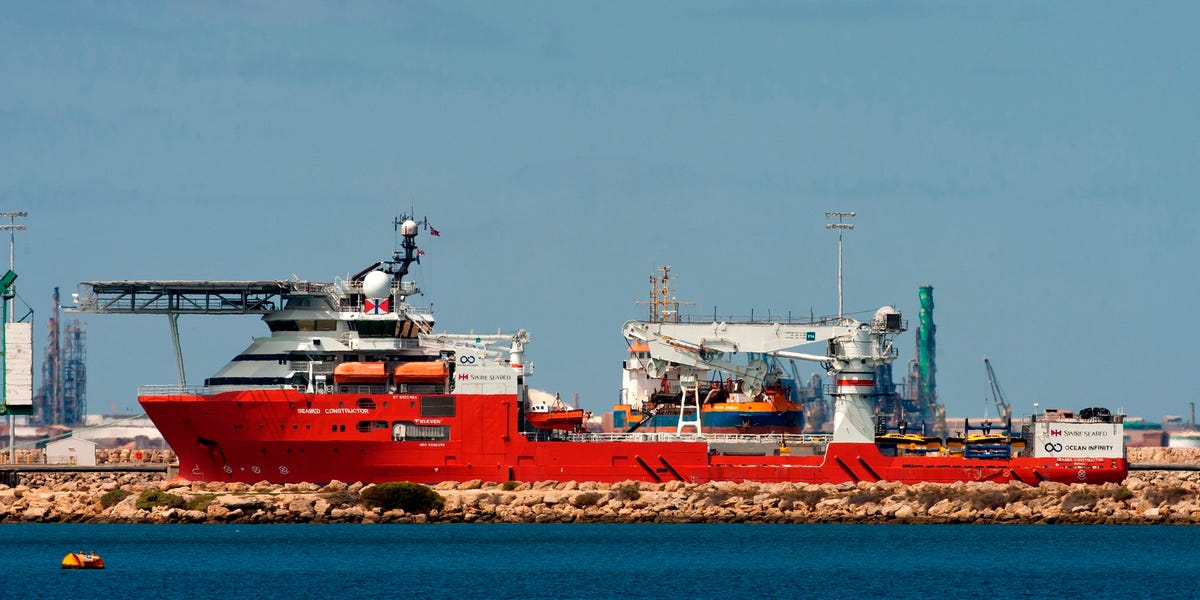
In July 2019, the search vessel Seabed Constructor, operated by the American deep-sea exploration company Ocean Infinity, located the wreck of La Minerve roughly 27 to 30 miles off the coast of Toulon, France. The submarine had been missing since January 27, 1968, when it disappeared during a training mission in rough weather. On board were 52 sailors. None survived, and for decades, no one knew exactly where the submarine had gone.
The find was not just another headline from the “cool things discovered underwater” department. It was a moment of relief for families, a technical achievement for modern ocean exploration, and a reminder that the sea has a very long memory. It also showed how today’s autonomous underwater vehicles, sonar mapping, and data modeling can solve cold cases that once seemed impossible.
The Mystery of La Minerve
La Minerve was a Daphné-class diesel-electric submarine of the French Navy. Commissioned in the 1960s, she belonged to a class of submarines designed for quiet underwater patrol and anti-submarine operations. Based near Toulon, France’s major Mediterranean naval port, Minerve operated in waters that were familiar to the French Navy but still unforgiving when weather and mechanical risk lined up at the wrong moment.
On the morning of January 27, 1968, Minerve was returning from a training exercise. The submarine was traveling in the western Mediterranean, near the Gulf of Lion, a broad stretch of water between the French and Spanish coastlines. Conditions were poor. The submarine made its last known contact while close to home, reportedly expecting to return to Toulon within about an hour.
Then it vanished.
No dramatic distress call. No final explanation. No neat answer wrapped in a navy-blue folder. Just silence.
The French Navy launched search efforts, but the tools available in 1968 were limited by today’s standards. Search teams had to work with rough position estimates, difficult seabed conditions, and a huge area of deep water. The Mediterranean may look calm on a vacation postcard, but it is not a bathtub. Below the surface, depth, currents, sediment, and terrain can turn a search into a very expensive guessing game.
Despite repeated attempts, the wreck remained missing for more than 50 years. For the families of the 52 sailors, that meant decades of grief without a location, a grave, or a full explanation. The unknown became part of the loss.
How the Seabed Constructor Found the Missing Submarine
The breakthrough came after the French government renewed the search in 2019. The renewed effort followed pressure and appeals from the families of the sailors, who had never stopped asking for answers. By then, underwater search technology had changed dramatically. What earlier generations tried to do with limited sonar and human estimation could now be approached with autonomous underwater vehicles, high-resolution mapping, and computer-assisted analysis.
Ocean Infinity’s Seabed Constructor entered the search with a reputation already attached to its name. The vessel had previously helped locate the wreck of the Argentine submarine ARA San Juan, which disappeared in 2017. That earlier discovery showed the power of using multiple underwater drones to scan large areas of seabed quickly and with extraordinary detail.
For Minerve, the search team reviewed older data, including information about tides, currents, and possible acoustic or seismic clues from the time of the accident. This was detective work with a maritime twist: part history, part physics, part “please let the ocean cooperate today.”
The Seabed Constructor used autonomous underwater vehicles and remotely operated systems to map the seabed. These machines can travel far below the surface, gather detailed sonar images, and help analysts identify objects that do not belong to the natural landscape. In deep-sea searches, the goal is often to turn a blurry question mark into a recognizable shape.
After several days of searching, the team found the wreck of La Minerve at a depth of about 2,350 to 2,370 meters, or roughly 7,700 to 7,800 feet. The submarine was found in multiple pieces on the seabed, about 45 kilometers from Toulon. One of the key identifying details was heartbreakingly simple: part of the name was still visible on the wreckage.
For investigators, that confirmed the find. For families, it meant the submarine was no longer simply “missing.” It had a place.
Why the Discovery Mattered So Much
Finding a submarine after five decades is not like finding a lost phone under the couch, although both discoveries can involve a shocking amount of dust and emotional drama. A missing submarine represents lives, national history, classified files, engineering questions, and unresolved grief.
The discovery of Minerve mattered for several reasons. First, it offered families a physical location connected to their loved ones. For 51 years, relatives had lived with uncertainty. Many had grown older while waiting for answers that seemed less likely with every passing decade. The wreck’s location gave them a site of remembrance.
Second, it allowed experts to study the wreckage and narrow possible explanations. The exact cause of the sinking remains uncertain, but locating the submarine made it possible to examine its condition, the debris field, and the way the wreck came to rest. Even when a discovery does not answer every question, it can remove many wrong guesses.
Third, the find highlighted the evolution of underwater search technology. In the late 1960s, even major naval powers had limited tools for finding wrecks in deep water. By 2019, private exploration companies, national navies, hydrographic agencies, and deep-ocean specialists could combine data modeling with fleets of underwater robots. The result was a search that succeeded in days where earlier efforts had failed for years.
The Human Story Behind the Search
Technology found the wreck, but people kept the search alive.
Families of the lost crew played a crucial role in pushing for the renewed search. Their persistence helped bring public attention back to a tragedy that might otherwise have remained a footnote in naval history. For them, the question was not merely technical. It was deeply personal: Where are they? What happened? Can we finally say goodbye properly?
That emotional weight is important. Stories about shipwrecks and submarines can easily become obsessed with hardware: displacement, sonar, depth ratings, underwater drones, and the kind of equipment that makes engineering fans suddenly sit up straighter. But Minerve was not just a machine. It was a vessel crewed by 52 people with families, duties, routines, jokes, favorite meals, and probably at least one sailor who complained about the coffee.
When the wreck was found, French officials described the discovery as both a relief and a technical achievement. That pairing makes sense. The search required advanced tools, but its meaning came from human loss.
What Happened to La Minerve?
The short answer is: no one can say with complete certainty.
The submarine disappeared in bad weather while returning to Toulon. Some reports and later analysis have discussed possibilities such as a sudden technical failure, rapid flooding, snorkel-related problems, or an implosion as the submarine descended beyond survivable limits. However, the definitive cause has not been publicly established.
What is known is that Minerve sank quickly and came to rest in very deep water. When discovered, the wreck was broken into several sections. That condition may help experts understand the sequence of events, but it does not automatically produce a single, courtroom-perfect answer. The ocean is a poor witness. It keeps evidence, yes, but it also crushes, scatters, buries, and corrodes it.
French authorities indicated that the wreck would not be raised. Instead, it would remain a maritime grave. That decision reflects both practicality and respect. Recovering a submarine from such depth would be extremely difficult, expensive, and potentially disruptive to the resting place of the crew.
The Role of Modern Ocean Exploration
The discovery of La Minerve is part of a larger pattern: modern technology is changing what “lost at sea” means. For centuries, a ship or submarine could disappear and remain lost forever. Families received ceremonies, memorials, and official reports, but often no wreck site. Today, the combination of autonomous underwater vehicles, side-scan sonar, multibeam mapping, remotely operated vehicles, and improved data analysis has made the deep ocean less unknowable.
That does not mean it is easy. Deep-sea searches remain expensive, complex, and often frustrating. A search area can be enormous. A wreck can be small compared with the landscape around it. Seabed geology can create confusing shapes. Sediment can cover key evidence. Strong currents can move debris. And machines operating thousands of feet underwater must survive pressure that would treat ordinary equipment like a soda can in a wrestling match.
Still, each successful search improves confidence in the next one. The same broad approach used to locate Minerve has also helped in searches for aircraft, ships, and other submarines. The lesson is clear: old mysteries do not always require old methods.
Why This Story Still Captures Public Attention
People are drawn to stories like this because they combine mystery, danger, technology, and emotion. A lost submarine is almost cinematic by nature. It has silence, depth, unanswered questions, and a clock that stopped decades ago. But unlike fiction, the emotional stakes are real.
The phrase “lost for 50 years” also carries a strange power. It reminds readers that history is not always settled. Some events remain open, not because no one cares, but because the tools needed to understand them have not yet arrived. The families of Minerve waited through social change, political change, and technological revolutions. By the time the wreck was found, the world had moved from paper charts and analog instruments to digital seabed mapping and underwater robots.
In that sense, the discovery was not only about the past. It was about the future of search, recovery, and remembrance.
Lessons from the Discovery of La Minerve
1. Persistence Can Outlast Silence
The families’ long campaign showed that unanswered questions do not disappear simply because official searches end. Their determination helped revive attention and eventually led to a renewed mission.
2. Technology Works Best When Guided by Human Context
The underwater drones were essential, but they did not operate in a vacuum. Analysts used historical records, environmental modeling, and naval expertise to narrow the search area. Machines scanned the seabed; humans decided where to look.
3. Closure Does Not Always Mean Every Answer Is Found
Finding the wreck did not fully explain why Minerve sank. But it did transform an open disappearance into a known resting place. For many families, that distinction matters enormously.
4. The Ocean Is Vast, But Not Invincible
The deep sea remains one of the least accessible places on Earth. Yet discoveries like this prove that even the most stubborn ocean mysteries can be challenged with patience, skill, and the right technology.
Experiences and Reflections Related to the Discovery
Stories like the discovery of La Minerve create a unique kind of emotional experience for readers, especially those interested in history, naval life, engineering, or family memory. At first, the story feels like a technical adventure: a powerful vessel, underwater drones, sonar scans, and a missing submarine finally appearing on a screen after decades of uncertainty. It is easy to imagine the search team leaning over monitors, trying to decide whether a shape on the seabed is rock, wreckage, or just another false alarm sent by the ocean to keep everyone humble.
But the experience changes once you remember the people behind the mission. For the families, this was not a treasure hunt. It was a long wait for a place to mourn. Many relatives spent most of their lives with the same painful gap in their family story. They knew the date. They knew the name of the submarine. They knew the number of sailors. What they did not know was where the vessel rested or whether modern France would ever return to the search with serious commitment.
That is why the discovery feels different from an ordinary historical find. It is not like uncovering an old coin or a forgotten anchor. A submarine is a sealed world. Sailors live and work inside it, trusting each other, their training, and the machine around them. When something goes wrong, the distance between routine and disaster can be terrifyingly short. The discovery of Minerve reminds us that military service is often built on quiet risks most people never see.
There is also an experience of awe in the technology itself. Modern deep-sea search vessels are floating command centers. Instead of relying only on divers or rough estimates, teams can deploy autonomous vehicles that travel through darkness, mapping the seabed with patient precision. These machines do not get bored, seasick, or distracted by lunch, which is more than can be said for many humans. Yet they still depend on human judgment. Someone must plan the mission, interpret the data, and recognize the difference between natural terrain and the remains of a submarine lost to history.
For writers, researchers, and readers, the Minerve story offers a powerful reminder: facts become meaningful when connected to people. The numbers are important52 sailors, more than 50 years missing, nearly 7,800 feet deep, about 45 kilometers from Toulon. But numbers alone do not explain why the discovery mattered. The meaning comes from the families who kept asking, the searchers who kept looking, and the moment when a name on a broken piece of wreckage confirmed that the missing submarine had finally been found.
In that sense, the discovery of La Minerve is both an ending and a beginning. It ended the uncertainty over the submarine’s location. It began a new phase of remembrance, study, and respect. The vessel will remain beneath the Mediterranean, but it no longer exists only as a mystery. It has returned to history with coordinates, evidence, and a story that continues to move people because it is about more than the sea. It is about patience, memory, and the human need to bring the lost back into the light, even when that light comes from a robot camera nearly a mile and a half underwater.
Conclusion
The discovery of the French submarine La Minerve after more than 50 years is one of those rare stories where technology, history, and emotion meet in the same deep-water current. The search vessel Seabed Constructor did more than locate wreckage; it helped answer a question that had haunted families and naval historians since 1968.
The cause of the sinking may never be known with absolute certainty, but the location of the submarine is no longer a mystery. That matters. It matters to the families of the 52 sailors, to the French Navy, and to anyone who believes the past deserves more than silence.
In the end, Minerve was found because people refused to let the story sink completely out of reach. The ocean held the submarine for five decades. Persistence, science, and memory finally brought it back into view.