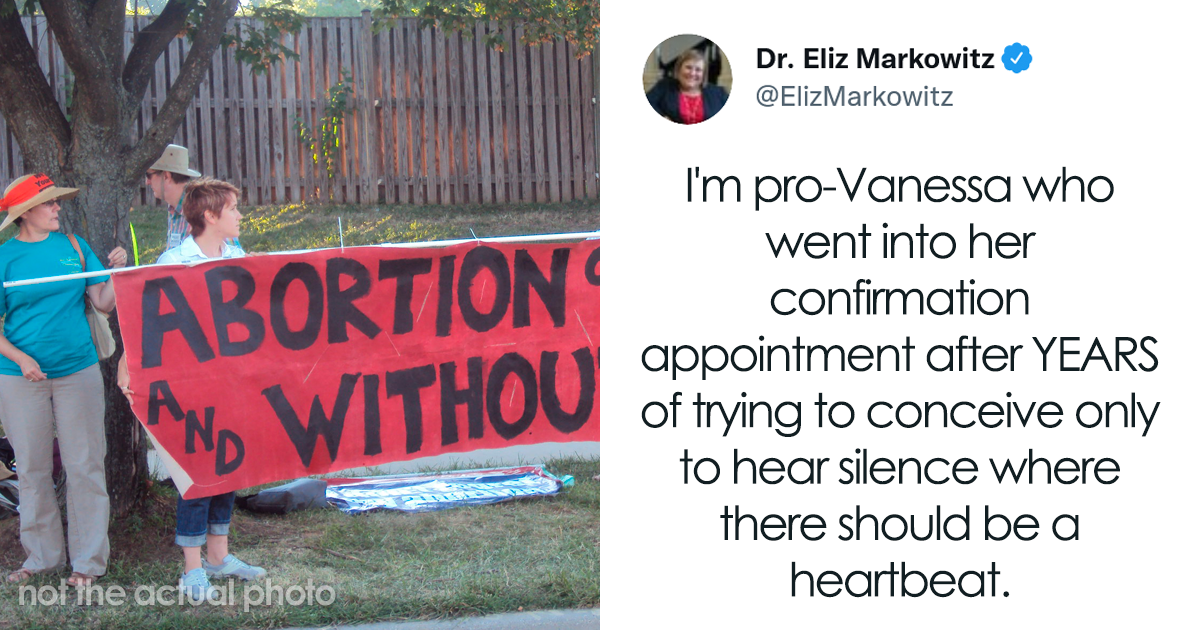
Sometimes a viral thread does what a thousand policy memos cannot: it yanks a debate out of the abstract and drops it right into a hospital room. That is why the old Twitter thread highlighted in a Bored Panda feature hit such a nerve. Its 11 short scenarios did not read like slogans. They read like real life: a wanted pregnancy gone wrong, a rape survivor cornered by law, a family already stretched thin, a patient whose doctor knows what to do but is afraid to do it. In other words, the thread exposed the gap between political talking points and the messier, scarier reality of pregnancy.
Texas made that gap impossible to ignore. First came Senate Bill 8, the law that banned abortion after fetal cardiac activity is detected and empowered private citizens to sue anyone who “aids or abets” an abortion, with damages of at least $10,000. Then, after Roe v. Wade fell, the state’s trigger ban took hold, prohibiting almost all abortions except in narrow medical emergencies. Put bluntly, Texas did not merely regulate abortion. It built a legal maze around it and handed the map to politicians, plaintiffs, and prosecutors instead of doctors.
That is why critics call these restrictions immoral. Not because every abortion story looks the same, but because the law treats radically different situations as if they deserve the same rigid answer. Pregnancy, however, does not care about legislative simplicity. Bodies hemorrhage. Fetuses develop fatal anomalies. Water breaks too early. Infections spread. And families discover, usually at the worst possible moment, that the law has all the bedside warmth of a parking ticket.
Why the Texas Debate Became a Moral Argument, Not Just a Legal One
The moral criticism of Texas abortion restrictions is not based on one single case. It is based on accumulation. Each story adds another brick to the wall: a patient denied care, a doctor waiting for a condition to worsen, a family forced to leave the state, a pregnancy complication treated like a courtroom puzzle instead of a medical emergency. When these stories pile up, the issue stops looking like a principled defense of life and starts looking like a system that tolerates preventable suffering.
And yes, that distinction matters. Laws often claim moral authority simply because they exist. But a law does not become ethical by dressing itself up in formal language and sending everyone home with paperwork. If a rule predictably causes fear, delay, and harm in emergencies, people are going to judge it by outcomes, not by slogans. In Texas, those outcomes have been impossible to ignore. Even lawmakers eventually moved to clarify medical exceptions, which is a polite way of admitting that the original setup left doctors and patients navigating a dangerous amount of uncertainty.
So when people say Texas restrictions are immoral, they are not talking about some vague internet vibe. They are talking about the documented human cost of letting ideology outrank timely care.
11 Stories That Show the Human Cost Behind the Restrictions
1. The rape survivor who discovers the law has no compassion clause
One of the most devastating points in the viral thread was also one of the simplest: what happens when pregnancy follows sexual violence? Texas law does not provide a rape exception to its abortion ban. That means a survivor can be carrying trauma, fear, and a pregnancy she never chose, yet still find the law staring back at her with bureaucratic indifference. For critics, that is not a defense of life. It is the state forcing a person to relive violence in slow motion.
This is where moral rhetoric starts to crack. Restrictions are often sold as universally noble, but it is hard to call a law compassionate when it refuses to distinguish between consensual sex and sexual assault. The woman’s circumstances may be extraordinary, but the legal answer remains grimly ordinary: no exception, no grace, no room.
2. The abused girl who is still a child herself
The thread also pointed to girls who become pregnant through abuse. That scenario is almost too painful to write about, which is exactly why it matters. Pregnancy is already medically and emotionally complex for adults; for children, it can be catastrophic. Yet restriction-heavy laws flatten that complexity and behave as if moral clarity is achieved by refusing to look too closely.
Critics argue that this is where the cruelty becomes especially obvious. A government that claims to protect innocence should not be indifferent to the fact that some pregnancies begin with exploitation. When the law offers no meaningful path for a child in crisis, it stops sounding like moral certainty and starts sounding like institutional neglect.
3. The mother with a wanted pregnancy and a fatal fetal diagnosis
Kate Cox became one of the clearest examples of how brutal this landscape can become. She was pregnant with a fetus diagnosed with Trisomy 18, a condition associated with severe abnormalities and a low chance of survival. She had already made multiple emergency room visits and faced serious risks to her own health and future fertility. Yet in Texas, even that was not enough to produce a straightforward answer. She went to court seeking permission for an emergency abortion, only to have the Texas Supreme Court block the path, and she ultimately had to leave the state for care.
Cases like hers demolish the lazy myth that abortion only concerns unwanted pregnancies. This was a wanted pregnancy. That is what makes the cruelty sting even more. Critics see a deep moral failure in asking families to endure escalating risk and grief because lawmakers have decided that a doomed pregnancy still counts more in theory than a living woman’s safety does in practice.
4. The woman whose water breaks too early and is told to wait
Amanda Zurawski’s story became one of the defining accounts in the legal challenge to Texas abortion laws. Her water broke far too early in pregnancy, making the pregnancy nonviable. But because fetal cardiac activity remained, doctors delayed intervention. She later developed sepsis and nearly died. This is the kind of story that strips the debate bare: a patient did not need a lecture, a talking point, or a campaign ad. She needed doctors who could act before infection turned her body into a battlefield.
From a moral perspective, waiting for a patient to get sicker before treating her is exactly backward. Critics argue that a humane system would reward prevention. Texas created conditions that made deterioration feel legally safer than timely care. That is not prudence. That is a system teaching physicians to hesitate while danger grows teeth.
5. The woman told it would be a “crime” to intervene in her miscarriage
Josseli Barnica’s case was one of the most haunting to emerge from Texas reporting. She was miscarrying, but the fetal heartbeat had not stopped. According to reporting on her case, she was told it would be a crime to provide the abortion-related care that could have ended the ordeal sooner. She waited roughly 40 hours. Three days after delivery, she died of infection.
This is where the moral argument becomes almost unavoidable. Barnica did not fit the caricature often used in abortion politics. She wanted her pregnancy. She needed emergency care. Yet the legal environment still shaped treatment in a way critics say cost her life. If a law cannot make room for a patient in an active miscarriage, many observers conclude it is not preserving life in any coherent moral sense at all.
6. The teenager sent from emergency room to emergency room
Another reported case involved Nevaeh Crain, a pregnant teenager who sought care multiple times before her condition turned fatal. ProPublica reported that she died after a miscarriage and that Texas was the only state exempt from the federal effort to ensure hospitals provide stabilizing abortion care in emergencies. Read that again and try not to feel your blood pressure rise. The system was not merely confusing; it was structurally inclined toward delay.
For critics, there is something especially appalling about a teenager being bounced through uncertainty while adults debate statutory phrasing. When a legal regime makes it harder for emergency departments to do emergency medicine, it invites moral condemnation the old-fashioned way: by earning it.
7. The miscarrying woman who bled while standard treatment sat just out of reach
Porsha Ngumezi’s death added another layer to the picture. Reporting found that she bled to death while miscarrying after her doctor opted against an emergency procedure commonly used in both miscarriage care and abortion. This overlap matters. Many of the same medications and procedures used to terminate pregnancies are also used to manage pregnancy loss. Restrictive laws may pretend those lines are easy to police, but real bodies do not sort themselves into neat policy categories.
Critics say the immorality lies in turning standard medical tools into legal tripwires. A D&C is not political theater. It is a procedure. When clinicians are pushed toward riskier workarounds because the safest option could be misunderstood as criminal, the law is no longer a guardian of ethics. It is an obstacle course with blood on the floor.
8. The women denied care for ectopic pregnancies and future fertility loss
Two Texas women later filed federal complaints saying hospitals denied timely treatment for dangerous ectopic pregnancies, allegedly leading both to lose fallopian tubes and jeopardizing future fertility. Ectopic pregnancies are not viable and can be life-threatening. Texas law allows treatment for them, but reporting on these complaints showed how fear and confusion can still cause delay. The issue was not simply what the law said on paper. It was what hospitals and clinicians believed the law might do to them if they moved too quickly.
That gap between legal theory and hospital reality is one of the strongest moral critiques of the Texas model. A system does not get full credit for technical exceptions if everyone is too frightened to use them. If patients lose organs, fertility, or precious time because providers are second-guessing the attorney general instead of trusting medical judgment, the ethical failure is already in the room.
9. The family forced onto highways, hotel bookings, and credit-card debt
Not every abortion restriction story ends in a hospital crisis. Some end in a road trip nobody wanted. Data show that more than 28,000 Texans traveled out of state for abortion care in 2024. Nationally, 155,000 patients crossed state lines for abortion care that year. Those numbers are not abstractions; they represent childcare arrangements, missed work, gas money, plane tickets, motel stays, and the exhausting logistics of trying to solve a time-sensitive problem while pretending life can pause for legislation.
This is why critics say the ban is not merely restrictive; it is unequal. People with money, flexible jobs, passports, credit limits, and support networks have options. People without them are trapped. A law that can be dodged by the comfortable but suffered most by the poor is not morally clean. It is selective hardship disguised as principle.
10. The parents asked to carry pregnancies with no real chance of survival
Texas still does not allow abortions for rape, incest, or lethal fetal anomalies unless the pregnant patient also meets the narrow medical exception. That means parents can receive devastating news that a fetus is unlikely to survive and still be told the law does not recognize their suffering as reason enough. Critics see this as one of the starkest moral failures of all: the state insisting on continuation even when the likely outcome is more pain, more risk, and no meaningful medical benefit.
Supporters of strict bans often describe this as a principled refusal to “discriminate” based on diagnosis. Critics hear something else: the law requiring families to endure grief on the government’s timetable. It is difficult to sell that as humane when the people living through it are begging for mercy and finding a legal shrug instead.
11. The doctor turned into a legal risk manager
Perhaps the most revealing story is not about one patient, but about the culture created by the law. Texas physicians have described confusion around what counts as enough danger, enough impairment, enough risk, enough certainty. In 2024, the Texas Supreme Court rejected a challenge from women denied medically necessary abortions. In 2025, the Legislature moved to clarify when doctors could act to save a mother’s life, a sign that even policymakers recognized the system was producing fear and delay.
Meanwhile, reporting based on Texas hospital data found that after the state banned abortion, the sepsis rate for second-trimester pregnancy-loss hospitalizations increased by more than 50%, rising from 2.9% to 4.9%. That is not what moral success looks like. That is what happens when clinicians are pushed to manage legal exposure alongside medical emergencies. No patient wants her doctor wondering whether timely care will later need a defense attorney.
Why Critics Say These Restrictions Are Immoral
The strongest moral case against Texas restrictions is not that every pregnancy complication ends in catastrophe. It is that the legal structure makes catastrophe more likely, more confusing, and more unequal. The state has effectively told women: if your situation is horrifying enough, maybe there is an exception, but good luck proving it in real time while your condition worsens. That is not moral clarity. That is coercion wearing a necktie.
Critics also argue that the law privileges symbolism over lived reality. It treats “abortion” as a single category when, in practice, abortion care is tangled with miscarriage management, ectopic pregnancy treatment, fertility preservation, and emergency obstetrics. By flattening these distinctions, the law punishes people in wanted pregnancies right alongside those seeking to end unwanted ones. It replaces nuanced medical judgment with fear-based delay, then acts surprised when hospitals become hesitant and patients become collateral damage.
And then there is the class problem. Restrictions rarely hit everyone the same way. A wealthy patient can often leave Texas. A single mother working hourly shifts may not. A woman with paid leave and family support can scramble. A teenager in crisis may not even know where to begin. When a law predictably lands hardest on the people with the fewest resources, it is not just strict. It is unfair by design.
That is why the “immoral” label has endured. For many observers, the issue is no longer whether the law sounds principled at a podium. It is whether it behaves humanely in the moments that matter most. The record from Texas gives critics plenty of reasons to say no.
More Experiences That Make the Debate Impossible to Keep Abstract
Spend enough time reading these stories and one pattern becomes painfully clear: abortion restrictions in Texas do not live only in court opinions or campaign speeches. They live in waiting rooms. They live in whispered conversations between spouses who are trying not to panic. They live in the awful silence after a doctor says, in effect, “I know what you need, but I need to think about the law first.” That sentence alone tells you something has gone badly wrong.
Again and again, the people caught in these cases are not cavalier, careless, or cartoonishly irresponsible. They are often married, often already parents, often in wanted pregnancies, and often stunned that a medical crisis has suddenly become a legal standoff. One family is calling relatives to watch the kids while they drive across state lines. Another is standing in a hospital corridor wondering why everyone is speaking in euphemisms. Another is watching blood loss, fever, or cramping get worse while staff wait for a condition to become dangerous enough to satisfy a statute. Nobody in these stories is treating abortion like a punchline or a convenience. They are trying to survive the kind of days people remember forever.
There is also a quieter emotional toll that headlines cannot fully capture. Imagine learning that the fetus you desperately wanted is unlikely to survive, then being told that your grief is not legally persuasive. Imagine being a survivor of sexual violence and realizing the law has no particular interest in your circumstances. Imagine being told that treatment exists, but the atmosphere around that treatment is so chilled by politics that hospitals still hesitate. Even when patients eventually get care, the experience can leave behind distrust, trauma, and the sickening feeling that they had to become sicker before anyone felt safe enough to help.
And for doctors, the damage is different but real. Medical professionals are trained to assess risk, act quickly, and prevent deterioration. Restrictive abortion laws flip that instinct on its head. They create incentives to document obsessively, consult nervously, delay defensively, and fear that decisive care could be second-guessed by courts, regulators, or prosecutors. That is not how good medicine thrives. It is how defensive medicine spreads.
All of this helps explain why the original thread resonated. Those 11 stories were not persuasive because they were dramatic. They were persuasive because they were recognizable. They reflected the messy reasons people seek abortion care and the equally messy emergencies that make delays dangerous. The moral point was not that every case is identical. It was that real life is too complicated, too intimate, and too high-stakes to be ruled by one-size-fits-all cruelty. Texas restrictions have convinced many people not because critics shouted louder, but because the stories themselves kept showing up, one after another, saying the quiet part out loud: when law ignores lived reality, people get hurt.
Conclusion
The power of the viral Twitter thread was never just that it listed 11 scenarios. It was that it forced people to look at abortion the way life presents it: messy, heartbreaking, medically complicated, and deeply personal. Texas restrictions turned those scenarios from cautionary thought experiments into documented reality. Wanted pregnancies became legal dilemmas. Miscarriages became dangerous waiting games. Survivors of violence found no meaningful exception. Families with means fled the state; families without means often absorbed the blow.
That is why the moral criticism has stuck. Critics are not saying every abortion story is easy. They are saying the opposite. Because the situations are so complex, the law should make room for judgment, compassion, and timely care. Texas chose fear, ambiguity, and rigidity instead. And when a policy repeatedly asks women to risk infection, hemorrhage, infertility, trauma, or forced travel in order to satisfy ideological rules, “immoral” stops sounding like rhetorical excess. It starts sounding like the most honest word in the room.