A butter dish sounds like the sort of object that should quietly sit in the refrigerator and mind its own dairy business. Japanese designers, naturally, have other ideas. In their hands, this humble kitchen container becomes a miniature study in porcelain, enamel, solid wood, bent cedar, proportion, texture, and thoughtful everyday function.
That transformation feels especially relevant now. Butter dishes have returned to American countertops as part of a broader interest in nostalgic kitchen accessories, handmade tableware, slower morning rituals, and practical objects attractive enough to leave on display. Instead of wrestling with a foil wrapper before the first cup of coffee, people are placing butter in vessels that look more like small sculptures than storage containers.
Japanese butter dishes fit this trend beautifully because they rarely rely on decoration alone. Their appeal usually comes from material, construction, and proportion. A lid may reverse into a serving board. A knife may fit into a precisely carved slot. A thick wooden wall may reduce abrupt temperature changes. A porcelain container may stack neatly with other preparation tools. Nothing shouts, yet everything has a reason for being there.
The following seven designs represent different interpretations of the Japanese butter case, from snowy white porcelain to warm walnut and curved Akita cedar. Some are updated versions of pieces that first attracted international design attention years ago, while others remain available through specialty retailers today. Together, they show why a butter dish can be both a useful kitchen tool and a very small work of art.
Why Japanese Butter Dishes Feel So Distinctive
Japanese craft has a long history of treating household objects as worthy of serious design attention. Ceramics, lacquerware, woodwork, enamelware, and metalwork were not developed solely for museum display. They evolved through repeated daily use: holding rice, serving tea, storing food, arranging flowers, or organizing personal belongings.
This connection between beauty and utility remains visible in contemporary Japanese tableware. Arita porcelain, for example, developed into an important industry during the 17th century and became internationally known through trade from the nearby port of Imari. Modern Arita manufacturers still combine that technical heritage with restrained, highly functional product design.
Japanese woodcraft follows a similar philosophy. Makers study grain direction, moisture, flexibility, insulation, weight, and the way an object feels in the hand. The result is not minimalism for the sake of having fewer things. It is minimalism in which every curve has already survived a lengthy interrogation.
1. The Plain Porcelain Butter Dish
The classic Japanese porcelain butter dish is the quietest member of this collection, and that is precisely its strength. Typically formed as a rectangular base with a softly rounded lid, it has no elaborate pattern, novelty handle, or giant word proclaiming “BUTTER” across the front. Apparently, it trusts you to remember what you put inside.
Examples sold by Plain Goods are made in Japan and offered in compact proportions that suit restrained kitchens, breakfast trays, and refrigerator shelves where space is valuable. The smooth white surface works with nearly any table setting, from blue-and-white dinnerware to rustic stoneware or modern glass.
Why It Works
Porcelain is nonporous, easy to wipe clean, and resistant to absorbing odors when properly glazed. Its visual neutrality also allows the butter itself to become the color accent. Lift the lid and there it is: a golden rectangle making a surprisingly theatrical entrance.
This style is best for someone who wants an elegant refrigerator-to-table container without turning breakfast into a product demonstration. It is simple, durable, and timeless enough to survive several kitchen redesigns.
2. The Magewappa Cedar Butter Case
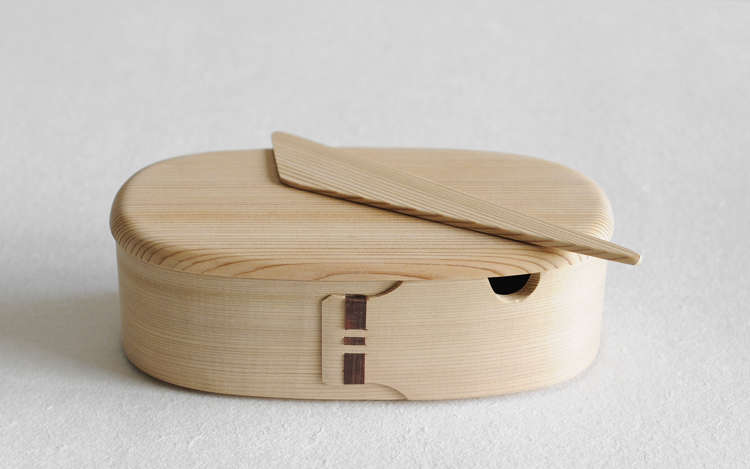
Magewappa is a traditional form of Japanese bentwood craft associated with Odate in Akita Prefecture. Thin sheets of cedar are softened, curved, joined, and finished to create lightweight containers with graceful continuous walls. Although the technique is widely recognized through bento boxes, it also translates wonderfully into butter storage.
The Magewappa butter case highlighted by design retailers uses Akita cedar and received recognition in Japan’s 2011 Good Design Awards. Its pale grain, oval shape, and nearly invisible construction give it the calm appearance of an object that floated downstream from a particularly tasteful forest.
Why It Works
Wood brings warmth to a table in a way that ceramic and metal cannot quite imitate. The cedar case also provides a tactile experience: it is lightweight, softly textured, and comfortable to hold. Because natural wood requires more attentive care, this option appeals to people who enjoy maintaining their kitchen tools rather than treating them as disposable accessories.
It pairs especially well with sourdough, linen napkins, hand-thrown mugs, and the dangerous belief that breakfast should last two hours.
3. The Noda Horo Enamel Butter Case
Noda Horo’s butter case combines a white enamel container with a natural wood lid, creating one of the most practical designs in the group. Japanese enamelware is valued for its smooth glass-like surface, resistance to lingering food smells, and clean appearance. Here, that crisp white body is softened by the warmth of cherry wood.
The clever detail is the lid. On several versions, it can be flipped over and used as a small cutting or serving board. This means the butter can travel from refrigerator to table with its own preparation surface, reducing the number of extra dishes required.
Why It Works
This is the butter case for cooks who appreciate practical engineering but do not want their kitchen to resemble a laboratory. The enamel body is straightforward to clean, while the wooden lid adds enough natural variation to keep the design from feeling clinical.
It is also versatile. Beyond butter, the container can hold cheese, condiments, small leftovers, or a suspiciously tiny portion of dessert that everyone knows will not survive until tomorrow.
4. The Azmaya Solid Cherry Butter Case
Azmaya’s butter case takes a more sculptural approach. Rather than assembling the body from multiple panels, makers carefully hollow the container from solid Japanese wild cherry wood. The finished piece is rubbed with walnut oil, allowing the grain and natural color to remain visible.
Wild cherry is used partly because its stability and substantial walls make it suitable for an object repeatedly moved between the refrigerator and dining table. The thick wood moderates sudden temperature changes while creating a smooth, uninterrupted form.
Why It Works
The Azmaya case feels less like ordinary food storage and more like a lidded keepsake box. That can make a weekday breakfast feel unusually civilized, even when the toast is slightly burned and someone has misplaced the coffee filters.
Because every block of wood has a different grain pattern, each piece carries subtle visual variation. It is ideal for buyers who value natural materials, skilled woodworking, and objects that become more personal as they age.
5. The Kakudo Walnut Butter Case
Designed by Masanori Oji and made by Takahashi Kougei, the Kakudo butter case is a geometric wooden design with exceptionally tidy details. “Kakudo” refers to angle, and the name is reflected in the precisely cut edges that help the lid fit securely.
The walnut version accommodates roughly two standard American sticks, or approximately half a pound of butter. It also includes a wooden spreading knife and a dedicated interior slot, eliminating the familiar morning search through a drawer full of every utensil except the one currently needed.
Why It Works
Walnut gives the Kakudo case a darker and more architectural character than pale cedar or cherry. Its straight sides suit modern kitchens, while the visible grain prevents it from looking mass-produced.
The integrated knife is more than a charming accessory. Keeping the spreader with the container turns the butter case into a complete serving system. It is a small example of good product design solving an equally small but surprisingly persistent irritation.
6. The KIHARA SITAKU Stackable Butter Case
The SITAKU butter case, produced through a collaboration between Koizumi Studio and KIHARA, introduces Arita porcelain into a modular kitchen system. The rectangular container can store butter, cheese, olives, or other small ingredients and is designed to stack with related preparation tools.
KIHARA works in Arita, an area associated with approximately four centuries of Japanese porcelain production. The SITAKU case translates that history into a distinctly contemporary object: smooth, compact, white, and easy to move directly from preparation area to dining table.
Why It Works
Stacking is particularly valuable in small kitchens, where every container seems determined to occupy the exact shelf needed for something else. The SITAKU design reduces visual clutter and creates a coordinated system without requiring the kitchen to look overly matched.
Porcelain also gives the case enough visual refinement for serving. One moment it is storage; the next it is tableware. No emergency transfer to a decorative plate is required when guests arrive unexpectedly.
7. The ZERO JAPAN Bee House Butter Dish
The Bee House butter dish, now sold under the ZERO JAPAN name in the United States, offers the most playful interpretation of the group. Made in Mino, Japan, it features a glazed ceramic body, a fitted lid, and an integrated stainless-steel butter knife.
It has appeared in colors ranging from classic white to cheerful shades inspired by fruits and vegetables. Some versions are compact compared with long American butter sticks, so the butter may need to be cut before it is placed inside. That minor inconvenience is balanced by the joy of never asking, “Where did the butter knife go?” again.
Why It Works
This is an excellent entry point for someone who likes Japanese design but does not want an extremely precious object. The ceramic body has reassuring weight, the integrated knife is genuinely convenient, and the available colors make it easy to add personality to a neutral kitchen.
It is practical, friendly, and just quirky enough to become a conversation piece. Butter has rarely enjoyed such well-organized accommodations.
How to Choose the Right Japanese Butter Dish
Match the Capacity to Your Butter
American butter is sold in different stick shapes depending on region and brand. Measure the interior before buying, particularly when selecting a compact Japanese case. A dish designed for a shorter block may require a long stick to be divided into smaller portions.
Consider Where It Will Live
For regular refrigerator storage, porcelain, ceramic, and enamel are low-maintenance choices. A wooden case offers warmth and insulation but requires gentler washing and careful drying. Avoid placing natural wood in a dishwasher unless the manufacturer specifically permits it.
Decide How Much Maintenance You Enjoy
An enamel or glazed ceramic container generally needs little more than routine washing. Solid wood may occasionally benefit from food-safe oil and should not be left soaking in water. This extra attention is not necessarily a drawback; for many owners, caring for the object is part of its appeal.
Follow Food-Safety Guidance
A beautiful lid protects butter from dust and helps limit exposure to surrounding odors, but it does not function as refrigeration. Storage recommendations can vary by product, butter type, household temperature, and intended holding time. When uncertain, keep the filled dish refrigerated and remove only the amount needed for serving. The FDA recommends maintaining refrigerators at 40 degrees Fahrenheit or below.
Why This Tiny Kitchen Trend Has Staying Power
The renewed interest in butter dishes is not really about butter alone. It reflects a larger desire to replace anonymous packaging with objects that make routines more pleasant. A wrapper performs a function, but a handcrafted case adds ritual. It asks you to slow down for approximately six seconds, lift a lid, use a proper knife, and notice what is on the table.
Japanese butter dishes are especially compelling because they balance that emotional pleasure with intelligent construction. The best examples do not decorate a weak idea. They improve the idea through better materials, compact dimensions, fitted lids, integrated utensils, reversible surfaces, and workmanship intended to remain useful for years.
Of the seven designs, the porcelain and ZERO JAPAN dishes are easy choices for everyday practicality. The Noda Horo case offers perhaps the strongest balance of function and warmth. SITAKU is ideal for organized small kitchens, while the Azmaya, Kakudo, and Magewappa cases appeal to anyone who considers wood grain a perfectly acceptable form of entertainment.
Experience Guide: What Living With an Artful Butter Dish Is Actually Like
The first change is visual. Instead of opening the refrigerator to find a partially torn wrapper balanced on a shelf, you see a defined object with a clear purpose. Even an inexpensive breakfast feels more composed when the butter arrives in porcelain, enamel, or wood. The toast has not become better educated, but it certainly looks as though it has.
The second change is organizational. A well-designed case gives butter a permanent location, which prevents it from wandering behind jars and leftovers. Models with integrated knives are particularly convenient. The utensil is always present, it does not smear butter across the cutlery drawer, and family members have fewer opportunities to accuse one another of hiding it.
Capacity becomes the first practical lesson. Compact Japanese cases are often designed around butter blocks that differ from some American sticks. Checking measurements before purchasing prevents disappointment. When the case is smaller, dividing a stick can actually become useful: one portion remains accessible for current meals while the rest stays wrapped and refrigerated.
Material creates the biggest difference in daily experience. Glazed ceramic feels cool, substantial, and dependable. It can usually handle repeated washing without much fuss. Enamel feels lighter and slightly more utilitarian, making it a good choice for active cooks who move ingredients between the refrigerator, counter, and stove throughout the day.
Wood is a more sensory experience. The case feels warmer in the hand, and the grain changes subtly under different light. Opening a precisely fitted wooden lid can be oddly satisfying. However, wood also expects better manners. It should be washed promptly, dried thoroughly, and protected from prolonged soaking. Anyone who routinely discovers dishes in the sink the following morning may prefer porcelain.
A reversible lid, such as the one used on the Noda Horo case, quickly proves its value. Flip it over, slice the required amount, serve from the same surface, and return the container to the refrigerator. This small sequence reduces cleanup and demonstrates why thoughtful design often feels effortless: the object quietly removes unnecessary steps.
The dish also changes how butter is served to guests. Rather than placing branded packaging on the table, the host presents a clean, intentional object. A cedar or walnut case attracts questions because many people have never seen butter stored in bentwood or carefully hollowed timber. The conversation may begin with craftsmanship and end with everyone debating the correct amount of butter for one piece of bread. The correct answer, naturally, is more.
After regular use, the most successful butter dish becomes nearly invisible in the best possible way. It is easy to open, easy to clean, correctly sized, and pleasant enough to remain on the table. That is the real achievement of these Japanese designs. They do not demand a special occasion. They make an ordinary action feel considered without making it complicated.
For new buyers, the safest approach is to choose according to habits rather than appearance alone. Frequent bakers may favor a roomy porcelain or enamel case. Minimalists may prefer stackable Arita ware. Design collectors may enjoy the precision of Kakudo, while lovers of traditional craft may find the Magewappa case impossible to resist. The ideal choice is the one that continues to feel useful after the initial excitement has meltedpreferably more slowly than the butter.
Conclusion
Japanese butter dishes demonstrate how much creativity can be invested in one of the smallest objects in the kitchen. Porcelain offers purity, enamel brings practical resilience, and solid or bent wood introduces warmth, grain, and craft tradition. Whether you select a modest ZERO JAPAN dish or a meticulously constructed walnut case, the goal is the same: make an everyday ingredient easier and more enjoyable to use.
This trend deserves attention because it is not built around disposable novelty. A carefully chosen butter case can remain useful for years, adapt to changing table settings, and bring a little order to the refrigerator. That is impressive work for an object whose main responsibility is preventing toast from having a disappointing morning.
Note: Product colors, dimensions, prices, care instructions, and availability may change. Confirm current specifications with the manufacturer or retailer before purchasing, and follow the storage directions supplied with both the butter and the container.