Some quotes are like party guests who arrive wearing someone else’s name tag. They sound smart, they look polished, and they know exactly how to make a room nod thoughtfully. The only problem? The famous person on the label often never said them.
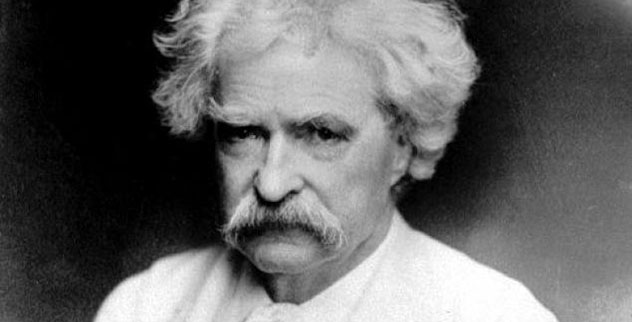
Misattributed quotes spread because they are short, useful, emotional, and easy to share. Attach a line to Albert Einstein, Mark Twain, Winston Churchill, Gandhi, or Shakespeare, and suddenly it walks into the internet wearing a tuxedo. But quote history is messier, funnier, and far more interesting than a motivational poster would have us believe.
Note: This article is based on established quote-history research, historical archives, literary records, and film references. External source links are intentionally not included, per publishing requirements.
Why Famous Sayings Get Misattributed
Quotes often get assigned to the wrong person for one simple reason: fame works like a magnet. A clever line about science drifts toward Einstein. A sharp joke drifts toward Mark Twain. A grand political warning drifts toward Churchill or Jefferson. A dramatic line with old-fashioned rhythm somehow becomes Shakespeare, even when Shakespeare was nowhere near the crime scene.
Sometimes the quote is a paraphrase. Sometimes it is a later summary of someone’s beliefs. Sometimes it is a movie line people remember more cleanly than it was written. And sometimes, let’s be honest, the quote is just too good for the internet to leave unattributed.
Below are 17 famous sayings attributed to the wrong person, along with the more accurate story behind each one.
The Top 17 Sayings Attributed to the Wrong Person
1. “I disapprove of what you say, but I will defend to the death your right to say it.”
Usually attributed to: Voltaire
More accurate attribution: Evelyn Beatrice Hall, writing under the name S. G. Tallentyre
This is the ultimate free-speech quote, and it sounds exactly like something Voltaire might have said while dramatically adjusting a powdered wig. But the wording comes from Evelyn Beatrice Hall’s 1906 book about Voltaire. She was summarizing his attitude, not quoting him directly. Over time, readers mistook her elegant summary for Voltaire’s own sentence. It is still a fine expression of tolerance, but the credit belongs to Hall.
2. “Be the change you wish to see in the world.”
Usually attributed to: Mahatma Gandhi
More accurate attribution: A modern paraphrase of ideas associated with Gandhi
Gandhi did write and speak often about self-discipline, moral example, and personal responsibility. However, the neat bumper-sticker version “Be the change you wish to see in the world” has not been found in his verified writings in that exact form. The sentiment is Gandhi-like, but the wording is modern, polished, and suspiciously perfect for tote bags. Think of it as a paraphrase with a spiritual passport problem.
3. “The definition of insanity is doing the same thing over and over and expecting different results.”
Usually attributed to: Albert Einstein
More accurate attribution: Recovery literature and later self-help culture
Einstein has become the internet’s favorite unpaid quote spokesman. This saying is often used in business meetings, therapy discussions, and group projects where someone is clearly about to make the same spreadsheet mistake again. Yet there is no strong evidence that Einstein said it. Similar wording appeared in recovery communities before becoming attached to Einstein in popular culture. It is a useful warning, but not a verified Einstein quote.
4. “Everybody is a genius. But if you judge a fish by its ability to climb a tree…”
Usually attributed to: Albert Einstein
More accurate attribution: Unknown; popularized in modern educational and self-help writing
This quote is beloved by teachers, students, parents, and fish who are tired of standardized testing. It makes a compassionate point about different kinds of ability, but it does not appear in authoritative Einstein quotation collections. The line seems to have traveled through modern self-help and education circles before gaining Einstein’s name as a credibility booster. Lovely message? Yes. Einstein-approved? Not according to the evidence.
5. “A lie can travel halfway around the world while the truth is putting on its shoes.”
Usually attributed to: Mark Twain
More accurate attribution: Older proverb-like variants, often linked to Jonathan Swift-era wording
This quote feels Twain-ish because it is witty, cynical, and slightly annoyed with humanity. The trouble is that versions of the idea existed long before Twain became the patron saint of snappy skepticism. Earlier forms contrast falsehood flying quickly while truth arrives late and exhausted. Twain may be the perfect celebrity vehicle for the quote, but he is not the proven driver.
6. “Success is not final, failure is not fatal: it is the courage to continue that counts.”
Usually attributed to: Winston Churchill
More accurate attribution: Unverified; not found in Churchill’s authenticated writings or speeches
Churchill said many memorable things, which is probably why people keep sneaking extra lines into his luggage. This quote is hugely popular because it sounds grand, wartime, and suitable for a gym wall. But researchers have not found it in Churchill’s verified works. It may express a Churchillian mood, but that is not the same as being a Churchill quote. Historical accuracy demands more than a cigar-shaped vibe.
7. “The only thing necessary for the triumph of evil is that good men do nothing.”
Usually attributed to: Edmund Burke
More accurate attribution: Uncertain; evolved through later political and moral commentary
This line is powerful, urgent, and endlessly reusable. It has been attached to Edmund Burke for decades, but quote researchers have not found this exact sentence in Burke’s writings. Burke did express related ideas about public duty, but the famous phrasing appears to have developed later. The saying still carries moral force, but its authorship is not as clean as motivational posters suggest.
8. “I cannot tell a lie.”
Usually attributed to: Young George Washington
More accurate attribution: Mason Locke Weems’s popular biography of Washington
The cherry tree story is one of America’s most famous childhood legends: little George damages a tree, confesses bravely, and becomes honesty in knee breeches. The problem is that the tale appears in Parson Weems’s early biography, written after Washington’s death, and is widely treated as a moral fable rather than a documented event. Washington may have been honest, but the hatchet story is historical storytelling with extra syrup.
9. “Let them eat cake.”
Usually attributed to: Marie Antoinette
More accurate attribution: A story circulating before Marie Antoinette became queen
This is history’s most famous pastry accusation. The phrase is usually presented as proof that Marie Antoinette was cruelly out of touch with starving peasants. However, similar stories existed before she was in a position to say it, and the line appears in earlier literature as a remark by an unnamed “great princess.” The quote became a perfect symbol during a revolutionary age, but symbolism is not the same as evidence.
10. “Well-behaved women seldom make history.”
Usually attributed to: Marilyn Monroe, Eleanor Roosevelt, or various rebellious icons
More accurate attribution: Laurel Thatcher Ulrich
This quote has appeared on mugs, T-shirts, classroom posters, and probably at least one glittery notebook. It is often credited to Marilyn Monroe, but the historian Laurel Thatcher Ulrich wrote it in a 1976 scholarly article. Ironically, the quote was originally part of an academic observation about how quiet, ordinary women are often overlooked by historians. Then it escaped academia, put on lipstick, and became a slogan.
11. “Good artists copy; great artists steal.”
Usually attributed to: Pablo Picasso
More accurate attribution: Uncertain; related ideas appear in earlier literary criticism
Picasso is often credited with this creative battle cry, and Steve Jobs helped make the attribution famous. But the exact wording is difficult to verify as Picasso’s. Similar ideas circulated before, especially in discussions of poets, influence, imitation, and originality. The line survives because it sounds daring and mischievous. Still, artists should probably avoid using it as a legal defense after copying someone’s logo.
12. “Be yourself; everyone else is already taken.”
Usually attributed to: Oscar Wilde
More accurate attribution: Unknown; no solid evidence in Wilde’s works
Oscar Wilde really was brilliant, quotable, and allergic to dullness, so he naturally gets blamed for every elegant sentence wearing a velvet jacket. This line about authenticity is often attached to him, but it has not been found in his verified writings. It sounds like Wilde after being run through a modern inspirational calendar. The message is charming; the attribution is shaky.
13. “There’s a sucker born every minute.”
Usually attributed to: P. T. Barnum
More accurate attribution: Uncertain; associated with gamblers, con men, and possibly Barnum’s rivals
P. T. Barnum built a career on spectacle, publicity, and human curiosity, so this cynical line stuck to him like circus glue. Yet researchers have not found strong evidence that Barnum said it. Some accounts connect it to banker David Hannum during the Cardiff Giant hoax; others trace similar sayings through gambling and con-man circles. Barnum loved attention, but he may not deserve this particular insult to his customers.
14. “Winning isn’t everything; it’s the only thing.”
Usually attributed to: Vince Lombardi
More accurate attribution: Henry “Red” Sanders popularized it earlier
Lombardi did repeat versions of this line, so the case is not a total fumble. But the famous slogan is generally traced earlier to UCLA football coach Henry “Red” Sanders. Lombardi’s fame helped the phrase become a permanent part of American sports culture. In other words, Lombardi may have run the ball beautifully, but Sanders appears to have snapped it first.
15. “Go West, young man.”
Usually attributed to: Horace Greeley
More accurate attribution: Disputed; Greeley popularized the idea, but the exact origin is contested
The slogan is tied to westward expansion and the mythic promise of American opportunity. Horace Greeley, influential editor of the New York Tribune, certainly promoted westward migration. But the exact phrase has a complicated paper trail, with competing claims involving other writers and later recollections. Greeley helped make the idea famous, but the slogan’s birthplace remains harder to pin down than a tumbleweed in a windstorm.
16. “Hell hath no fury like a woman scorned.”
Usually attributed to: William Shakespeare
More accurate attribution: William Congreve
People often hand any old dramatic English line to Shakespeare, as if he personally wrote the entire language during a long weekend. This one comes from William Congreve’s 1697 play The Mourning Bride. The original wording is slightly different: “Heav’n has no rage, like love to hatred turn’d, Nor hell a fury, like a woman scorn’d.” Shakespeare gets the applause, but Congreve wrote the line.
17. “Music hath charms to soothe the savage beast.”
Usually attributed to: William Shakespeare
More accurate attribution: William Congreve, with wording often misquoted
This is another case of Shakespeare getting someone else’s mail. The original line, also from Congreve’s The Mourning Bride, is “Musick has charms to soothe a savage breast.” Over time, “breast” became “beast,” probably because wild animals are more memorable than poetic anatomy. The corrected version is softer, stranger, and more elegant. Also, no lions were necessarily calmed in the making of this quote.
What These Misattributed Quotes Teach Us
Misattributed sayings are not just trivia. They reveal how culture remembers ideas. A sentence becomes famous not only because someone said it, but because people need it. We need courage quotes when life feels unstable. We need wisdom quotes when we are making decisions. We need witty quotes when we want to sound smarter than our group chat deserves.
The danger is that false attribution can flatten history. Gandhi becomes a slogan machine. Einstein becomes a motivational speaker. Twain becomes the author of every joke that sounds like it owns a rocking chair. Shakespeare becomes a universal storage cabinet for old English phrases. These mistakes may seem harmless, but they slowly replace real voices with convenient legends.
The better approach is not to become a quote snob who ruins dinner parties. Nobody wants to invite the person who interrupts a toast with, “Actually, that line appears in a 1906 biographical interpretation.” Well, someone might invite that person, but they will probably seat them near the potted plant. Instead, we can treat quotes with curiosity. When a line matters, ask where it came from. If the attribution is uncertain, say so. A quote does not become useless just because the famous label falls off.
Personal Experiences With Misquoted Wisdom
Anyone who has spent time writing, teaching, researching, or simply scrolling through social media has probably met a misattributed quote in the wild. They usually appear with a dramatic background: a sunset, a mountain, a black-and-white portrait of a famous genius, or a lion staring into the distance as if it has just completed a leadership seminar.
One common experience is the “Einstein effect.” A quote gets attached to Einstein, and suddenly it becomes nearly impossible to question. People trust the name before they examine the words. In classrooms and offices, the fish-climbing-a-tree quote often appears during discussions about learning styles, talent, or creativity. The message is kind, but the attribution does too much work. When people discover Einstein probably did not say it, the best reaction is not disappointment. It is relief. The idea can stand on its own without borrowing a lab coat.
Another familiar experience is the “movie memory problem.” People do not remember exact lines; they remember cultural versions of lines. “Play it again, Sam,” “Luke, I am your father,” and similar phrases survive because they are clearer in conversation than the originals. Our brains edit for usefulness. We turn dialogue into shorthand. That does not mean everyone is careless; it means memory behaves like an enthusiastic editor with no fact-checking department.
Writers also run into misattributed quotes when preparing articles, speeches, or social posts. A line that looks perfect can become a tiny credibility trap. The quote may be emotionally right but historically wrong. That is why careful writers check before publishing. It only takes one skeptical reader to spot a fake attribution, and once they do, the rest of the article suddenly looks suspicious, even if everything else is solid. Accuracy is not decoration; it is load-bearing.
There is also something humbling about discovering that a favorite quote has the wrong author. At first, it feels like losing a small cultural treasure. Then it becomes more interesting. The quote has a journey. It passed through books, speeches, newspapers, classrooms, posters, and websites. It changed shape because people kept using it. Misattribution is a mistake, yes, but it is also evidence that language is alive, messy, social, and occasionally wearing a fake mustache.
The best experience, finally, is learning to enjoy the detective work. Tracking a quote is like following footprints across a crowded room. You find paraphrases, altered wording, forgotten authors, marketing slogans, and sometimes a complete dead end. The reward is not only knowing who said what. The reward is understanding how humans package wisdom, how fame reshapes memory, and how a sentence can become more famous than its real author ever did.
Conclusion
The most famous misattributed quotes remind us that truth and popularity do not always travel together. A saying can be meaningful even when its name tag is wrong, but accuracy still matters. Giving credit correctly honors the real writers, historians, thinkers, playwrights, and speakers behind memorable language.
So the next time a quote appears online under a famous face, pause before sharing it. Ask whether the person truly said it, whether the wording is exact, and whether the quote has been polished by generations of repetition. A little curiosity can save you from accidentally making Einstein coach a fish, Shakespeare soothe a beast, or Voltaire defend a sentence written by someone else.
Great quotes deserve more than applause. They deserve a proper ID check.