There are few household mysteries more dramatic than a glass of tap water. It looks innocent. It sparkles. It chills politely in the refrigerator. Then one day you notice a metallic taste, cloudy ice cubes, orange stains in the sink, or a smell that makes your faucet seem like it has joined a swamp-themed theater troupe. That is when a home water quality test kit becomes more than a gadget. It becomes peace of mind in a box.
In 2025, the best home water quality test kits fall into two broad groups: quick DIY screening kits and mail-in laboratory kits. DIY strips and vials can check common water concerns such as chlorine, hardness, pH, nitrates, nitrites, lead, copper, iron, and bacteria. Lab kits go further, often measuring dozens or even hundreds of contaminants with professional equipment. Both have a place. The trick is knowing which kit matches your water source, your budget, and your level of worry.
This guide breaks down the best DIY water quality test kits for homeowners, renters, private-well users, city-water customers, parents, landlords, and anyone who has ever stared suspiciously at a faucet and whispered, “What exactly are you doing in there?”
Why Home Water Testing Matters in 2025
Most public tap water in the United States is treated and monitored, but “usually safe” is not the same as “perfect in every house.” Municipal water can meet federal standards at the treatment plant and still pick up contaminants from older plumbing, lead service lines, corroded fixtures, or building-specific pipes. Private wells are a different story altogether: homeowners are generally responsible for testing and maintaining their own water.
Water quality can also change after flooding, nearby construction, drought, agricultural runoff, septic issues, plumbing repairs, wildfire damage, or changes in taste, smell, or appearance. In other words, water is not a “test once and forget forever” situation. It is more like dental care: ignore it long enough and eventually something expensive starts happening.
The most useful home water test kits help answer three questions: Is my water safe to drink? Is my plumbing adding anything unwanted? And do I need a filter, softener, treatment system, or professional lab test?
DIY Test Kits vs. Mail-In Lab Kits: What Is the Difference?
DIY Water Quality Test Kits
DIY kits usually include test strips, color charts, bacteria vials, or small chemical reagents. They are fast, affordable, and easy to use. Many deliver results in minutes, although bacteria tests often require a longer waiting period. These kits are excellent for routine screening, checking water hardness, monitoring chlorine, testing after replacing a filter, or getting a first look at common problems.
The downside is precision. A color strip can tell you that your water may have high hardness or detectable nitrate, but it cannot always provide laboratory-grade detail. Lighting, timing, user technique, and color interpretation can affect results. If your test strip becomes your household’s most debated Rorschach test, it may be time for a lab.
Mail-In Laboratory Water Test Kits
Mail-in kits include bottles, instructions, prepaid or arranged shipping, and professional analysis. You collect the sample at home, send it to a certified lab, and receive a report. These kits are better for serious concerns such as lead, arsenic, PFAS, uranium, volatile organic compounds, pesticides, disinfection byproducts, and complex well-water issues.
Lab kits cost more and take longer, but they provide more reliable data. For families with infants, pregnant people, private wells, older plumbing, or unexplained health-related concerns, a certified lab test is usually the smarter investment.
Best Home Water Quality Test Kits 2025
1. Best Overall Lab Kit: Tap Score Advanced Water Test
Tap Score by SimpleLab remains one of the strongest choices for homeowners who want a serious report without needing a chemistry degree and a suspiciously quiet basement laboratory. The company offers different kits for city water, well water, lead and copper, PFAS, VOCs, radon, and other targeted concerns.
The best reason to choose Tap Score is clarity. Many water reports throw numbers at you like confetti at a science fair. Tap Score organizes results in a user-friendly format and often explains what the findings mean, which contaminants matter, and what treatment options may be appropriate. For city-water users with older plumbing, the Advanced City Water Test is a strong pick. For private wells, the Essential or Advanced Well Water Test makes more sense.
Best for: homeowners who want detailed, lab-based results and practical recommendations.
Watch out for: higher cost compared with strips and a waiting period for lab results.
2. Best Premium Lab Kit: Safe Home Ultimate Drinking Water Test Kit
Safe Home is a popular name in the home testing space, and its higher-end drinking water kits are designed for people who want broad contaminant screening. The Ultimate kit is positioned as a comprehensive lab option, testing a large range of parameters and returning a formal report.
This is the kind of kit to consider when buying a home, selling a home, checking a private well, testing after a flood, or investigating water that has multiple warning signs. It is also helpful for households that do not know what to test for and would rather cast a wider net than play “guess the contaminant,” which is not nearly as fun as it sounds.
Best for: real estate transactions, private wells, broad safety screening, and high-concern households.
Watch out for: premium pricing and more data than some casual users need.
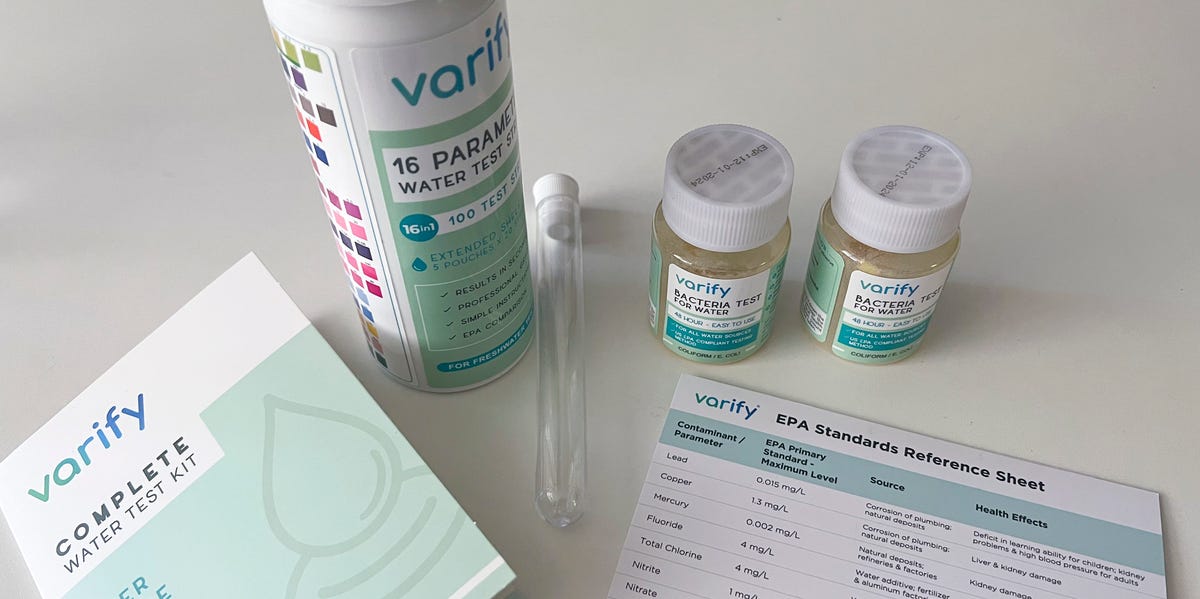
3. Best Budget DIY Kit: Varify Premium Drinking Water Test Kit
Varify is a strong budget-friendly choice for people who want quick at-home screening across many common water-quality indicators. Its kits typically test for multiple parameters such as hardness, chlorine, copper, lead, iron, nitrate, nitrite, pH, alkalinity, and bacteria depending on the version.
This kit is easy to recommend for renters, first-time testers, and anyone who wants a fast snapshot before deciding whether to pay for lab testing. It will not replace a certified lab for serious contaminants, but it can reveal patterns. For example, high hardness may explain chalky fixtures. High chlorine may explain taste. A suspicious bacteria result is your cue to stop guessing and call in a lab or local health department.
Best for: affordable first-pass testing and quick household checks.
Watch out for: color-strip interpretation and limited precision.
4. Best Classic DIY Kit: WaterSafe Drinking Water Test Kit
WaterSafe has been around for years and remains a practical pick for testing common drinking-water concerns without mailing samples away. Depending on the kit, it can screen for lead, bacteria, nitrate, nitrite, chlorine, pH, hardness, pesticides, iron, or copper.
The biggest advantage is simplicity. It is a straightforward kit for households that want to test well water, tap water, or filtered water without building a spreadsheet that needs its own office chair. It is especially useful when you want quick yes-or-no style screening for common concerns.
Best for: simple DIY testing of common contaminants.
Watch out for: one-time-use tests and less detail than lab analysis.
5. Best for Water Hardness: JNW Direct Water Hardness Test Strips
If your main question is “Do I have hard water?” you do not need a giant lab panel. JNW Direct Water Hardness Test Strips are a practical choice for checking hardness in tap water, well water, dishwashers, showers, aquariums, and water softeners.
Hard water is not usually a health emergency, but it can be a household annoyance. It may leave spots on dishes, buildup on faucets, dry-feeling skin, dull laundry, and appliances that age like they have seen things. Hardness strips are also useful for checking whether a water softener is working properly.
Best for: water softener owners and homes with scale buildup.
Watch out for: this is a hardness-focused tool, not a complete safety test.
6. Best Focused Test for Lead and Copper: Tap Score Lead & Copper Kit
Lead is one of the contaminants where “close enough” is not comforting. A focused lead and copper lab kit is smart for older homes, schools, rental units, buildings with older fixtures, and households with children. Tap Score’s targeted lead and copper testing is useful because it avoids paying for a giant panel when the main concern is plumbing-related metal contamination.
DIY lead strips can be useful as a screening tool, but lab testing provides better confidence. This is especially important because lead can be uneven. One faucet may test differently from another, and water that sits in pipes overnight can show different results than flushed water.
Best for: older homes, families with children, and plumbing-related concerns.
Watch out for: sample collection instructions must be followed carefully.
7. Best for Private Wells: Tap Score Essential or Advanced Well Water Test
Private well owners should think differently from city-water customers. A well is not just water; it is a small personal water system with geology, weather, plumbing, nearby land use, and maintenance all invited to the party. At minimum, well owners should routinely test for bacteria, nitrates, pH, total dissolved solids, and other region-specific contaminants.
Tap Score’s well-water kits are strong because they are built around common well concerns. Depending on the package, they may include metals, minerals, bacteria indicators, nitrate, hardness, and other analytes. In areas with known risks, homeowners may also need arsenic, uranium, radon, pesticides, or PFAS testing.
Best for: private well owners who want lab-based clarity.
Watch out for: local geology matters, so ask your health department what is common in your area.
How to Choose the Best DIY Water Quality Test Kit
Start With Your Water Source
If you use municipal water, start by reading your annual Consumer Confidence Report from the utility. It shows regulated contaminants detected in your water system. Then test for household-specific issues such as lead, copper, chlorine taste, hardness, or old plumbing concerns.
If you use a private well, skip the casual attitude. Test at least once a year for key indicators and use a certified laboratory for health-related concerns. Wells can be affected by runoff, septic systems, nearby farms, industrial activity, flooding, and natural minerals in bedrock.
Match the Kit to the Contaminant
Not all kits test the same things. A hardness strip will not tell you about arsenic. A chlorine test will not detect PFAS. A bacteria vial will not explain lead. Before buying, list the concerns you actually need to check: taste and odor, stains, scale, infant formula safety, well contamination, old pipes, or local pollution.
Know When DIY Is Not Enough
DIY test kits are useful screening tools, but lab testing is best for high-risk contaminants. Use a certified lab if you are testing for lead, arsenic, PFAS, uranium, VOCs, pesticides, or bacteria in a private well. Also use a lab after flooding, major plumbing changes, nearby contamination events, or repeated suspicious DIY results.
Common Water Test Results and What They Mean
Hardness
Hard water contains dissolved minerals such as calcium and magnesium. It can cause scale, soap scum, cloudy glassware, and reduced appliance efficiency. A water softener may help, but hardness alone does not mean the water is unsafe.
pH
pH measures how acidic or alkaline water is. Very low pH can make water corrosive, which may increase the chance of metals leaching from pipes. Very high pH can affect taste and treatment performance.
Chlorine
Chlorine is used by many utilities for disinfection. A little chlorine taste may be annoying but expected. Too little disinfectant in certain systems can also be a concern. Carbon filters often improve chlorine taste and odor.
Nitrates and Nitrites
Nitrates can come from fertilizer, septic systems, and agricultural runoff. They are especially important for households with infants. Private wells in agricultural areas should take nitrate testing seriously.
Lead and Copper
Lead and copper often come from plumbing, fixtures, or service lines. Because these metals may vary by faucet and sampling method, careful testing matters. For lead concerns, a certified lab is the better choice.
Bacteria
Total coliform bacteria can indicate that surface water or other contamination may be entering the water supply. E. coli is more serious and requires prompt action. If a DIY bacteria test is positive, confirm with a certified lab and follow local health guidance.
Best Home Water Testing Strategy for 2025
The smartest approach is not always buying the most expensive kit. It is testing in layers. First, read your local water report if you are on city water. Second, use a DIY kit for quick screening of common household issues. Third, use a certified lab for anything health-related, unusual, or expensive to fix. Fourth, choose treatment only after you know the problem.
This last point matters. Buying a filter before testing is like buying prescription glasses because a friend said the frames were cute. Maybe they help. Maybe they do nothing. Maybe they make everything blurry and now your wallet is sad. Water treatment should match the contaminant: carbon for taste and certain chemicals, reverse osmosis for many dissolved contaminants, softeners for hardness, UV for certain microbial concerns, and specialized systems for arsenic, PFAS, or radon.
Extra Experience: What Real Home Water Testing Feels Like
Using a home water quality test kit sounds simple, and mostly it is, but the experience depends heavily on the kit. Test strips feel fast and satisfying. You dip, wait, compare colors, and suddenly feel like a scientist in a kitchen with better snacks. The challenge is color matching. Is that nitrate square pale pink, slightly pink, or “I stared too long and now everything is pink”? Good lighting helps. So does reading the instructions before opening every packet like an overexcited raccoon.
Mail-in lab kits feel more serious. The bottles are labeled, the instructions are specific, and the timing matters. Some samples must be filled to a line, some must not be rinsed, and some need to be shipped quickly. The best advice is to lay everything out on a clean counter, read the instructions twice, and collect samples when you have enough time. Do not do it five minutes before school pickup, work, or dinner unless you enjoy turning your sink into a tiny panic station.
One useful habit is testing more than one faucet when plumbing is the concern. Kitchen water may differ from bathroom water. First-draw water, which has been sitting in pipes for several hours, may differ from flushed water. If your concern is lead or copper, follow the lab’s sampling instructions exactly because the method affects the result.
Another real-world lesson: do not test only because water tastes bad. Some important contaminants have no taste, color, or smell. Clear water can still have problems, while weird-tasting water may simply contain harmless minerals or chlorine. Your tongue is a charming companion, but it is not a certified laboratory.
Finally, keep records. Save reports, dates, kit names, results, filter changes, plumbing work, and treatment maintenance. If you test again later, you will know whether conditions improved, worsened, or stayed the same. This is especially useful for wells, rentals, home sales, and families installing filtration systems. Water testing is not about becoming paranoid. It is about replacing vague worry with actual data, which is much better for your brain and your coffee.
Conclusion
The best home water quality test kit in 2025 depends on what you need to know. For broad, lab-based analysis, Tap Score and Safe Home are top choices. For quick DIY screening, Varify and WaterSafe offer affordable convenience. For hardness, JNW Direct strips are simple and useful. For lead, copper, PFAS, arsenic, bacteria, and private-well concerns, certified lab testing is the safer path.
Good water testing is not about fear. It is about making smart decisions. Test first, understand the results, then choose the right treatment if needed. Your faucet may never send you a thank-you card, but your pipes, appliances, coffee, and peace of mind will appreciate the effort.
Note: This article is written for general educational and SEO publishing purposes. For serious health concerns, private wells, lead, PFAS, arsenic, bacteria, or unusual water changes, use a certified laboratory and follow local health department guidance.