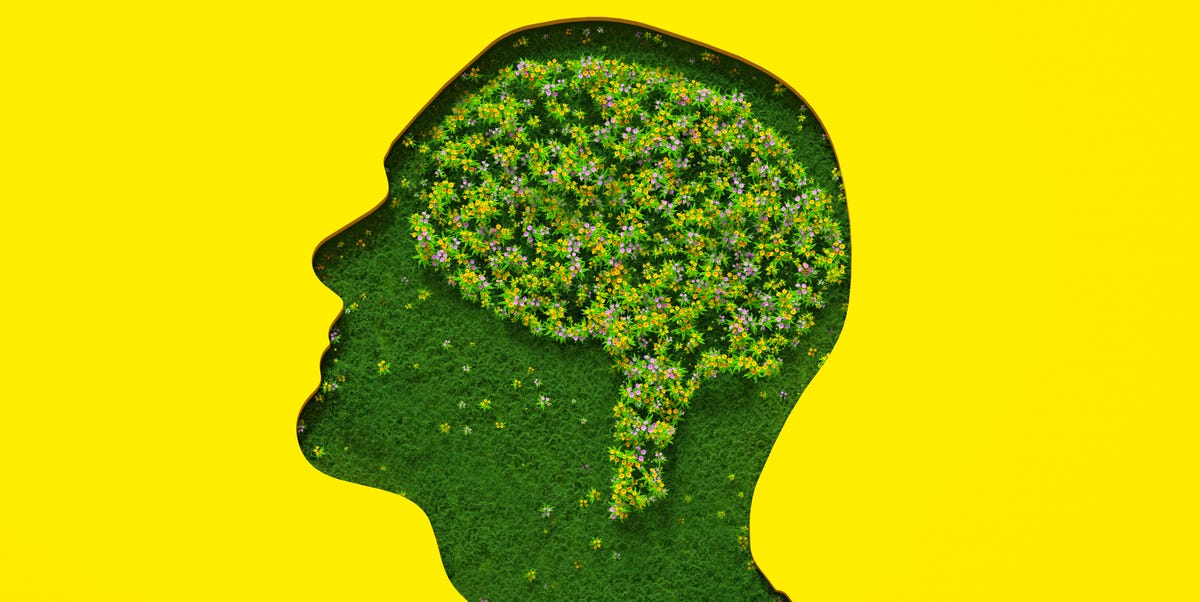
If the human brain were a movie production, the neurons would be the stars, the glial cells would be the crew, and DNA would be the director yelling, “Again, but more dramatic.” For years, scientists have asked a question that sounds simple and turns out to be gloriously messy: what, exactly, makes our brains human?
It is tempting to assume the answer is just size. Bigger brain, smarter species, end of story, cue triumphant soundtrack. But the science has gotten much more interesting than that. Researchers now think the secret may lie not only in brain size, but in how the human brain develops, how long it develops, which cells multiply when they should, and which stretches of DNA act like molecular dimmer switches during that process.
One of the most intriguing clues is a tiny piece of DNA called HAR123. It is not a classic gene that codes for a protein. Instead, it appears to work more like a control knob, helping regulate the formation of neural progenitor cells during development. Those progenitor cells are the early builders of the brain, the kind of cells that decide whether the construction site becomes a modest cottage or a sprawling cognitive metropolis.
That does not mean scientists have found a single magic ingredient that turned apes into people who write sonnets, build spacecraft, and forget why they walked into the kitchen. Evolution is almost never that tidy. Still, HAR123 may be one of the clearest examples yet of how small changes in the genome could have helped shape the traits we associate with the human brain: expanded cortex, flexible learning, and a remarkable ability to juggle language, planning, memory, and imagination.
Why the Question Is So Hard
The human brain is not unique because it has one flashy feature and a neon sign pointing at it. It is unique because many traits likely changed together. The cerebral cortex, especially the neocortex, expanded dramatically over evolutionary time. Developmental timing also appears to matter. Human brains grow over a longer period, refine connections across childhood and adolescence, and support an unusual combination of social intelligence, abstract reasoning, and cognitive flexibility.
Scientists have also learned that the human brain cannot be understood by neurons alone. Neurons send the electrical signals that make thought possible, but glial cells help support, protect, nourish, and fine-tune that activity. So when researchers study what makes our brains human, they are not only asking how many neurons we make. They are also asking how the brain balances neurons and glia, how cells specialize, how the cortex folds, and how gene regulation choreographs the entire performance.
That is why recent research has shifted from asking, “Which gene made us human?” to asking, “Which developmental programs changed, and how?” That subtle difference matters. Evolution often rewires when and where genes are used rather than inventing entirely new biological parts from scratch.
The Tiny DNA Switch Getting Big Attention
HAR123 belongs to a class of DNA sequences called human accelerated regions, or HARs. These are stretches of the genome that stayed relatively conserved across many species but changed unusually fast in the human lineage after our split from chimpanzees. That pattern makes researchers pay attention, because rapid change in an otherwise conserved region suggests natural selection may have favored something new.
What makes HAR123 especially exciting is that it appears to act as a transcriptional enhancer. In plain English, it is not the recipe itself; it is more like a very opinionated editor marking up the recipe and saying, “Use more of this, less of that, and do it earlier.” In developmental biology, that kind of control can have outsized effects.
In experimental systems, HAR123 promoted the development of neural progenitor cells and influenced the ratio of neurons and glia that emerged from them. Even more interesting, the human version behaved differently from the chimpanzee version. That is the kind of result evolutionary neuroscientists dream about: same general genomic neighborhood, slightly different sequence, noticeably different developmental outcome.
The idea is not that HAR123 single-handedly invented human intelligence while the rest of the genome was out getting coffee. The point is that a regulatory sequence this small can still alter the tempo and output of brain development. If enough of these small changes accumulated, the effects could become enormous over evolutionary time.
Why Neural Progenitor Cells Matter So Much
To understand why HAR123 matters, it helps to know a little about neural progenitor cells. These are early developmental cells that produce the brain’s major cell types. In the cortex, certain progenitors can keep dividing, generating more cells and extending the window during which new neurons are made. That is a big deal, because cortical expansion depends heavily on how long these cells persist and how productively they divide.
One cell population that gets a lot of attention is basal radial glia. These cells are especially important in species with larger, more folded cortices. They act like productivity boosters during neocortical development, helping generate many more neurons than simpler developmental systems can manage. If evolution found ways to expand or maintain these progenitors for longer, the cortex could grow in both size and complexity.
That is one reason researchers care so much about molecular changes that influence progenitor behavior. A tweak that increases the abundance of the right progenitor cell at the right developmental moment can have a downstream effect on cortical architecture, connectivity, and possibly cognition. Evolution, in other words, may have been editing the blueprint at the level of timing and cell fate rather than adding a shiny new “intelligence module.”
HAR123 Is Not Alone: Other Suspects in the Human Brain Mystery
HAR123 may be the headline-grabber, but it is part of a larger cast of genomic characters. Human brain evolution looks increasingly like a team project, not a solo act.
ARHGAP11B
This human-specific gene has become famous in brain evolution research because it can increase basal progenitor abundance and promote features associated with neocortex expansion. In experimental models, ARHGAP11B has been linked to a more human-like pattern of cortical development. Some studies even suggest it can alter behavior-related traits in model animals, though scientists remain appropriately cautious about making big leaps from mice to humans.
NOTCH2NL and NBPF14
These human-specific genes are also tied to the self-renewal and abundance of cortical progenitors. Their importance lies in the same general neighborhood of biology: how long stem-like cells keep dividing before they mature into specialized neurons. More self-renewal at the right stage can mean more cortical tissue later. In evolutionary terms, that is a very efficient way to make a brain more elaborate without completely redesigning the system.
TKTL1
Another widely discussed clue is a modern human variant of TKTL1, which has been linked to greater neurogenesis in parts of the developing neocortex compared with the archaic version associated with Neanderthals. The research has sparked debate, as good science often does, but it adds to the broader theme: small genetic differences can influence how many neurons are produced during development.
Noncoding RNAs and Regulatory Networks
Scientists are also realizing that the noncoding genome is not genomic filler lounging around in sweatpants. Long noncoding RNAs and other regulatory elements appear to help keep neural stem cells on their developmental path. That means human brain evolution may depend not only on protein-coding genes, but also on the regulatory instructions that tell developing cells when to commit, divide, pause, or specialize.
Why Organoids Changed the Conversation
One reason this field has accelerated is the rise of brain organoids, small lab-grown tissue models derived from human cells. No, they are not tiny conscious brains plotting against humanity. They are simplified models that allow scientists to study stages of human brain development that would otherwise be hard or impossible to observe directly.
Organoids let researchers compare human cells with chimpanzee cells, insert or remove candidate genes, and test how specific variants affect progenitor populations, neuron production, and gene regulation. They are especially valuable because animal models, while essential, cannot fully capture the uniquely derived features of human cortical development.
That matters for more than evolution. The same tools that help researchers ask what makes our brains human also help them investigate neurodevelopmental disorders, brain malformations, and potential treatments. In that sense, the science is not just about where we came from. It is also about what goes wrong when development takes a different path.
So, What Might Really Make Our Brains Human?
The most honest answer is also the least cinematic: probably a network of changes. Human brains likely emerged from a combination of regulatory tweaks, duplicated genes, altered developmental timing, expanded progenitor populations, refined cell-type diversity, and prolonged periods of wiring and learning.
Still, HAR123 is a compelling candidate because it represents the kind of evolutionary change that makes biological sense. It is small. It is regulatory. It affects early developmental cells. And it behaves differently in humans than in chimpanzees. That is not proof of a single grand answer, but it is a strong clue in the right direction.
In other words, what may make our brains human is not simply “more brain.” It may be more carefully regulated brain-building: a developmental program that creates the right cells, in the right proportions, for the right amount of time, and then leaves room for experience, culture, language, and learning to do the rest.
Evolution did not just make a larger primate brain and call it a day. It may have tuned the controls with extraordinary precision. HAR123 could be one of those controls.
What This Means Beyond the Lab
The beauty of this research is that it connects molecular biology with some of the most familiar features of human life. A tiny enhancer in the genome may eventually help explain why we are so good at updating strategies, adapting rules, learning symbols, and shifting between old and new ideas. That capacity is sometimes called cognitive flexibility, and it shows up everywhere: in language, in social life, in technology, and in the very human ability to say, “Well, that plan failed spectacularly, let’s try something else.”
It also reminds us that being human is not about a single trait. It is about layers. Genes shape development. Development shapes circuits. Circuits support behavior. Behavior interacts with culture. Culture feeds back into learning. By the time a person is joking with a friend, solving a math problem, or composing a song, biology and experience are already deeply intertwined.
That is why the question “What makes our brains human?” remains so fascinating. It is a genetic question, a developmental question, a neuroscience question, and a philosophical question all at once. The latest evidence suggests that the answer may begin with subtle switches in the genome, but it does not end there.
Human Experiences That Make the Research Feel Real
Research on HAR123, cortical progenitors, and brain evolution can sound abstract until you connect it with ordinary human experience. Think about how a child learns language. At first, words are clumsy little building blocks. Then, almost magically, the child begins to understand jokes, metaphors, and double meanings. A sentence like “break a leg” no longer sounds like terrible advice. That leap is not just memory at work. It reflects flexible interpretation, pattern recognition, and social understanding. Scientists studying human brain development are trying to explain how a biological system becomes capable of that kind of layered thinking.
Or take something even more ordinary: changing your mind. A human being can believe one thing, gather new evidence, feel embarrassed for approximately three seconds, and then revise the belief. Sometimes that happens in science, sometimes in politics, and sometimes while trying to assemble furniture after realizing the “extra” screw was not extra at all. Cognitive flexibility sounds like a dry laboratory phrase, but in real life it powers adaptation. It helps people switch jobs, learn new software, recover from mistakes, and survive Thanksgiving dinner debates without flipping the table.
There is also the social side of the human brain. People constantly read faces, tones, pauses, and context. A raised eyebrow can mean skepticism, amusement, or “please stop explaining Bitcoin at the family barbecue.” Human communication is not just about words. It is about inference. We guess what others know, what they feel, and what they might do next. That ability depends on complex neural systems built during development and refined through experience. When scientists investigate the developmental rules that generate the human cortex, they are also investigating the roots of empathy, cooperation, storytelling, and conflict.
Creativity offers another example. Humans do not simply store information like filing cabinets with anxiety. We remix it. We combine memories, symbols, sounds, and emotions into things that did not exist before: a poem, a scientific theory, a recipe improvement, a business idea, a terrible meme, a brilliant meme, or both at once. That creative flexibility likely depends on large-scale coordination across brain networks, but it begins much earlier with how the brain is built in the first place. The developmental processes shaped by regulatory DNA and human-specific genes may help explain why the human brain became such a powerful engine for novelty.
Even learning itself feels different in humans because it is so cumulative. One person discovers a pattern, another teaches it, a third improves it, and the fourth turns it into a tutorial with suspiciously cheerful background music. Knowledge stacks across generations. Writing, math, music notation, engineering, law, and software all depend on brains that can manipulate symbols and transmit them socially. That is why the question of what makes our brains human matters beyond curiosity. It speaks to education, technology, medicine, and culture. The science suggests that our species may owe a great deal to subtle developmental changes in the cortex, but the lived experience of being human is what happens after those changes open the door. We step through it every time we learn, adapt, imagine, teach, laugh, or build something that outlasts us.
Note: This article reflects current research and interpretation, not a final verdict. The science of human brain evolution is moving fast, and today’s strongest clue may become tomorrow’s supporting character.