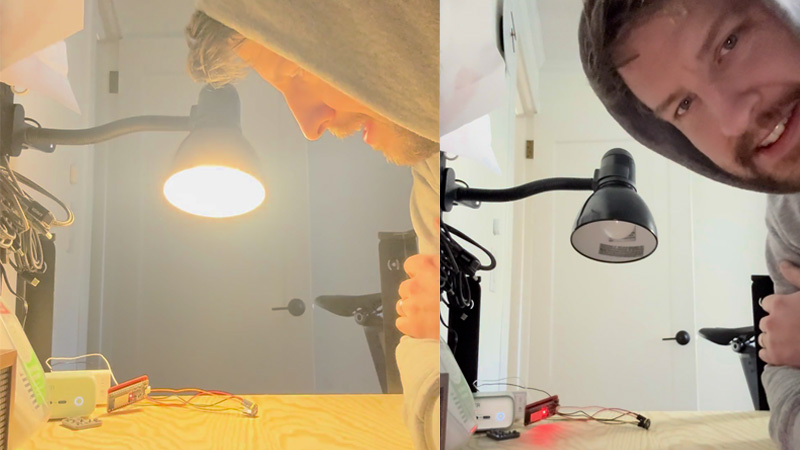
Some smart-home inventions arrive wearing a tuxedo: sleek packaging, polished app onboarding, a tasteful promise that your house will finally behave like a helpful butler. Then there is The Screamer, a gloriously ridiculous idea that asks a simple question: what if, instead of clapping to turn on a lamp, you just yelled at it?
That is the joke, the charm, and the tiny domestic nightmare all rolled into one. The Screamer is best understood as a modern DIY riff on The Clapper, the famous sound activated switch that turned appliances on and off when someone clapped. The Clapper made home automation feel simple before “smart home automation” became a phrase that required Wi-Fi passwords, firmware updates, and at least one family member muttering, “Why won’t the app find the bulb?”
The Screamer takes that old idea and makes it louder, sillier, and somehow more emotionally honest. After all, plenty of people already yell at voice assistants when they fail to understand basic commands. The Screamer simply removes the pretense. No wake word. No polite “please turn off the living room lamp.” Just raw human frustration converted into a lighting event. It is home automation for anyone who has ever lost an argument with a smart speaker.
What Is The Screamer?
The Screamer is a DIY yell activated light concept inspired by the old sound-switch logic of The Clapper. Instead of detecting two or three sharp claps, it responds to a loud vocal sound. In plain English: shout, and the light changes state. It is not trying to be subtle. It is not trying to pass a spa-day vibe check. It exists in the wonderful tradition of “useless projects” that are funny because they technically work.
At its core, The Screamer belongs to the same family as sound activated switches, smart plugs, voice controlled lights, and maker projects that ask, “Can we?” before asking, “Should the neighbors be warned?” The answer to the first question is yes. The answer to the second question is also yes, preferably with snacks as a peace offering.
The Clapper: The Original Clap-Powered Legend
To understand why The Screamer is funny, you have to understand The Clapper. Sold for decades as a sound activated on/off switch, The Clapper let users control plugged-in lamps and appliances by clapping. Two claps could control one outlet, while three claps could control another. It was simple, memorable, and powered by one of the stickiest advertising slogans in American gadget history: “Clap on! Clap off!”
The Clapper mattered because it made home automation feel human. You did not need a hub, a cloud account, or a 90-minute tutorial narrated by a man named Chad. You plugged in the device, plugged a lamp into it, clapped, and watched the room obey. For people with mobility limitations, dark rooms, or a love of theatrical entrances, that simplicity had real appeal.
Of course, The Clapper also had a famous flaw: it listened for sound patterns, not intent. A dog barking, a loud TV scene, applause from a sitcom, or someone dropping a pan could occasionally confuse the system. That is both the beauty and the comedy of early smart home technology. It was convenient until your living room lamp developed stage fright.
Why The Screamer Feels Like The Clapper’s Chaotic Cousin
The Screamer is basically The Clapper after three energy drinks and a bad customer service call. Both devices use sound as the trigger. Both replace physical switches with a body-powered command. Both are funny because they turn a normal household action into a performance.
The key difference is social acceptability. Clapping in a room is odd but survivable. Screaming at a lamp feels like the beginning of a neighborhood meeting. The Clapper says, “I enjoy convenience.” The Screamer says, “This lamp and I have unresolved history.”
Clapping vs. Screaming
Clapping is percussive, short, and relatively easy for a circuit or microphone-based system to recognize. Screaming is messier. It varies by pitch, duration, volume, room acoustics, and how personally betrayed you feel by the overhead light. That makes The Screamer more entertaining but also more annoying in real life.
In a quiet house, a yell activated light might work with hilarious consistency. In an apartment, dorm room, or shared home, it could become the fastest way to convert friends into former friends. Sound activated technology always has one problem: everyone nearby gets to participate, even if they did not consent to joining your lighting ritual.
Modern Smart Home Automation Has Come a Long Way
Today, smart home automation is much more advanced than the original clap activated switch. Smart plugs can connect through Wi-Fi, work with Alexa or Google Home, follow schedules, monitor energy use, and integrate with broader platforms. Some systems use local control, while others rely on cloud services. Newer standards such as Matter aim to improve compatibility between smart home devices so consumers are not trapped in a jungle of apps, bridges, and confusing logos.
That progress makes The Screamer even funnier. We now have the technology to build calm, secure, interoperable homes. We can schedule lights, automate fans, monitor power, and build elegant routines. And yet, one of the most emotionally satisfying interfaces is still yelling into the void and seeing a lamp blink. Progress is a winding road, and sometimes that road screams.
The Real Appeal: Bad Interface, Great Joke
The Screamer is not appealing because it is practical. It is appealing because it exposes the absurdity of the smart home. Many connected devices promise simplicity, but anyone who has ever reset a smart bulb knows that “simple” can involve holding a switch for exactly five seconds, blinking twice, opening an app, closing the app, questioning reality, and trying again.
By comparison, The Screamer is beautifully honest. It says: “You are already annoyed. Let’s use that.” That is why the project resonates. It turns user frustration into user input. The louder your disappointment, the more committed the interface becomes.
A Comedy Device With a Serious Point
Behind the joke is a real design lesson: input methods shape behavior. A button encourages a tap. A voice assistant encourages speech. A clap switch encourages dramatic hand gestures. A scream switch encourages everyone in the house to ask whether you are okay. Good technology should reduce friction without creating new social problems. The Screamer deliberately creates social problems, which is why it belongs in the comedy wing of smart home history.
Where The Screamer Fits in DIY Electronics Culture
DIY electronics culture loves projects that are equal parts clever and unnecessary. A yell activated light is a perfect example. It combines a recognizable problem, a simple joke, and enough technical creativity to make builders nod appreciatively. It is not just a gag; it is a working commentary on how we control machines.
Projects like this often use familiar building blocks: a sensor or microphone, a microcontroller or smart plug, and software logic that decides when a sound should trigger an action. The important safety note is that household electricity is not a playground. Anyone experimenting with smart plugs or mains-powered devices should avoid unsafe modifications and stick to certified hardware unless they truly know what they are doing. A funny lamp is not worth turning your desk into a tiny thunderstorm.
Is The Screamer Actually Useful?
In most homes, probably not. That is part of the fun. The Screamer is useful in the same way a toaster with Bluetooth is useful: technically possible, occasionally convenient, and mostly a conversation starter that makes guests blink twice.
Still, there are a few situations where the idea becomes interesting. A loud sound trigger could be used for accessibility experiments, emergency signaling, workshop controls, or theatrical effects. Haunted houses, comedy videos, maker fairs, and tech demos could all benefit from a yell activated switch. The key is context. In a workshop demo, The Screamer is hilarious. In a baby’s nursery, it is a war crime against nap time.
Why It Is More Annoying Than The Clapper
The Clapper was annoying because it could misfire. The Screamer is annoying because it asks the user to become the misfire. Instead of accidental applause confusing a lamp, the entire control method is loud enough to make the dog leave the room and reconsider its loyalty.
Noise matters. Health experts commonly warn that long or repeated exposure to loud sounds can damage hearing, especially at higher decibel levels. A single silly shout for a demo is one thing. Turning every light switch into a vocal endurance test is another. If your smart home routine requires throat tea afterward, the interface may need a redesign.
The Social Cost of Loud Automation
Smart home technology does not live in a vacuum. It lives with roommates, pets, sleeping children, remote workers, and neighbors with opinions. A system that works technically can still fail socially. That is why the most successful home automation tools usually disappear into daily life. They make the home easier without making the humans more irritating.
The Screamer does the opposite on purpose. It is not frictionless. It is friction with a megaphone. That is why it is memorable.
The Best Alternatives to Screaming at Your Lamp
If you like the concept but not the public performance, there are better options. A modern smart plug can turn a basic lamp into an app-controlled device. Motion sensors can switch lights on when someone enters a room. Smart buttons can trigger routines without making a sound. Voice assistants can control lights with normal speech, assuming they are having one of their cooperative days.
For people who want local control, platforms such as Home Assistant and ESPHome support flexible automation setups, including voice-related features and wake word detection in certain configurations. For people who want mainstream simplicity, Matter-compatible devices may reduce ecosystem headaches over time. None of these options are as funny as The Screamer, but they are less likely to make your neighbor text, “Everything okay over there?”
Privacy and Security Still Matter
Any connected smart home device deserves basic security attention. Keep firmware updated, use strong passwords, enable available security settings, and avoid leaving old devices connected when they are no longer needed. A lamp should not become the weakest link in your home network. That sentence sounds ridiculous until you remember that we now live in a world where refrigerators can need software updates.
The Screamer itself is more of a DIY joke than a polished consumer product, but the broader category of smart plugs and connected switches should be treated seriously. Convenience is great. Convenience with sloppy security is just a tiny doorbell for problems.
What The Screamer Teaches Us About Smart Homes
The Screamer works as humor because it exaggerates a truth: smart homes are supposed to make life easier, but they often make us perform for our devices. We talk to speakers, wave at sensors, tap apps, scan QR codes, reset hubs, and occasionally negotiate with a light bulb like it is a moody raccoon.
The Clapper succeeded because it was understandable. Clap, and something happens. The Screamer succeeds as a joke because it is even more understandable. Scream, and something happens. There is no mystery. No menu. No account recovery email. Just cause, effect, and mild embarrassment.
Experiences: Living With a Screamer-Like Smart Home Idea
Imagine bringing The Screamer into a normal home for a weekend. At first, everyone loves it. The first demonstration is a triumph. Someone stands in the living room, takes a heroic breath, yells at the lamp, and the light obediently clicks on. The room erupts in laughter. Someone says, “That is stupid.” Someone else says, “Do it again.” The lamp becomes the star of the evening, which is impressive because lamps are usually not known for stage presence.
By the second hour, the novelty has evolved into competition. People test different commands. A dramatic movie-style yell. A tiny frustrated squeak. A fake opera note. The lamp responds sometimes, ignores everyone at other times, and develops the personality of a stubborn vending machine. This is when the house divides into two groups: those who think The Screamer is the funniest thing ever built, and those who have begun quietly researching noise ordinances.
By the next morning, reality arrives wearing slippers. Someone wants coffee. Someone else is asleep. The lamp is off. The question becomes: is anyone willing to scream before breakfast? Suddenly, the old wall switch looks elegant. The boring switch, previously ignored for decades, now seems like a masterpiece of human-centered design. It does not require an app, a clap, a shout, or an apology. You touch it. It works. Civilization continues.
That experience is the real lesson. Novel interfaces are fun when they create delight, but they become annoying when they demand performance. The Clapper walked that line well because clapping was quick. The Screamer leaps over the line, knocks over a chair, and announces itself to the entire block. It is brilliant as a demo and questionable as a lifestyle.
Still, there is something oddly satisfying about it. Many smart devices ask us to be calm and precise even when they are being difficult. The Screamer validates the emotional truth of modern technology: sometimes you do not want to troubleshoot; you want to yell. A yell activated light turns that feeling into a feature. It is not the future of home automation, but it is a very funny postcard from one possible future where every device knows exactly how annoyed you are.
In the end, The Screamer is best enjoyed as a conversation piece, a maker project, and a reminder that not every invention needs to be useful to be valuable. Some inventions exist to make us laugh, rethink familiar technology, and appreciate the humble light switch. If The Clapper was the friendly grandparent of sound activated switches, The Screamer is the chaotic cousin who shows up late, makes the party louder, and somehow becomes the story everyone remembers.
Conclusion
The Screamer Is Just Like The Clapper But Even More Annoying because it takes the simple genius of sound activated control and turns the volume knob to “please stop.” It is funny, impractical, memorable, and surprisingly useful as a lens for understanding smart home design. The Clapper made automation approachable with a clap. The Screamer makes automation ridiculous with a yell.
That ridiculousness is exactly the point. Great gadgets solve problems. Great jokes reveal them. The Screamer reveals that the modern smart home is still wrestling with the same old challenge: how do humans tell machines what to do without making daily life more complicated? Sometimes the answer is a button. Sometimes it is a schedule. Sometimes it is a clap. And sometimes, for comedy purposes only, it is yelling at a lamp like it owes you money.