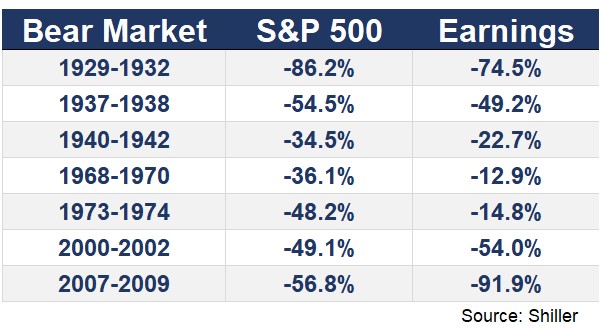
Bear markets have a flair for drama. One day investors are debating whether a stock is “reasonably valued,” and the next day everyone is suddenly an expert in defensive sectors, cash flow, and the emotional benefits of herbal tea. But beneath the headlines, red charts, and nervous TV panels, bear markets usually revolve around one deceptively simple question: what will companies earn?
The relationship between earnings and bear markets is one of the most important connections in investing. Stock prices are not just random numbers floating around like balloons at a parade. Over time, they reflect expectations for corporate earnings, profit margins, interest rates, economic growth, and investor confidence. When earnings look strong, investors are usually willing to pay more for stocks. When earnings weaken or become uncertain, the market can become about as cheerful as a dentist waiting room.
Understanding how earnings interact with bear markets helps investors separate temporary panic from deeper financial trouble. It also explains why some bear markets are short and sharp, while others drag on like a season finale that refuses to end.
What Is a Bear Market?
A bear market is commonly defined as a decline of 20% or more from a recent market high. The phrase usually refers to major indexes such as the S&P 500, the Dow Jones Industrial Average, or the Nasdaq Composite. A correction, by comparison, is typically a decline of 10% or more. A bear market is not just a bad day, a bad week, or your portfolio throwing a small tantrum. It is a significant, sustained drop in investor confidence.
Bear markets can happen for many reasons. Recessions, rising interest rates, inflation shocks, credit stress, asset bubbles, geopolitical events, and financial crises can all contribute. But even when the trigger looks different, the market eventually asks the same earnings-related questions: Are companies still growing profits? Are margins shrinking? Are analysts cutting forecasts? Are consumers and businesses spending less? Are investors paying too much for future earnings?
That is where earnings enter the story. A bear market is rarely just about what companies earned last quarter. It is more often about what investors fear companies will earn next quarter, next year, and beyond.
Why Earnings Matter So Much to Stock Prices
At its core, a stock represents ownership in a business. That business has revenue, costs, assets, debt, employees, customers, and hopefully profits. Earnings are the portion of a company’s results that show how much profit remains after expenses. For public companies, investors often focus on earnings per share, or EPS, because it shows how much profit is attributable to each share of stock.
Investors use earnings to estimate what a business is worth. One of the most common valuation tools is the price-to-earnings ratio, or P/E ratio. The formula is simple:
P/E Ratio = Stock Price ÷ Earnings Per Share
If a company earns $5 per share and its stock trades at $100, the P/E ratio is 20. Investors are paying $20 for every $1 of annual earnings. That may be reasonable for a fast-growing company, expensive for a slow-growing company, or wildly optimistic for a business whose profits are about to fall off a cliff wearing tap shoes.
For the overall market, the same logic applies. The S&P 500’s value depends heavily on the earnings of its member companies and the multiple investors are willing to pay for those earnings. During bull markets, earnings expectations often rise, and investors may also pay higher multiples. During bear markets, both forces can reverse: earnings estimates fall, and investors become less willing to pay premium prices.
The Two Main Ways Earnings Drive Bear Markets
Earnings influence bear markets in two major ways: through actual profit declines and through changes in expectations. These two forces often work together, but they are not identical.
1. Actual Earnings Declines
Actual earnings decline when companies make less money. This can happen when sales slow, costs rise, margins shrink, debt becomes more expensive, or demand weakens. In a recession, consumers may cut spending, businesses may delay investment, and companies may struggle to pass higher costs to customers. That combination can squeeze earnings quickly.
When profits fall across many sectors, investors begin to question whether stock prices are too high. If earnings are dropping and prices do not adjust, valuations become stretched. Eventually, prices often fall to reflect the weaker profit environment.
2. Earnings Expectations Collapse
Sometimes the market falls before earnings actually decline. This is because stock prices are forward-looking. Investors do not wait patiently for the official earnings report to arrive wearing a little bow tie. They react to hints: weaker guidance, lower sales trends, rising inventories, slowing job growth, tighter credit, cautious management commentary, or analyst estimate cuts.
This is why a market can enter a bear phase even while current earnings still look decent. Investors may believe those earnings are near a peak. The market often punishes what it thinks is coming, not just what has already happened.
What Is an Earnings Recession?
An earnings recession occurs when corporate profits decline for two or more consecutive quarters, usually on a year-over-year basis. It is not the same as an economic recession, though the two often overlap. The economy can keep growing modestly while corporate earnings contract. Likewise, earnings can recover before the broader economy looks healthy.
This distinction is important. Investors sometimes assume that every bear market requires a recession. History says otherwise. Some bear markets happen without a formal economic recession, often because valuations were too high, interest rates rose sharply, or a major sector experienced a profit reset.
For example, the 2022 bear market was heavily shaped by inflation, aggressive Federal Reserve rate hikes, and valuation compression. Earnings did not collapse in the same way they did during the 2008 financial crisis, but the market still fell sharply because investors were no longer willing to pay high multiples for future profits when interest rates were rising.
Bear Markets Are Not Always Earnings Disasters
Here is where the relationship gets interesting: not all bear markets are caused by collapsing earnings. Some are driven mainly by valuation compression. Others are caused by financial stress, policy shocks, or sudden changes in investor psychology.
Imagine a company earns $10 per share and trades at a P/E ratio of 25. Its stock price would be $250. If investors decide the company deserves only a P/E ratio of 18 because interest rates have risen or growth looks less exciting, the stock could fall to $180 even if earnings remain unchanged. That is a 28% decline without any drop in profits. Congratulations, you have met the bear market’s sneaky cousin: multiple compression.
This is especially important for broad market indexes. When the market begins from high valuations, it does not always need a severe earnings downturn to fall 20%. A lower multiple can do plenty of damage by itself. That is why analysts watch both earnings forecasts and valuation levels. Earnings tell us about corporate health. Valuations tell us how much optimism investors have already priced in.
The Role of Profit Margins
Revenue growth gets a lot of attention, but profit margins often decide whether earnings can hold up during rough markets. Profit margin measures how much profit a company keeps from each dollar of sales. A company with rising sales can still suffer falling earnings if costs rise faster than revenue.
During inflationary periods, companies may face higher wages, raw material costs, transportation expenses, and interest payments. If they can raise prices without losing customers, margins may survive. If customers resist price increases, margins shrink. Investors tend to react quickly when margins appear vulnerable because margin pressure can turn solid revenue growth into disappointing earnings.
This matters at the index level too. If many S&P 500 companies enjoy unusually high margins, investors may wonder whether those margins are sustainable. If margins normalize lower, earnings may weaken even without a dramatic decline in sales. In other words, sales can keep walking forward while earnings quietly trip over a cost increase.
Interest Rates: The Earnings Multiplier’s Bossy Manager
Interest rates affect bear markets in two ways. First, higher rates increase borrowing costs for companies and consumers. That can reduce spending, investment, and profit growth. Second, higher rates affect valuation multiples. When Treasury yields rise, investors have more attractive alternatives to stocks. Future earnings are also discounted at a higher rate, which can lower the present value investors assign to equities.
This is why growth stocks can be hit especially hard when rates rise. Many growth companies are valued based on profits expected far in the future. When discount rates rise, those future earnings become less valuable today. It is not that investors suddenly hate innovation. It is that math walked into the room and started rearranging the furniture.
Rate-driven bear markets can therefore occur even before earnings fall. Investors may lower the multiple they are willing to pay for each dollar of earnings. If earnings later decline too, the market faces a double hit: lower profits and lower valuations.
Recessions, Earnings, and Bear Markets
Recessions are often associated with bear markets because they pressure corporate profits. During recessions, unemployment may rise, consumer demand weakens, credit tightens, and business confidence declines. Companies may cut forecasts, reduce hiring, delay expansion, and protect cash.
However, markets frequently move before the economic data confirms the recession. Stocks often decline in anticipation of weaker earnings and then begin recovering before the economy fully improves. This forward-looking behavior can confuse investors. The news may still sound terrible when the market starts climbing again. That does not mean the market has lost its mind. It means investors are looking ahead to the next earnings cycle.
In severe recessions, earnings can fall dramatically. The 2008 financial crisis is a classic example. Banks, housing-related companies, consumer businesses, and industrial firms faced intense pressure. The market decline reflected not only falling profits but also fears about the financial system itself. In that kind of environment, earnings visibility becomes very low, and investors demand much cheaper prices before taking risk.
Sector Earnings: Not All Companies Suffer Equally
Bear markets do not hit every sector in the same way. Some sectors are highly cyclical, meaning their earnings rise and fall with the economy. Industrials, materials, energy, consumer discretionary, and financials often respond strongly to economic cycles. When growth slows, these sectors may experience significant earnings pressure.
Other sectors are more defensive. Health care, utilities, consumer staples, and certain communication services businesses may hold up better because demand for their products is less sensitive to the economy. People still buy medicine, toothpaste, electricity, and basic food when markets are grumpy. They may delay buying a new car, a luxury vacation, or a giant television that requires its own ZIP code.
Technology is more complicated. Some tech companies have recurring revenue, strong balance sheets, and high margins. Others depend on speculative growth, advertising cycles, or expensive capital spending. During a bear market, investors often separate durable earnings from hopeful storytelling. Companies with real cash flow usually receive more patience than companies powered mainly by vibes and conference-stage lighting.
How Analyst Revisions Can Accelerate a Bear Market
Analyst earnings estimates play a major role in market psychology. If analysts expect S&P 500 earnings to grow 12% next year, investors may accept higher valuations. But if estimates are cut to 4%, the market may reprice quickly. The danger is not only that earnings fall; it is that investors realize expectations were too optimistic.
Bear markets often include a painful “reset” phase. Companies lower guidance, analysts cut estimates, and investors adjust valuations. This process can feel slow because earnings reports arrive quarterly, while stock prices update every second. The market may seem impatient, but it is really trying to price a moving target.
One warning sign is when stock prices fall even after companies report decent earnings. That can happen when investors focus on weaker guidance, slowing bookings, rising costs, or cautious commentary. Another warning sign is when companies beat lowered estimates but stocks still decline. In that case, investors may believe the next round of estimates still needs to come down.
Valuation Compression vs. Earnings Compression
To understand bear markets, it helps to separate two forms of compression:
Valuation Compression
This happens when investors pay a lower multiple for the same earnings. It is common when interest rates rise, growth expectations fade, or market optimism becomes excessive.
Earnings Compression
This happens when actual profits decline. It is common during recessions, margin squeezes, demand slowdowns, or credit shocks.
The worst bear markets often combine both. Earnings fall, and investors also pay lower multiples for those reduced earnings. That is like ordering a bad sandwich and discovering it also comes with a parking ticket.
For example, if market earnings are $250 per share and investors pay 20 times earnings, the index value implied by that multiple is 5,000. If earnings fall to $220 and the multiple drops to 16, the implied value falls to 3,520. That is a decline of nearly 30%. This simple math explains why bear markets can move so quickly when earnings expectations and valuations both deteriorate.
Why Markets Sometimes Bottom Before Earnings Do
One of the most confusing features of bear markets is that stocks often bottom before earnings recover. Investors new to market cycles may wonder: “How can stocks rise when earnings are still falling?” The answer is that markets discount the future.
If investors believe earnings will be terrible for two quarters but improve after that, stocks may start recovering while current reports still look ugly. The market is not celebrating bad earnings. It is reacting to the possibility that the worst revisions are over.
This is why waiting for perfect earnings data can be risky. By the time every report looks clean, the market may already have rebounded. Bear market bottoms are usually uncomfortable. They often occur when the news is still negative, sentiment is weak, and investors are tired of hearing the phrase “uncertain outlook.”
What Investors Should Watch During a Bear Market
Investors who want to understand the relationship between earnings and bear markets should monitor several practical indicators.
Forward Earnings Estimates
Forward earnings estimates show what analysts expect companies to earn over the next 12 months. Falling estimates can signal that profit expectations are being reset.
Profit Margins
Margins reveal whether companies can protect profitability. Shrinking margins may indicate cost pressure or weakening pricing power.
Revenue Growth
Revenue trends show whether demand is holding up. Earnings supported only by cost-cutting may be less durable than earnings supported by healthy sales growth.
Corporate Guidance
Management commentary often matters more than the reported numbers. Investors listen closely for comments about demand, pricing, inventory, labor costs, and capital spending.
Credit Conditions
Credit stress can pressure earnings by increasing borrowing costs and reducing access to capital. Tight credit can turn a normal slowdown into something more serious.
Valuation Multiples
Even strong earnings may not prevent losses if valuations begin at extreme levels. A great company can still be a poor investment if the starting price assumes perfection.
Specific Examples of Earnings and Bear Markets
The Dot-Com Bear Market
The early 2000s bear market was heavily driven by valuation excess, especially in technology. Many internet companies had little or no earnings, yet traded at enormous valuations. When expectations collapsed, stocks fell sharply. In this case, the problem was not only falling earnings; it was that many companies never had sustainable profits in the first place.
The 2008 Financial Crisis
The 2008 bear market was deeply tied to collapsing earnings, credit stress, and systemic financial risk. Banks and financial firms faced severe losses, while the recession hurt corporate profits across many sectors. Investors demanded much lower valuations because earnings visibility became extremely poor.
The 2020 Pandemic Bear Market
The pandemic bear market was historically fast. Earnings expectations plunged as businesses shut down and consumers stayed home. Yet the market recovered quickly because investors anticipated massive policy support, reopening, and future earnings recovery. This episode showed how markets can move ahead of earnings when investors believe the shock is temporary.
The 2022 Inflation and Rate-Hike Bear Market
The 2022 bear market was shaped by high inflation and aggressive interest rate increases. Earnings held up better than in a classic recession, but valuation multiples compressed significantly. Growth stocks were hit especially hard because higher rates reduced the present value of future earnings.
Experience-Based Lessons: What Bear Markets Teach Investors About Earnings
Anyone who has followed markets through more than one downturn eventually learns that earnings headlines can be both useful and misleading. The number itself matters, but the market reaction often depends on expectations. A company can report record profits and still fall if investors expected even more. Another company can report a decline in earnings and rally if the decline was less awful than feared. Wall Street grades on a curve, and sometimes that curve has the personality of a strict substitute teacher.
One practical experience many investors share is discovering that “cheap” stocks can become cheaper when earnings fall. A stock trading at 12 times earnings may appear inexpensive. But if earnings drop by 30%, the real valuation may not be as attractive as it first looked. This is why experienced investors look beyond the current P/E ratio and ask whether the “E” in the ratio is stable. During bear markets, the denominator can move just as dramatically as the price.
Another common lesson is that companies with strong balance sheets often sleep better at night. Businesses with low debt, reliable cash flow, and durable demand usually have more flexibility when profits weaken. They can keep investing, maintain dividends, buy back shares opportunistically, or simply survive without begging the bond market for mercy. Highly leveraged companies may be fine during easy-money periods, but rising rates and falling earnings can turn debt into a very loud problem.
Investors also learn to respect management guidance. During calm markets, guidance may sound like corporate theater: carefully polished language, cautious optimism, and enough buzzwords to power a small office building. During bear markets, however, guidance becomes a flashlight. Comments about order trends, cancellations, input costs, inventory, pricing power, and customer behavior can reveal whether earnings estimates are realistic or still too high.
Another experience-based insight is that bear markets often create emotional pressure to focus only on losses. But earnings quality matters more than the daily price move. A stock that falls because its multiple was too high may still be a strong long-term business. A stock that falls because its earnings power is permanently impaired is a different situation. The first may be a valuation reset. The second may be a business problem wearing a market-cycle costume.
Long-term investors often find that the best opportunities appear when the market has already priced in a gloomy earnings outlook. This does not mean buying blindly every time stocks fall. It means studying whether the market is overestimating the damage. If a company’s earnings decline is temporary and its competitive position remains strong, a bear market can offer attractive entry points. But if earnings were inflated by a one-time boom, excessive leverage, or unsustainable margins, the decline may be a warning rather than a bargain.
The biggest experience-based lesson is humility. Earnings forecasts are estimates, not prophecies carved into marble. Analysts revise them. Companies miss them. Economies surprise them. Bear markets remind investors that certainty is expensive and usually unavailable. A thoughtful investor does not need to predict every earnings turn perfectly. Instead, the goal is to understand the range of outcomes, avoid overpaying for fragile profits, and keep enough discipline to act when panic creates opportunity.
Conclusion: Earnings Are the Bear Market’s Main Character
The relationship between earnings and bear markets is central to understanding how stock prices move. Bear markets can begin because earnings are falling, because investors expect earnings to fall, or because valuations become too high relative to future profits. Sometimes all three happen together, creating the kind of market environment that makes even seasoned investors check their accounts with one eye closed.
Earnings matter because they represent the financial engine behind stock prices. But investors must look beyond current profits. Forward estimates, margins, interest rates, valuations, sector trends, and management guidance all influence how the market prices earnings risk. A bear market is not just a decline in stock prices; it is often a broad reassessment of future corporate profitability.
For investors, the lesson is not to fear every downturn or worship every earnings beat. The better approach is to ask sharper questions. Are earnings temporarily pressured or permanently impaired? Are margins sustainable? Are analysts still too optimistic? Has the valuation already adjusted? Are strong companies being sold along with weak ones?
Bear markets are uncomfortable, but they are also clarifying. They reveal which earnings were durable, which valuations were fantasy, and which investors had a plan beyond “hope and snacks.” In the long run, stock prices follow earnings power. In the short run, they follow expectations, emotions, rates, and sometimes a herd of investors sprinting toward the same exit. Understanding that relationship can help investors stay calmer, think more clearly, and make better decisions when the bears arrive.
Note: This article is for educational and informational purposes only. It is not financial advice, investment advice, or a recommendation to buy or sell any security.