Editor’s note: The locations below are real places with documented histories of abandonment, restoration, rewilding, or controlled tourism. Some are protected, restricted, unstable, radioactive, privately owned, or unsafe. In other words: admire the moss, respect the rules, and do not make “but ChatGPT said it was cool” your legal defense.
When Humans Leave, the Green Team Moves In
There is something oddly comforting about abandoned places reclaimed by nature. A factory closes, a village empties, a railroad rusts, and for a while everything looks like a sad gray postcard. Then the plants arrive. First come the weeds, the tiny botanical interns of the apocalypse. Then vines, mosses, shrubs, trees, roots, fungi, birds, insects, and the whole unpaid renovation crew of the natural world.
“10 places that plants took back” is not just a list of spooky ruins with good photo angles. It is a reminder that nature is persistent, opportunistic, and frankly not impressed by our concrete. The places below include ghost villages, jungle temples, abandoned railways, former quarantine hospitals, industrial ruins, and disaster zones where greenery has done what greenery does best: find a crack and turn it into a front door.
These abandoned places reclaimed by nature are beautiful, yes, but they are also complicated. Some tell stories of climate, war, disease, economic collapse, colonial violence, urban renewal, or environmental disaster. The plants may soften the view, but they do not erase the history. They simply add another chapter, written in roots instead of ink.
10 Real Places Reclaimed by Plants
1. Houtouwan, China: The Fishing Village Wearing an Ivy Sweater
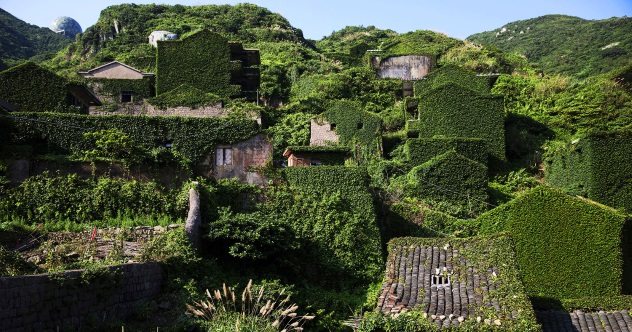
Houtouwan, on Shengshan Island off China’s eastern coast, may be the poster child for places where plants took back the lease. Once a busy fishing village, it began emptying in the 1990s as residents moved toward better education, transportation, and job opportunities on the mainland. The houses stayed. The people mostly left. The vines looked around and said, “Finally, open floor plan.”
Today, many of Houtouwan’s abandoned homes are covered in lush climbing plants. Rooflines disappear into green blankets, windows become leaf-framed portals, and narrow lanes seem to belong more to ivy than to anyone with a mailing address. The village became famous online because it looks like a fairytale after the fairies unionized and took over property management.
What makes Houtouwan special is the speed of its transformation. It did not take centuries for the village to become visually absorbed by nature. Within a few decades, humidity, coastal weather, and fast-growing vegetation turned a human settlement into one of the world’s most photogenic examples of passive rewilding.
2. Ta Prohm, Cambodia: The Temple Where Roots Became Architecture
Ta Prohm, part of Cambodia’s Angkor Archaeological Park, is one of the most famous examples of nature and architecture locked in a dramatic embrace. Built in the late 12th and early 13th centuries under King Jayavarman VII, the temple was once a major Buddhist monastery and center of learning. After Angkor’s decline, the forest gradually returned, and trees found opportunity in the loosened stone.
The result is unforgettable: giant roots spill over walls, wrap around doorways, and plunge between blocks like ancient cables. At Ta Prohm, trees do not merely grow beside history; they appear to hold it, squeeze it, and decorate it with botanical confidence. The site is carefully managed because the same roots that make it iconic can also stress the stone structures. Nature, as always, has no concept of a preservation budget.
Ta Prohm is not simply “abandoned ruins with trees.” It is a living conservation puzzle. Remove too much vegetation and the temple loses part of its identity. Leave everything alone and the roots may damage the monument beyond repair. That delicate balance is what makes it one of the most fascinating green ruins on Earth.
3. Pripyat and the Chernobyl Exclusion Zone, Ukraine: A City Forest After Catastrophe
Pripyat was built for workers at the Chernobyl Nuclear Power Plant and their families. After the reactor disaster on April 26, 1986, the city was evacuated. Apartment blocks, schools, sports halls, and amusement rides remained behind, but human maintenance stopped almost overnight. The plants did not wait for permission.
Street trees, ornamental shrubs, grasses, and pioneer species began moving into sidewalks, courtyards, rooftops, and cracks in asphalt. Over time, parts of Pripyat developed the feel of an urban forest. The larger Chernobyl Exclusion Zone also became a strange ecological case study: radiation caused severe damage, especially in heavily contaminated areas, yet the sharp reduction in human activity allowed forests and wildlife habitats to expand in many places.
This is not a simple “nature healed everything” story. Radiation risks remain serious, and scientists continue to study long-term effects on plants, animals, and ecosystems. Still, Pripyat shows how quickly a modern city can begin to blur at the edges when mowing, paving, pruning, and foot traffic stop. Give birch saplings a quiet boulevard, and they will happily redesign it.
4. The High Line, New York City: From Wild Railroad to Designed Urban Meadow
Before it became one of New York City’s most beloved parks, the High Line was an elevated freight rail line on Manhattan’s West Side. Train traffic declined, service ended in 1980, and the structure sat unused for years. During that time, grasses, wildflowers, and small trees seeded themselves along the rails, creating a spontaneous meadow above the streets.
That accidental landscape helped inspire the park’s eventual design. Instead of erasing the wildness completely, the transformation preserved the memory of plants reclaiming industrial infrastructure. Today’s High Line is not abandoned; it is carefully maintained. But its soul comes from the years when seeds rode in on wind, birds, and railway grit, then turned a derelict structure into a floating garden.
The High Line proves that nature reclaiming cities does not always end in ruin. Sometimes it becomes urban design. It also proves that New Yorkers will absolutely line up to admire grasses if the grasses are stylish enough and located above good coffee.
5. North Brother Island, New York City: A Quarantine Island Turned Bird Sanctuary
North Brother Island sits in New York City’s East River, but it feels mentally far from Manhattan’s noise. The island once housed Riverside Hospital, which treated contagious diseases, and it is closely associated with Mary Mallon, better known as Typhoid Mary. Later, it served other institutional purposes before being abandoned in the 1960s.
Since then, trees and vines have swallowed much of the island’s built environment. Ruined hospital buildings stand under dense vegetation. Poison ivy, invasive plants, native shrubs, and self-seeded trees have turned the old campus into a place where architecture seems to be losing a very slow wrestling match with ecology.
North Brother Island is now a protected bird habitat and generally off-limits to the public. That restriction matters. Part of why nature has reclaimed it so thoroughly is because people are not constantly trampling, clearing, tagging, filming dance videos, or trying to climb through broken windows for “content.” Sometimes the best way to let plants take back a place is to let the place be.
6. Ross Island, India: Colonial Ruins Wrapped in Ficus Roots
Ross Island, now officially Netaji Subhas Chandra Bose Island, lies near Port Blair in India’s Andaman Islands. During British rule, it became an administrative center connected to the penal settlement system of the Andamans. Grand buildings, churches, bungalows, and service structures once stood there as symbols of colonial authority.
After abandonment, the island’s tropical vegetation moved in with remarkable force. Ficus and banyan roots now wrap walls, crawl over old structures, and turn colonial ruins into haunting green sculptures. Doorways remain, but trees often seem to be the real gatekeepers. It is the kind of place where history whispers, and the roots answer in a much louder voice.
Ross Island is visually stunning, but its beauty sits on top of painful history. The greenery may create a dreamlike atmosphere, yet the site also speaks of imprisonment, empire, and forced labor. That tension is important. Plants can reclaim stone, but responsible visitors should not let picturesque ruins cover up what happened there.
7. Vallone dei Mulini, Italy: Ferns in the Valley of the Mills
In the heart of Sorrento, Italy, the Vallone dei Mulini, or Valley of the Mills, hides below street level like a secret garden that forgot to remain a secret. The valley was shaped by ancient geological forces, and mills were built there to use the constant water flow. Over time, industrial change and altered access contributed to the mills’ abandonment.
The valley’s special microclimate became perfect for greenery. High humidity, limited air circulation, shade, and tuff rock helped mosses, ferns, and other plants thrive on the abandoned stone structures. The ruins look less like buildings and more like a stage set for a drama titled “Ferns Win Again.”
Unlike many abandoned places reclaimed by nature, Vallone dei Mulini is not remote. It sits near busy modern life, which makes the contrast even stronger. Tourists can look down from above and see a damp green world tucked beneath the city, a reminder that wildness does not always need a distant jungle. Sometimes it just needs a ravine, moisture, and a few decades without housekeeping.
8. Tunnel of Love, Ukraine: A Railway Trimmed by Trees
Near Klevan, Ukraine, the Tunnel of Love is a leafy corridor formed around an industrial railway. It is not abandoned in the classic ghost-town sense, because trains have continued to use the line at least intermittently. But it belongs on this list because it shows a different version of plant takeover: not total conquest, but cooperation with machinery.
Trees and shrubs grew densely around the track. Passing trains naturally trimmed the vegetation into a long arched tunnel. The result is a green passage so romantic that it sounds fake, like something invented by a tourism board after three espressos and a group brainstorm. Yet the place is real, and its charm comes from the meeting of industry and growth.
The Tunnel of Love is a reminder that plants do not always erase human systems. Sometimes they shape themselves around them. The track still suggests movement and industry, while the arching leaves turn it into a living hallway. It is nature reclaiming a route, but with surprisingly good interior design.
9. Six Flags New Orleans, Louisiana: A Theme Park the Swamp Remembered
Six Flags New Orleans closed after Hurricane Katrina in 2005, when floodwaters damaged the park severely. For nearly two decades, the site became one of America’s most famous abandoned amusement parks. Roller coasters, signs, walkways, and themed buildings sat in the humid Louisiana climate while weeds, grasses, vines, and wetland vegetation pushed through the cracks.
There is something especially eerie about plants reclaiming a theme park. A hospital ruin already feels somber. An abandoned roller coaster covered in vines feels like childhood laughter got lost in the weeds and never found the exit. The contrast is powerful: bright entertainment architecture fading into rust, flood damage, and green overgrowth.
Redevelopment and demolition have changed the site, so it should be understood as a recent historical example rather than a permanent ruin. Still, for years, Six Flags New Orleans showed how quickly vegetation can soften and distort a place built for constant crowds. Without guests, lights, music, and maintenance crews, the park became a humid laboratory in post-disaster abandonment.
10. Bokor Hill Station, Cambodia: Fog, Lichen, and Colonial Echoes
Bokor Hill Station, in Cambodia’s Preah Monivong Bokor National Park, was developed in the French colonial era as a cool mountain retreat. Its history includes abandonment during periods of war and political upheaval, later redevelopment, and a strange mix of restored structures, ruins, and misty landscapes.
In its abandoned periods, Bokor’s climate helped nature reclaim parts of the built environment. Fog rolled through empty halls, lichen stained walls, grasses pushed into cracks, and vines found balconies and stonework. The mountaintop setting gives the place an atmosphere that feels less like a ruin and more like a building slowly being edited by weather.
Bokor is another reminder that abandoned places are rarely frozen in one perfect “ruin” state. They change. Some are restored, some are demolished, some become tourist attractions, and some are folded into new development. Plants may take a place back for a season or a century, but humans often return with scaffolding, permits, and ambitious plans. Nature is patient; developers have spreadsheets.
Why Plants Reclaim Abandoned Places So Quickly
Plants do not need an engraved invitation. They need light, moisture, seeds, and somewhere to grip. Abandoned buildings and cities provide all kinds of opportunities: cracked pavement, clogged gutters, broken windows, damp basements, roof dust, wall joints, rusted rail beds, and neglected courtyards. What humans see as decay, plants see as affordable housing.
The first wave is usually made up of tough pioneer species. These plants tolerate poor soil, heat, drought, pollution, or disturbance. Grasses and weeds break up surfaces. Mosses hold moisture. Shrubs create shade and trap organic matter. Trees arrive when birds, wind, or animals deliver seeds. Over time, leaf litter builds soil where soil was never supposed to be, and the whole process becomes easier for the next wave of life.
Climate matters too. Tropical and subtropical places like Ross Island, Houtouwan, and Ta Prohm can become green very quickly because warmth and humidity accelerate growth. Damp enclosed spaces like Vallone dei Mulini favor mosses and ferns. Temperate urban places like the High Line or Pripyat may take longer to look fully wild, but once maintenance stops, seedlings begin the slow job of lifting, splitting, shading, and softening hard surfaces.
What These Green Ruins Teach Us
Abandoned places reclaimed by nature are not just internet eye candy. They reveal how temporary human control can be. Roads, hospitals, parks, railways, temples, and villages all require maintenance. Without it, the living world begins to renegotiate the contract.
They also challenge the idea that “wild” and “human-made” are opposites. The High Line became a designed park because people recognized beauty in spontaneous vegetation. Ta Prohm is protected partly because its trees are inseparable from its identity. North Brother Island is valuable not only for its buildings, but for its habitat. These places show that nature can return through cracks in civilization, but how we respond matters.
Finally, green ruins teach humility. The plants are not angry. They are not dramatic villains. They are simply alive, doing what life does: growing, climbing, rooting, shading, decomposing, and beginning again. If that makes our concrete look a little less permanent, maybe that is a lesson worth learning.
Experience: What It Feels Like to Encounter Places Plants Took Back
Seeing a place reclaimed by plants is different from seeing an ordinary ruin. A ruin alone can feel like an ending. A ruin covered in living green feels like an argument between endings and beginnings. The broken wall says, “Something stopped here.” The vine replies, “Not exactly.”
The first experience is usually visual overload. Your brain tries to sort categories: house, tree, road, root, window, leaf. But in a reclaimed place, those categories tangle together. A window is also a trellis. A stairway is also a planter. A roof is also a meadow. The familiar becomes unfamiliar, which is why these places feel so cinematic. They look like the world after people, but also like the world before people, somehow at the same time.
Then comes the sound. In active cities, human noise dominates: engines, voices, doors, phones, music, construction. In plant-taken places, sound often belongs to wind, insects, birds, dripping water, leaves rubbing against walls, or your own footsteps. That quiet can feel peaceful, but it can also feel exposing. You become aware that you are the temporary visitor, not the main character. The plants have been there longer than your itinerary.
There is also a smell to these places. Damp stone, warm leaves, old wood, moss, soil, salt air, rust, and sometimes mildew create a scent that no candle company has successfully bottled, probably because “Abandoned Hospital Fern Mist” is a difficult sell. The smell reminds you that decay is physical. It is not just an aesthetic. Materials are breaking down, nutrients are cycling, and the place is being slowly converted into habitat.
For travelers, photographers, writers, and history lovers, the temptation is to romanticize everything. Green ruins are gorgeous. They are also fragile and sometimes dangerous. Floors collapse. Walls shed bricks. Wildlife nests in quiet corners. Toxic materials, radiation, unstable structures, legal restrictions, and conservation rules are real. The best experience comes from responsible distance: use legal viewing areas, local guides, official paths, and common sense. A beautiful ruin is not improved by your ankle meeting a rusty nail.
Emotionally, these places can be surprisingly hopeful. Not cheerful, exactly, but hopeful in a deep-time way. Plants taking back abandoned places do not mean human stories never mattered. They mean the story continues after us. A school can become a grove. A rail line can become a garden. A mill can become a fern-filled pocket of cool air. A village can turn green enough to make the internet collectively gasp.
That is the real experience behind “10 places that plants took back.” It is not only about decay, and it is not only about beauty. It is about perspective. We build as if our structures are final. Plants grow as if final is not a serious concept. They do not hurry. They do not announce a grand opening. They simply find the light, hold the water, widen the crack, and begin.
Conclusion
The most unforgettable places that plants took back are powerful because they combine beauty with evidence. Houtouwan shows how fast a village can turn green. Ta Prohm shows how roots can become part of cultural memory. Pripyat shows the complexity of rewilding after disaster. The High Line shows how spontaneous plant life can inspire urban renewal. North Brother Island, Ross Island, Vallone dei Mulini, the Tunnel of Love, Six Flags New Orleans, and Bokor Hill Station each add their own lesson: nature is not separate from our world. It is waiting at the edge of every wall.
These abandoned places reclaimed by nature are not just spooky travel curiosities. They are reminders that maintenance is temporary, growth is persistent, and the planet has a long memory. Humans may pour concrete, raise towers, build railways, and design amusement parks, but plants are patient negotiators. Give them time, moisture, and one tiny crack, and they will return with leaves, roots, and a surprisingly strong sense of interior decoration.