Note: This article is based on synthesized information from reputable U.S. science organizations, NASA resources, university research, and peer-reviewed planetary science findings.
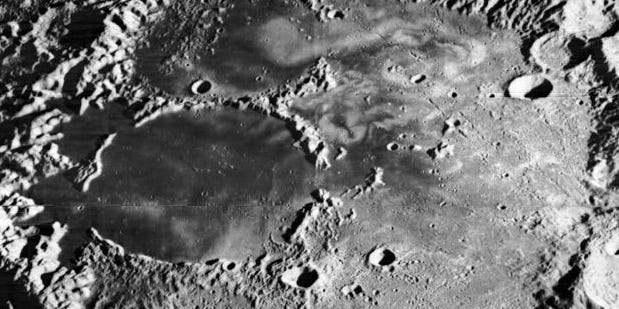
The Moon has never been short on drama. It controls tides, inspires poets, photobombs romantic movie scenes, and has convinced generations of humans to squint at the night sky while saying, “Wait, is that a face?” But one of its strangest features is not a crater, a mountain, or a footprint left by an astronaut. It is a set of pale, curling patterns known as lunar swirls, and the most famous of them, Reiner Gamma, looks like someone dragged a cosmic paintbrush across the lunar surface.
For decades, scientists have treated lunar swirls like one of the Moon’s best-kept secrets. These bright, looping markings do not behave like ordinary geological features. They are not raised ridges. They are not carved valleys. They do not match the neat circular scars left by impacts. Instead, they appear as ghostly, high-contrast streaks spread across the Moon’s dusty face. Now, after years of spacecraft observations, modeling, magnetic mapping, and a fair amount of scientific head-scratching, the Moon’s most mysterious feature finally has a compelling origin story.
The short version: lunar swirls appear to be connected to ancient magnetic fields, solar wind shielding, and possibly buried volcanic structures such as lava tubes or lava dikes. The long version is much more fun. It includes a Moon that once had a magnetic personality, underground volcanic plumbing, solar particles doing unwanted exfoliation, and a natural sunscreen effect that preserved parts of the lunar surface like pale brushstrokes on a gray canvas.
What Are Lunar Swirls?
Lunar swirls are bright, winding patterns found on the Moon’s surface. They are called “swirls” because that is exactly what they look like: elegant, twisting ribbons of lighter material surrounded by darker terrain. Reiner Gamma, located in Oceanus Procellarum on the Moon’s near side, is the celebrity of the group. It is large enough to be seen through many backyard telescopes, which makes it one of the rare space mysteries you can admire without needing a billion-dollar observatory or a badge that says “NASA.”
Unlike craters, lunar swirls do not have obvious depth. They are mainly differences in brightness, or albedo. In plain English, some areas reflect more sunlight than others. The bright areas look younger or less weathered, while the darker surrounding areas appear more mature, as if they have spent more time being roasted and roughed up by space.
That alone made scientists suspicious. On the Moon, exposed surface material slowly changes over time through a process called space weathering. Tiny meteorite impacts, solar radiation, and charged particles from the Sun gradually darken and redden lunar soil, known as regolith. So if one area remains brighter than its surroundings, something must be protecting it, refreshing it, moving it, or otherwise cheating the aging process. Basically, Reiner Gamma has been using SPF 10,000 while the rest of the Moon forgot its hat.
Why Reiner Gamma Became the Moon’s Poster Child for Mystery
Reiner Gamma is not just pretty. It is scientifically weird in several important ways. First, it is associated with one of the strongest localized magnetic anomalies on the Moon. Second, its bright and dark markings form detailed patterns that stretch across the surface without matching obvious topography. Third, it exists on a world that does not currently have a global magnetic field like Earth does.
Earth’s magnetic field acts like a protective bubble, helping deflect charged particles from the Sun. The Moon does not have that planet-scale shield today. Yet certain patches of lunar crust still contain leftover magnetism. These local magnetic regions are like small umbrellas in a solar windstorm. They are not strong enough to make the Moon a cozy place for humans, but they can affect how charged solar particles strike the lunar soil.
That connection between lunar swirls and magnetic anomalies became one of the biggest clues. Wherever scientists found swirls, magnetic oddities were nearby. The question was: did the magnetism create the swirls, did the swirls create the magnetism, or were both caused by something deeper and older?
The Solar Wind “Sunscreen” Theory
One of the leading explanations for lunar swirls is often described as the magnetic sunscreen theory. It is a wonderfully simple idea with complicated physics underneath. The Sun constantly releases a stream of charged particles called the solar wind. On an airless body like the Moon, those particles hit the surface directly and help change the chemistry and appearance of the regolith over time.
But where the Moon has local magnetic fields, some of those particles are deflected. The protected areas receive less solar wind bombardment, so they weather more slowly and remain brighter. Nearby unprotected regions continue to darken as usual. Over millions or billions of years, that difference can create the distinctive bright-and-dark swirl patterns visible today.
Think of it like a beach day. If two people sit in the Sun for hours, but one has an umbrella and the other does not, the results will differ. One person leaves with normal skin. The other leaves looking like a lobster who made poor decisions. On the Moon, the magnetic anomaly is the umbrella, the solar wind is the relentless sunshine, and the bright lunar swirl is the patch that avoided the worst of the space-weathering sunburn.
But Where Did the Magnetic Fields Come From?
The magnetic sunscreen theory explains why some lunar soil stayed bright, but it does not fully explain the deeper mystery: why are those magnetic fields there in the first place?
Modern research suggests that the answer may lie beneath the surface. Scientists studying the shape and magnetic structure of lunar swirls found that the magnetic sources likely had to be narrow, shallow, and strongly magnetized. That description matches possible underground volcanic features, especially lava tubes and lava dikes.
Lava tubes are tunnel-like structures formed when flowing lava cools on the outside while molten material continues moving inside. Lava dikes are vertical sheets of magma that push into cracks in the crust. Both are common features in volcanic environments, and the Moon had a much more volcanic past than its quiet gray face suggests today.
If ancient lunar lava cooled in the presence of a magnetic field, and if chemical reactions enhanced the magnetic minerals inside the rock, those buried structures could have become powerful natural magnets. Over time, they would create localized magnetic fields above them. Those fields would then help shield the surface from solar wind, preserving the pale patterns we now call lunar swirls.
The Moon Was Once More Active Than It Looks
Today the Moon looks calm, cold, and frankly a little dusty. But billions of years ago, it was a much more dynamic place. Its interior was hotter. Volcanic activity shaped huge basaltic plains called maria, including Oceanus Procellarum, where Reiner Gamma sits. The Moon also likely had an ancient magnetic field generated by internal processes, although scientists continue to study exactly how long it lasted and how strong it was.
This matters because rocks can record magnetic fields as they cool. On Earth, iron-bearing minerals in lava can align with the planet’s magnetic field and preserve a record of that direction. Something similar may have happened on the ancient Moon. If molten material in lava tubes or dikes cooled while the Moon still had a magnetic field, the rocks could have locked in that magnetism.
There is another twist. Under certain lunar conditions, heating and chemical reactions may have produced tiny grains of metallic iron, increasing the rock’s ability to hold magnetism. Because the Moon lacks Earth’s oxygen-rich environment, iron chemistry there can behave differently. In other words, lunar rocks had the chance to become strangely magnetic in ways that would be harder to reproduce on Earth. The Moon was not just a dead rock; it was a dramatic geological kitchen, and apparently the recipe included “add lava, reduce iron, magnetize generously.”
How Spacecraft Helped Solve the Puzzle
The origin story of lunar swirls did not come from one single “aha!” moment. It came from decades of observations and increasingly sophisticated models. NASA’s Lunar Reconnaissance Orbiter provided detailed images of Reiner Gamma and other swirls. Earlier missions, including Apollo-era measurements and later lunar orbiters, helped map magnetic anomalies. NASA’s ARTEMIS mission added information about how the solar wind interacts with the Moon’s local magnetic fields.
Computer simulations then allowed scientists to test whether magnetic fields could realistically deflect solar wind particles in patterns matching the observed swirls. Several studies found that the geometry of the magnetic field matters. Areas where solar wind particles are blocked or redirected may remain brighter, while nearby areas receiving concentrated particle bombardment may become darker. This helps explain why Reiner Gamma is not simply one bright blob, but a complex pattern with pale lobes and darker lanes.
The best scientific models do not just say, “Maybe magnets did it.” They attempt to reproduce the actual shape, scale, and brightness differences of the swirl. Reiner Gamma’s tadpole-like form, its bright lobes, and its darker streaks all provide clues. The closer a model comes to matching those details, the more persuasive it becomes.
Other Theories Have Entered the Chat
Science rarely moves in a straight line, and lunar swirls are no exception. Over the years, researchers have proposed several possible explanations. One idea suggested comet impacts could have scoured the surface and left behind bright material. Another proposed that electric fields might sort fine lunar dust, moving lighter particles into swirl-like patterns. Some models focused on how magnetic anomalies shield the surface, while others explored how the anomalies themselves formed.
These theories are not always mutually exclusive. The Moon is old, and old places collect complicated histories. A swirl may involve ancient magnetized rock, solar wind shielding, surface dust behavior, and long-term space weathering all working together. The newest origin story is not simply “lava tubes did everything.” Rather, it suggests that buried volcanic structures may explain the strong local magnetism, while solar wind interactions explain the visible bright-and-dark patterns on top.
That distinction is important. The hidden source creates the magnetic field. The magnetic field shapes how the surface ages. The surface aging creates the visual swirl. It is a three-act lunar mystery: underground magnet, solar wind drama, visible ghost painting.
Why Lunar Swirls Matter for Future Moon Missions
Lunar swirls are not just pretty decorations for astronomy calendars. They are natural laboratories for studying space weathering, plasma physics, magnetic shielding, and the history of the Moon’s interior. Understanding them can help scientists learn how airless worlds change over time. That matters not only for the Moon, but also for Mercury, asteroids, and other bodies exposed directly to space.
They may also matter for human exploration. The magnetic bubbles associated with swirls are not strong enough to protect astronauts the way Earth’s magnetosphere protects us. Nobody should pack a tent and say, “Relax, Reiner Gamma has us covered.” Still, studying these mini-magnetospheres can help researchers understand how magnetic fields interact with solar radiation on small scales. That knowledge could influence future ideas for radiation protection on the lunar surface.
NASA’s planned and proposed lunar missions have shown growing interest in Reiner Gamma and similar regions. A surface mission to a lunar swirl could directly measure magnetic fields, plasma behavior, soil properties, and radiation conditions. That would move the science from “very good orbital detective work” to “boots, wheels, and instruments on the mystery itself.”
What Makes This Origin Story So Satisfying?
The best scientific explanations are satisfying because they connect details that once seemed unrelated. Lunar swirls looked like optical oddities. Magnetic anomalies seemed like invisible leftovers from the Moon’s past. Solar wind weathering explained why lunar soil changes color. Ancient volcanism explained how hidden structures could exist under the surface. Put those pieces together, and Reiner Gamma becomes less like a random doodle and more like a fossilized interaction between the Moon’s interior and the space environment around it.
In that sense, lunar swirls are not merely surface markings. They are records. They tell us the Moon once had stronger internal activity. They show that local magnetism can shape the visible aging of an airless world. They remind us that even a place humans have photographed, orbited, landed on, and turned into countless desktop wallpapers can still keep secrets.
And yes, the Moon absolutely chose an aesthetic way to preserve those secrets. Some planets give us storms. Some give us rings. The Moon gave us elegant magnetic calligraphy.
Common Questions About Lunar Swirls
Are lunar swirls made of different material?
Not necessarily. In many cases, the brightness differences seem to come from how mature or weathered the soil is, rather than from completely different materials. Bright swirl areas may have been shielded from solar wind weathering, allowing them to remain fresher-looking than nearby darker regions.
Can you see Reiner Gamma from Earth?
Yes, under good viewing conditions, Reiner Gamma can be observed through many telescopes. It appears as a bright marking in Oceanus Procellarum. It is not as obvious as a major crater, but for patient Moon-watchers, it is a rewarding target.
Does the Moon have a magnetic field today?
The Moon does not have a global magnetic field like Earth. However, it has localized crustal magnetic anomalies. These are patches where ancient rocks still hold remnant magnetism, likely from processes that occurred billions of years ago.
Are lunar swirls dangerous?
Lunar swirls are not dangerous features by themselves. They are surface brightness patterns linked to magnetic anomalies. For future missions, their scientific value is the main attraction, although understanding local radiation and plasma conditions will be important for exploration planning.
Experiences and Reflections: Seeing the Moon’s Mystery With New Eyes
There is something oddly personal about learning the origin story of lunar swirls. Most of us first meet the Moon as a simple object: a glowing disk outside the window, a shape in a children’s book, or the thing adults point at when they want kids to stop staring at screens for three heroic seconds. It feels familiar. It feels close. It feels like the one cosmic neighbor we already understand. Then a feature like Reiner Gamma comes along and politely ruins that confidence.
Looking at Reiner Gamma through a telescope, or even in high-resolution images, can feel less like studying geology and more like reading a message written in invisible ink. At first, the bright swirl seems decorative, almost delicate. It does not announce itself with the violence of a crater or the grandeur of a mountain range. It whispers. The more you learn about it, the stranger it becomes. That pale curl is not just a surface stain. It is the visible result of ancient lava, buried magnetized rock, solar particles, and billions of years of exposure to space.
For anyone who enjoys backyard astronomy, this changes the experience of observing the Moon. The next time you look at its gray plains, you are not just seeing a static world. You are seeing a landscape still carrying the memory of its younger, hotter, more volcanic self. The Moon becomes less like a cold stone and more like an archive. Every crater is a page. Every mare is a chapter. Every swirl is a footnote written by magnetism in extremely fancy handwriting.
There is also a useful lesson here about mystery. People often imagine scientific discovery as a process that removes wonder. Once we know how something works, the magic supposedly disappears. Lunar swirls prove the opposite. Knowing that Reiner Gamma may owe its appearance to magnetic shielding and buried volcanic structures does not make it boring. It makes it better. The swirl becomes more impressive because it is not random. It is a natural artwork produced by physics, chemistry, geology, and time.
That is the joy of planetary science. It takes something that looks simple and reveals the machinery underneath. A bright marking on the Moon becomes evidence of ancient internal magnetism. A strange patch of pale dust becomes a clue about solar wind. A telescope target becomes a story about how worlds age when they have no atmosphere to protect them.
For students, science lovers, and casual sky-watchers, lunar swirls offer a perfect reminder that exploration does not always require traveling far away. Sometimes it starts with looking again at something we thought we already knew. The Moon has been above humanity for every civilization, every empire, every calendar, every midnight snack, and every person who has ever said, “Wow, it’s really bright tonight.” Yet it still had this mystery waiting in plain sight.
The most exciting part is that the story is not finished. Future lunar missions may land near Reiner Gamma and measure its magnetic field directly from the surface. Rovers may inspect the soil, study the plasma environment, and test whether the magnetic sunscreen model holds up at ground level. Scientists may discover that the origin story needs another twist. Space loves a sequel.
Until then, Reiner Gamma remains one of the Moon’s most beautiful puzzles: a pale swirl painted by invisible forces, preserved across deep time, and finally beginning to explain itself. The Moon, as usual, is playing it cool. But now we know its mysterious markings are not just decoration. They are history, written in dust and magnetism.
Conclusion
The Moon’s most mysterious feature now has a powerful origin story. Lunar swirls, especially Reiner Gamma, appear to be the result of a remarkable chain of events: ancient volcanic structures became strongly magnetized, localized magnetic fields shielded parts of the lunar surface from solar wind, and those protected areas stayed brighter while nearby soil darkened through space weathering.
This explanation connects the Moon’s ancient interior, its volcanic past, its magnetic leftovers, and its ongoing interaction with the Sun. It also shows why the Moon remains one of the most scientifically valuable places in the solar system. Even after centuries of observation and decades of spacecraft exploration, our nearest neighbor still knows how to surprise us.
Reiner Gamma may look like a cosmic doodle, but it is much more than that. It is a preserved signature of the Moon’s past, a clue to how airless worlds evolve, and a reminder that sometimes the universe hides its best stories in plain sightright on the face of the object we have been staring at all our lives.