Note: This article is based on publicly available 2025 SaaS pricing updates, software spend reports, and enterprise technology procurement trends. It is written for web publication in standard American English.
Introduction: Welcome to the Era of the Surprise Renewal
There was a time when SaaS pricing felt simple. A company bought a software subscription, added a few seats, maybe upgraded a plan, and everyone went back to arguing about whether the CRM dashboard was “strategic” or merely “a digital filing cabinet with opinions.” Then 2025 arrived, wearing an AI blazer, carrying a renewal notice, and asking finance if it had “a few extra million dollars lying around.”
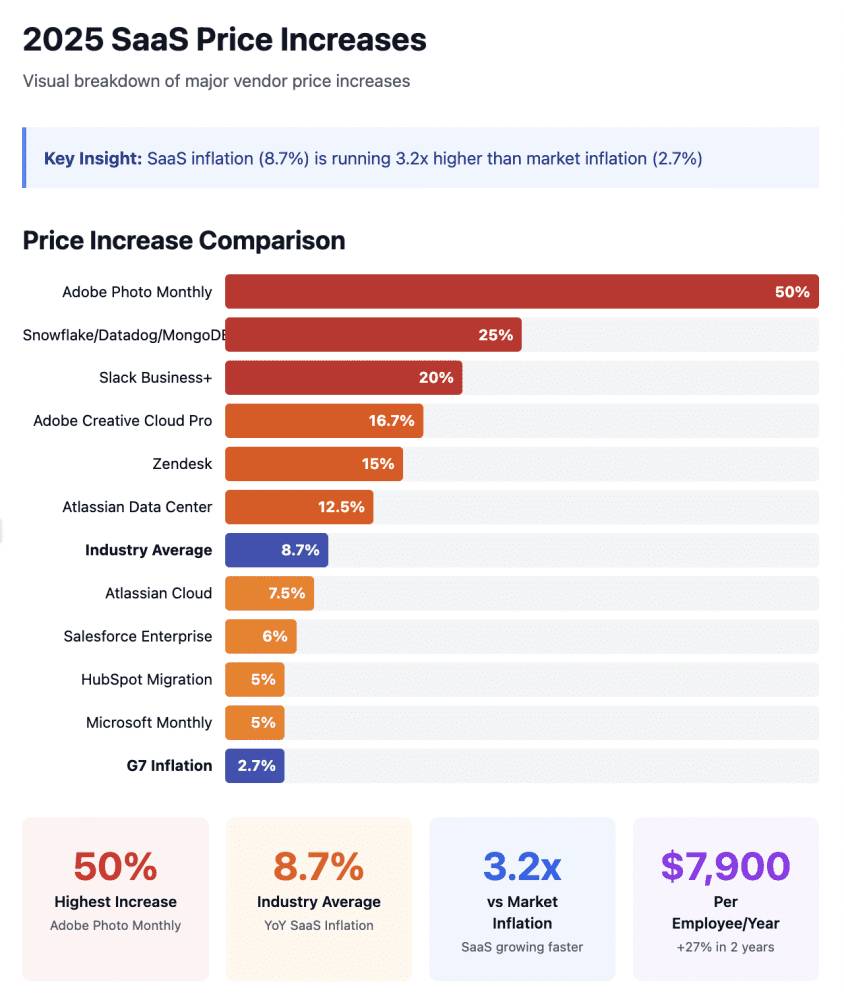
The Great SaaS Price Surge of 2025 is not just a colorful phrase. It describes a real shift in how business software vendors are pricing, packaging, upselling, and defending their products. Across categories such as CRM, collaboration, creative tools, project management, IT service management, productivity suites, and AI-native applications, software costs have moved sharply upward. Some increases were modest on paper, such as 5% or 6%. Others were much more dramatic, especially when vendors bundled AI features into higher tiers, changed packaging, added consumption-based fees, or nudged customers toward premium plans.
For software companies, the argument is straightforward: products have improved, infrastructure costs are rising, AI is expensive, security needs are greater, and customers are getting more value. For buyers, the counterargument is equally straightforward: “That is lovely, but my budget did not receive a generative AI raise.”
This article breaks down what happened, why SaaS prices increased in 2025, which pricing tactics created the most friction, and how businesses can respond without turning every renewal meeting into a corporate hostage negotiation with screen sharing.
What Is Driving the SaaS Price Surge?
1. AI Became the Perfect Pricing Umbrella
The most obvious driver of SaaS price increases in 2025 is artificial intelligence. Vendors spent heavily on AI features, AI agents, generative content tools, search, automation, copilots, workflow assistants, and enterprise security enhancements. Many then used those investments to justify higher list prices or new premium tiers.
This does not mean every AI-related price increase is unfair. AI infrastructure can be expensive. Model inference, data processing, cloud compute, compliance controls, and product development are not powered by fairy dust and leftover conference swag. But the issue is not simply that AI costs money. The issue is that many customers were asked to pay for AI whether they were ready to use it or not.
That created a new kind of SaaS frustration: bundled value without buyer consent. A marketing team may love AI copy generation. A legal department may ban it. A finance team may want proof of ROI before expanding licenses. Meanwhile, the invoice arrives acting like the entire company has already become a futuristic productivity cyborg.
2. Vendors Needed Growth in a Slower Software Market
Many mature SaaS companies face a harder growth environment than they did during the easy-money years. New customer acquisition has slowed in many categories. Buyers are consolidating tools. CFOs are scrutinizing software spend. Public software companies still need to show revenue growth, margin strength, and investor confidence.
When net-new growth becomes harder, one lever becomes especially tempting: raise prices on existing customers. Existing customers are already trained, integrated, migrated, and dependent. In plain English, they are easier to bill than to replace. That is why price increases became such a popular playbook in 2025. It is not glamorous, but neither is explaining missed revenue targets on an earnings call.
3. SaaS Sprawl Made Customers Vulnerable
Another reason vendors could raise prices is that many companies do not have a clean map of their own SaaS stack. The average organization uses a large and growing number of applications across departments. Sales has one toolset, marketing has another, HR has several, engineering has many, and somewhere in the corner sits a forgotten project management app billing annually like a raccoon with a corporate card.
When companies lack visibility, they negotiate from weakness. They do not know which licenses are active, which tools overlap, which departments own contracts, or which products are truly mission-critical. That makes renewal season painful. It also allows small increases to quietly become giant cost problems.
The Big Pricing Patterns of 2025
Pattern One: Straight List-Price Increases
The cleanest version of the 2025 SaaS price hike was the traditional list-price increase. Salesforce, for example, announced an average 6% list price increase for Enterprise and Unlimited editions across major clouds such as Sales Cloud, Service Cloud, Field Service, and selected Industries Clouds, effective August 1, 2025. A 6% increase may sound manageable until it lands on a seven-figure contract. On a $1 million annual software commitment, 6% is $60,000. That is not “rounding error.” That is a headcount conversation with a spreadsheet wearing boxing gloves.
List-price increases are easy to understand, but they are not always easy to absorb. Many IT budgets are not growing at the same pace as SaaS inflation. A vendor may see a 6% increase as reasonable. A customer managing 100 software renewals may see it as one more brick in a wall that is starting to lean ominously toward the CFO’s office.
Pattern Two: AI-Bundled Plan Changes
Adobe’s Creative Cloud changes are a strong example of AI-bundled packaging. In 2025, Creative Cloud All Apps was renamed Creative Cloud Pro in many markets, with higher pricing and expanded generative AI benefits. Adobe also introduced a lower-priced Creative Cloud Standard plan for users who did not need the same level of AI access or premium features.
This approach gives vendors a strong story: “We added more value.” The problem is that customers may not value all new features equally. A designer who uses AI daily may happily accept the upgrade. A small agency that mainly needs Photoshop, Illustrator, and predictable costs may feel as if it has been invited to a buffet and charged for lobster it never put on the plate.
Pattern Three: Collaboration Tools Becoming AI Work Hubs
Slack updated its pricing and packaging in 2025, adding more AI, Salesforce integration, enterprise search, security, and agent-related features. Slack Business+ annual pricing increased from $12.50 to $15 per user per month, while monthly billing rose from $15 to $18 per user per month. The company positioned the changes around AI-powered work, digital labor, and deeper CRM integration.
For organizations that live inside Slack all day, these features may be valuable. But collaboration tools have become infrastructure. When infrastructure prices rise, everyone feels it. You are not just paying for a chat app anymore. You are paying for the hallway, the meeting room, the filing cabinet, the help desk window, the AI assistant, and possibly the robot intern who summarizes a thread that should have been an email.
Pattern Four: Packaging Complexity and Tier Migration
Atlassian, ServiceNow, Microsoft, and other enterprise software providers have continued evolving pricing structures, packaging, cloud tiers, data center plans, AI add-ons, and billing rules. Sometimes the increase is not a simple “your price is now 10% higher.” Instead, customers discover that the feature they need has moved to a different tier, the old plan is being retired, a usage metric has changed, or the new AI capability requires a premium SKU.
This kind of pricing complexity can be more painful than a visible price hike because it is harder to budget. Procurement teams need to understand product editions, user roles, usage limits, contract timing, support tiers, and whether “included” means included forever, included until renewal, or included in the way hotel Wi-Fi is “included” after the resort fee.
Pattern Five: Consumption-Based and Usage-Based Pricing
Consumption pricing has expanded across cloud, AI, data, automation, and infrastructure-heavy SaaS categories. In theory, usage-based pricing is fair: pay for what you use. In practice, it can turn the finance team into meteorologists trying to forecast a storm made of API calls.
The rise of AI makes this even harder. AI usage can spike unpredictably when teams adopt new workflows. A successful rollout can create higher costs. That means the better the tool performs, the more nervous the budget owner becomes. Congratulations, your software is valuable. Also, please explain this invoice.
The Issues Created by the 2025 SaaS Price Surge
1. Budget Planning Became a Moving Target
The first and most obvious issue is budget instability. Many companies plan software budgets annually, but SaaS pricing now changes through list-price increases, renewal uplifts, AI add-ons, usage growth, tier migrations, and contract restructuring. A budget that looked responsible in January can look underfunded by September.
This creates friction between IT, finance, procurement, and department leaders. IT wants security and control. Finance wants predictability. Department heads want the tools their teams already use. Procurement wants leverage. The vendor wants expansion. Everyone wants a dashboard. Nobody wants to admit the dashboard costs extra.
2. Customers Are Paying for Unused Licenses
Unused SaaS licenses are one of the most expensive open secrets in business. Companies buy seats for employees who leave, change roles, stop using the tool, or never fully adopt it. During the zero-interest-rate party years, this waste was annoying but survivable. In 2025, with price increases hitting renewals, unused licenses became a much bigger problem.
If a company wastes 20% of its seats and then accepts a 10% price increase, the real problem is not just the increase. The problem is that the organization is now paying more for software value it was not receiving in the first place. That is like tipping extra for a meal nobody ate.
3. Shadow IT Got More Expensive and Riskier
AI tools have made shadow IT more complicated. Employees can sign up for AI writing tools, coding assistants, design platforms, meeting bots, data analysis tools, and productivity apps faster than IT can say, “Please submit a request.” Some of these tools are useful. Some create security, compliance, and data governance risks. Many add recurring costs that are invisible until finance audits expense reports and discovers a small nation-state of subscriptions.
When SaaS prices rise, shadow IT becomes doubly dangerous. It creates both cost leakage and security exposure. A company may be trying to negotiate a better enterprise agreement while individual teams are quietly buying overlapping tools with corporate cards.
4. Vendor Trust Took a Hit
Not every price increase damages trust. Customers understand that software improves, inflation exists, and innovation costs money. But trust erodes when vendors raise prices while making it hard to understand what changed, how the new package works, or whether customers can opt out of unwanted features.
The most sensitive area is forced bundling. When a vendor says, “We added AI, so your price is higher,” customers ask, “Can I choose not to buy the AI?” If the answer is unclear, unavailable, or buried in a maze of tiers, resentment grows. In SaaS, trust is not just built by uptime and feature releases. It is built by renewal behavior.
5. Procurement Cycles Became Longer
With costs rising, buyers are spending more time reviewing renewals. More contracts require CFO approval. More departments must justify usage. More vendors face competitive bake-offs. More legal teams review data terms for AI features. The result is slower procurement cycles.
This creates a strange paradox. Vendors raise prices to increase revenue, but aggressive increases can slow deals, increase churn risk, and push customers to consolidate. A pricing strategy that looks brilliant in a quarterly spreadsheet can create long-term customer fatigue if every renewal feels like a surprise quiz where the answer is “pay more.”
Specific Examples: What 2025 Taught SaaS Buyers
Salesforce: Pricing Power Meets AI Positioning
Salesforce’s 2025 price increase showed how major SaaS vendors are connecting pricing to AI innovation and platform value. For many customers, Salesforce is deeply embedded in sales, service, marketing, operations, analytics, and customer data workflows. That stickiness gives Salesforce pricing power. It also gives customers a strong incentive to prepare early, benchmark carefully, and avoid waiting until the last week before renewal to discover their negotiating leverage has gone on vacation.
Slack: Collaboration Gets Repriced for the Agentic Era
Slack’s Business+ price increase illustrates how collaboration platforms are being repositioned as AI operating systems. The product is no longer marketed only as workplace messaging. It is now a layer for AI agents, enterprise search, Salesforce workflows, and cross-application productivity. That may be compelling, but it also changes the buying conversation. Customers must ask whether they are buying chat, knowledge management, workflow automation, AI assistance, CRM collaboration, or all of the above.
Adobe: The Creative AI Bundle Question
Adobe’s Creative Cloud Pro changes highlight one of the central debates of 2025: should AI features be bundled by default or sold as optional add-ons? Creative professionals may find major value in generative fill, media creation, AI credits, and enhanced workflows. But not every user needs the same AI capacity. The lesson for buyers is to segment users carefully. Power users may justify premium plans, while lighter users may belong on standard plans or alternative tools.
Atlassian and Enterprise Tooling: Complexity Is the Cost Multiplier
Atlassian’s pricing updates reflect a broader trend in enterprise tooling: cloud migration, data center changes, premium tiers, advanced security, AI, and user-based pricing can all combine to create complicated renewal math. For buyers, the lesson is simple but not easy: do not treat the renewal quote as the starting point. Treat it as the vendor’s opening argument.
How Businesses Can Fight Back Without Becoming Anti-Software Hermits
Build a Real SaaS Inventory
The first step is visibility. Companies need a complete inventory of applications, owners, contract dates, license counts, usage levels, renewal terms, billing frequency, and security status. Without this, SaaS management becomes guesswork with invoices attached.
Separate Power Users from Casual Users
Not everyone needs the most expensive plan. A sales operations leader may need advanced CRM features. A part-time contributor may only need read access. A designer may need the full creative suite. A stakeholder reviewing files may not. Segmenting users can reduce waste without hurting productivity.
Negotiate Price Caps and Renewal Protections
In 2025 and beyond, buyers should push for renewal caps, usage alerts, clear AI pricing terms, opt-out rights, ramp schedules, and protections against forced tier migration. A discount is nice. Predictability is better. A 30% discount on a contract that can balloon unpredictably is like a coupon for a mystery box.
Measure AI ROI Before Expanding
AI features should be evaluated with practical metrics: hours saved, tickets resolved, content produced, sales cycles shortened, support costs reduced, or compliance risks lowered. “It has AI” is not a business case. It is a sticker on a product box.
Consolidate Ruthlessly, But Carefully
Tool consolidation can save money, but only if done thoughtfully. Cutting a beloved product without understanding workflows can create productivity backlash. The goal is not to reduce software for sport. The goal is to eliminate duplication, unused seats, and low-value spend while protecting tools that genuinely help teams work faster.
Experience-Based Reflections: What the SaaS Price Surge Feels Like Inside a Business
Anyone who has sat through a software renewal meeting in 2025 knows the emotional journey. It begins with optimism. The team joins a call. Someone from the vendor says they are “excited to partner.” There is a slide about innovation. There is another slide about AI. Someone says “agentic” twice. Then the quote appears, and suddenly everyone becomes very interested in the mute button.
The practical experience of the SaaS price surge is not just financial. It is operational. Teams have built their processes around these platforms. Sales pipelines live in the CRM. Customer histories live in support tools. Design files live in creative suites. Engineering workflows live in project management systems. Knowledge lives in collaboration apps. These tools are not optional accessories anymore. They are digital plumbing. And when plumbing costs rise, nobody says, “Let’s simply stop using water.”
This dependency changes the power dynamic. A company may dislike a price increase, but switching vendors can require retraining, migration, data cleanup, integration work, security review, and months of internal disruption. Vendors know this. Buyers know vendors know this. The whole negotiation becomes a polite chess match where every piece is labeled “business continuity.”
In many organizations, the SaaS price surge has forced a long-overdue maturity moment. Before 2025, software buying was often decentralized and casual. A department needed a tool, so it bought one. A team wanted automation, so it subscribed. A manager liked a dashboard, so the dashboard got a budget line. The result was flexibility, speed, and innovation. It also produced duplicate tools, unused licenses, overlapping features, unclear ownership, and renewal chaos.
The better companies are learning to treat SaaS like a strategic portfolio. They review usage quarterly. They assign business owners to every major app. They connect procurement, IT, security, finance, and department leaders before renewal season. They ask hard questions: Who uses this? What business outcome does it support? Can we reduce seats? Can we downgrade some users? Are we paying for AI features we have not adopted? Is there a competing product already inside the company?
One common experience is the “AI enthusiasm gap.” Executives want AI adoption. Employees experiment with AI tools. Vendors sell AI upgrades. But finance wants measurable ROI, legal wants data protection, security wants governance, and IT wants admin controls. This creates a gap between excitement and operational readiness. Companies that rush into AI bundles without governance may overspend. Companies that block everything may fall behind. The winners are likely to be the ones that create controlled adoption paths with clear measurement.
Another real-world lesson is that renewal timing matters. Waiting until a contract is days from expiration weakens the buyer. Starting 90 to 180 days early creates time to audit usage, compare alternatives, pressure-test vendor claims, and negotiate better terms. Procurement teams that enter renewals with data tend to do better than teams that enter with vibes, panic, and a calendar invite titled “URGENT: Contract Expires Friday.”
The SaaS price surge also changes how teams think about “free” or “cheap” tools. A low-cost product can become expensive if it spreads across hundreds of users without governance. A premium product can be worth the money if it replaces three other tools and improves productivity. Price alone is not the issue. Value, adoption, risk, and predictability are the real questions.
The human side should not be ignored either. Employees get attached to tools. Asking a team to give up its favorite workflow platform can feel like asking them to move desks, change coffee brands, and write status updates in ancient Latin. Leaders need to communicate why changes are happening. Cost control works best when teams understand the trade-offs and participate in the cleanup.
Ultimately, the experience of 2025 is a wake-up call. SaaS is no longer a background expense that grows quietly in the corner. It is now a major operating cost, a productivity engine, a security risk, an AI strategy layer, and a negotiation battleground. The companies that manage it actively will protect margin and agility. The companies that ignore it will keep discovering surprise charges like plot twists in a very boring thriller.
Conclusion: The SaaS Bill Has Entered the Boardroom
The Great SaaS Price Surge of 2025 has made one thing clear: software pricing is now a boardroom issue. It affects budgets, margins, security, productivity, procurement strategy, and AI adoption. The old approach of rubber-stamping renewals and hoping the invoice behaves itself is over.
For vendors, the challenge is to raise prices without breaking customer trust. AI innovation is valuable, but customers want transparency, choice, and proof. For buyers, the challenge is to become smarter, faster, and more disciplined. That means building SaaS inventories, tracking usage, negotiating renewal caps, segmenting users, measuring AI ROI, and consolidating tools where it makes sense.
SaaS is still one of the most powerful business models ever created. It helps companies move faster, scale globally, automate work, analyze data, and collaborate from anywhere. But in 2025, the subscription dream came with a new warning label: recurring revenue for vendors means recurring responsibility for buyers.
The companies that win the next phase will not be the ones that cancel every tool and return to spreadsheets, sticky notes, and heroic suffering. They will be the ones that treat software as an investment portfolio. Every app needs a purpose. Every license needs an owner. Every renewal needs a strategy. And every AI upsell needs to answer one simple question: “What business result does this actually improve?”
Because when the SaaS bill arrives, it should not feel like a jump scare. It should feel like a decision.