Insects are tiny, persistent, and apparently born with graduate degrees in finding the one tomato leaf you forgot to check. Whether you are defending a vegetable garden, rescuing houseplants, protecting a lawn, or trying to keep ants from turning your kitchen into a conference center, choosing the right insecticide in 2025 is less about grabbing the strongest bottle on the shelf and more about matching the product to the pest, the place, and the level of risk.
The best insecticides of 2025 are not automatically the harshest. In fact, the smarter trend is toward targeted pest control, integrated pest management, and products that solve the problem without turning your home or garden into a tiny chemical drama series. EPA-registered products, label-first use, pollinator awareness, and safer application habits matter just as much as killing bugs quickly.
This guide looks at seven standout insecticide categories that make sense for modern homeowners and gardeners. Instead of pushing one miracle spray, we are ranking practical options by purpose: edible gardens, soft-bodied pests, caterpillars, perimeter invaders, lawn insects, crawling pests, and fast knockdown situations. Because yes, “best” depends on whether you are battling aphids on basil or roaches near the garage. Bugs are rude, but they are also specific.
How We Chose the Best Insecticides of 2025
To build this list, we focused on real-world usefulness, active ingredient reputation, availability in the U.S. market, safety considerations, and how well each insecticide type fits into an integrated pest management approach. A responsible pest-control plan starts with identification, prevention, and monitoring before any pesticide enters the chat.
The top choices below favor products and active ingredients commonly found in EPA-registered insecticides. We also considered whether each option is practical for homeowners, suitable for common pest situations, and easier to use responsibly when an adult follows the product label exactly. That last part is important: the label is not decorative. It is the instruction manual, legal guide, safety sheet, and “please do not freestyle this” warning all in one.
The 7 Best Insecticides of 2025
1. Spinosad Garden Insecticide: Best Overall for Edible Gardens
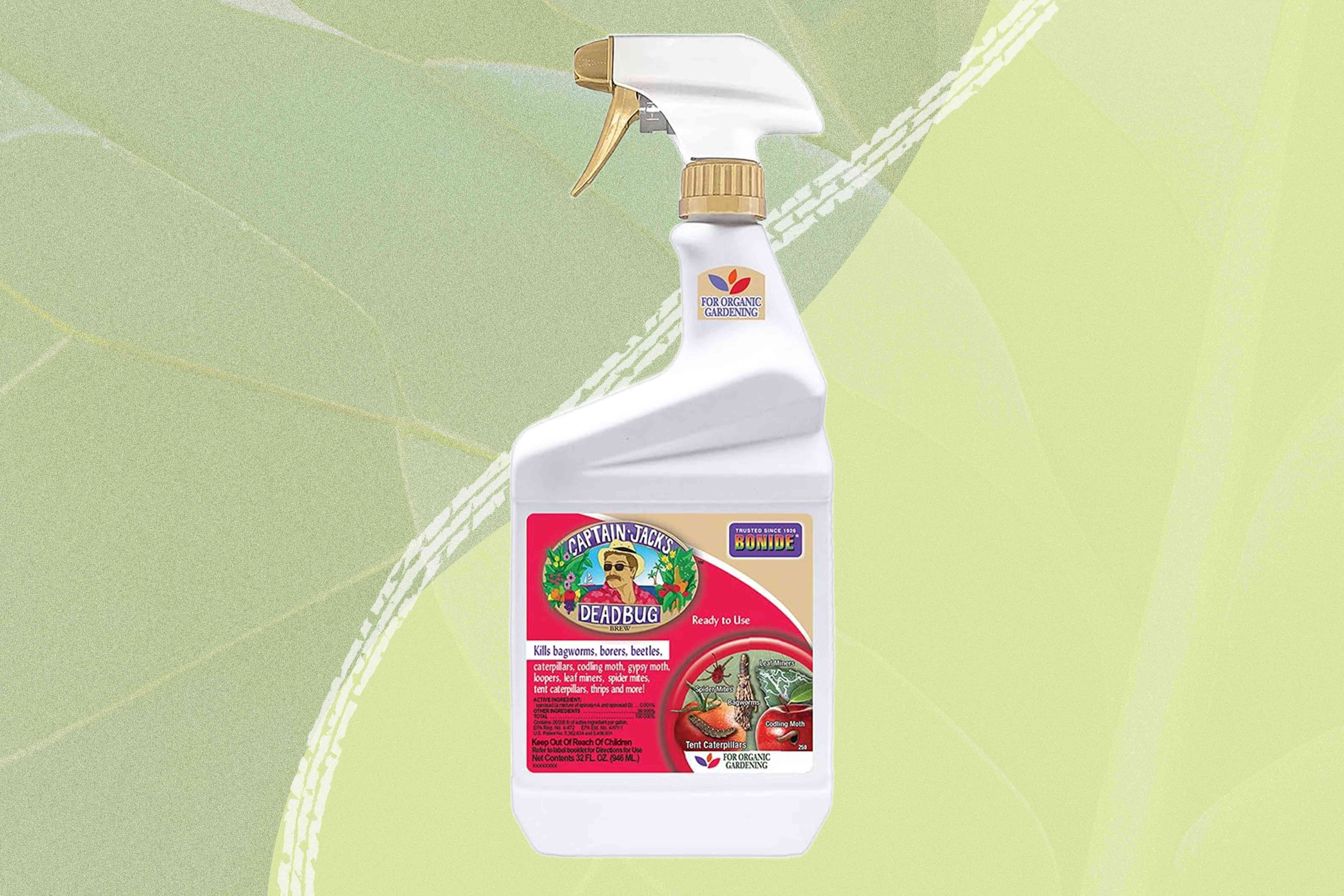
Spinosad earns the top spot for gardeners who want a targeted insecticide for common chewing pests on vegetables, herbs, and ornamentals. It is derived from naturally occurring soil bacteria and is widely used in garden products designed for pests such as caterpillars, leafminers, thrips, and some beetles. In plain English: it is a strong candidate when something is treating your kale like an all-you-can-eat buffet.
What makes spinosad stand out in 2025 is its balance of effectiveness and selectivity. It is not perfect, and it still requires care around pollinators and beneficial insects, but it is often more targeted than broad-spectrum sprays. For vegetable gardeners, that matters. A healthy garden needs bees, lady beetles, lacewings, and other unpaid employees who do excellent pest-control work for zero salary.
Spinosad is best for people who already know what pest they are dealing with and want a garden-focused solution. It is not the best answer for every insect, and it is not a substitute for checking plants regularly, removing damaged leaves, and encouraging beneficial insects. Think of it as a smart tool, not a magic wand in a spray bottle.
2. Insecticidal Soap: Best for Aphids, Whiteflies, and Soft-Bodied Pests
Insecticidal soap is one of the most useful low-residue choices for soft-bodied insects such as aphids, whiteflies, mealybugs, and spider mites. It works mainly by direct contact, which makes it different from long-lasting synthetic insecticides. It is the pest-control version of “I need to see the problem to solve the problem.”
This category is especially popular with houseplant owners and gardeners because it is relatively simple compared with many stronger insecticides. It does not leave the same kind of long-term residual barrier that some outdoor products do, and it is often used when the pest problem is visible and localized. If your pothos has suddenly become a luxury resort for aphids, insecticidal soap may be a reasonable first-line option.
The downside is that insecticidal soap requires accurate pest targeting and patience. It is not ideal for hidden infestations, soil-dwelling pests, or insects with hard protective bodies. Also, not every “soap” is an insecticidal soap. Products made and labeled for pest control are different from random household soaps, which can harm plants. Your dish soap may clean lasagna pans like a champion, but that does not make it a plant doctor.
3. Neem Oil: Best Plant-Based Multipurpose Option
Neem oil remains one of the best-known plant-based insecticide options in 2025. Products based on neem oil or neem-derived compounds are commonly used against pests such as aphids, mites, whiteflies, and some scale insects. Many gardeners also like neem because certain formulations may help with fungal issues on ornamental or garden plants.
Neem’s appeal is versatility. It is not always the fastest insecticide, but it can be useful as part of a broader plant-care routine. It is especially attractive to gardeners who prefer botanical insecticide options and want something that fits into a gentler pest-management plan.
However, neem is not a free pass to spray everything in sight. It has a strong smell, can affect beneficial insects if misused, and may stress sensitive plants under poor conditions. In 2025, the smartest way to think about neem is this: useful, flexible, and popular, but still a pesticide. “Natural” does not mean “impossible to misuse.” Poison ivy is natural too, and nobody invites it to brunch.
4. Bacillus thuringiensis, or Bt: Best for Caterpillars
Bt is the specialist on this list. It is not the best general insecticide for every pest, and that is exactly why it is valuable. Bacillus thuringiensis is a microbial insecticide used against certain larvae, especially caterpillars that chew leaves on vegetables and ornamentals.
For gardeners dealing with cabbage worms, hornworms, or other caterpillar damage, Bt can be a targeted option. Its strength is precision. Instead of wiping out a wide range of insects, Bt products are chosen for specific larval pests. That makes it a smart fit for integrated pest management, where the goal is not to declare war on every six-legged creature within zip-code range.
The key limitation is that Bt must match the pest. It will not solve ants in the pantry, roaches in the garage, or adult beetles treating your roses like a salad bar. It is best for people who can identify caterpillar damage and want a narrow tool rather than a broad-spectrum insecticide.
5. Diatomaceous Earth: Best Dry Barrier for Crawling Insects
Diatomaceous earth is different from most liquid insecticides. It is a mineral-based dust that works physically rather than chemically, damaging the outer coating of insects and causing them to dry out. It is commonly discussed for crawling pests such as ants, fleas, cockroaches, and other insects that move across treated dry areas.
Its biggest advantage is that it does not work like a nerve poison. That makes it appealing to people looking for a non-synthetic option. It can also be useful in cracks, dry spaces, and garden areas where crawling insects are the issue.
But diatomaceous earth deserves respect. Dust can irritate eyes and lungs, and it is not something to casually puff around the house like powdered sugar on a donut. It also loses effectiveness when wet, and it can affect beneficial insects that contact it. The best use case is careful, adult-supervised, label-following placement in dry areas where crawling pests are active.
6. Pyrethrin-Based Insecticide: Best Fast Knockdown Option
Pyrethrins are insecticidal compounds originally derived from chrysanthemum flowers, and pyrethrin-based products are often chosen when fast knockdown is needed. They are common in home and garden pest-control products and can act quickly against a variety of insects.
The benefit is speed. When a pest problem is active and visible, pyrethrin products can work quickly compared with slower botanical or microbial choices. They are often found in sprays for ornamental plants, garden pests, and household insects.
The caution is that pyrethrins can be highly toxic to bees, fish, and aquatic life. Some products also include additional ingredients that change how the formulation behaves. This category is best reserved for targeted situations, not routine spraying. If pollinators are nearby or water runoff is a concern, this option needs extra caution and may not be the right fit.
7. Perimeter and Lawn Insecticides: Best for Outdoor Barrier Control
Perimeter and lawn insecticides are designed for outdoor spaces where pests move around foundations, patios, lawns, and landscaped areas. Many of these products use synthetic pyrethroids or other long-lasting active ingredients. They can be useful against ants, ticks, fleas, spiders, crickets, and other outdoor pests when the product is labeled for that purpose.
This category is powerful, but it also carries the most responsibility. Outdoor barrier products are not meant for edible garden leaves unless the label specifically allows that use. They may pose risks to aquatic organisms, pollinators, pets, and children if used carelessly. In other words, this is not the category for “close enough” thinking.
For homeowners with recurring outdoor pest pressure, perimeter insecticides can be effective when used by adults exactly as labeled. Still, they should be paired with prevention: sealing cracks, reducing standing water, trimming vegetation away from the house, fixing screens, storing food properly, and removing clutter. The best bug spray is often a closed door, a clean surface, and a trash can with a lid that actually fits.
Best Insecticide by Pest Problem
For Aphids and Whiteflies
Insecticidal soap and neem oil are usually the most sensible first options for visible soft-bodied pests. They fit well into houseplant and garden care because they are targeted and do not rely on long residual activity.
For Caterpillars
Bt is the most targeted choice when caterpillars are the confirmed problem. Spinosad can also be useful for certain chewing insects, but Bt is the category specialist.
For Ants, Roaches, and Spiders Around the Home
Perimeter insecticides, enclosed baits, and non-spray prevention tools are often more practical than spraying random surfaces. Identification matters because ants, roaches, and spiders respond to different control strategies.
For Lawn Pests
Lawn insecticides may help with pests such as ticks, fleas, armyworms, and grubs, depending on the product label. The best approach starts with confirming the pest before treating the whole lawn. Your grass may be stressed from heat, drought, disease, or soil issues, not necessarily insects.
Safety Tips Before Choosing Any Insecticide
Before selecting an insecticide, identify the pest. This sounds obvious, but many pest-control mistakes begin with “I saw something tiny and panicked.” A fungus gnat, aphid, termite, and flea are not the same problem, even if they all inspire the same dramatic sigh.
Choose EPA-registered products and read the entire label before any use. The label tells you where the product may be used, what pests it targets, what precautions matter, and how to store it safely. Never use an outdoor-only product indoors. Never use a lawn product on vegetables unless the label specifically allows it. Never mix products together. Chemistry is not a group project for the garage.
Keep insecticides away from children, pets, food, dishes, toys, and water sources. Avoid treating blooming plants when pollinators are active. Store products in original containers so the label stays attached and the contents are not mistaken for something else. If the infestation is severe, recurring, or involves termites, bed bugs, or dangerous stinging insects, contact a licensed pest-control professional.
What Makes an Insecticide “Best” in 2025?
The best insecticide is not the one with the scariest label or the boldest marketing claim. The best insecticide is the one that matches the pest, works in the correct location, minimizes unnecessary exposure, and fits into a larger prevention plan.
In 2025, consumers are more aware of pollinators, pets, indoor air quality, edible gardens, and environmental runoff. That means “best” includes more than speed. A product that works fast but is wrong for the site is not a good choice. A gentle product that does nothing against the target pest is not a good choice either. The sweet spot is accurate, targeted, and responsible.
For many homes and gardens, the winning formula is simple: inspect first, prevent second, treat only when needed, and choose the least disruptive effective option. Bugs may be stubborn, but a thoughtful plan beats panic-spraying every time.
Real-World Experience: What Homeowners Learn After Fighting Bugs for a Season
After one full season of dealing with insects, most people learn that pest control is less like a dramatic battle scene and more like doing laundry: boring, repetitive, and strangely satisfying when you stay ahead of it. The biggest lesson is that insects love neglect. Skip a week of checking tomato plants, leave crumbs near the toaster, ignore standing water in a flowerpot saucer, and suddenly the bugs are acting like they signed a lease.
In a vegetable garden, the most useful habit is regular inspection. Many gardeners discover that a small aphid cluster is easy to manage, but a full infestation feels like trying to cancel a subscription with no customer service number. Checking leaves, stems, and new growth every few days can prevent a minor issue from becoming a botanical soap opera. This is where insecticidal soap, neem oil, Bt, or spinosad may come into the picture, depending on the pest. But the real hero is early detection.
Houseplant owners often learn a different lesson: new plants should be inspected before joining the indoor jungle. A single cute plant from the store can bring fungus gnats, mealybugs, or spider mites along for the ride. Congratulations, you bought a fern and a tiny circus. Keeping new plants separate for a short observation period and checking leaf undersides can save weeks of frustration.
For homeowners dealing with ants or roaches, sprays alone rarely solve the root problem. Food storage, moisture control, sealing entry points, and cleaning hidden crumbs often matter more than dramatic product use. Ants are basically tiny detectives with excellent snack radar. If they keep coming back, they are finding something worth visiting.
Lawn pest control teaches patience. Brown patches are not always insects. Sometimes the problem is heat, compacted soil, poor watering, pet damage, or disease. Treating the lawn without identifying the cause can waste money and create unnecessary chemical exposure. A careful diagnosis beats the “spray now, ask questions never” approach.
The best experience-based advice is to keep pest control boring. Boring means labels are read, products are stored safely, pests are identified, and treatments are used only where appropriate. Boring means kids and pets are kept away from products, pollinators are considered, and stronger chemicals are not treated like all-purpose cleaning spray. Boring is good. Boring keeps your basil alive, your kitchen calmer, and your weekend from becoming an emergency call to a professional.
By the end of the season, most people realize that the best insecticide is only one part of the solution. The real secret is consistency: clean spaces, healthy plants, sealed gaps, fewer hiding places, and quick action when pests first appear. Insects are persistent, but they are not magical. Give them fewer invitations, and they usually throw fewer parties.
Conclusion
The 7 best insecticides of 2025 are not seven random bottles with loud labels. They are seven smart categories: spinosad, insecticidal soap, neem oil, Bt, diatomaceous earth, pyrethrin-based insecticides, and perimeter or lawn insecticides. Each one has a place, a purpose, and a set of safety limits.
For edible gardens, spinosad and Bt shine when matched to the right pests. For houseplants and soft-bodied insects, insecticidal soap and neem oil are practical favorites. For crawling insects, diatomaceous earth can be useful in dry areas. For fast knockdown, pyrethrins may help in targeted situations. For outdoor barriers and lawns, stronger perimeter products may be effective but require extra caution.
The smartest choice is always the one that solves the real pest problem with the least unnecessary risk. Identify first, prevent where possible, choose carefully, and let the label be the boss. Bugs may be annoying, but responsible pest control should never be scarier than the insects themselves.