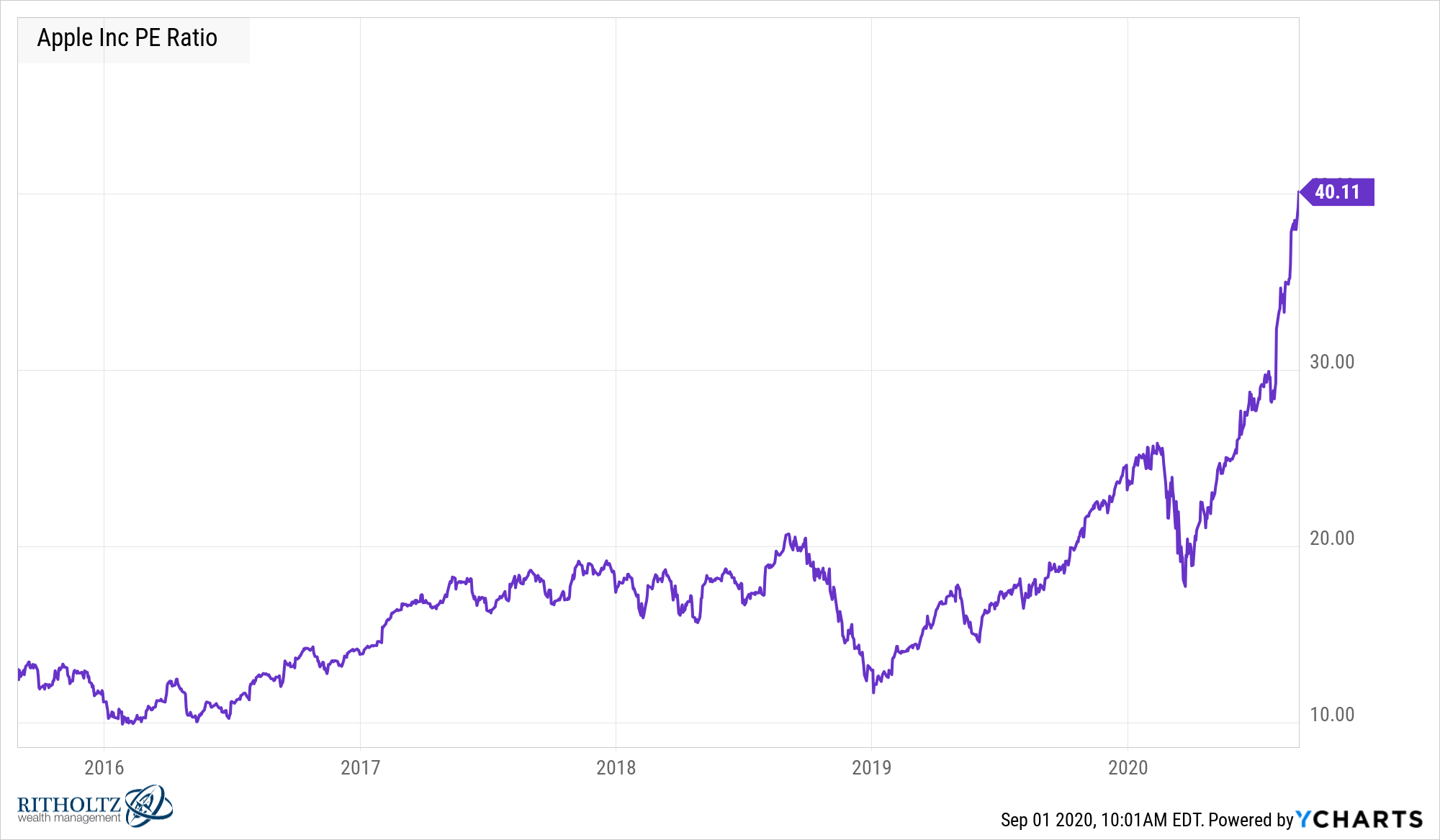
Stock prices can look like they are powered by breaking news, analyst upgrades, CEO interviews, social media drama, and that mysterious uncle who says he “has a feeling” about semiconductor stocks. But beneath the daily noise, the market usually comes back to two powerful variables: earnings and valuation multiples.
Put simply, a stock price is often explained by this practical formula:
Stock Price = Earnings Per Share × Valuation Multiple
That is not the only way professionals value a company, but it is one of the clearest ways to understand why stocks rise, fall, stall, boom, or occasionally behave like a caffeinated squirrel. If earnings grow and investors are willing to pay the same or a higher multiple for those earnings, the stock price can climb. If earnings disappoint or the market decides the company deserves a lower multiple, the stock can dropeven when the business is still profitable.
This article breaks down the two variables that drive stock prices, why they matter, how they interact, and how investors can use them to think more clearly about the market.
Variable 1: Earnings The Business Engine Behind the Stock
Earnings are the profits a company generates after paying its expenses. For public companies, investors usually focus on earnings per share, or EPS. EPS shows how much profit belongs to each share of stock. If a company earns $10 billion and has 1 billion shares outstanding, its EPS is $10.
Why does EPS matter so much? Because when you buy a stock, you are buying a slice of a business. That business may own factories, software, patents, stores, trucks, brands, or a very expensive espresso machine in the executive lounge. But over time, what matters most is whether those assets can produce cash and profit.
Earnings Growth Is the Fuel
A company that grows earnings consistently gives investors a reason to pay attention. Rising earnings suggest that the business is selling more, improving margins, expanding into new markets, controlling costs, or benefiting from a durable competitive advantage.
For example, imagine Company A earns $2 per share this year and is expected to earn $3 next year. That 50% earnings growth can make the stock more attractive. Investors may believe the company is entering a stronger phase, launching a successful product, or gaining market share. If the market trusts that growth, demand for the stock may rise.
Now imagine Company B earns $8 per share but is expected to earn only $6 next year. Even though Company B is still profitable, the direction is negative. Investors may worry that sales are slowing, expenses are rising, or competition is eating the company’s lunch and billing it for dessert.
Revenue, Margins, and Share Count All Affect EPS
Earnings per share can grow in several ways. Revenue growth is the most obvious. A company sells more products or services, and more money flows into the business. But revenue alone does not guarantee earnings growth. A company can increase sales and still make less money if costs rise faster than revenue.
That is where profit margins come in. A company with strong pricing power can often protect or expand margins. Think of a business that raises prices without losing many customers. That is usually a good sign. On the other hand, a company that must discount heavily to keep customers may see margins shrink.
Share count also matters. If a company repurchases its own stock, the same total profit is divided among fewer shares, which can increase EPS. If a company issues new shares, existing shareholders may own a smaller percentage of the business, which can reduce EPS unless the new capital creates enough growth to offset the dilution.
Expectations Matter More Than the Headline Number
One of the market’s favorite tricks is punishing a company after it reports “good” earnings. This seems unfair until you understand expectations. Stock prices do not react only to whether earnings are good or bad. They react to whether earnings are better or worse than expected.
If analysts expect a company to earn $2 per share and it earns $2.20, the stock may rise. If analysts expect $3 per share and the company earns $2.80, the stock may falleven though $2.80 may still be a strong result. The market is not grading on vibes. It is grading against expectations.
This is why earnings guidance matters. When management updates investors about expected future revenue, profit margins, demand, or costs, stock prices can move quickly. Investors are constantly adjusting their estimates of future earnings, and those estimates feed directly into valuation.
Variable 2: Valuation Multiple What Investors Will Pay for the Earnings
The second major variable is the valuation multiple. The most common version is the price-to-earnings ratio, or P/E ratio. It compares a company’s stock price with its earnings per share.
If a stock trades at $100 and earns $5 per share, its P/E ratio is 20. That means investors are paying $20 for every $1 of annual earnings. Whether that is cheap or expensive depends on the company’s growth, risk, industry, interest rates, competitive position, and investor confidence.
Why Some Stocks Get Higher Multiples
High-quality companies often trade at higher valuation multiples. Investors may pay more for businesses with strong brands, recurring revenue, high margins, loyal customers, excellent balance sheets, or long growth runways.
A fast-growing software company might trade at a high multiple because investors believe today’s earnings are only a preview of much larger future profits. A slow-growing utility company might trade at a lower multiple because its earnings are steadier but less likely to explode upward. There is nothing wrong with being a utility stock. It just usually does not walk into the market wearing a “future trillion-dollar empire” hat.
Valuation is partly math and partly mood. The math includes growth rates, margins, return on capital, debt, and cash flow. The mood includes investor confidence, market cycles, fear, greed, and whether everyone suddenly believes artificial intelligence will turn every toaster into a profit machine.
Multiple Expansion and Multiple Compression
When investors become more optimistic about a company, the valuation multiple can expand. For example, a stock earning $5 per share at a P/E of 20 trades at $100. If investors decide the company deserves a P/E of 25, the stock could rise to $125 even if earnings do not change.
The reverse is called multiple compression. If that same company still earns $5 per share but the market lowers its P/E from 20 to 15, the stock price falls to $75. The business may not have collapsed. Investors are simply willing to pay less for each dollar of earnings.
Multiple compression is one reason investors can lose money in companies that keep growing. If earnings rise 10% but the valuation multiple falls 30%, the stock can still decline. This is the market’s way of reminding everyone that price matters. Politely? Not always.
Interest Rates Influence Valuation
Interest rates play a major role in valuation multiples. When rates are low, future earnings are often worth more in today’s dollars, and investors may accept higher stock valuations. When rates rise, investors may demand lower multiples because bonds, money market funds, and other lower-risk assets become more attractive.
This is especially important for growth stocks. Companies expected to generate much of their profit far in the future can be sensitive to interest rates. If the discount rate rises, the present value of those future profits can fall. That is finance-speak for: “Great story, but we are not paying quite so much for it anymore.”
How Earnings and Multiples Work Together
The real magicor miseryhappens when earnings and multiples move together. A stock can rise sharply when earnings grow and the valuation multiple expands. This is the double engine of strong stock performance.
For example:
- A company earns $4 per share.
- The market values it at 20 times earnings.
- The stock trades at $80.
Now suppose earnings grow to $5 per share, and investor optimism pushes the P/E ratio to 24. The new stock price would be $120. That is a 50% gain, created by both higher earnings and a higher multiple.
But the opposite can happen too:
- A company earns $4 per share.
- The stock trades at a P/E of 20.
- The stock price is $80.
If earnings fall to $3.50 and the market lowers the multiple to 15, the stock drops to $52.50. That is a painful decline caused by both weaker business results and lower investor confidence.
Why Stock Prices Move Even When Nothing “Happens”
Many investors are surprised when a stock moves even though there is no obvious news. The reason is that markets are constantly updating expectations. Analysts revise earnings forecasts. Bond yields move. Competitors report results. Economic data changes. Investors rotate from one sector to another. Large funds rebalance portfolios. Sometimes, the market wakes up and chooses chaos before breakfast.
Even without company-specific news, a stock’s earnings outlook or valuation multiple can shift. A retailer may fall because another retailer reported weak demand. A bank may rise because interest rate expectations changed. A chip company may move because investors reassessed growth in artificial intelligence spending. These moves may look random, but they usually connect back to expected earnings, valuation multiples, or both.
Short-Term Noise vs. Long-Term Drivers
In the short term, stock prices can be noisy. Headlines, sentiment, technical trading, options activity, and market momentum can push prices around. In the long term, however, earnings and valuation do most of the heavy lifting.
A great company can be a poor investment if bought at an extreme price. A boring company can be a strong investment if bought at an attractive valuation and supported by steady earnings. This is why experienced investors often separate two questions:
- Is this a good business?
- Is this a good price?
The first question focuses on earnings quality. The second focuses on valuation. Confusing the two is one of the easiest ways to get into trouble. A company can be wonderful and overpriced. A company can be cheap for a reason. The market contains both treasure chests and trapdoors, and they are not always labeled clearly.
Specific Examples of the Two Variables in Action
Example 1: A Growth Company
Imagine a cloud software company earning $1 per share. Investors expect earnings to grow quickly, so they assign a P/E ratio of 60. The stock trades at $60.
If earnings rise to $2 per share and the P/E stays at 60, the stock could trade at $120. But if growth slows and the market lowers the P/E to 30, the stock would trade at $60 despite earnings doubling. The business improved, but the valuation multiple compressed.
Example 2: A Mature Dividend Company
Now consider a mature consumer goods company earning $5 per share. It grows slowly but consistently, pays dividends, and has loyal customers. The market values it at 18 times earnings, giving it a $90 stock price.
If earnings grow to $5.50 and the multiple remains 18, the stock rises to $99. That is not dramatic, but it is steady. If investors become more cautious and reduce the multiple to 15, the stock falls to $82.50 despite earnings growth.
Example 3: A Cyclical Company
Cyclical businesses, such as automakers, airlines, energy producers, and industrial companies, can be tricky. Their earnings may rise sharply during strong economic periods and fall during downturns. Investors often lower multiples when earnings are near a cyclical peak because they worry those profits may not last.
This is why a stock can look “cheap” on a low P/E ratio but still be risky. If earnings are temporarily inflated, the low multiple may be the market’s warning label.
How Investors Can Use This Framework
Understanding earnings and valuation multiples does not make investing easy, but it makes it less mysterious. Instead of asking, “Why did this stock move?” investors can ask better questions:
- Did expected earnings change?
- Did the valuation multiple change?
- Did interest rates affect what investors are willing to pay?
- Did guidance improve or worsen?
- Is the market rewarding growth or demanding safety?
- Is the stock expensive because the business is exceptional, or because investors are overly excited?
These questions help investors avoid reacting emotionally to every price move. A falling stock is not automatically a bargain. A rising stock is not automatically a bubble. The important issue is whether the price movement is supported by changes in earnings, valuation, or both.
Common Mistakes Investors Make
Mistake 1: Looking Only at the P/E Ratio
A low P/E ratio can be attractive, but it can also signal trouble. If earnings are about to fall, the stock may not be as cheap as it looks. Investors should compare valuation with growth, balance sheet strength, industry conditions, and earnings quality.
Mistake 2: Ignoring the Quality of Earnings
Not all earnings are equal. Profits supported by recurring revenue, strong cash flow, and healthy margins are usually more valuable than profits created by one-time gains, temporary cost cuts, or accounting adjustments.
Mistake 3: Forgetting That Expectations Drive Prices
A company can report record profits and still see its stock fall if expectations were even higher. The market is forward-looking. It cares less about what already happened and more about what may happen next.
Mistake 4: Overpaying for a Great Story
Every bull market produces exciting stories. Some become real. Others become expensive bedtime tales. Investors should respect growth but remember that even the best story has a price.
Experiences Related to the Topic: What Watching Stock Prices Teaches You
Anyone who follows the market for long enough eventually learns that stock prices are excellent teachers, though they are not always gentle ones. The first lesson is that a company and its stock are connected, but they are not the same thing. A company can launch good products, hire smart people, and report solid revenue growth while its stock goes nowhere. At first, that feels confusing. Then you look closer and discover that investors had already priced in even better results. The business performed well, but the expectations were sitting on a much higher shelf.
A common experience for newer investors is buying a popular stock after hearing everyone praise it. The company may be real, profitable, and exciting. The problem is not the business. The problem is the price. When a stock already trades at a rich valuation multiple, it needs strong earnings growth to justify that price. If growth merely becomes “good” instead of “spectacular,” the multiple can shrink. The stock falls, and the investor learns a painful but useful lesson: great companies do not automatically make great investments at any price.
Another experience is watching earnings season. At first, earnings reports seem simple. Beat estimates, stock goes up. Miss estimates, stock goes down. Then reality enters the room wearing muddy boots. Sometimes a company beats earnings estimates, raises revenue, and still drops because future guidance disappoints. Sometimes a company misses current earnings but rises because management signals that margins may improve next quarter. The market is always trying to look ahead. It does not drive using only the rearview mirror.
Investors also learn that valuation multiples are emotional. They expand when confidence is high and compress when fear rises. During optimistic periods, investors may pay large multiples for companies with strong growth stories. During cautious periods, those same companies may be judged more harshly. Nothing about the product may have changed overnight. What changed was the market’s willingness to pay for future earnings.
Interest rates provide another practical lesson. When rates are low, investors often become more comfortable paying higher multiples because alternatives may offer lower returns. When rates rise, the math changes. Investors can earn more from lower-risk assets, so stocks must compete harder for attention. This can pressure valuation multiples, especially for companies whose expected profits are far in the future.
One of the most useful habits is breaking every stock move into two parts: earnings and multiple. If a stock rises, ask whether earnings estimates improved or whether the market simply became willing to pay more for the same earnings. If a stock falls, ask whether the company’s profit outlook weakened or whether the valuation multiple compressed. This habit turns market watching from emotional guessing into structured analysis.
Over time, this framework can make investors more patient. A short-term price drop may be less scary if earnings remain strong and valuation becomes more reasonable. A sudden price surge may feel less tempting if it comes mostly from multiple expansion rather than improved fundamentals. The goal is not to predict every move. Nobody receives a secret market crystal ball at adulthood, and if they say they did, check whether they are also selling a course.
The real value of understanding the two variables that drive stock prices is clarity. Earnings show how the business is doing. Valuation multiples show what investors are willing to pay for that performance. Together, they explain most of what matters. The market will always have noise, drama, and occasional nonsense, but underneath it all, the same two questions keep returning: How much money can this company make, and what price should investors pay for it?
Conclusion
The two variables that drive stock prices are earnings and valuation multiples. Earnings represent the company’s ability to generate profit, while valuation multiples represent investor willingness to pay for those profits. When both rise, stock prices can soar. When both fall, prices can drop quickly. When one rises and the other falls, investors need to look carefully at which force is stronger.
This framework does not eliminate risk, but it gives investors a cleaner way to analyze stocks. Instead of getting lost in daily headlines, investors can focus on the core drivers: business performance, future expectations, interest rates, confidence, and price. In the long run, stock investing is not just about finding good companies. It is about understanding earnings, respecting valuation, and avoiding the classic mistake of paying champagne prices for tap-water returns.
Note: This article is for educational purposes only and should not be considered personal investment, tax, or financial advice.