Some romance anime hand you flowers. Others hand you emotional paperwork, a box of tissues, and a quiet warning that you may never hear a piano, train whistle, summer cicada, or high school confession the same way again. The most tragic romance anime do not simply make characters fall in love; they make love fragile, inconvenient, impossible, late, misunderstood, or painfully human.
This list gathers 17 unforgettable tragic romance anime that have earned their reputation for beautiful heartbreak. Some are classic tearjerkers, some are psychological dramas wearing school uniforms, and a few are fantasy or science-fiction stories where love has to argue with death, time, war, memory, illness, or fate. In other words: bring snacks, hydration, and emotional backup.
Why Tragic Romance Anime Hits So Hard
Romance anime becomes tragic when love is not enough to fix the world. That sounds harsh, but it is also what makes these stories memorable. A confession may come too late. A promise may be kept at an unbearable cost. Two people may love each other deeply and still be separated by illness, distance, trauma, guilt, or the quiet cruelty of growing up.
The best tragic romance anime never treats sadness as cheap decoration. Instead, heartbreak becomes a way to explore grief, healing, regret, forgiveness, and the tiny miracles people leave behind. Now, let’s count down the most devastating romances that anime has ever used to emotionally rearrange viewers.
The 17 Most Tragic Romance Anime of All Time
1. Your Lie in April
Your Lie in April is often the first title fans mention when discussing tragic romance anime, and for good reason. The story follows Kosei Arima, a gifted pianist who loses his ability to hear the sound of his own playing after trauma, and Kaori Miyazono, a free-spirited violinist who crashes into his life like a musical storm with excellent hair.
What makes the series devastating is how it pairs beauty with dread. Every performance feels like a confession. Every smile from Kaori carries a shadow. The romance is not loud or melodramatic; it grows through music, encouragement, and the painful realization that some people change your life even if they cannot stay in it forever.
2. Clannad: After Story
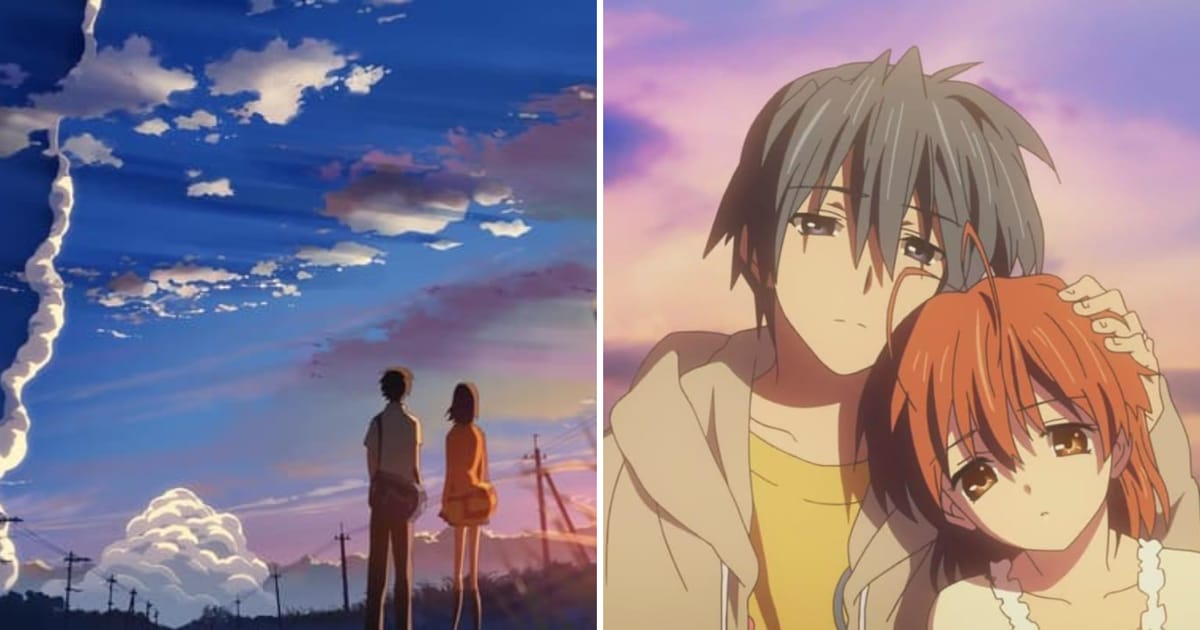
Clannad: After Story is not just sad; it is the anime equivalent of letting your heart buy a house, start a family, and then asking it to survive a natural disaster. The series continues Tomoya and Nagisa’s relationship beyond school romance and into adulthood, marriage, work, parenthood, and loss.
Its tragedy lands because it feels domestic and real. The emotional stakes are not about saving the universe. They are about paying bills, building a future, and loving someone through ordinary days that suddenly become precious. Few romance anime show how adulthood can deepen love and multiply grief at the same time.
3. I Want to Eat Your Pancreas
Do not let the title scare you away. I Want to Eat Your Pancreas is one of the most tender tragic romance anime films ever made. It follows an introverted boy who discovers that his lively classmate Sakura is living with a terminal pancreatic disease.
The heartbreak comes from the contrast between Sakura’s bright personality and the limited time she has left. The film understands that tragedy is not only about death; it is about all the normal things a person may never get to do. It also asks an uncomfortable question: what does it mean to truly know someone before they disappear from your life?
4. 5 Centimeters per Second
Makoto Shinkai’s 5 Centimeters per Second is a quiet masterpiece about distance, memory, and the slow erosion of young love. Unlike many tragic romances, it does not rely on dramatic illness or fantasy rules. Its villain is life itself: moving away, growing up, missing trains, answering messages too late, and becoming strangers while still remembering everything.
The film is painful because it is recognizable. Almost everyone has a version of “what if?” tucked away somewhere. Shinkai turns that feeling into falling cherry blossoms, snowy stations, and one of the most elegantly devastating depictions of emotional distance in anime.
5. A Silent Voice
A Silent Voice is more than a romance; it is a story about bullying, disability, shame, social isolation, and the difficult work of forgiveness. Still, the connection between Shoya Ishida and Shoko Nishimiya carries a deeply romantic tenderness, shaped by guilt and a desperate wish to communicate.
The tragedy lies in how much damage people can do before they understand themselves. Shoya’s attempt to reconnect with Shoko is not a neat redemption arc with a bow on top. It is messy, painful, and honest. Love here is not a cure-all. It is a chance to listen better than before.
6. Violet Evergarden
Violet Evergarden blends war trauma, grief, and longing into one of the most visually stunning anime dramas of the modern era. Violet, a former child soldier, becomes an Auto Memory Doll, writing letters for others while trying to understand the meaning of the words “I love you.”
The romantic tragedy is tied to Major Gilbert, the person who gave Violet both affection and a wound she cannot easily name. The series is powerful because every letter she writes becomes a mirror. Through other people’s love and loss, Violet slowly learns the emotional language she was denied as a weapon of war.
7. Hotarubi no Mori e
Hotarubi no Mori e proves that a short anime film can destroy your feelings with alarming efficiency. The story centers on Hotaru, a girl who befriends Gin, a mysterious spirit-like boy in a forest. The catch is cruelly simple: if a human touches Gin, he will disappear.
That one rule turns every moment into emotional suspense. A hand almost reaches. A summer ends. Another year passes. The romance is gentle, innocent, and doomed by design. When the ending arrives, it feels both inevitable and impossible to accept, which is the official recipe for anime heartbreak soup.
8. Plastic Memories
Plastic Memories takes a science-fiction premise and uses it to punch viewers directly in the feelings. In this world, androids called Giftia have human emotions but limited lifespans. Tsukasa begins working in a department that retrieves Giftia near expiration and partners with Isla, who is nearing the end of her own time.
The series is tragic because the ending is built into the beginning. Viewers know the clock is ticking, and so do the characters. Instead of avoiding that pain, the anime asks whether love is still worth choosing when the goodbye is guaranteed. Spoiler-free answer: yes, but please keep tissues within arm’s reach.
9. Anohana: The Flower We Saw That Day
Anohana is not a traditional romance anime, but unspoken feelings are central to its tragedy. A group of childhood friends is fractured by the death of Menma, and years later her spirit appears to Jinta, forcing everyone to confront guilt, grief, jealousy, and old love that never had time to grow up.
The romance in Anohana is tangled in memory. Characters love versions of each other that no longer exist. They carry confessions that arrived too late and regrets that have become part of their identities. Its final emotional release remains one of anime’s most famous group-cry moments.
10. Ride Your Wave
Ride Your Wave begins as a charming romance between surfer Hinako and firefighter Minato, then takes a supernatural turn after tragedy strikes. Directed with bright color and fluid motion, the film uses water as both comfort and grief.
Its sadness comes from the fantasy of being able to see someone again after losing them. At first, that idea seems comforting. Eventually, it becomes clear that love also requires letting the dead remain dead, no matter how much the living want one more conversation, one more song, or one more impossible day at the beach.
11. The Wind Rises
The Wind Rises is a historical romantic drama about dreams, ambition, illness, and the uneasy cost of creation. Jiro Horikoshi’s love for Naoko gives the film its emotional center, while his passion for aircraft design exists against the shadow of war.
The romance is tragic because beauty and destruction sit side by side. Naoko’s illness makes their time together fragile, and Jiro’s professional dream is tied to machines that will be used in conflict. It is a romance about loving intensely while the world refuses to become gentle.
12. Orange
Orange mixes high school romance with time-travel regret. Naho receives letters from her future self warning her about mistakes involving transfer student Kakeru, whose emotional struggles place him in danger. The result is a romance built around prevention, compassion, and the fear of not reaching someone in time.
The tragedy of Orange is grounded in mental health, grief, and the helplessness of watching someone suffer behind a smile. Its hopeful elements do not erase its sadness. Instead, they show that love can be an action: noticing, asking, staying, and refusing to let silence win.
13. Nana
Nana is one of the great adult romance dramas in anime. It follows two young women named Nana whose lives intersect in Tokyo, bringing love, music, ambition, friendship, betrayal, and emotional chaos into the same tiny apartment.
Unlike cleaner tragic romances, Nana feels raw and unfinished in a painfully realistic way. People make bad choices, love the wrong person, stay too long, leave too late, and confuse passion with stability. Its tragedy is not one event; it is the slow accumulation of desire, insecurity, fame, and heartbreak.
14. White Album 2
White Album 2 is a love triangle wrapped in music, winter, and emotional self-destruction. Haruki, Setsuna, and Kazusa form a school festival band, but their musical harmony hides romantic feelings that are anything but harmonious.
The series is tragic because nobody is simply evil. Everyone wants love, everyone is afraid, and everyone hurts someone. It captures the specific pain of timing: the right feelings landing on the wrong person at the wrong moment. By the end, the songs feel less like performances and more like evidence.
15. Rumbling Hearts
Rumbling Hearts, also known as Kimi ga Nozomu Eien, is an older but still brutal romance drama about an accident that changes several lives. After a young woman falls into a coma, the relationships around her shift under the weight of guilt, loyalty, and unresolved love.
This anime is tragic because it refuses to offer easy moral comfort. Moving on can look like betrayal. Waiting can become another kind of pain. The characters are flawed in ways that feel uncomfortable because their choices come from fear and grief, not cartoon villainy.
16. Saikano: She, the Ultimate Weapon
Saikano turns teenage romance into an apocalyptic war tragedy. Chise, a shy high school girl, becomes a living weapon, while her boyfriend Shuji tries to love her as the world collapses around them.
The title sounds like science fiction, but the emotional core is intimate and devastating. What happens when the person you love is still herself, but also something the world has transformed into a tool? Saikano is bleak, poetic, and almost unfairly committed to breaking hearts.
17. WorldEnd: What Do You Do at the End of the World? Are You Busy? Will You Save Us?
WorldEnd, often called SukaSuka, combines fantasy, post-apocalyptic worldbuilding, and tragic romance. Willem, one of the last remnants of humanity, forms a bond with Chtholly, a fairy soldier raised for sacrifice.
The romance is heartbreaking because both characters know they are living inside a system designed to consume them. Chtholly’s growing sense of self makes her fate even harder to watch. The series asks whether happiness matters when it is brief, and then answers with a beautiful, painful yes.
What These Tragic Romance Anime Have in Common
The most tragic romance anime are rarely sad for sadness’ sake. They hurt because they understand love as something active and vulnerable. Characters do not simply say “I love you.” They learn piano again. They write letters. They ride trains through snow. They apologize. They wait through summers. They perform songs they cannot emotionally survive.
These anime also show that tragedy has many shapes. Sometimes it is death. Sometimes it is illness. Sometimes it is distance, guilt, war, memory loss, or the ordinary passage of time. The strongest stories do not depend on shock value. They build emotional trust first, then let viewers feel the cost when that trust is tested.
Viewing Experience: What It Feels Like to Watch These Anime
Watching tragic romance anime is a strange hobby because, on paper, it sounds like voluntarily scheduling emotional damage. Yet fans keep returning to these stories because the sadness is not empty. It is strangely cleansing. A good tragic romance gives viewers a safe place to feel the emotions that daily life often asks them to fold neatly and hide in a drawer.
The first experience many viewers have is surprise. You start an anime because the poster looks pretty, the opening song is catchy, or someone online says, “It is emotional.” That phrase is suspiciously mild. “Emotional” can mean a sweet ending, but in this genre it often means you will stare at the ceiling afterward like you just lost a court case against your own feelings.
There is also a special rhythm to these shows. Early episodes often feel warm and harmless. Characters meet, tease each other, practice music, go to school, visit festivals, or exchange awkward conversations. Then small details begin to glow with warning. A cough lasts too long. A train leaves too soon. A character avoids a question. A deadline is mentioned casually, and suddenly every happy scene feels like it has a countdown timer hiding behind the scenery.
That is the genius of tragic romance anime: it makes ordinary moments feel sacred. A shared meal becomes important. A text message becomes a lifeline. A song becomes a confession. A hug becomes the entire thesis statement of the story. These anime remind viewers that love is not only grand speeches under fireworks. Sometimes love is showing up, remembering someone’s favorite thing, or choosing kindness when regret is already in the room.
For fans, the experience can also be communal. People recommend these anime with warnings that sound dramatic but are completely reasonable: “Do not watch episode 22 in public,” “Keep tissues nearby,” or “I thought I was fine, and then the ending song started.” Online discussions often become group therapy sessions with profile pictures. Everyone remembers the scene that broke them.
At the same time, these stories can be comforting. They say that grief is not proof that love failed. In many of these anime, love matters precisely because it was temporary. Kaori changes Kosei. Violet learns language through loss. Hotaru treasures summers that could never become ordinary life. Hinako learns to move forward without betraying the person she loved. The endings may hurt, but the relationships leave meaning behind.
The best way to watch these anime is slowly. Give each story room to breathe. Do not rush from one tearjerker to the next unless your emotional support snack budget is impressive. Let the music, silence, and visual details settle. These shows are not only about asking, “Who dies?” or “Who ends up together?” They are about how people become braver, kinder, and more honest because they loved someone.
That is why tragic romance anime remains so beloved. It turns heartbreak into art, and art into memory. Long after the final episode ends, a melody, a train crossing, a letter, or a summer festival can bring the whole feeling back. Painful? Absolutely. Worth it? Also absolutely.
Conclusion
The 17 most tragic romance anime of all time prove that love stories do not need perfect endings to be unforgettable. From Your Lie in April and Clannad: After Story to Hotarubi no Mori e, Plastic Memories, and Saikano, these anime explore how love survives in memory, music, letters, sacrifice, and the courage to say goodbye.
If you are new to tragic romance anime, start with the emotional tone you can handle. Want beautiful music and tears? Choose Your Lie in April. Want adult-level devastation? Try Clannad: After Story or Nana. Want a short but powerful heartbreak? Watch Hotarubi no Mori e. Just remember: the genre may break your heart, but it usually leaves it a little bigger afterward.