If cannabis labels have started to look like alphabet soup with attitude, you are not imagining things. THC is familiar to most people because it is the cannabinoid famous for producing a high. THCA, on the other hand, often shows up on product labels, hemp flower jars, and very confusing online ads that make shoppers feel like they accidentally enrolled in Organic Chemistry Against Their Will.
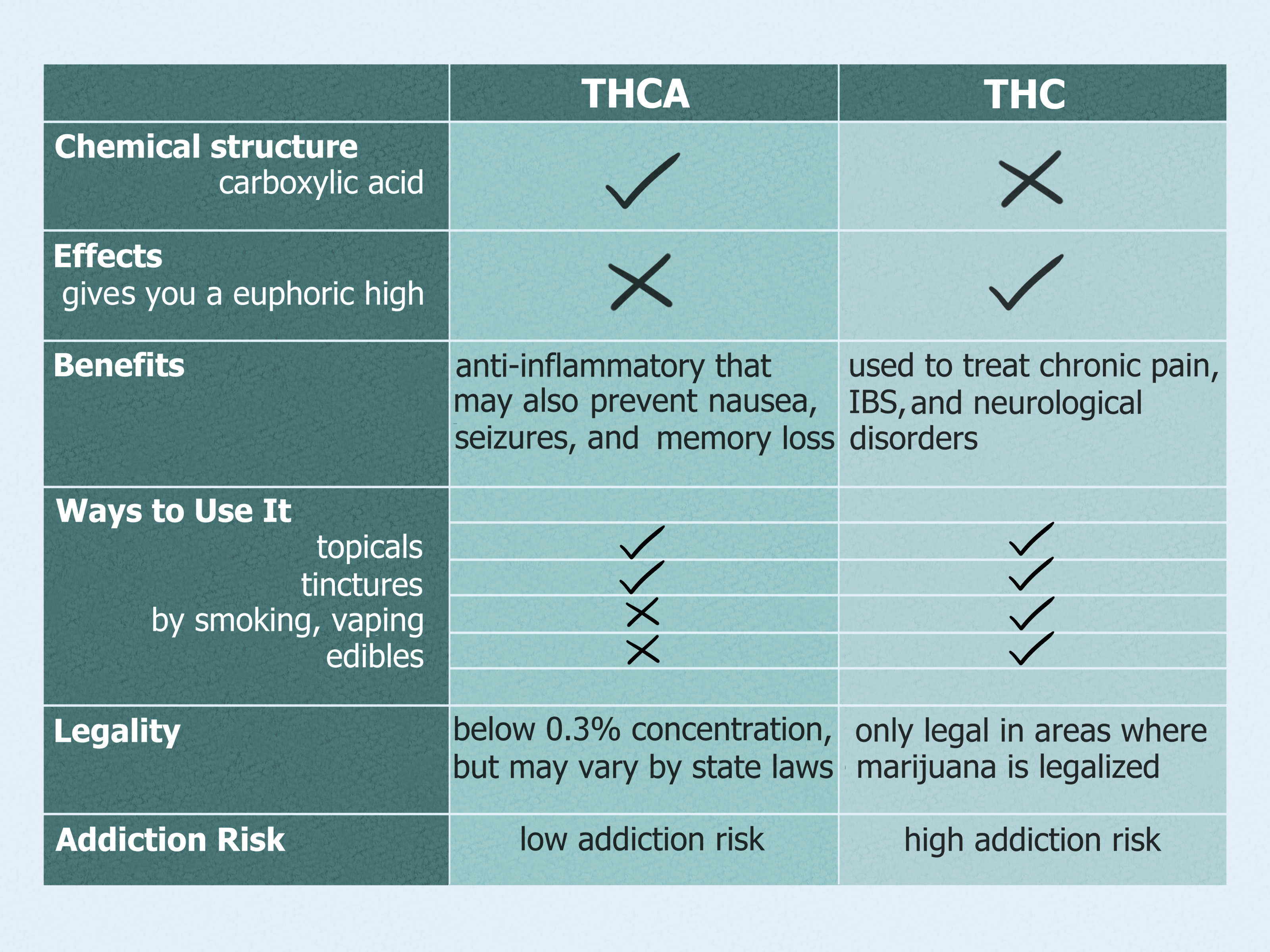
So what is the actual difference between THC and THCA? In plain English, THCA is the raw, acidic precursor to THC. THC is the form that causes intoxication. THCA lives in fresh or unheated cannabis. Once heat enters the chat, THCA changes into THC through a process called decarboxylation. That conversion is the whole plot twist.
This matters for more than just trivia night. The difference between THC and THCA affects how a product feels, how it is sold, how it may be tested, and why one label can look harmless while the real-world effect is anything but. Here is what experts want consumers to understand before they buy, try, or confidently explain cannabinoids to a friend at brunch.
What Are THC and THCA, Exactly?
THCA is the raw starting point
THCA stands for tetrahydrocannabinolic acid. It is naturally present in raw cannabis flower and is produced by the plant before heating. In fresh plant material, THCA is often the dominant form in cannabis varieties that people informally think of as “high-THC” strains. That sounds backward at first, but it makes sense once you realize the plant mostly makes the acid form first.
THCA has a slightly different chemical structure from THC. That extra acidic group may seem like a tiny molecular detail, but it changes the way the compound behaves. Most importantly, THCA does not produce the classic intoxicating effects associated with THC when it is in its raw form. In other words, THCA is not just “THC with a fancy name.” It is a different form with different immediate effects.
THC is the activated form
THC, usually referring to delta-9 tetrahydrocannabinol, is the cannabinoid most associated with the cannabis high. It is the form that produces intoxication and the altered perception, slower reaction time, and impaired coordination that public-health experts keep warning people about. THC is the celebrity, the headline maker, and occasionally the reason someone thinks it is a good idea to text their ex a paragraph about “energy.”
THC interacts with cannabinoid receptors in the body, especially in the central nervous system, which is why it can change mood, perception, appetite, memory, and reaction time. That is also why the difference between THCA and THC is not just academic. One is mostly the raw ingredient; the other is the form most likely to change how you feel in a noticeable way.
The Biggest Difference: Will It Get You High?
If you only remember one thing from this article, make it this: THCA in raw cannabis is generally not intoxicating, while THC is. That distinction explains a huge amount of consumer confusion.
People sometimes see a product marketed as “THCA flower” and assume it must be gentle, mild, or somehow separate from ordinary cannabis. Not so fast. If that flower is heated by smoking, vaping, or cooking, much of the THCA can convert into THC. At that point, the body is not receiving a neat little chemistry lecture. It is receiving THC.
That is why a raw cannabis smoothie and a smoked cannabis pre-roll are very different experiences, even if the starting plant material came from the same general family of cannabinoids. One keeps THCA mostly in its original form. The other flips the switch and turns much of that THCA into THC.
This also helps explain why product labels can be misleading to casual shoppers. A label may highlight low delta-9 THC numbers but still contain substantial THCA that can become THC when heated. For consumers, that can mean the product feels a lot stronger than the front label seems to suggest.
How THCA Turns Into THC
The transformation from THCA to THC happens through decarboxylation, which is a chemistry term for removing a carboxyl group from the molecule. In real life, this usually happens when cannabis is exposed to heat over time. Smoking, vaping, baking, and other heated processing methods can all drive that conversion.
THCA can also slowly degrade or convert during storage, but heat is the major accelerant. That is why raw flower in a jar is not the same thing as the same flower after it has been lit, baked, or vaporized. Same family, very different mood.
This conversion is so important that federal hemp testing rules do not just look at delta-9 THC in isolation during production testing. Regulators also account for the potential conversion of THCA into THC, which is why “total THC” has become a major concept in hemp compliance. More on that legal funhouse mirror in a minute.
THC vs. THCA at a Glance
| Category | THCA | THC |
|---|---|---|
| Full name | Tetrahydrocannabinolic acid | Delta-9 tetrahydrocannabinol |
| Found in | Raw or minimally heated cannabis | Heated, decarboxylated cannabis and many finished products |
| Intoxicating? | Generally no in raw form | Yes |
| Main consumer confusion | Can look “legal” or “mild” on labels | Usually recognized as the compound behind the high |
| What changes it? | Heat converts it into THC | Already in active form |
| Research status | Early-stage and still developing | Much better studied in humans |
What About Potential Benefits?
Here is where a little discipline helps. Cannabis marketing loves to sprint far ahead of the evidence. Human research on THC is much more developed than research on THCA. THC has known pharmacologic effects, and certain THC-related prescription products have been approved in the United States for specific uses, such as chemotherapy-related nausea and appetite issues in certain settings.
THCA research is more preliminary. Laboratory and animal studies suggest that THCA may have interesting biological activity, and researchers have explored possible anti-inflammatory, neuroprotective, and other effects. But “interesting” is not the same as “proven,” and “studied in a lab” is not the same as “established treatment for people.” That distinction is important enough to underline with a giant fluorescent marker.
So if you see a product page implying that THCA is a fully validated miracle compound with none of the complexity of THC, take a respectful step backward. The science is still evolving. Some signals are promising, but the evidence base is not nearly as mature as the marketing often suggests.
Safety and Side Effects: Where THC Changes the Conversation
Because THC is intoxicating, it raises practical safety concerns that do not apply in the same way to raw THCA. THC can impair coordination, slow reaction time, distort perception, and affect memory and judgment. That matters for driving, work, childcare, sports, and basically any task where “excellent decision-making” is part of the job description.
Edibles deserve special mention because they can catch people off guard. Effects can take longer to appear than inhaled products, which makes some people assume nothing is happening and consume more. That is how a calm Tuesday can become a very dramatic Wednesday preview. Public-health agencies also warn that THC-containing edibles can pose a serious poisoning risk to children, especially when they look like snacks or candy.
THC can also trigger uncomfortable effects such as anxiety, panic, dizziness, nausea, increased heart rate, short-term memory problems, or confusion, especially at higher doses or in people who are inexperienced. The fact that a product is sold openly or labeled as hemp does not automatically make it mild, predictable, or safe for every person in every setting.
The Legal Difference Is Real, Messy, and Weirdly Important
The legal side of THC versus THCA is where many consumers get whiplash. Federal law defines hemp by delta-9 THC concentration on a dry-weight basis, but federal hemp production testing also considers the potential conversion of THCA into THC when calculating total THC. In plain language, regulators know THCA can become THC, so the chemistry matters.
The U.S. Department of Agriculture has explicitly said that “high-THCA cannabis” is not a defined federal term. At the same time, hemp testing rules use a total THC formula that incorporates THCA. That is a major reason the marketplace feels so contradictory. A product may be marketed in a way that emphasizes low delta-9 THC at one moment, while the underlying chemistry tells a much more complicated story.
State law adds another layer of chaos. Some states regulate intoxicating hemp-derived products more aggressively than others. Some focus on delta-9 THC limits, some on total THC, some on finished products, and some on broader definitions of intoxicating cannabinoids. Translation: two jars that look nearly identical online may not be treated the same way in different states.
For shoppers, the practical takeaway is simple. Do not assume “THCA” means legally carefree, non-intoxicating in all forms, or immune from enforcement questions. That is a lot of pressure to put on five letters.
Will THCA Show Up on a Drug Test?
This is another area where labels and biology do not always get along. Routine drug testing is generally looking for cannabinoid metabolites associated with THC exposure rather than whether a product label said “THCA.” If a THCA product is heated and converted into THC before or during use, there is clear reason to treat it as a drug-test risk.
Even beyond intentional heating, consumers should be cautious about assuming any hemp-derived cannabinoid product is test-safe. Federal workplace guidance has long warned that cannabinoid products may lead to positive test results in some circumstances, and product labeling in the hemp space is not always a model of saintly precision.
If passing a drug test matters for your job, probation status, sports eligibility, or medical program, this is not the place for wishful thinking. “But the label said THCA” is not a scientific defense.
How Experts Usually Explain the Choice
Experts tend to frame THC and THCA less like rivals and more like stages of a cannabinoid lifecycle. THCA is the raw precursor. THC is the activated result. The practical questions are not just “Which one sounds trendier?” but:
- Is the product raw or heated?
- Is intoxication expected or not?
- How reliable is the labeling?
- What does state law say about this kind of product?
- Is there real human evidence behind the claims?
Once you ask those questions, the mystery fades fast. The confusion usually comes from marketing language, not from the basic chemistry.
Real-World Experiences: What People Commonly Notice With THC vs. THCA
Now for the human side of the story. Experiences with THC and THCA can feel dramatically different, and that difference often surprises first-time shoppers. Someone who tries raw cannabis juice or a minimally heated preparation rich in THCA may report no obvious high at all. They may describe the experience as subtle, neutral, or honestly a little anticlimactic. No spinning room, no giggles, no philosophical debate with a houseplant. Just a product that feels far less dramatic than they expected.
Compare that with someone who uses a THCA-rich flower in a heated form. Suddenly the experience can look much more like a traditional THC experience because the chemistry has shifted. People commonly describe feeling relaxed, floaty, mentally slowed down, more sensitive to sound or taste, and more likely to laugh at things that are only mildly funny. Others report the less charming side of THC: dry mouth, racing thoughts, anxiety, time distortion, or the unsettling realization that five minutes feels like it has been running for public office.
Edibles bring their own plot line. A person may think a THC or heat-activated THCA edible is not working, wait impatiently, then take more. Later, the effects arrive all at once and feel stronger, longer, and more intense than expected. People often report heavy body sensations, sleepiness, increased appetite, or a sense that their short-term memory just wandered off without leaving a forwarding address. For some, that is merely inconvenient. For others, especially inexperienced users, it can feel scary.
Another common real-world difference is predictability. Raw THCA products are often discussed as gentler because they do not typically deliver the same immediate intoxication as THC. THC products, especially high-potency ones, tend to feel more noticeable and less forgiving. Experienced users may say they can “handle it,” but tolerance changes the story. What feels manageable to one person may feel overwhelming to another, particularly if the product is stronger than the label suggests or if the person combines it with alcohol.
There is also the expectation gap. Some consumers buy THCA products thinking they have found a clever legal loophole that acts nothing like marijuana. Then they heat the product and have an experience that feels, functionally, very much like THC-rich cannabis. Others go in the opposite direction and assume THCA is just fake THC, then discover that raw THCA does not create the intoxication they expected. Same letters, different consequences, lots of consumer confusion.
People also talk about setting. Someone who uses a THC-heavy product at home on a quiet evening may describe it as relaxing or pleasantly mood-shifting. The same person using a similar product before driving, working, parenting, or walking into a crowded social event may describe it as distracting, stressful, or a terrible life choice made in stretchy pants. Context matters. So do dose, product type, personal sensitivity, and whether the person actually knows what they are taking.
The broad lesson from these experiences is not that one compound is “good” and the other is “bad.” It is that THC and THCA are not interchangeable in practice. The label may look similar, the plant may be related, and the conversation online may be a circus, but the user experience depends heavily on whether THCA stays raw or gets converted into THC. That single detail changes almost everything.
Bottom Line
THC and THCA are closely related, but they are not the same thing. THCA is the raw acidic precursor found in unheated cannabis. THC is the intoxicating form created when THCA is exposed to heat and decarboxylates. That one shift explains differences in effects, safety concerns, drug-test risk, and legal treatment.
If you are comparing products, the smartest question is not just “How much THC does this have?” It is also “How much THCA could become THC?” Once you start thinking that way, cannabis labels become a lot less mysterious and a lot more honest.
Note: This article is for informational purposes only and should not be treated as medical or legal advice.