Holiday lessons can make a classroom feel warm, curious, and connected. They can also make an educator feel as though they are walking a legal tightrope while carrying a stack of construction-paper snowflakes. Public schools serve students from many religious, cultural, and nonreligious backgrounds, so teaching about holidays requires more than a festive playlist and a bowl of peppermint candy.
The good news is that public schools can teach about religious and cultural holidays. The key is to keep the instruction academic, accurate, inclusive, and free from pressure to participate in religious observance. Done well, holiday education can help students understand history, literature, geography, art, migration, civic life, and the many traditions that shape American communities.
Done poorly, it can turn into a December parade where one tradition gets a float, everyone else gets a footnote, and the teacher spends January answering emails. The goal is not to remove holidays from school. The goal is to teach them thoughtfully.
Why Holiday Education Matters in Public Schools
Holidays are not just dates on a calendar. They are windows into family traditions, historical events, religious beliefs, cultural practices, foodways, music, migration, and community values. A lesson about Diwali may connect to South Asian history, the meaning of light in different traditions, and the global movement of people and ideas. A lesson about Hanukkah can lead to discussions about Jewish history, cultural resilience, and religious freedom. A unit on Eid can introduce the Islamic lunar calendar, charity, family gatherings, and the diversity of Muslim communities around the world.
Students also benefit when school recognizes that the United States is not a one-holiday country. A classroom may include students who celebrate Christmas, Hanukkah, Kwanzaa, Diwali, Lunar New Year, Eid al-Fitr, Eid al-Adha, Nowruz, Vaisakhi, Día de los Muertos, Thanksgiving, Juneteenth, or no holiday at all. Some students may observe a holiday deeply. Others may participate mostly through family food, music, gifts, or local traditions. Still others may not celebrate any religious holidays.
Teaching about holidays can build religious literacy and cultural understanding. It gives students language for discussing traditions respectfully rather than relying on stereotypes, movie scenes, or whatever an algorithm served them at 1:00 a.m. It also reminds students that people within the same faith or culture do not all celebrate in identical ways. There is no single “correct” way to observe a holiday, just as there is no single correct way to make mashed potatoes. Families have opinions.
The Constitutional Line: Teaching About vs. Celebrating
The most important distinction for public schools is simple: educators may teach about religion and holidays, but schools may not sponsor, promote, or require religious observance. Public school employees act on behalf of the government while teaching, so they must remain neutral toward religion and nonbelief.
That does not mean religion must disappear from the curriculum. Religion has influenced art, music, literature, law, history, architecture, civic movements, and cultures around the world. Ignoring it entirely would make school less accurate, not more neutral. Neutrality does not mean pretending that religious traditions do not exist. It means presenting them fairly without telling students what they should believe or how they should worship.
What Teaching About Holidays Can Look Like
Academic holiday instruction may include:
- Studying the history, origins, and cultural meaning of a holiday.
- Comparing calendars, seasonal traditions, music, literature, or art.
- Reading stories, examining primary sources, or analyzing holiday-related poetry.
- Discussing how different communities observe a holiday.
- Using religious objects or symbols temporarily as instructional materials.
- Exploring how holidays have changed over time in the United States and around the world.
- Teaching the secular, cultural, and religious dimensions of a holiday when those dimensions are relevant.
What Crosses the Line
School-sponsored religious observance is different from education. A teacher should not direct students to pray, recite a religious text devotionally, reenact a sacred ritual, sing worship music as an act of worship, or create a classroom activity that pressures students to affirm a religious belief.
For example, students may study the religious themes of Christmas in literature, art, or music. They should not be required to perform a nativity scene as a devotional exercise. Students may learn that Ramadan includes fasting from dawn to sunset for many Muslims. They should not be asked to “try fasting like Muslims” as a class project. Students may learn about the seder meal associated with Passover. They should not be directed to conduct a religious seder in school as though the classroom has become a congregation.
A useful test is this: Would the activity still make educational sense if no student personally practiced the tradition? If the answer is yes, the lesson may be academically grounded. If the activity depends on students acting out worship, affirming belief, or participating in a sacred ritual, it needs a serious redesign.
Start With Learning Objectives, Not Decorations
Strong holiday teaching begins with a clear academic purpose. Before planning crafts, snacks, or an ambitious bulletin board that requires three extension cords and a ladder, ask what students are supposed to learn.
A holiday lesson should connect to an instructional goal such as:
- Understanding how calendars reflect astronomy, geography, and culture.
- Analyzing primary sources related to Thanksgiving, Juneteenth, or Lunar New Year.
- Examining symbolism in art, music, and literature.
- Comparing how communities express gratitude, remembrance, renewal, or celebration.
- Studying immigration and the ways traditions change in new places.
- Practicing respectful discussion across religious and cultural differences.
When the learning objective is clear, activities become easier to evaluate. A lesson on the history of holiday cards can fit into a writing or design unit. A comparison of lunar and solar calendars can fit into science or social studies. A discussion of harvest traditions can connect to agriculture, Indigenous knowledge, geography, and environmental studies.
By contrast, “because it is December” is not really an objective. It is a weather report.
Include Many Traditions Without Turning Students Into Tour Guides
Inclusive holiday teaching does not require a classroom to sprint through every celebration on Earth between Thanksgiving and winter break. Teachers do not need a “Holidays of the World” unit so broad that every tradition receives six minutes, one clip-art icon, and a worksheet with suspiciously cheerful fonts.
Instead, choose a manageable number of holidays that connect naturally to the curriculum, local community, grade level, and instructional goals. Teach those topics with depth and accuracy. Make room for religious and nonreligious perspectives. A lesson can acknowledge that not every student celebrates holidays, that people may celebrate differently within the same community, and that some families keep their traditions private.
Students should never be required to represent an entire religion, ethnicity, country, or family tradition. Asking a student, “Can you explain what all Muslims do during Ramadan?” places an unfair burden on one child and assumes every community is a monolith. Better questions include:
- “What do reliable sources tell us about the holiday?”
- “How might traditions vary among families and regions?”
- “Would anyone like to share a personal experience voluntarily?”
- “What questions can we ask respectfully without assuming everyone celebrates the same way?”
Voluntary student sharing can be meaningful, but it should never become a required performance. A child should not have to bring food, clothing, artifacts, or spiritual explanations to prove that their family belongs in the classroom.
Teaching Winter Holidays With Balance and Accuracy
Winter holiday lessons often create the most anxiety because Christmas is highly visible in American public life. Christmas may be studied as a religious holiday, a cultural tradition, a commercial season, a literary topic, or a historical development. The challenge is ensuring that it does not become the unofficial school religion with a few decorative side dishes from other traditions.
A balanced unit might explore how different communities use light, food, music, family gatherings, generosity, memory, and seasonal change in winter celebrations. Students could compare the historical roots and modern practices of Christmas, Hanukkah, Kwanzaa, Diwali, Lunar New Year, Las Posadas, Yule, or New Year traditions. The emphasis should be on information, context, and variation rather than ranking holidays by how many ornaments they can support.
Religious Symbols and Classroom Displays
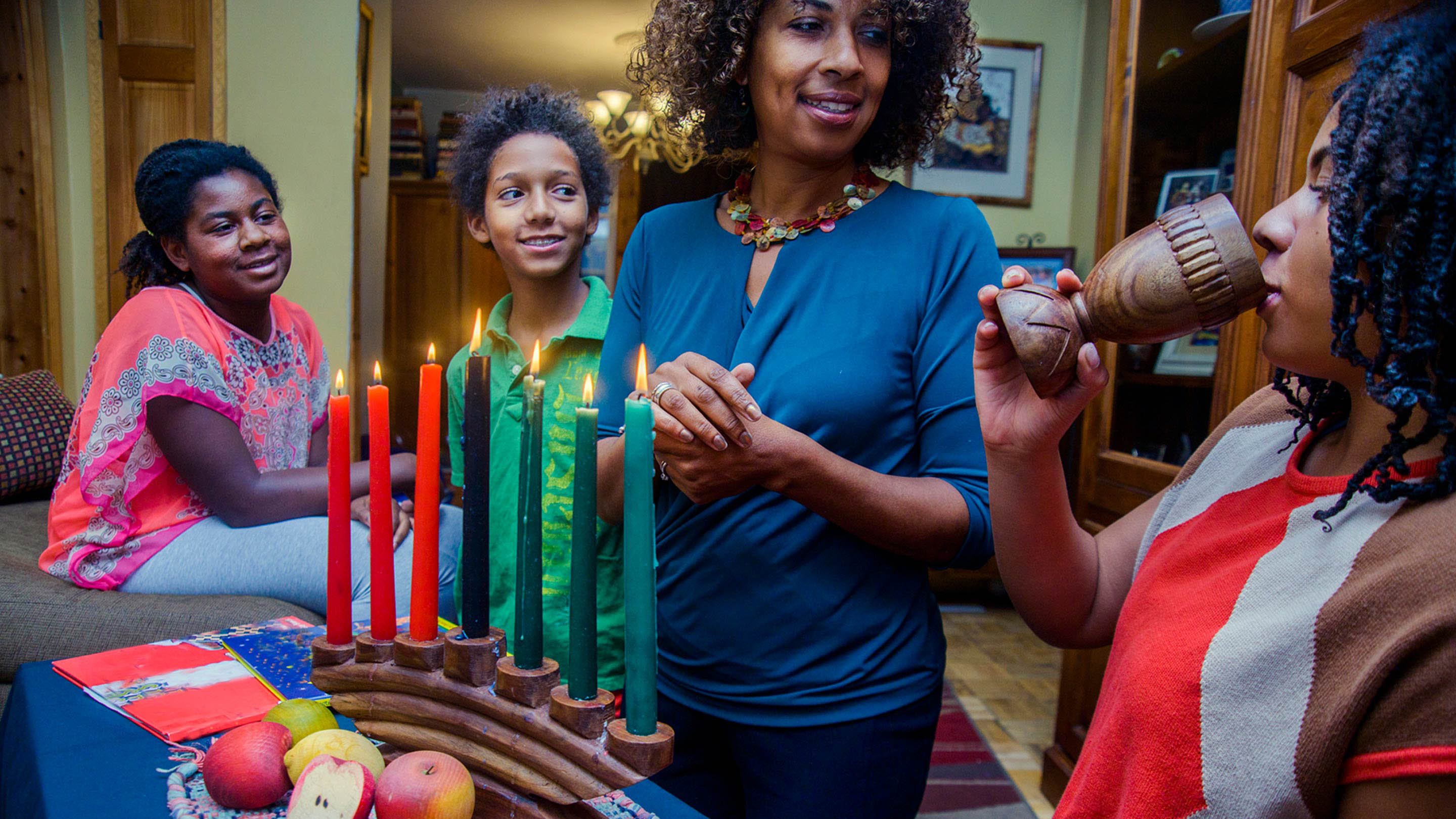
Religious symbols may be used as temporary teaching aids when they directly support a lesson. For example, a menorah, kinara, star, crescent, nativity image, diya lamp, or calendar may be appropriate when students are studying the holiday or tradition connected to it.
The difference lies in purpose and presentation. A temporary display with explanatory labels in a comparative lesson is different from decorating the entire classroom as a devotional environment. Symbols should help students learn, not tell students what to believe. A classroom can teach about a tradition without looking like a gift shop after a blizzard.
Thanksgiving: Teach History, Not a Costume Party
Thanksgiving offers a powerful opportunity to teach historical inquiry, civic memory, food traditions, gratitude, and the importance of examining whose voices are included in national stories. It also requires care. Simplified classroom narratives have often presented Native peoples as nameless background characters in a cheerful feast story centered on Pilgrims.
More accurate teaching includes Wampanoag perspectives, Indigenous knowledge, the history of colonization, and the ongoing presence of Native nations today. Students can examine how Thanksgiving stories have been told in textbooks, paintings, films, and family traditions. They can compare historical evidence with later myths. They can learn that gratitude and harvest celebrations existed in many Native communities long before the United States became a nation.
Teachers should avoid activities that reduce Native cultures to costumes, paper feather headbands, or generic “Indian” crafts. Native peoples are not historical props, and no classroom project should suggest otherwise. A stronger approach is to use tribally informed resources, primary sources, maps, contemporary Native voices, and discussions of specific nations and communities.
Music, Performances, and Holiday Assemblies
School concerts can be educational and joyful, but they need thoughtful planning. Music with religious origins may be included in a concert when it is selected for musical, historical, or cultural value and presented in a broader educational context. A program should not become a worship service in school clothing.
Balance matters. A concert with a dozen Christmas songs and one brief instrumental selection from another tradition may technically include diversity, but students can usually spot a token gesture faster than adults can find the missing microphone cable. Consider a program that includes secular winter songs, music from multiple traditions, instrumental works, poetry, and student-created pieces connected to themes such as light, peace, community, or seasonal change.
Students should have reasonable alternatives when a performance conflicts with their beliefs. Opt-out procedures should be respectful and private, not punitive. No child should be sent into the hallway with a worksheet labeled “Fun Alternative Activity” while everyone else receives applause and cookies.
School Calendars, Absences, and Accommodations
Public schools may close for practical reasons related to attendance, staffing, transportation, or community needs when a major holiday is likely to result in widespread absences. Schools should not treat closure as an endorsement of a religion. In practice, many districts consider local attendance patterns when setting calendars.
Even when a school remains open, students should be treated fairly when they miss class to observe religious holidays. Teachers can help by avoiding major exams, presentations, field trips, and high-stakes deadlines on days when large groups of students may be absent. When absences occur, students should have a reasonable opportunity to make up work without being penalized.
Planning ahead matters. A school calendar does not need to include every observance as a day off, but it should recognize that students and staff may have legitimate religious obligations throughout the year. A little calendar awareness can prevent a lot of last-minute confusion, frustrated families, and emails sent in all caps.
How Teachers Can Respond to Parent Questions
Parents may have sincere concerns about holiday lessons. Some may worry that a school is promoting religion. Others may worry that their child’s tradition is invisible or misunderstood. The best response is transparency.
Teachers can explain the academic purpose of the lesson, share the materials being used, describe how students may participate, and clarify that the school is not asking students to practice or affirm any religious belief. Families should know that instruction is designed to build knowledge and respect, not to tell children what to believe.
When concerns arise, avoid becoming defensive. Ask what specifically worries the family. Is the issue factual accuracy, required participation, a display, a performance, a scheduling conflict, or a student feeling excluded? Clear answers and early communication often prevent a misunderstanding from becoming a full-scale community debate with a parking-lot sequel.
Practical Checklist for Teaching About Holidays
- Use a clear academic learning objective.
- Teach about traditions; do not lead students in religious observance.
- Use accurate sources and avoid stereotypes.
- Include internal diversity within religious and cultural communities.
- Do not require students to speak for an entire group.
- Offer respectful alternatives when participation conflicts with family beliefs.
- Plan around known religious observances when scheduling major assignments.
- Use displays and symbols as temporary instructional tools, not devotional decorations.
- Communicate clearly with families about the purpose of lessons and events.
- Review district policies and state requirements before planning major holiday programming.
Final Thoughts: Curiosity Is More Educational Than Cheerleading
Teaching about holidays in public schools is not about finding the perfect neutral decoration or avoiding every difficult conversation. It is about helping students understand the world they live in while protecting their freedom to believe, not believe, celebrate, or abstain.
The strongest holiday lessons treat students as thoughtful learners. They invite curiosity, make room for complexity, recognize differences, and avoid turning any one tradition into the default setting for everyone else. A classroom does not need to celebrate every holiday. It does need to respect every student.
Classroom Experiences: What Thoughtful Holiday Teaching Can Look Like
In one elementary classroom, a teacher began December by placing a large calendar on the wall and asking students to notice how people organize time. Rather than opening with a Christmas craft, she introduced the idea that calendars can be solar, lunar, agricultural, civic, or religious. Students compared the school calendar with a lunar calendar and discussed why some holidays move from year to year. The class learned that dates are not always fixed because communities measure time in different ways. Suddenly, the calendar became more than a chart for counting down to vacation. It became a lesson in astronomy, history, and human creativity.
In another school, a middle school social studies teacher used Diwali as part of a unit on global migration. Students studied how the festival is celebrated in India, the United States, Guyana, Fiji, Singapore, and other places. They examined photographs, oral histories, and newspaper articles. The teacher emphasized that Diwali has different meanings for Hindus, Jains, Sikhs, Buddhists, and families who observe it primarily as a cultural celebration. One student voluntarily shared that her grandmother lit lamps every year. Another student said his family did not celebrate but enjoyed learning why neighbors decorated their homes with lights. The conversation stayed focused on learning, not on asking students to perform belief.
A high school English teacher used holiday poetry to show that celebrations can be joyful, complicated, commercial, spiritual, lonely, or deeply personal. Students compared poems about Christmas, Hanukkah, winter, homecoming, grief, and new beginnings. They discussed how authors use images of light, darkness, food, family, weather, and silence. The unit did not ask students to agree with any religious idea. It asked them to read closely, make evidence-based claims, and notice how writers describe belonging. That is what academic holiday teaching can do at its best: it opens a door without pushing anyone through it.
Thanksgiving can also become a model for stronger teaching. One teacher replaced a paper-headdress activity with an inquiry unit built around maps, Wampanoag perspectives, harvest traditions, and historical evidence. Students looked at paintings of the “First Thanksgiving” and asked who created the images, when they were made, and what details might be missing. They learned that history is not a cartoon with a turkey in the middle. It is a collection of stories, documents, memories, and perspectives that must be examined carefully. Students still discussed gratitude and food traditions, but they did so without reducing Native peoples to costumes.
Sometimes the most meaningful experience is small. A teacher notices that several students will miss school for Eid and moves a major presentation. A music director gives a student a respectful alternative to participating in a song that conflicts with family beliefs. A librarian adds books featuring many holidays and also books about children whose families do not observe them. These decisions do not require a grand assembly or a viral bulletin board. They simply communicate that students are seen.
The best classroom experiences around holidays are rarely the loudest. They are the ones in which students learn something true, feel safe asking questions, and leave with a wider understanding of the people around them. That is a lesson worth keeping long after the decorations come down.