Every family has a “Grandma Rule.” Sometimes it’s sweet (“Grandma’s house has better snacks”). Sometimes it’s harmless (“Grandma will absolutely buy the loud toy with 700 buttons”). And sometimesrarely, but loudlyit’s the kind that makes new parents sit up straight like a meerkat who just heard a twig snap.
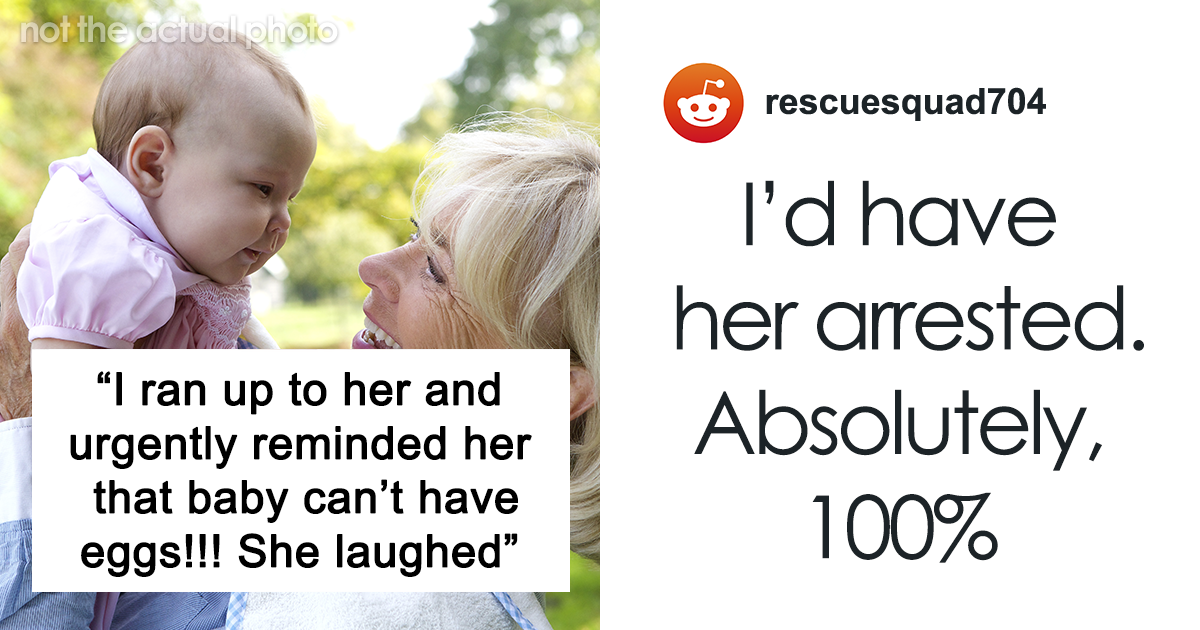
The viral-style scenario goes like this: a mother-in-law declares, with the confidence of someone who has never met a modern choking hazard chart, that “spoiling is what grandmas are for.” She then ignores basic safety, a friend’s grandbaby ends up in the emergency room, and she laughs about it like it’s a sitcom plot twist instead of a tiny human having a very bad day. Her adult son and his partner respond with the most unromantic sentence in the English language: “You will not be babysitting our future kids.”
If your first reaction is “That’s extreme,” and your second reaction is “Wait… is it?”congrats. You have the exact emotional whiplash that keeps parent forums alive and thriving. Let’s talk about why this kind of boundary isn’t petty… it’s preventative maintenance.
When “Spoiling” Becomes a Safety Problem
Here’s the truth nobody likes to say at the family barbecue: babysitting is not a right. It’s a role. And roles come with requirementslike “take parents seriously,” “follow current safety guidance,” and “do not treat an ER visit like stand-up material.”
Spoiling is supposed to mean extra love. Extra attention. Extra patience. It can even mean extra treats when age-appropriate. But it does not mean:
- feeding a baby whatever you feel like because “my kids survived,”
- ignoring safe sleep because “the baby likes it better,”
- skipping car seat rules because “it’s just a short drive,”
- or minimizing an injury with “Kids are so dramatic these days.”
The biggest red flag in the story isn’t even the mistakecaregivers can make mistakes. The biggest red flag is the attitude afterward: laughing, dismissing, doubling down, or acting like the parents are “too sensitive.” That mindset is what turns a one-time error into a repeating pattern.
Why Parents Draw a Hard Line (Even Before the Baby Exists)
Modern parenting isn’t “everyone’s feelings get a trophy.” It’s “we know more now.” Safety recommendations change because doctors, researchers, and child safety organizations track what actually sends kids to the ERand what prevents tragedy.
Grandparents aren’t villains for being from a different era. The problem starts when someone treats updated guidance like an insult. A boundary like “you won’t babysit” is often a response to one of these patterns:
- Rule-testing: “I’ll do it my way and they’ll never know.”
- Minimizing: “It’s fine. Babies are tougher than you think.”
- Mocking: “Look at you and your little list of rules.”
- Performing competence: “I raised kids, therefore I can’t be wrong.”
Babysitting requires alignment. If the caregiver sees safety rules as negotiable, parents are forced into a risk-management role: supervising, policing, double-checking, and wondering what “small” rule got ignored this time. That’s not a break. That’s a stress internship.
The “Grandma Hazards” Most Likely to Send Little Kids to the ER
Let’s get specific, because vague warnings like “Be careful!” are about as useful as telling a toddler, “Try being reasonable.” Here are some of the most common categories where well-meaning (or overconfident) caregivers get it wrong.
1) Choking: The Sneakiest Emergency
Choking hazards aren’t always “dangerous-looking.” They’re often round, smooth, and perfectly sized to cause panic. Think whole grapes, hot dogs cut into coins, nuts, popcorn, chunks of cheese, raw carrot rounds, and sticky globs of nut butter.
“But I cut it!” is not the same as “I cut it the safe way.” For many risky foods, safer prep means slicing lengthwise, chopping into very small pieces, cooking until soft, or skipping it entirely until the child is older and developmentally ready. Add in a toddler who laughs while eating, or a baby who’s just learning textures, and a snack can turn into a siren situation.
The parent-friendly rule: kids should sit while eating. No “walking tacos” for toddlers. No “run around with a handful of snacks.” No eating in the car seat when you’re not actively watching. And if a caregiver isn’t trained on what to do in a choking emergency, that’s not “old school.” That’s a gap that needs fixing.
2) Safe Sleep: Cozy Isn’t Always Safe
Babies love soft things. Baby brains are basically drawn to fluff like moths to a porch light. Unfortunately, “cozy” can be risky for infants. Safe sleep guidance emphasizes a firm, flat sleep surface, baby on their back, and a sleep space free of loose blankets, pillows, stuffed animals, and other soft items.
Many conflicts between parents and grandparents happen right here. A grandparent may want to add a blanket, a pillow, or let the baby nap on a couch “just this once.” Parents hear: “I’m about to create a preventable risk because it feels nicer.”
If you want an easy phrase that’s firm without being insulting: “We follow ABC sleep: Alone, on their Back, in a Crib.” You don’t need a debate club. You need a consistent routine.
3) Button Batteries and Tiny Objects: The Modern House Trap
Grandparents’ homes are often full of charming gadgets: remotes, key fobs, hearing aids, kitchen timers, singing greeting cards. Many of these contain button or coin batteriessmall, shiny, and extremely attractive to curious little hands.
The scary part is how quickly a battery can cause severe injury if swallowed or lodged. This is a “don’t wait and see” situation. If ingestion is suspected, caregivers should seek immediate medical help and contact Poison Control. It’s one of the clearest examples of why updated childproofing matters: yesterday’s hazards weren’t powered by tiny lithium discs.
4) Car Seat “Short Trip” Logic
“We’re only going around the corner” is not a safety planit’s a bedtime story people tell themselves. Car seat guidance is built around proper restraint on every trip, and keeping kids rear-facing as long as their seat allows (within the manufacturer’s height/weight limits).
This is also where family dynamics get spicy because the caregiver may feel judged. Here’s the reframe: car seats aren’t about your parenting résumé. They’re about physics. If a caregiver refuses to buckle correctly, or loosens harness straps “for comfort,” that’s not a preference. That’s a reason to revoke driving privileges with the child.
So… When Is It Reasonable to Ban Someone From Babysitting?
“Ban” sounds dramatic, but sometimes it’s simply the cleanest word for “we’re no longer taking this risk.” Consider limiting or ending babysitting if any of these are true:
- They ignore rules on purpose (not confusionchoice).
- They hide what happened (“Don’t tell your mom”).
- They mock safety or label parents “paranoid.”
- They don’t take injuries seriously or laugh them off.
- They refuse training (CPR/first aid, safe sleep, car seat basics).
One mistake + sincere accountability can be repaired. A pattern of dismissiveness usually can’tbecause the next “small” rule might be the one that matters most.
How to Set Babysitting Boundaries Without Starting World War III
You’re allowed to be clear and kind at the same time. The goal is not to “win.” The goal is to keep your child safe while preserving as much relationship as possible.
Step 1: Define Non-Negotiables (Keep It Short)
Give a caregiver a list of 47 rules and you’ll get the same reaction as handing someone a phone book and calling it “light reading.” Pick 5–8 safety non-negotiables. Examples:
- Safe sleep rules (ABC sleep; no couch naps).
- No high-risk choking foods unless prepared the safe way.
- No honey or unapproved foods for babies (follow parent instructions).
- Car seat use exactly as instructed, every trip.
- No button batteries, meds, or small objects accessible.
- Call us immediately for any injury, choking episode, fever in a young infant, or head hit.
- No “secrets” with the child. Ever.
Step 2: Offer a “Yes, And” Version of Spoiling
People fight less when they feel they still get to be themselves. Give grandma a lane that’s safe:
- Extra story time, silly songs, “grandma-and-me” craft box
- Special outing rules (park picnic, library day)
- One “signature” tradition (pancake morning, holiday ornament, bedtime poem)
- Age-appropriate treats approved by parents (because yes, joy matters too)
Step 3: Use Scripts That Don’t Invite Debate
When someone says: “Spoiling is what grandmas are for.”
You can say: “Totally. Spoil with love and fun. Safety rules aren’t negotiable.”
When someone says: “I raised kids. I know what I’m doing.”
You can say: “And you did a lot right. Guidance has changed, and we’re following current recommendations.”
When someone laughs off an injury:
You can say: “We don’t joke about medical emergencies. That’s why we can’t do unsupervised care.”
Step 4: Create a Simple Babysitting Readiness Checklist
If you want a practical tool that reduces drama, try a checklist framed as “making it easy,” not “testing you.” Here’s a parent-friendly version:
- Emergency contacts posted; phone charged.
- Poison Control number saved.
- Approved sleep space ready (firm, flat, empty crib/bassinet).
- Food plan agreed (including safe cutting/prep).
- Hazards secured (meds, cleaners, small objects, batteries).
- Car seat installed and checked if driving is involved.
- Caregiver knows when to call parents vs. urgent care vs. 911.
What the “Laughing About It” Detail Really Means
People can laugh from nerves. They can laugh because they’re embarrassed. But laughing while dismissing the seriousness of an ER visit often signals something else: a lack of empathy and accountability.
Parenting requires trust. Trust isn’t “I believe you love the child.” It’s “I believe you will protect the child when it’s inconvenient, when it’s annoying, when you think the parents are overreacting, and when you’d rather do things your way.” If someone shows you they won’tbelieve them the first time.
Extra Section: Real-Life Experiences Families Share About Grandma Boundaries (Approx. )
Families who set “no babysitting” boundaries often describe it as less of a single dramatic decision and more of a slow accumulation of “wait, what?” moments. Here are a few common experiences parents talk aboutnames and details vary, but the lessons are familiar.
Experience #1: The Snack That Wasn’t Age-Appropriate
One parent described walking into the room to find their toddler happily chewing a whole grapebecause “she loves grapes!” Grandma didn’t mean harm; she just didn’t realize how risky certain shapes can be. The fix wasn’t a screaming match. It was a rule: grapes get sliced lengthwise, hot dogs get chopped small, popcorn waits until the child is older, and snacks happen sitting down. Babysitting resumed only after grandma agreed that “cute” snacks never outrank “safe” snacks.
Experience #2: The “Couch Nap” Argument
Another family shared that their infant always fell asleep during cuddles, and grandma kept letting the baby nap on a couch because “she sleeps so well here.” The parents finally said, “If the baby is sleepy, we move to the cribevery time.” Grandma felt criticized, but the parents reframed it: they weren’t accusing her of being careless; they were insisting on a consistent system that doesn’t rely on luck. Supervised visits continued until grandma could show she’d follow the routine without bargaining.
Experience #3: The “Don’t Tell Mom” Moment
Many parents say the real deal-breaker wasn’t a mistakeit was secrecy. A caregiver might offer a forbidden food, skip a car seat buckle “just once,” or ignore a nap schedule, then tell the child to keep it quiet. That single sentence (“Don’t tell Mom”) made parents realize they weren’t dealing with forgetfulness. They were dealing with a willingness to undermineand that’s when babysitting privileges ended.
Experience #4: The Defensive Apology That Wasn’t an Apology
Parents often describe a fork in the road after an incident. If grandma says, “I’m so sorry, I didn’t knowteach me,” trust can rebuild. But if grandma says, “Well, you turned out fine,” or “You’re overreacting,” the relationship gets stuck. One couple shared they offered a CPR/first-aid class as a peace offering. Grandma refused because it was “insulting.” That refusal made the parents’ decision easy: love isn’t enough; willingness to learn is part of safety.
Experience #5: Finding a “Yes” That Still Protects the Child
Not every story ends with a permanent ban. Some families pivoted to safer involvement: grandma visits while a parent is home, grandma does daycare pickup but not meals, or grandma gets “fun time” on weekends without being responsible for naps, sleep, or driving. The happiest versions usually share one ingredient: grandma learns that boundaries aren’t punishmentthey’re the price of trust. And parents learn that saying “no” to babysitting can still mean saying “yes” to a relationship.
Conclusion: Spoil With Love, Not With Risk
The line “Spoiling is what grandmas are for” can be adorablewhen it means affection. But when “spoiling” becomes code for ignoring safety, dismissing parents, or laughing off a medical emergency, parents aren’t being dramatic by drawing a boundary. They’re being responsible.
If you’re navigating this dynamic, remember: you don’t need everyone to agree with your rules. You just need anyone caring for your child to follow them. Because the goal isn’t to win an argument at Sunday dinner. The goal is to send your kid to grandma’s and get them back safe.