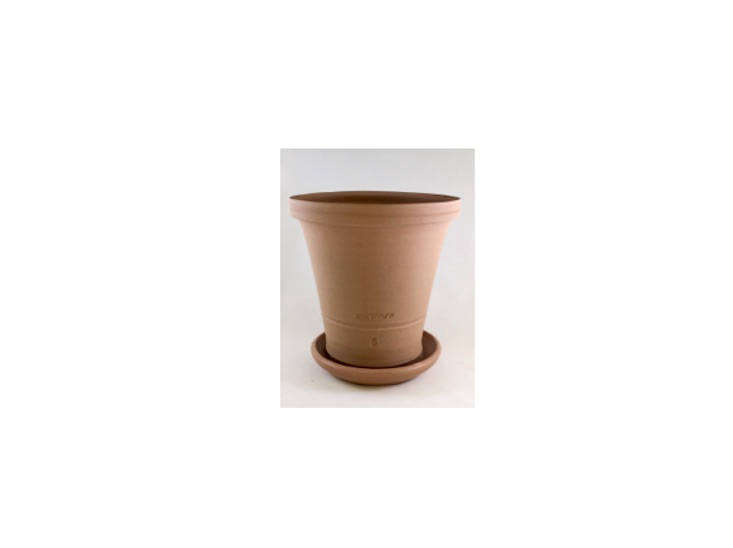
Some flower pots are basically real estate for roots. Others are tiny pieces of sculpture that happen to tolerate potting mix. The SPC1138-7 Ben Wolff #6 Flower Pot falls comfortably into the second categorywhile still doing the important first-category job of giving plants a functional home.
This handmade gray planter was created by Connecticut potter Ben Wolff, whose work blends garden utility with the pleasing irregularity that mass-produced pots spend their entire factory lives trying to fake. It is the kind of vessel that can make a simple rosemary plant look like it has an agent, a stylist, and a very busy publicist.
Originally listed as a one-of-a-kind piece, SPC1138-7 featured a gray finish, a sealed saucer with cork pads, and an approximately 8.5-inch height and 8.5-inch outside width. The inside rim measured about 7.75 inches across, while the base measured roughly 4.5 inches wide. The historical listing also identified the planter as handmade and personally signed.
What Makes the SPC1138-7 Ben Wolff #6 Flower Pot Special?
The appeal of this Ben Wolff flower pot is not that it tries to be perfectly uniform. Quite the opposite. Handmade pottery carries small visual differences in finish, shape, texture, and color, which means it has more personality than the average beige storage bin.
Ben Wolff produces his pottery on a wheel in Goshen, Connecticut, using different clays, glazes, and finishes for home and garden pieces. His flower pots are designed with drainage and separate sealed saucers, making them more practical than decorative vessels that force plant owners to play a stressful guessing game every time they water.
The maker’s numbering system is also worth understanding. In this collection, the number on the pot is not a universal container-size measurement. It indicates the amount of wet clay used during production. In other words, “#6” is part of the studio’s handmade classification system, not a guarantee that every #6 pot will have identical dimensions. Since each planter is wheel-thrown, small size variations are expected and should be appreciated rather than treated like a crime scene investigation.
A Handmade Planter With a Living Finish
One of the most interesting features of Ben Wolff pottery is its porous character. The pot is meant to age, change color, and develop patina over time. Water quality, soil type, fertilizer residue, sunlight, and plant-care habits can all influence how the surface evolves. White and gray finishes may show this aging process more quickly than darker finishes, giving each planter a garden-worn appearance that becomes more individual with use.
That means the SPC1138-7 Ben Wolff #6 Flower Pot is not the right choice for someone who wants a planter that looks factory-fresh forever. It is a better match for someone who enjoys the slow visual storytelling of handmade pottery: a soft mineral mark here, a slightly deeper gray there, and the gradual evidence that the pot has actually been part of a life with plants.
Design Details: Why the Shape and Saucer Matter
The dimensions of this gray ceramic flower pot make it a versatile choice for medium-sized indoor plants, herbs, compact flowering plants, and carefully selected patio greenery. Its approximate 7.75-inch inside opening can work well for a plant currently growing in a 5- or 6-inch nursery container, depending on the root ball and the plant’s growth habit.
That does not mean every plant should be promoted into this pot immediately. A container that is dramatically larger than a plant’s root system can hold excess moisture around the roots. For many houseplants, choosing only one size up is often the safer move when repotting. Signs that a plant may need more room include roots circling tightly in the pot, roots escaping through drainage holes, or soil drying unusually fast.
The sealed saucer is more than a decorative sidekick. It catches drainage water and helps protect tables, shelves, windowsills, and other surfaces from moisture. Cork pads add another layer of protection by reducing direct contact between the saucer and furniture. This is especially useful for indoor gardeners who enjoy plants but do not enjoy discovering a mysterious ring on a beloved wood table three weeks later.
Still, a saucer should not become a permanent swimming pool for roots. Most plants do poorly when their containers remain in standing water. Drainage holes allow excess water to leave the potting mix, helping maintain oxygen around the root zone.
Best Plants for a Ben Wolff #6 Flower Pot
The right plant depends on light, watering habits, root growth, and whether the pot will live indoors, on a covered porch, or in a sunny garden corner. Because the SPC1138-7 is a porous handmade flower pot, it is particularly well suited to plants that appreciate a potting mix that can dry moderately between waterings.
Herbs for a Kitchen Window or Patio
Rosemary, thyme, oregano, sage, and compact basil varieties can look excellent in a gray handmade planter. The muted finish creates a handsome contrast with fragrant green foliage, and the pot can make a kitchen herb garden feel less like a plastic nursery display and more like someone in the house owns a linen apron on purpose.
Herbs generally need loose, well-drained potting mix and containers with drainage holes. They may require regular watering, especially in warm or windy conditions, but allowing excess water to escape is essential.
Indoor Foliage Plants
A compact pothos, heartleaf philodendron, peperomia, small snake plant, or upright fern can be a strong indoor match, provided the light level suits the plant. The gray finish works particularly well in neutral interiors, Scandinavian-style rooms, farmhouse kitchens, modern apartments, and spaces where every object is expected to look calm enough to have its own meditation app.
For moisture-sensitive plants, such as succulents and many snake plants, use a fast-draining mix and avoid watering on a fixed calendar. Succulents need drainage holes and soil that does not stay wet for long periods, because trapped moisture can quickly contribute to rot.
Seasonal Flowers
For a porch, patio, or entryway, consider pansies, violas, compact petunias, lobelia, miniature dahlias, or small annual combinations. A single dramatic plant often works better than overstuffing the container. Handmade pottery already brings visual interest, so there is no need to plant it like a floral parade float unless that is truly your calling.
Container gardens can highlight the texture, color, and form of individual plants, while mixed arrangements can create a “bouquet with roots” effect.
How to Plant in the SPC1138-7 Ben Wolff Flower Pot
Planting a handmade ceramic pot is simple, but a few smart choices can prevent future root drama.
Use Potting Mix, Not Garden Soil
Do not fill this planter with dense soil dug directly from the yard. Garden soil tends to compact inside containers, reducing airflow and making drainage less reliable. A high-quality potting mix or soilless container mix is usually a better choice because it is lighter, more porous, and formulated to retain enough moisture while still draining excess water.
Many container mixes contain ingredients such as peat moss, coconut coir, perlite, vermiculite, bark, or compost. These ingredients help create the balance container plants need: water retention without turning the root zone into a swampy retirement community for fungus.
Skip the Gravel Layer
It is tempting to place rocks or gravel in the bottom of a planter. It sounds logical, it looks industrious, and it gives you something to do with those decorative pebbles you bought in 2014. Unfortunately, it does not improve drainage in the way many people expect.
Research-based extension guidance explains that a continuous column of potting mix drains better than a pot layered with rocks, gravel, or broken pottery. Instead, fill the container with potting mix and make sure the existing drainage hole remains open.
Leave Watering Room at the Top
Do not pack soil all the way to the rim. Leave roughly an inch of space so water can soak in without immediately rushing over the edge like a tiny muddy waterfall. This small gap also gives you room to top-dress with fresh potting mix later if the soil settles.
Water Thoroughly, Then Let It Drain
When watering, apply enough moisture for water to move through the potting mix and out of the drainage hole. Then allow the planter to drain fully. Container plants often require more frequent watering than in-ground plants, especially during warm weather, but the exact schedule depends on the plant, season, sunlight, humidity, and potting mix.
A practical approach is the finger test: check the soil below the surface before watering. If the top inch or two is dry for a plant that prefers moderate moisture, it may be time to water. Succulents and drought-tolerant plants should dry more thoroughly between waterings.
Care Tips for Porous Handmade Pottery
Because Ben Wolff pots are porous, they can exchange moisture with the surrounding air more readily than glazed plastic or fully sealed ceramic containers. That can be beneficial for airflow around roots, but it also means the potting mix may dry faster.
Porous containers such as clay and wood allow air movement into the root zone but can lose moisture more quickly than nonporous materials. In hot, dry, or windy conditions, check the soil more often than you would in a plastic planter.
To keep the planter looking good without stripping away its character, wipe the exterior gently with a soft damp cloth or soft brush. Avoid aggressive scrubbing, harsh chemicals, or attempts to force the surface back into a brand-new appearance. The pot’s shifting color and patina are part of the handmade experience, not a defect waiting to be erased.
At the end of a growing season, remove old potting mix if the plant has been discarded or suffered from disease. Wash the saucer and container with warm, soapy water before replanting, then allow both to dry completely. Clean containers and fresh growing media are helpful habits when starting new plantings.
For winter care, do not assume that any handmade porous planter is automatically frost-proof. If temperatures regularly fall below freezing, move the pot to a protected location or follow the maker’s care instructions. Plant roots in containers are more exposed to cold than roots growing in the ground.
Is the SPC1138-7 Ben Wolff #6 Flower Pot Worth It?
For shoppers comparing this piece with inexpensive ceramic planters, the answer depends on what they value. A big-box pot may hold a plant perfectly well. But a handmade Ben Wolff flower pot offers something different: wheel-thrown craftsmanship, a signed maker’s mark, a separate sealed saucer, a muted gray finish, and an appearance that is designed to become more distinctive over time.
It is not merely a container. It is an object that occupies visual space even when the plant is having an off week. That matters because plants are not always in peak condition. Leaves brown. Basil gets leggy. A fern occasionally decides to become a crispy mystery. A beautiful pot helps the whole arrangement remain appealing while the gardener regroups.
Ben Wolff’s work has also been recognized in garden and design settings for its handmade character and understated forms. His pottery is made in Goshen, Connecticut, and his gray pots have been used in greenhouse and garden environments where texture and natural patina are part of the overall design language.
Practical Experience: Living With a Handmade Ben Wolff Flower Pot
The following section is a practical ownership-style perspective based on the product’s documented materials, construction, and established container-gardening practices. It is not presented as a personal customer testimonial.
Living with a planter like the SPC1138-7 Ben Wolff #6 Flower Pot is a little different from living with a glossy ceramic pot bought on impulse while purchasing paper towels. The first difference is visual. Handmade pottery does not sit silently in a room. It has texture, small variations, and a surface that catches changing light throughout the day. In the morning, the gray finish may look soft and chalky. In the afternoon, it may appear deeper, cooler, and slightly more stone-like.
The second difference is that the pot invites attention. Not obsessive attentionno one needs to build a shrine to a flower potbut the pleasant kind of attention that makes watering plants feel less like a chore. The planter’s porous surface and separate saucer create a gentle reminder that plants are living things with changing needs. If a basil plant drinks quickly during a bright summer week, the potting mix may dry sooner than expected. If a pothos spends a cloudy stretch near a window, it may need less water. The pot becomes part of the routine instead of disappearing into the background.
There is also a certain satisfaction in seeing the pot age naturally. Many home décor products are designed to resist change at all costs. A handmade porous planter does the opposite. It accepts that water, minerals, soil, and sunlight will leave subtle traces. That can feel refreshingly honest. A faint change in tone is not necessarily damage; it can be evidence that the planter has carried herbs, flowers, or houseplants through an actual season of care.
In a kitchen, the SPC1138-7 style works especially well with culinary herbs. A rosemary plant or thyme arrangement can make the pot feel useful every day, not just decorative on weekends when guests are coming over. On a shelf or entry table, a compact trailing plant can soften the pot’s substantial shape and turn it into a calm focal point. Outdoors, the gray finish can blend beautifully with stone, weathered wood, brick, or gravel without competing with flowering plants.
The practical reality is that handmade clay pottery asks for a little awareness. You need to check moisture rather than watering automatically. You need to empty excess water from the saucer when appropriate. You should bring it somewhere protected during freezing weather unless the maker specifically confirms it is safe outdoors year-round. These are not burdens so much as part of the relationship between gardener, plant, and pot.
That relationship is what makes a planter like this memorable. The plant will grow, change, shed leaves, recover, and occasionally test your patience. The pot will remaina useful, durable, quietly expressive object that becomes more personal with every season. A machine-made planter may be easier to replace. A handmade Ben Wolff flower pot is easier to keep.
Final Thoughts
The SPC1138-7 Ben Wolff #6 Flower Pot combines practical planting features with the charm of handmade studio pottery. Its gray finish, porous surface, drainage design, sealed saucer, cork pads, and one-of-a-kind character make it a strong option for gardeners and design lovers who want more than a generic plant container.
Choose a plant that matches the pot’s scale, use a lightweight container mix, water thoughtfully, and let the finish develop naturally. Over time, the planter may become one of those rare household objects that looks better because it has been usednot despite it.