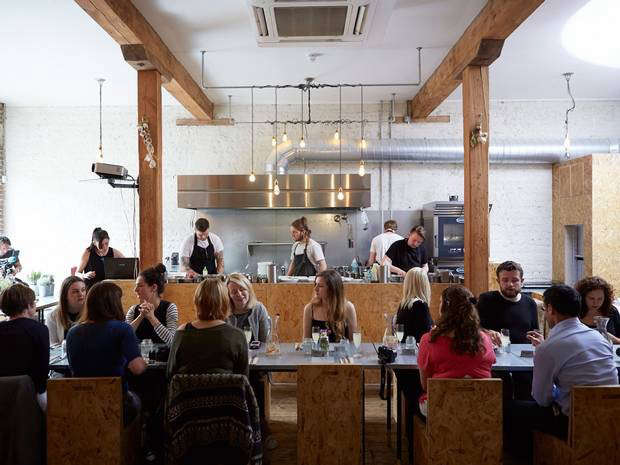
Most restaurants hide their trash situation like it is an embarrassing family secret. The bins are out back, the packaging is somebody else’s problem, and the food scraps disappear into the great beyond with the speed of a magician making a coin vanish. Silo, which began in Brighton, flipped that logic on its head and politely asked a question that made the hospitality world very uncomfortable: what if the trash can is not a necessity, but a design failure?
That question became the heartbeat of one of the most influential restaurant concepts of the last decade. Founded by chef Douglas McMaster, Silo was built around a radical idea that now feels less radical and more like common sense wearing chef whites: waste should be designed out of the system from the start. Instead of cooking beautifully and cleaning up the mess later, Silo tried to make the mess impossible in the first place.
And that is why Silo mattered. It was not just a cool restaurant with a sustainability slogan and some fashionable reclaimed wood. It was a working prototype for a different food system. Ingredients came from suppliers who used reusable containers. Flour was milled in-house. Fermentation transformed scraps into flavor. Interiors were built from repurposed materials. Compost was not treated as an afterthought, but as part of the architecture of the business. Dining at Silo was meant to feel delicious first, eye-opening second, and preachy never.
In an era when food waste has become one of the clearest symbols of a broken food economy, Silo offered something rare: not just critique, but a functioning alternative. It showed that a restaurant could be inventive, stylish, and ambitious without acting like landfill was part of the tasting menu.
What Made Silo in Brighton Different?
Silo first made its name in Brighton in 2014, and from the beginning it aimed to be more than another ethically minded place with a chalkboard and good intentions. Its philosophy grew from the “no bin” concept introduced in Australia by Joost Bakker, then developed by McMaster into what became known as the world’s first zero-waste restaurant. That origin story matters because Silo was never only about reducing waste a little bit. It was about redesigning the whole operation so waste had fewer chances to appear in the first place.
That meant sourcing ingredients directly from farmers and producers, often in reusable vessels rather than disposable packaging. It meant using whole ingredients rather than relying on trimmed, pre-portioned, highly packaged convenience products. It meant making things on site that many restaurants simply buy ready-made, from bread components to cultured and fermented elements. In other words, Silo tried to reverse some of the habits of industrial food service and replace them with a more circular, craft-based system.
The Brighton restaurant also made its principles visible. This was not sustainability hidden in the spreadsheet. The flour mill was part of the story. The composting system was part of the story. The furniture and plates were part of the story. Even the room itself seemed to say, “Hello, welcome to dinner, and by the way, your garbage habits are looking a little dramatic.”
Designed with the bin in mind
One of Silo’s smartest ideas was also one of its simplest: build the restaurant backwards from the trash can. If an object, ingredient, or process would create unnecessary waste later, question it now. That approach sounds obvious, but it is surprisingly rare. Most restaurants optimize for speed, cost, consistency, and aesthetics, then deal with the packaging mountain and food trim after the fact. Silo did the opposite.
At Brighton, that led to a dining room filled with upcycled materials and a kitchen culture obsessed with utility. Old school-table legs became dining tables. Seating was made from pulped wood waste. Plates were made from recycled plastic bags. A compost machine handled organic waste rapidly enough that the restaurant could think of “waste” as a nutrient stream rather than a dead end. It was sustainability, yes, but it was also industrial design, systems thinking, and a bit of punk attitude in one package.
The Mechanics of Zero-Waste Dining
For all the attention Silo received, the restaurant was not running on vibes alone. Its zero-waste identity depended on a set of practical systems that connected sourcing, cooking, service, and design. That is what made it compelling. Plenty of restaurants talk about sustainability. Silo tried to operationalize it.
Direct sourcing and reusable delivery
The first move was to attack waste before ingredients even crossed the threshold. Silo worked directly with farmers, fishers, millers, dairies, and other producers, favoring local and low-waste supply relationships over anonymous industrial distribution. Reusable delivery vessels helped cut the stream of cardboard, plastic film, and disposable containers that normally pile up behind restaurant kitchens like a very sad modern sculpture.
This mattered because packaging is often treated as unavoidable collateral damage in food service. Silo argued that it is usually the product of lazy system design. When the supply chain is closer, more transparent, and more collaborative, ingredients can move in loops rather than one-way trips to the dumpster.
Fermentation as flavor, not just preservation
If Silo has a secret weapon, it is probably fermentation. The restaurant’s so-called fermentarium turned scraps and trim into some of the kitchen’s most interesting flavors. Vegetable peelings, cheese rinds, excess dairy, and other overlooked bits could be transformed with salt, time, and technique into garums, seasonings, and layered flavor bases.
This is where Silo stopped being merely admirable and started becoming exciting. Too often, sustainable cooking gets framed as a moral compromise, as if diners must heroically accept blandness in exchange for saving the planet. Silo rejected that bargain. At its best, waste reduction became a path to more complexity, not less. A by-product of fermentation could become a cracker. A trim-heavy process could become the starting point for a sauce. The flavor logic ran deeper because the kitchen was paying attention to ingredients all the way down.
That is a big reason Silo influenced chefs beyond Brighton. It proved that zero-waste cooking is not only about restraint. It can also be about invention.
Materials matter too
Silo’s food system got most of the headlines, but the physical environment told the story just as loudly. The Brighton iteration used reclaimed and repurposed materials throughout the space. Later versions of Silo’s philosophy pushed this even further with tables made from reconstituted food packaging, light shades grown from mycelium on spent brewer’s grain, and crockery forged from crushed wine bottles. The message was consistent: if the dining room itself can become a demonstration of circular design, the idea becomes impossible to ignore.
That choice also prevented sustainability from becoming abstract. Diners were not just hearing about waste reduction. They were touching it, sitting on it, eating from it, and realizing that “reused” did not have to look shabby. In Silo’s universe, reuse could be elegant, contemporary, and surprisingly beautiful.
Why Silo Felt Like the Future
Silo’s appeal went beyond its novelty because the problem it addressed is enormous. In the United States alone, government agencies and food-waste researchers have spent years documenting a system that loses a shocking amount of edible food, while also sending huge volumes of organics to landfill. When food decomposes in landfills, it produces methane, and methane is exactly the kind of climate problem nobody should be ordering as a side dish.
Seen in that context, Silo was not a quirky Brighton exception. It was an early prototype for the kinds of systems restaurants may increasingly need to adopt as waste, climate, packaging, and sourcing pressures collide. Restaurants sit at a powerful intersection of culture and commerce. They influence what people value, how food is presented, how ingredients are sourced, and what seems normal. If a restaurant can make circularity feel luxurious instead of dutiful, it can shift expectations far beyond its own tables.
Luxury without the waste hangover
One of Silo’s most important accomplishments was cultural. It made sustainability feel aspirational. Diners were not being sold an exercise in self-denial. They were being offered a stylish meal in a room full of thoughtful details, served by people who cared deeply about flavor. That matters because moral scolding rarely changes behavior for long. Pleasure, on the other hand, is an excellent teacher.
Bon Appétit once highlighted the idea that sustainable restaurants succeed when guests can simply enjoy dinner without feeling like they have been assigned homework. Silo understood that instinctively. You could engage with the zero-waste philosophy as deeply as you wanted, but the food still had to stand on its own. If the bread was remarkable, the fermentation vivid, and the room magnetic, then the sustainability lesson landed almost by stealth.
A circular economy prototype in apron form
There is also something bigger at work in Silo’s model. It treats the restaurant not just as a place to sell meals, but as a miniature circular economy. Inputs are carefully chosen. Outputs are repurposed. Waste streams become resources. Materials remain in use longer. Design reduces dependency on disposables. That is the kind of systems thinking governments, startups, and large food businesses are now trying to apply at scale.
In that sense, Silo did not feel futuristic because it relied on flashy technology. It felt futuristic because it returned to older food wisdom while pairing it with modern design intelligence. Mill flour. Ferment scraps. Know your suppliers. Use everything well. Build objects to last. Compost what remains. It is a surprisingly elegant blueprint once you strip away the jargon.
Where the Idea Gets Complicated
Of course, zero waste is easier to admire than to execute. Silo itself has acknowledged that no restaurant is literally perfect. Even in its later official philosophy, the business admitted that a tiny stream of “alien waste” remained, made up of materials that could not be fermented, composted, upcycled, or recycled within its system. That honesty is part of what made the concept credible. Silo was not claiming sainthood. It was demonstrating how far deliberate design could push the industry.
There are real barriers to copying the model wholesale. Direct sourcing takes time and relationships. Fermentation takes knowledge, labor, and patience. Whole-ingredient cooking can be less convenient than buying prepared components. Reusable delivery infrastructure requires coordination. Upcycled interiors do not happen by magic, though they do sometimes happen with a lot of creative stubbornness and a suspiciously large number of power tools.
There is also the issue of scale. A pioneering restaurant can act like a laboratory, but a global chain has different constraints, and a household has different ones again. Silo’s brilliance was not that it solved every waste problem for everyone forever. Its brilliance was showing that many “unavoidable” forms of waste are only unavoidable because people have stopped questioning them.
Zero waste is not zero effort
That may be the most useful lesson of all. Sustainability at Silo was not passive. It depended on active craft, discipline, and imagination. Scraps did not save themselves. Containers did not magically become reusable. Menus did not write themselves around by-products. A zero-waste restaurant is labor-intensive by definition because it requires attention at every stage. The reward is a richer, more integrated system. The cost is that nobody gets to be lazy.
What American Restaurants Can Learn from Silo
Silo is especially relevant for American restaurants because the United States is still wrestling with massive food waste, high landfill dependence, and a culture of convenience that often translates into piles of disposable packaging. Not every restaurant can become Silo, and honestly, some should not try to cosplay as Silo after one staff meeting and a trip to the farmers market. But many can borrow parts of the playbook.
First, they can redesign purchasing. Direct relationships with suppliers and more reusable transport systems can reduce packaging before it enters the building. Second, they can treat trim as an ingredient stream rather than a loss column. Stocks, ferments, condiments, preserved elements, staff meals, and secondary products can all extend value. Third, they can rethink serviceware and interiors with circularity in mind. Reuse is not only for kitchens.
Fourth, they can make sustainability feel good. A diner who falls in love with a cracker made from a by-product of a by-product is a diner whose imagination has been permanently tampered with. That is the long game.
Silo’s Legacy
Even though Silo’s story eventually moved from Brighton to London, the Brighton chapter remains the essential myth and the practical blueprint. It was the place where the no-bin philosophy became tangible, where zero waste stopped sounding like eco-theater and started functioning as hospitality. The restaurant’s later visibility only reinforced what Brighton had already made clear: this was not a gimmick; it was a serious design proposition for the future of dining.
That legacy is bigger than one restaurant. Today, reusable packaging pilots, sustainable foodservice research, methane reporting, composting initiatives, and circular design projects are pushing the industry in directions Silo explored early. The broader movement is still messy, incomplete, and occasionally obsessed with branding its compost bin. But the direction of travel is unmistakable.
Silo did not invent every answer. It did something arguably more valuable. It made the question unavoidable. If a restaurant can remove the bin from the center of its logic, why are so many others still designing their businesses around disposability?
The Experience: What a Zero-Waste Meal at Silo Really Feels Like
To understand why Silo captured people’s imagination, you have to imagine the experience of it, not just the mission statement. You walk into a space that feels raw, thoughtful, and quietly defiant. It does not scream “eco” in the usual way. There are no leafy clichés begging to be photographed next to a caption about saving the Earth before dessert. Instead, the room feels like a workshop collided with a dining room and decided to become elegant.
You notice details first. A table that seems simple until you learn it came from reclaimed or reconstituted material. A plate that carries its own argument about waste without looking like it was rescued from a science fair. The flour mill gives the place an old-world seriousness, as if bread has not been outsourced here because dignity would not allow it. Somewhere in the background is the sense that systems are at work: ingredients arriving differently, scraps moving differently, objects living longer than the average restaurant fixture ever gets to dream.
Then there is the food. The cleverness does not arrive wearing a neon sign. What hits you first is flavor. Fermented notes, deep savory layers, textures that suggest patient technique rather than quick assembly. You start to realize that the kitchen is not trying to hide its principles inside worthy but dull cooking. It is doing the opposite. It is using those principles to unlock flavors that a more wasteful kitchen might never discover, because that kitchen would have thrown away the very thing that became the soul of the dish.
There is also a subtle shift in your own attention. In an ordinary restaurant, convenience is so total that you rarely think about the material life of what you are consuming. At Silo, the opposite happens. You become aware, not in an annoying way, but in a newly curious one. Where did this come from? What was it delivered in? What happened to the trim? Why does this room feel more intentional than places with ten times the budget and half the brain?
The answer is that Silo makes design visible. The absence of waste becomes part of the atmosphere. Not a void, but a presence. You feel the discipline of the kitchen, the collaboration with producers, the respect for ingredients, the refusal to let materials become disposable just because the modern economy says that is easier. It is oddly emotional, because once you see the alternatives, regular restaurant waste starts to look less inevitable and more absurd.
And yet the experience is not grim. That is the magic trick. You are not dining inside a lecture. You are dining inside a possibility. The place feels hopeful, creative, even playful. It suggests that the future of restaurants does not have to taste like sacrifice. It can taste like better bread, smarter flavor, more beautiful objects, and a cleaner conscience that arrives without fanfare. You leave thinking about dinner, yes, but also about systems, habits, and all the things we call normal simply because no one bothered to redesign them sooner. That is what made Silo memorable. It fed people, but it also messed with their assumptions in the most satisfying way possible.
Conclusion
Silo in Brighton mattered because it proved that zero-waste dining could be more than an ethical talking point. It could be a working restaurant, a compelling design case study, and a delicious challenge to the habits of modern hospitality. By rethinking sourcing, cooking, materials, and disposal as one connected system, Silo offered a blueprint that still feels ahead of its time.
The restaurant’s greatest achievement may be that it made waste look like what it often is: not an unavoidable by-product of civilization, but a symptom of unimaginative design. In that sense, Silo was never just about one dining room in Brighton. It was about the possibility that restaurants of the future might be judged not only by how good dinner tastes, but by how intelligently the entire system behind dinner has been built.