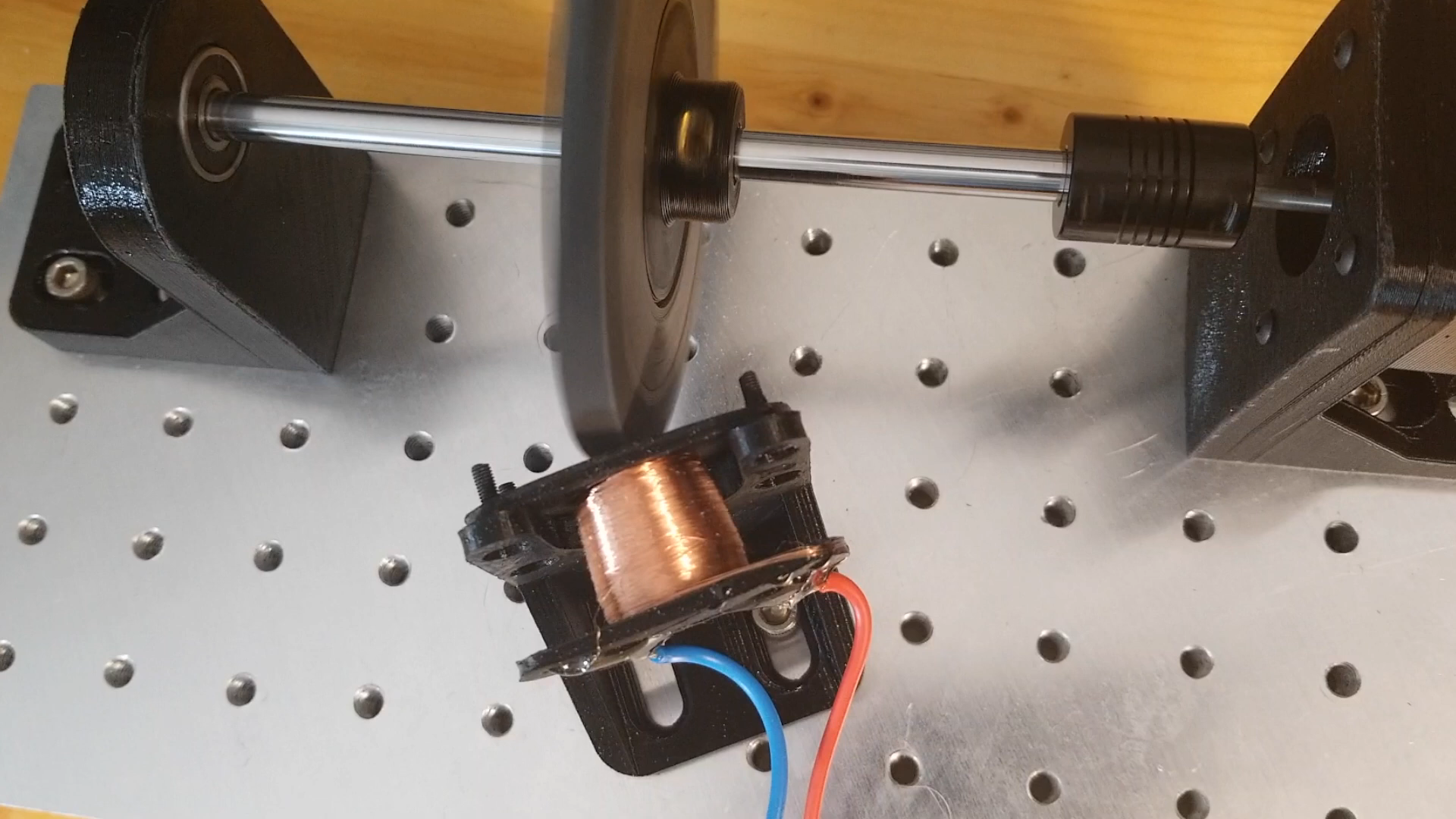
Some musical inventions arrive wearing a tuxedo. Others show up with a soldering iron, a spool of weird filament, and a motor that sounds like it has had too much coffee. The 3D-printed tonewheel belongs proudly in the second group. It is part science experiment, part rock organ tribute, and part reminder that music technology has always been slightly unhinged in the best possible way.
The phrase “3D-printed tonewheels” may sound like something a guitarist says after accidentally inhaling too much amplifier dust, but the idea is beautifully logical. A tonewheel is a rotating wheel with teeth or shaped edges that passes near a magnetic pickup. As the wheel spins, it changes the magnetic field around the pickup, creating an electrical signal. Amplify that signal, shape it, and suddenly a spinning object becomes a musical voice. That is not magic. It is physics wearing sunglasses.
This concept is most famously associated with the Hammond organ, the electromechanical legend that helped power gospel, jazz, blues, soul, progressive rock, and enough smoky club solos to make any keyboard player’s left hand feel underemployed. Modern maker projects have revived the principle with 3D printing, Arduino control, stepper motors, ferromagnetic filament, homemade pickups, and a strong appetite for glorious mechanical noise.
What Is a Tonewheel, and Why Should Rock Fans Care?
A tonewheel is an electromechanical sound generator. Instead of using strings, reeds, or purely digital oscillators, it creates sound by rotating a shaped metal or ferromagnetic wheel near a magnetic pickup. The pickup senses changes in magnetic flux and turns them into an audio signal. In classic Hammond organs, these tonewheels were part of a carefully engineered generator assembly. In a DIY 3D-printed tonewheel project, the same core idea can be explored with printed parts, motors, magnets, coils, and code.
Why does this matter to rock music? Because the Hammond-style organ sound is not just “a keyboard sound.” It is a living, growling, swirling beast. It can whisper behind a singer, roar through a solo, or lock into a groove like a rhythm guitar that went to engineering school. From gospel churches to classic rock stages, the Hammond tonewheel sound became a musical language of its own.
The appeal of a 3D-printed tonewheel is that it brings this historic mechanism back into the hands of experimenters. Instead of only studying old service manuals or loading a digital organ plugin, makers can physically build a small version of the sound source. It turns the invisible world of waveforms into something you can hold, spin, measure, and occasionally blame when it wobbles.
The Hammond Organ: The Original Tonewheel Rock Machine
The Hammond organ was introduced in the 1930s as a smaller, more affordable alternative to the pipe organ. Rather than moving air through pipes, it produced tones with rotating tonewheels and electromagnetic pickups. Laurens Hammond, an inventor with a background in clocks and synchronous motors, used mechanical precision to create stable musical pitches.
Inside a classic tonewheel Hammond, a motor drives a complicated gear train. Each tonewheel is cut or shaped to produce a particular frequency. When a key is pressed, the organ routes selected tonewheel signals into the audio path. The drawbars then let the player mix different harmonic components, almost like a hands-on additive synthesizer with more wood, oil, and attitude.
That mixture of engineering and imperfection is the secret sauce. A Hammond does not sound beloved because it is mathematically sterile. It has key click, leakage between tones, mechanical movement, amplifier coloration, and the famous interaction with Leslie rotating speakers. The machine breathes. It has little flaws that behave like personality traits. In music, perfect is useful; slightly imperfect is often unforgettable.
How 3D-Printed Tonewheels Recreate the Principle
A modern 3D-printed tonewheel project usually starts with a wheel shaped like a small gear. The teeth or raised sections pass by a pickup coil as the wheel spins. If the printed material contains iron particles, such as magnetic iron PLA, it can interact with a magnetic field more like a traditional ferromagnetic part. The result is a changing signal that can be amplified and heard.
In one well-known maker approach, an Arduino-controlled stepper motor spins the tonewheel at different speeds. The faster the wheel turns, the higher the pitch. With code, a CNC shield, MIDI input, or G-code-style speed commands, the builder can control the note being produced. Compared with a full Hammond generator, this is a much smaller proof of concept, but it demonstrates the heart of the technology: rotating geometry becomes tone.
The pickup can be handmade by winding wire around a core and pairing it with a magnet, similar in spirit to how an electric guitar pickup senses vibrating strings. Here, however, the vibrating object is replaced by a spinning wheel. The tone is raw, mechanical, and wonderfully educational. It may not replace a vintage B-3 on a world tour, but it can teach more about electromechanical sound in one afternoon than a dozen glossy brochures.
Why Ferromagnetic Filament Matters
Ordinary PLA is great for printing brackets, toys, prototypes, and the occasional desk creature that looks like it pays rent. But a tonewheel needs to interact with a magnetic field. That is where iron-filled or magnetic PLA becomes interesting. These filaments combine PLA with finely ground iron powder, allowing printed parts to respond to magnets.
Magnetic iron PLA is not the same as a solid steel part. It is usually more brittle than standard PLA, often denser, and may require careful print settings. It can respond to magnets, but the print itself does not automatically become a powerful permanent magnet. For tonewheel experiments, however, the important point is not superhero magnetism. The important point is that the wheel can disturb the magnetic field enough for a pickup to detect motion.
This opens a fascinating door for musical prototyping. Makers can alter tooth count, wheel diameter, tooth profile, infill, thickness, and spacing, then listen to how those changes affect the signal. A 3D printer becomes a tone laboratory. Instead of ordering custom metal parts every time inspiration strikes, builders can print, test, revise, and repeat. It is the musical equivalent of “measure twice, print three times, pretend the first two were research.”
The Role of Stepper Motors and Microcontrollers
A tonewheel needs steady rotation. In a vintage Hammond, that job belonged to carefully designed motors and gearing. In a 3D-printed project, a stepper motor is a practical choice because it can be controlled precisely by a microcontroller. An Arduino can send commands that set the motor speed, allowing the wheel to produce different pitches.
This approach has advantages and quirks. A stepper motor is accessible, affordable, and easy to integrate with hobby electronics. It also has its own mechanical character. Depending on speed, load, driver settings, and construction, a stepper can introduce vibration or audible motor artifacts. In a sterile lab, that might be annoying. In a rock-inspired instrument, it might be flavor. The line between “noise problem” and “signature tone” is sometimes just a confident facial expression.
Some builders explore brushless motors, different gear profiles, multiple wheels, MIDI control, or more stable speed feedback. The dream is not merely to spin one wheel and make one note. The bigger vision is a playable electromechanical instrument that blends vintage organ logic with maker-era flexibility.
Drawbars, Harmonics, and the Beauty of Additive Sound
The classic Hammond sound is not only about one tonewheel producing one pitch. Its magic comes from combining harmonic components. Hammond drawbars let players blend different pitch intervals, including the fundamental, octaves, and other harmonics. Pull a drawbar out and that component becomes louder. Push it in and the sound gets thinner.
That is essentially additive synthesis with physical attitude. Instead of generating harmonics with software math alone, the Hammond tradition combines mechanically generated tones. A bright rock organ sound may use strong upper harmonics. A mellow gospel tone may lean softer and rounder. A jazz setting can purr; a rock setting can snarl.
For 3D-printed tonewheel projects, this suggests an exciting path forward. One wheel can prove the concept. Several wheels can create intervals. A bank of wheels, each with its own pickup or carefully arranged sensing system, could create richer harmonic mixtures. Add a digital interface for control, analog circuitry for warmth, and perhaps a rotating speaker effect, and suddenly the bench project starts eyeing the stage door.
What Makes the Sound So Addictive?
The charm of a tonewheel sound comes from movement. Digital oscillators can be extremely accurate, but a physical wheel creates a signal with tiny variations. The shape of the wheel, consistency of rotation, pickup placement, material properties, motor behavior, and amplifier chain all matter. These details create a tone that feels alive because it is literally generated by motion.
Classic Hammond organs also became famous for their imperfections. Key click, for example, began as a switching artifact but became part of the sound players loved. Harmonic leakage, where nearby tones subtly bleed into the output, added complexity. The Leslie speaker then transformed the organ tone by adding pitch movement, amplitude modulation, and spatial swirl.
A 3D-printed tonewheel project does not need to copy every detail to be musically meaningful. In fact, the fun is partly in discovering new imperfections. A printed wheel may have layer lines. A homemade pickup may color the sound unexpectedly. A motor may add a faint mechanical pulse. Instead of hiding every fingerprint, the builder can decide which ones belong in the final voice.
Rock ‘n Roll Meets the Maker Movement
Rock music has always loved technology that misbehaves beautifully. Distorted guitar amplifiers, tape echo, spring reverb, wah pedals, fuzz boxes, and overdriven organs all began as tools that musicians pushed beyond polite behavior. The 3D-printed tonewheel fits that tradition perfectly. It is not trying to be a museum piece. It is trying to make electricity dance.
The maker movement adds a fresh twist. Today, a curious builder can combine CAD software, desktop 3D printing, open-source electronics, MIDI control, and online communities. The barrier between musical idea and working prototype has become much lower. You no longer need a factory in Chicago to explore electromechanical sound. You need patience, safety awareness, a printer that behaves most days, and a willingness to troubleshoot things that make no sense until they suddenly do.
This is where 3D-printed tonewheels become more than nostalgia. They are a bridge between generations of invention. Laurens Hammond used the best tools of his era: motors, gears, pickups, and manufacturing precision. Modern makers use their era’s tools: microcontrollers, CAD, hobby CNC shields, magnetic filament, and rapid prototyping. The spirit is the same: take a physical process, control it, and make music from it.
Practical Design Considerations for a 3D-Printed Tonewheel
A successful tonewheel experiment depends on several design choices. Tooth count affects frequency. Wheel diameter affects mechanical stability and pickup interaction. Material affects magnetic response. Motor speed affects pitch. Pickup distance affects output strength and noise. Even mounting hardware matters, because wobble can turn a promising note into a tiny mechanical goat.
Balance is important. A wheel spinning at musical speeds should be printed and mounted carefully so it does not vibrate excessively. The pickup should be placed close enough to sense the changing magnetic field but not so close that the wheel rubs. The motor should be controlled smoothly, and the frame should be rigid enough to avoid unwanted movement.
Audio output also deserves attention. The raw signal from a pickup may need preamplification before it can be sent to speakers, effects, or recording equipment. Filtering, gain staging, and shielding can help reduce unwanted noise. That said, some roughness is part of the fun. A tonewheel project should be clean enough to work and strange enough to have a personality.
Specific Example: One Wheel, One Pickup, Many Lessons
Imagine a simple bench-top setup: a 3D-printed ferromagnetic tonewheel mounted to a stepper motor shaft, spinning near a handmade coil pickup. An Arduino controls the motor speed. The pickup output goes into a small preamp, then into an amplifier or audio interface. At low speed, the pitch is low and pulsing. Increase the speed and the pitch rises. Change the wheel profile and the tone shifts. Move the pickup slightly and the output changes again.
This single-wheel system teaches the essential relationship between speed, geometry, magnetism, and sound. It also reveals why full tonewheel organs were such impressive machines. A complete musical instrument needs stable pitch, multiple notes, harmonic control, playable response, and a reliable audio path. The proof of concept is simple; the finished instrument is a serious engineering adventure.
That is exactly what makes the project so satisfying. It starts with a humble spinning part and quickly opens into acoustics, electronics, mechanics, music theory, materials science, and instrument design. It is STEM education with a backbeat.
Can 3D-Printed Tonewheels Replace Digital Organ Plugins?
Probably not for most musicians, and that is perfectly fine. Digital organ plugins and modern clonewheel keyboards are convenient, portable, and impressively realistic. They can emulate tonewheel leakage, key click, percussion, drawbars, tube drive, and Leslie speaker behavior without needing lubrication, alignment, or a small prayer to the motor gods.
But replacement is the wrong question. A 3D-printed tonewheel is not mainly about convenience. It is about physical sound creation. It lets makers and musicians touch the mechanism behind the legend. It creates an instrument that is part sculpture, part synthesizer, part history lesson, and part garage-band science fair.
For recording artists, the value could be uniqueness. A DIY tonewheel device may produce textures that no plugin offers. For educators, it is a brilliant demonstration of electromagnetic induction and waveform generation. For builders, it is a playground. For rock fans, it is a chance to see the invisible machinery of tone become visible again.
The Future of 3D-Printed Electromechanical Instruments
3D-printed tonewheels point toward a larger future: custom electromechanical instruments made in small workshops, classrooms, and home studios. Builders might create modular tonewheel banks, hybrid analog-digital organs, experimental rhythm machines, or kinetic synthesizers. Instead of choosing between vintage hardware and software emulation, musicians can explore a third path: new physical instruments inspired by old principles.
Better materials could improve magnetic response. More accurate printers could produce smoother wheel geometry. Sensor feedback could stabilize pitch. Brushless motor control could reduce unwanted mechanical noise. Custom pickup designs could shape tone at the source. Add MIDI, expressive controls, and modern effects, and the humble printed wheel may become the seed of an entirely new family of instruments.
The most exciting part is not that a 3D-printed tonewheel can imitate the past. It is that it can misunderstand the past creatively. That is how new sounds happen. Someone tries to copy a classic, the prototype does something weird, and the weird thing becomes the feature everyone loves.
Experience Notes: Building, Listening, and Learning From the Spin
Working with the idea of 3D-printed tonewheels feels different from working with a normal electronic music project. With a typical synthesizer circuit, the sound often begins as voltage on a board. With a tonewheel, the sound begins as a moving object. You can see the source of the pitch. You can watch the wheel spin, hear the motor settle into speed, and feel the relationship between mechanical motion and musical tone. That physical connection changes the experience.
The first lesson is patience. A printed tonewheel may look perfect on the bed but behave differently when mounted to a shaft. A tiny imbalance can become obvious at speed. A pickup placed a little too far away may produce a weak signal. Move it closer and the sound wakes up. Move it too close and the setup becomes a nervous little machine that seems personally offended by tolerances. This is not failure. This is the instrument explaining itself.
The second lesson is that tone is not one thing. It is the result of many small decisions. The number of teeth shapes the pulse rate. The tooth profile changes the waveform. The material affects magnetic response. The coil design influences output and frequency character. The preamp can make the result cleaner or dirtier. Even the frame matters, because vibration can become part of the sound. A builder quickly learns that “the note” is only the beginning. The real personality lives in the edges.
The third lesson is respect for the original Hammond engineers. It is easy to admire the Hammond organ as a musical icon. It is another thing entirely to build even a tiny demonstration and realize how much mechanical precision was required to make a full instrument stable, playable, and expressive. Every smooth chord from a vintage tonewheel organ represents a mountain of clever engineering hiding behind the keys.
The fourth lesson is joy. There is a special thrill in hearing a sound come from a device you made yourself. It may buzz. It may wobble. It may produce a note that is not exactly concert pitch unless the code, motor, wheel, and pickup are all in a cooperative mood. But when it works, it feels alive. The sound is not just generated; it is earned.
For musicians, this experience can reshape how they think about instruments. A guitar string, a speaker cone, a spinning tonewheel, and a drumhead are all moving systems. Music is motion translated into feeling. A 3D-printed tonewheel makes that idea obvious. It takes a concept usually hidden inside a heavy organ cabinet and puts it on the workbench where anyone can study it.
For students and hobbyists, the project is a gateway into multiple skills at once. It encourages CAD design, 3D printing, motor control, basic electronics, audio amplification, music theory, and careful listening. It also rewards curiosity. What happens with more teeth? What happens with a different filament? What if the pickup angle changes? What if the signal goes through distortion, chorus, or a rotary speaker simulator? Each question can become a new experiment.
The best experience, though, is the moment when the project stops feeling like a gadget and starts feeling like an instrument. That moment may arrive with a single sustained tone, a rough melody, or a noisy little riff that sounds like it crawled out of a vintage rock record and found a 3D printer. When that happens, the maker understands the real charm of 3D-printed tonewheels: they do not simply recreate old technology. They invite old technology to jam with the future.
Conclusion: A Spinning Wheel With a Rock Soul
3D-printed tonewheels are a perfect example of how old ideas can become new again when modern tools get involved. The underlying principle is nearly a century old, but the maker approach feels fresh, accessible, and full of creative possibility. By combining ferromagnetic printing materials, microcontroller motor control, pickup design, and audio experimentation, builders can explore the electromechanical roots of one of the most important keyboard sounds in modern music.
This is not just a quirky DIY project. It is a hands-on tribute to the Hammond organ, a practical lesson in electromagnetic sound generation, and a reminder that rock ‘n roll has always loved machines with character. The wheel spins, the pickup listens, the amplifier growls, and somewhere in that beautiful chain of motion and electricity, music happens.