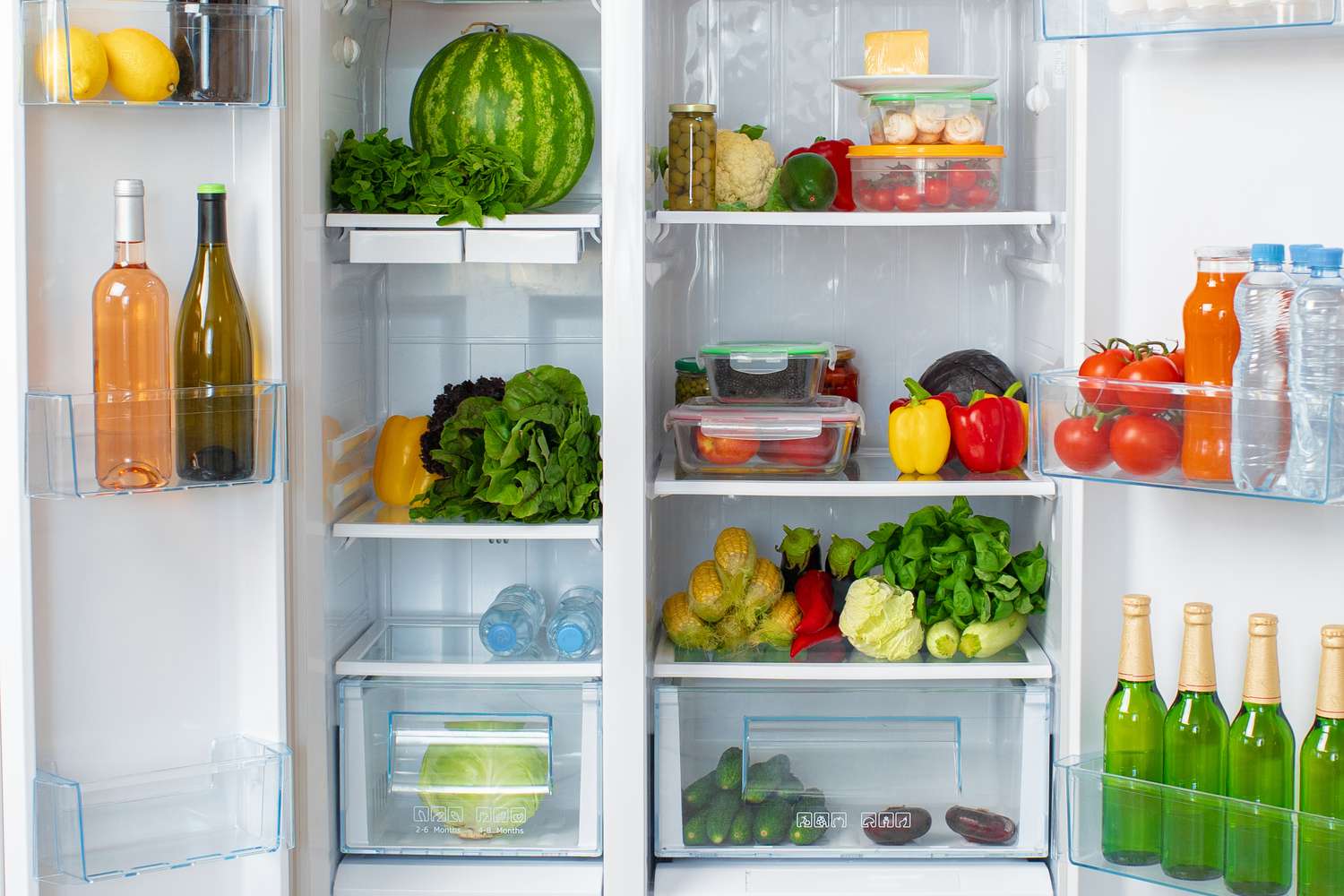
Because your refrigerator shouldn’t double as a museum of forgotten meals.
Let’s be honest: the fridge is where good intentions go to “rest.” You bought kale to become a healthier person.
You saved that takeout because you were definitely going to eat it tomorrow. And somewhere in the back,
a tiny container of… something… has been quietly evolving into its final form.
A quick fridge purge isn’t just about getting your shelf space back (though your yogurt will appreciate not being
stored under a leaning tower of sauces). It’s also about food safety: cold slows bacteria down, but it doesn’t
hit the “pause” button. Below are the seven biggest “toss it now” offendersplus what to do instead so you waste
less food and keep more meals safe.
Quick 2-Minute Safety Check Before You Start Tossing
1) Make sure your fridge is actually cold
Set your refrigerator to 40°F (4°C) or lower. If you don’t have a fridge thermometer,
consider this your sign from the universe to get one. Many fridges run warmer than you thinkespecially
the door shelves (aka “the tropical resort” of your fridge).
2) Don’t taste-test for safety
If something seems questionable, don’t take a “tiny bite” to investigate. Foodborne bacteria don’t need
your permission to cause problems, and some foods can be risky even when they look and smell fine.
3) Your new mantra
When in doubt, throw it out. Yes, it’s dramatic. It’s also cheaper than a miserable night.
4) Label going forward (future you will cry happy tears)
Keep a roll of masking tape and a marker nearby. Date leftovers when they go into the fridge. It’s the simplest
way to stop playing “Guess Who?” with your dinner.
7 Things You Should Toss From the Fridge Right Now
- 1) Mystery leftovers older than 4 days
- 2) Opened deli meats and hot dogs past their safe window
- 3) Moldy soft cheese (and sketchy shredded cheese)
- 4) Slimy bagged greens and tired cut produce
- 5) Old cooked rice, pasta, and grains
- 6) Eggs that are past their prime (especially hard-boiled)
- 7) Moldy jams, questionable jars, and expired dressings
1) Mystery Leftovers Older Than 4 Days
Why it’s a problem
Cooked leftovers generally have a safe refrigerator window of about 3–4 days.
After that, the risk of foodborne illness increaseseven if it looks okay.
That container of chili from “sometime last week” is not a personality trait; it’s a gamble.
What to look for
- Unlabeled containers you can’t identify without a séance
- Any fuzz, slime, or bubbling you didn’t put there on purpose
- Sour or “off” odors (your nose is not dramaticlisten to it)
- Leftovers that have been opened, picked at, and re-closed repeatedly
Do this instead
If you won’t eat it within 4 days, freeze it early while it’s still fresh.
Freeze in flat bags or shallow containers so it chills quickly and thaws faster later.
And when you reheat leftovers, heat them thoroughly (think steaming-hot, not “lukewarm vibes”).
Fun rule: If it’s older than your current phone’s battery health, it’s time to let it go.
2) Opened Deli Meats and Hot Dogs Past Their Safe Window
Why it’s a problem
Deli meats are convenient… and also easy to forget. Once opened, many lunch meats are best used within
3–5 days. Hot dogs tend to last a bit longer once opened (often about a week),
but they’re still not immortal.
Also worth knowing: ready-to-eat meats can be associated with Listeria concerns,
which is a bigger deal for pregnant people, older adults, and anyone with a weakened immune system.
What to toss right now
- Opened deli turkey that’s “kind of wet” or getting slimy
- Hot dogs with a sour smell or tacky surface
- Anything that’s been open for days and is now living behind the condiments like it pays rent
Do this instead
Buy smaller quantities, or freeze in sandwich-size portions. If you’re making a grilled sandwich or melt,
heating the meat until steaming is another extra safety stepespecially for higher-risk households.
3) Moldy Soft Cheese (and Sketchy Shredded Cheese)
Why it’s a problem
Not all cheese handles mold the same way. With soft cheeses (cream cheese, ricotta,
cottage cheese, queso fresco), mold can spread beyond what you see. Translation: if it’s moldy, it’s done.
Hard cheeses (like cheddar or parmesan) are denser, so you can sometimes salvage them by
cutting at least an inch around and below the moldwithout letting your knife drag mold across the good part.
But soft or shredded? Toss.
What to toss right now
- Any soft cheese with visible mold (even “just a dot”)
- Shredded, crumbled, or sliced cheese with mold (it spreads fast in those little pieces)
- Cheese with black/gray mold or strong ammonia-like odors
Do this instead
Store cheese wrapped in parchment/wax paper inside a container (it breathes but doesn’t dry out as fast).
And if you routinely lose cheese in the back of the fridge, keep a “use first” bin at eye level.
Cheese deserves a better ending than becoming a science fair project.
4) Slimy Bagged Greens and Tired Cut Produce
Why it’s a problem
Bagged salad is convenient, but it has a short emotional lifespan. Once greens get slimy, mushy,
or smell “swampy,” spoilage microbes have already clocked in for their shift.
Fresh-cut produce is also more delicate than whole produce because cutting creates more surfaces
for microbes and moisture.
What to toss right now
- Bagged greens that are slimy, soggy, or smell off
- Cut fruit that looks weepy, overly soft, or fermented
- Half an onion in an open bowl that has basically absorbed the personality of your fridge
Do this instead
For bagged salad, add a paper towel to absorb moisture and keep it colder (crisper drawer, not the door).
For cut produce, store in airtight containers and aim to use it quickly.
Bonus: if greens are slightly tired but not slimy, cooking them (sauté, soup, omelet) is often safer than
forcing a sad raw salad.
5) Old Cooked Rice, Pasta, and Grains
Why it’s a problem
Cooked rice has a reputation, and for once, the drama is earned. Rice can be associated with
Bacillus cereus, a bacterium that can produce toxins if cooked rice sits out too long before
being chilled. The key issue isn’t “reheating” (which people love to blame); it’s cooling and storing
correctly in the first place.
Even when stored properly, cooked rice and many cooked foods are best used within about 3–4 days
in the refrigerator. Past that, toss itespecially if it was cooled slowly or left at room temperature for hours.
What to toss right now
- Cooked rice or pasta you can’t date with confidence
- Any grain dish that’s been in the fridge for “a while” (you know the one)
- Rice that smells sour, feels sticky in a weird way, or shows any mold
Do this instead
Cool rice fast: spread in a shallow container, refrigerate promptly, and store airtight.
Reheat leftovers until steaming hot, and only reheat what you’ll actually eat.
Leftover rice is fantasticjust don’t treat it like a countertop decoration first.
6) Eggs That Are Past Their Prime (Especially Hard-Boiled)
Why it’s a problem
Eggs keep longer than many people expect, but not forever. In the refrigerator, raw eggs in the shell
are often safe for several weeks. Hard-boiled eggs, however, have a shorter windowabout one week
in the fridgebecause the protective shell barrier has been altered by cooking and handling.
What to toss right now
- Hard-boiled eggs that have been hanging around for more than a week
- Peeled hard-boiled eggs stored loosely (they dry out and pick up odors fast)
- Any egg with a strong sulfur smell after peeling (beyond normal “egg smell”)
Do this instead
Store hard-boiled eggs in a covered container, and date them. If you’re meal-prepping,
plan egg-based snacks early in the week and save longer-lasting items (like nuts or yogurt) for later.
And yes, you can find “egg freshness tests” online, but the safest move is still simple:
track time and temperature, and toss anything questionable.
7) Moldy Jams, Questionable Jars, and Expired Dressings
Why it’s a problem
The jar section of the fridge is where condiments go to become permanent residents. And while many
condiments last a long time, they’re not indestructible. Once you see mold on jams, jellies, or sweet spreads,
the safest move is to discard the whole jarnot “scoop the top and hope for the best.”
Dressings and creamy sauces can also turn risky when they’re old, repeatedly contaminated by “double-dipping”
utensils, or stored warm (hello, door shelf again). Separation isn’t always dangerous, but mold, off odors,
fizzing, or swelling lids are big flashing neon signs.
What to toss right now
- Jam or jelly with any visible mold
- Leftover jarred pasta sauce that’s been open “forever”
- Salad dressing that smells rancid, looks curdled, or is past a reasonable post-opening window
- Anything with a bulging lid, spurting liquid, or suspicious bubbles (nope)
Do this instead
Put a piece of tape on jars when you open them and write the date. Use clean utensils every time.
Store the most-used condiments in an easy-to-see bin so they rotate faster.
And if you rarely finish big jars, buy smaller sizesyour wallet and your fridge will both breathe easier.
A Simple 10-Minute “Fridge Audit” You’ll Actually Do
Minute 1–2: Toss the obvious
Anything moldy, slimy, leaking, or unidentifiable goes. You’re not running a soup kitchen for bacteria.
Minute 3–5: Group by category
- Leftovers / meal prep (front and center, so you eat them)
- Breakfast (eggs, yogurt, milk)
- Condiments (a small bin prevents the “jar avalanche”)
- Produce (crisper drawer, with a quick check for slimy greens)
Minute 6–8: Wipe the sticky crime scenes
A quick warm, soapy wipe prevents mystery smells and keeps spills from becoming permanent.
If you’re feeling fancy, pull the drawers and rinse themyour future strawberries will thank you.
Minute 9–10: Set yourself up to win
Put “eat first” items at eye level, and label leftovers. Most fridge waste isn’t because people don’t careit’s
because food gets hidden. Visibility is the real life hack.
Experience Section: Real-Life Fridge Cleanout Moments (and What They Teach You)
If you’ve ever cleaned out a fridge, you already know it’s never just “cleaning.” It’s an emotional journey.
It’s archaeology. It’s a series of tiny decisions that range from “obviously toss” to “I need a judge and jury.”
Here are a few painfully relatable fridge moments people run intoand the small lessons that keep them from
repeating the same horror story next week.
The Tupperware Time Capsule
You spot it: an opaque container with a lid sealed like it’s protecting national secrets. You don’t remember
cooking it. You don’t remember eating it. You’re not even sure it started as food. This is how “mystery leftovers”
become a long-term tenant in the back corner. The lesson: if leftovers aren’t labeled, they instantly become
suspicious. The easiest fix is to keep tape and a marker on the fridge door. Date it once, and you’ll never again
find yourself whispering, “Is this curry? Or chili? Or… neither?”
The Bagged Salad Betrayal
Bagged greens have a talent for turning from crisp to swampy in the time it takes you to look away.
People buy them with the best intentions, then forget they exist because they’re tucked behind a gallon of milk.
The lesson: produce needs visibility and breathability. A paper towel in the bag (or moving greens into a container
lined with a towel) can buy extra time. But when it’s slimy? That’s not “a rinse will fix it.” That’s “thank you for
your service, goodbye.”
The Door Shelf Illusion
The fridge door looks like premium real estate. It’s convenient. It’s organized. It’s also the warmest part of many
refrigerators because it gets hit with room air every time you open the door. That’s how people end up with dressings
that smell odd sooner than expected, or dairy stored where it warms up the most. The lesson: put sturdier condiments
in the door, and keep more delicate items deeper inside where the temperature is steadier.
The “Just One More Day” Deli Meat Spiral
Deli meat is the classic “I’ll finish it tomorrow” food. Then tomorrow becomes “after this meeting,” then “after the
weekend,” and suddenly you’re holding a package that looks fine… except it’s starting to feel slick. The lesson:
if you know you won’t eat it fast, portion and freeze it immediately. Future sandwiches will still happen, and you
won’t have to play the dangerously optimistic game of “maybe it’s okay.”
The Leftover Rice Myth
People love to blame reheating rice, but the real issue is how it was handled before it ever hit the fridge.
If rice sat out too long after dinner, it had time to drift into the temperature danger zone where bacteria can grow.
The lesson: cool rice quickly in shallow containers and refrigerate promptly. Then date it. Rice is an incredible
leftover when you treat it like foodnot like décor.
The Jam Jar Debate
Almost everyone has stared at a jam jar with a tiny dot of mold and thought, “Could I just scoop it out?”
The lesson: it’s not worth it. Mold can spread in ways you can’t see, and jam is cheap compared to getting sick.
When it’s moldy, it’s done. Also: use a clean utensil every time. The fastest way to shorten a condiment’s life is
introducing crumbs and bacteria with a knife that just touched toast, meat, or your very ambitious peanut butter jar.
The Big Win: One Small System
The happiest fridges aren’t the ones with the fanciest containers. They’re the ones with a simple system:
an “eat first” shelf, leftovers dated, and a quick weekly reset. The experience most people have is this:
once you purge the risky stuff and make food easier to see, you waste less, eat better, and stop discovering
horrifying surprises. Your fridge becomes a tool againrather than a suspense novel.
Conclusion
A safer fridge isn’t about being perfectit’s about being intentional. Toss the risky stuff: old leftovers, questionable deli meats,
moldy soft cheese, slimy greens, aging rice, past-their-window eggs, and any jar that looks like it’s plotting against you.
Then set yourself up for the easiest win in home cooking: keep your fridge cold, label what you store, and put “eat first” foods where you can see them.
Your future self deserves a fridge that says “dinner options,” not “choose-your-own-adventure: stomach edition.”